author.travelffeine.com

Blog

  • Hiking the Naches Peak Trail at Mt Rainier

    If you’re looking for a hike that is suitable for all ages, has alpine lakes and fantastic views of Mt Rainier, then look no further!  This hike has it all, and it’s a loop, so you never have to see the same view twice. Naches Peak Trail is perfect for families. I hiked this with a group of 10 people, ages ranging from 6 to 56 years old. The hike takes around 2-3 hours, depending on your pace and how many breaks you take. The Naches Peak Trail will reward your efforts with beautiful views and fun memories!

    Getting to the Trailhead

    Enter Mt Rainier National Park along Highway 410. Coming from the west side, it will take about 1 hour from Enumclaw to reach the Naches Peak Trail. At the junction for Highway 410 and 123 make sure to stay left and follow signs to Chinook Pass. It is about a 5-minute drive past the junction to the first parking area at Tipsoo Lake. You will see a sign for Tipsoo Lake and then the parking lot on your left.

    There are multiple parking areas you can use to access the Naches Peak Trail. Since it is a loop, you will return to whichever parking area you started from.

    The largest parking area is at Tipsoo Lake. There are restroom and picnic facilities at this parking lot. However, if the parking lot is full, don’t worry, continue down the road and you will pass another parking area on the left. And if that is full continue driving just a little further down the way to a parking area on the right and on both sides of the road near the Mt Rainier National Park sign that also doubles as a bridge for the Naches Peak Trail.

    Naches Peak Trailhead: Starting Your Hike

    We started our hike by Tipsoo Lake. We parked in the Tipsoo Lake parking lot and found the trailhead at the far right corner of the parking lot (when facing away from the road). I recommend hiking this loop in a clockwise direction as this gives you beautiful views of Mt Rainier facing you, rather than at your back.

    The trail has a gradual ascent that continues steadily up before once again leveling out. There are shaded areas along the way to stop and take breaks.  Soon you will reach a flat area and see the parking area along the road I mentioned in the “Getting to the Trailhead” section. 

    Walk across the Mt Rainier National Park sign that doubles as a bridge. If you’re ambitious, you could have someone run down to the road and take a picture of you standing above the sign.  However, we had a large group, so we just kept on moving!

    Shortly after crossing the highway you have views of the mountains and trees that stretch out for miles.  It warmed my heart to hear the “oohs and ahhs” that came from the mouths of my 6-year-old nephew and 8-year-old niece. They said, “Oh, wow, this is beautiful!” And they were right.

    Watching young children delight in the beauty of nature makes me smile.  I feel that nature is therapeutic, and we can all use time away from the fast pace of life (and from our electronics).
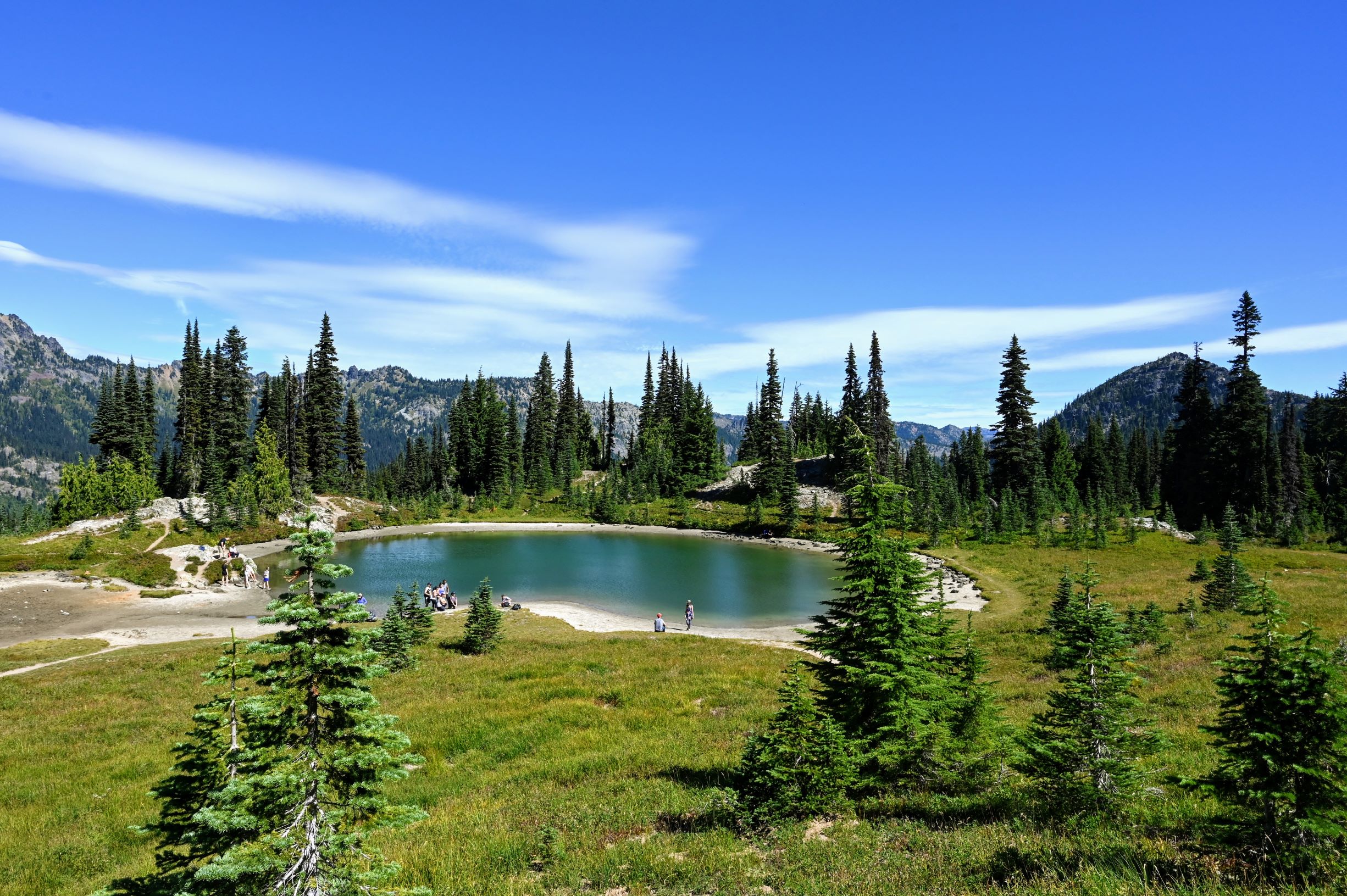
    The hike continues uphill, at a gradual grade, and soon you are rewarded with a flat area to take a refreshing break alongside this alpine lake.

    After resting, continue climbing past rolling hills, rocky mountainsides and if you’re lucky, colorful wildflowers (July thru August is best for this).

    The trail reaches another viewing area of the mountains spread out in front of you. Feel free to take another break here if you want before following the path as it curves to the right. Continue the gradual climb up for about another 5-10 minutes before reaching the below viewpoint of Dewey Lake.

    Lunch Break Near Dewey Lake
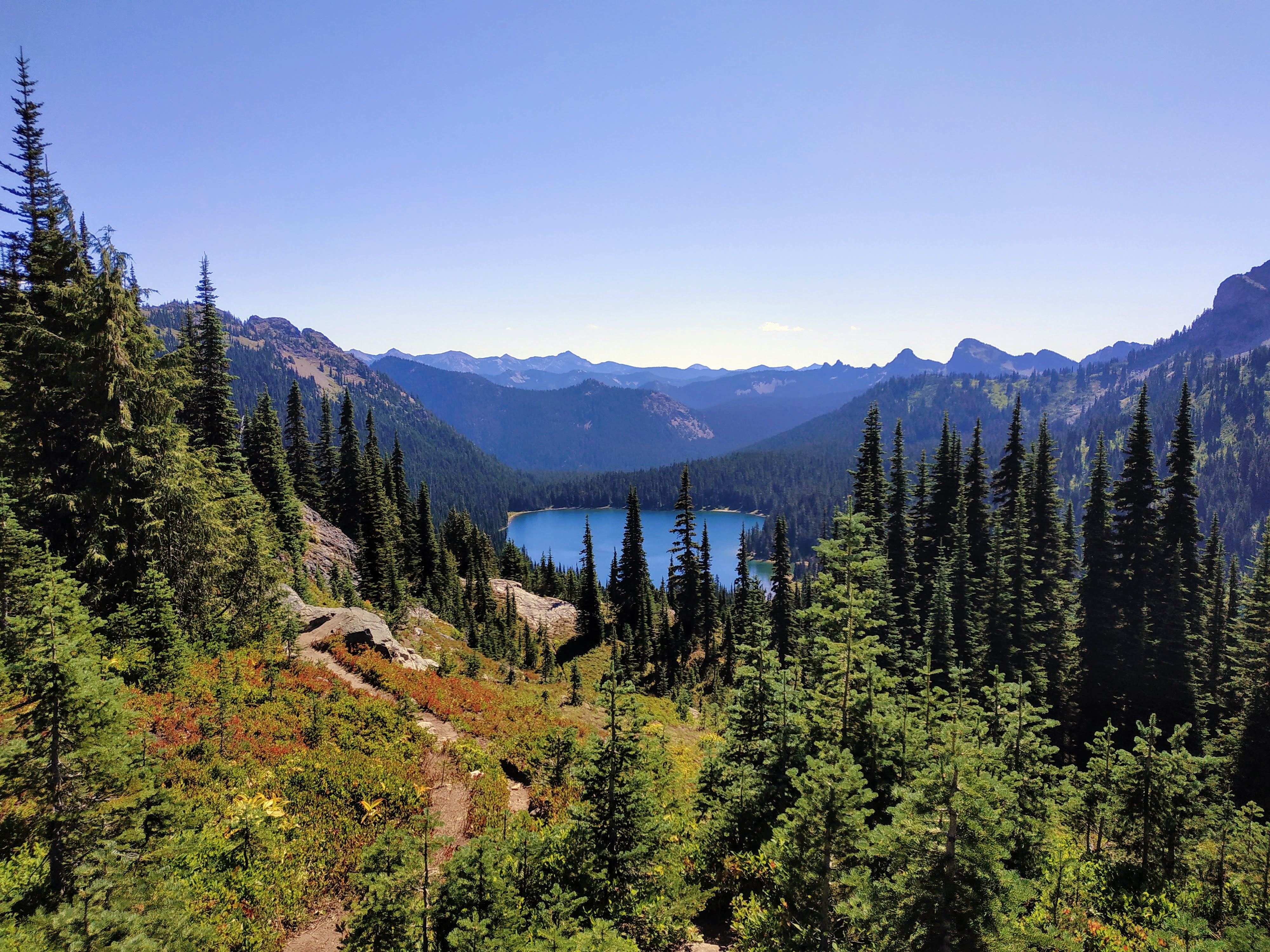
    This is about the halfway point in your hike, and it makes an excellent place for a lunch break! There is a small trail that leads to some rocks on the left side (when facing the lake) that make perfect benches to sit on. Our group enjoyed our lunch stop here. And everyone was re-energized for the rest of the hike.

    After you finish your break, continue down the trail, and you will come to a fork in the path. This is part of the Pacific Crest Trail that takes you down to Dewey Lake. If you’re not in a hurry and don’t mind adding another 2 miles to your hike, then take a left and hike down to this beautiful lake. Otherwise, continue straight to stay on the Naches Peak Trail. 
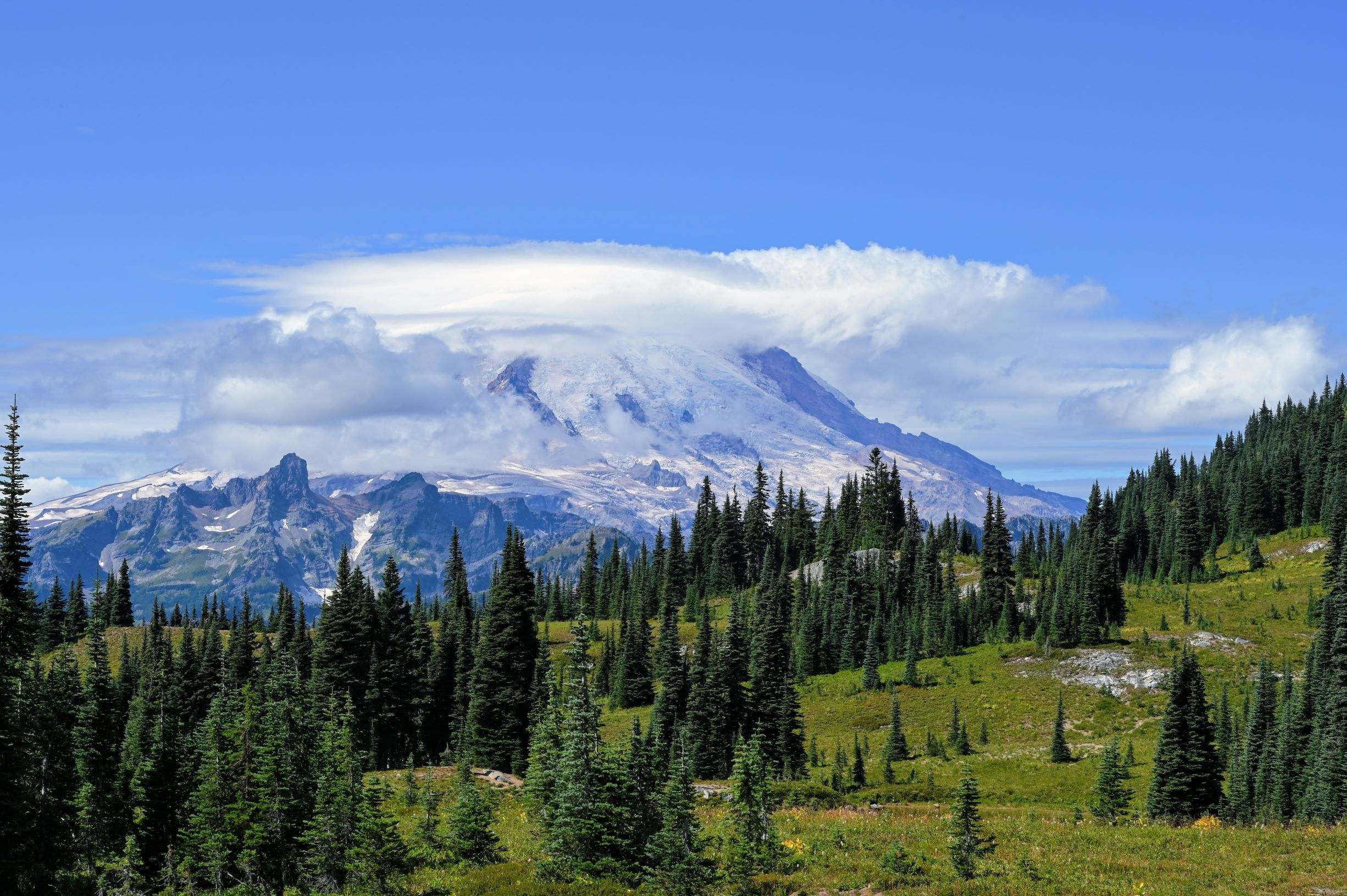
    Soon you will see why I recommended hiking this clockwise. If you’re lucky, you’ll have a clear day with unobstructed views of Mt Rainier. We had some clouds around the top during our hike, but it was still such a beautiful view!

    This part of the trail is mostly flat with a slight downhill slope. The Naches Peak Trail will continue its gradual descent as you return to Tipsoo Lake. There are lots of rocks and roots on the trail so watch your step. Poles are not required, but are helpful, especially if you have any problems with mobility or balance.
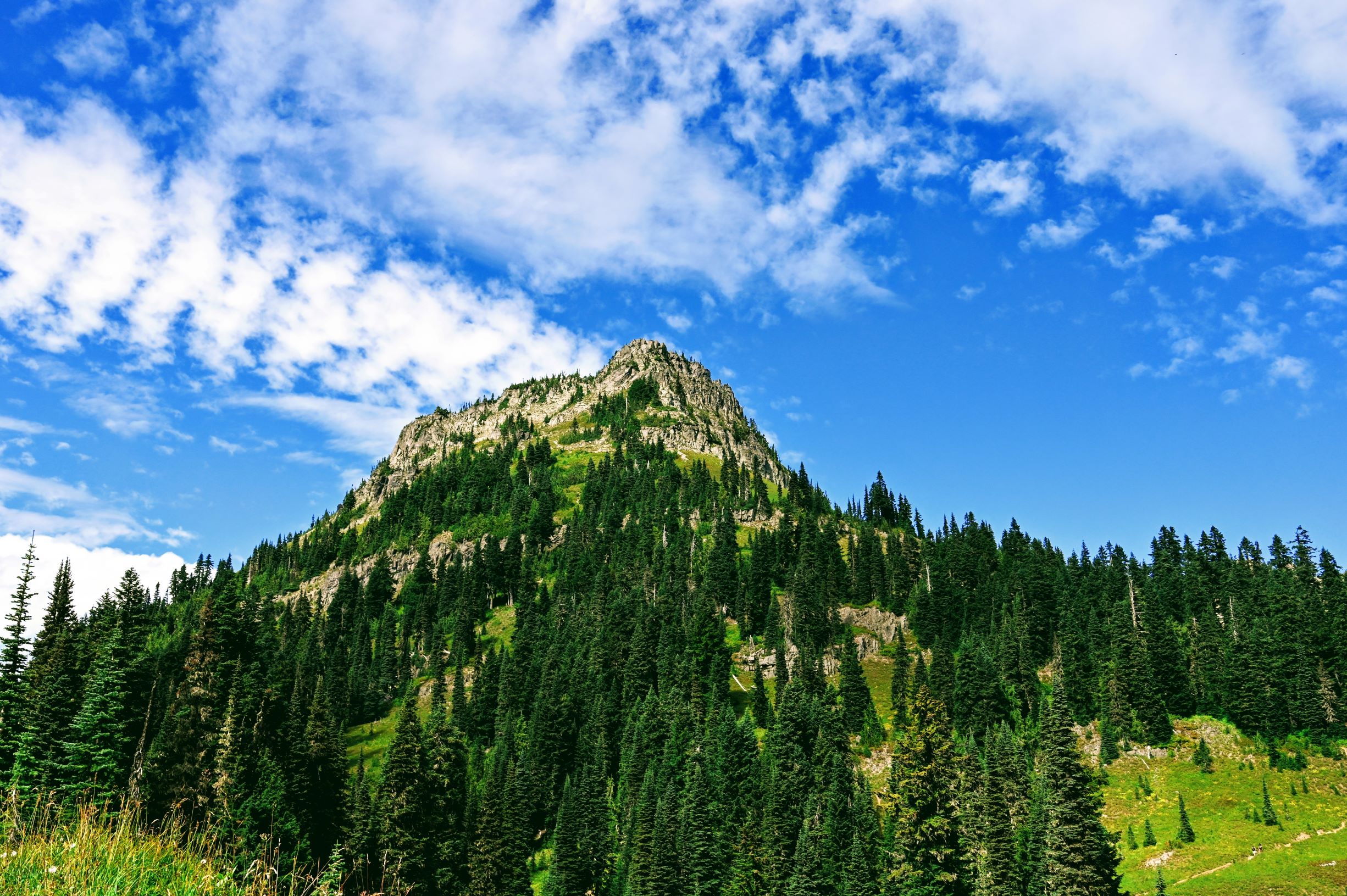
    You eventually make your way down to Highway 410 again, where you will need to cross the road to re-connect with the trail and return to your parking area. You have now come full circle on the Naches Peak Trail! And in case you missed it when you started your hike, make sure to look up, that’s Naches Peak your viewing!

    Important Things to Know

    • You need to purchase a Northwest Forest Pass to park at the trailhead. This pass is different than your National Parks pass or the State Parks Discovery Pass. You can buy a day pass or an annual pass, depending on your needs.
    • Part of this trail is along the Pacific Crest Trail, and part of this is in the Mount Rainier National Park. That means dogs are allowed on the trail, only in the portion of the PCT, but not within Mount Rainier National Park. So it is best to leave Fido at home for this hike. 
    • Pack plenty of water, snacks and perhaps even a picnic lunch, depending on your group. 
    • Naches Peak Trail is a very popular trail, so practice proper trail etiquette and be prepared to yield the path to faster hikers when it makes sense.
    • Set the hiking pace to the slowest person in your group.  Make sure everyone has fun and can go at a comfortable pace. 

    Mount Rainier is one of my favorite places to camp and hike here in the Seattle area. It is like a second home to me.  If you want to extend this hike and make it a weekend excursion, then consider staying at White River Campground, this area of Mount Rainier is truly remarkable!

    Happy Hiking!
  • S’mores Brownies: Eat s’mores anytime of the year!

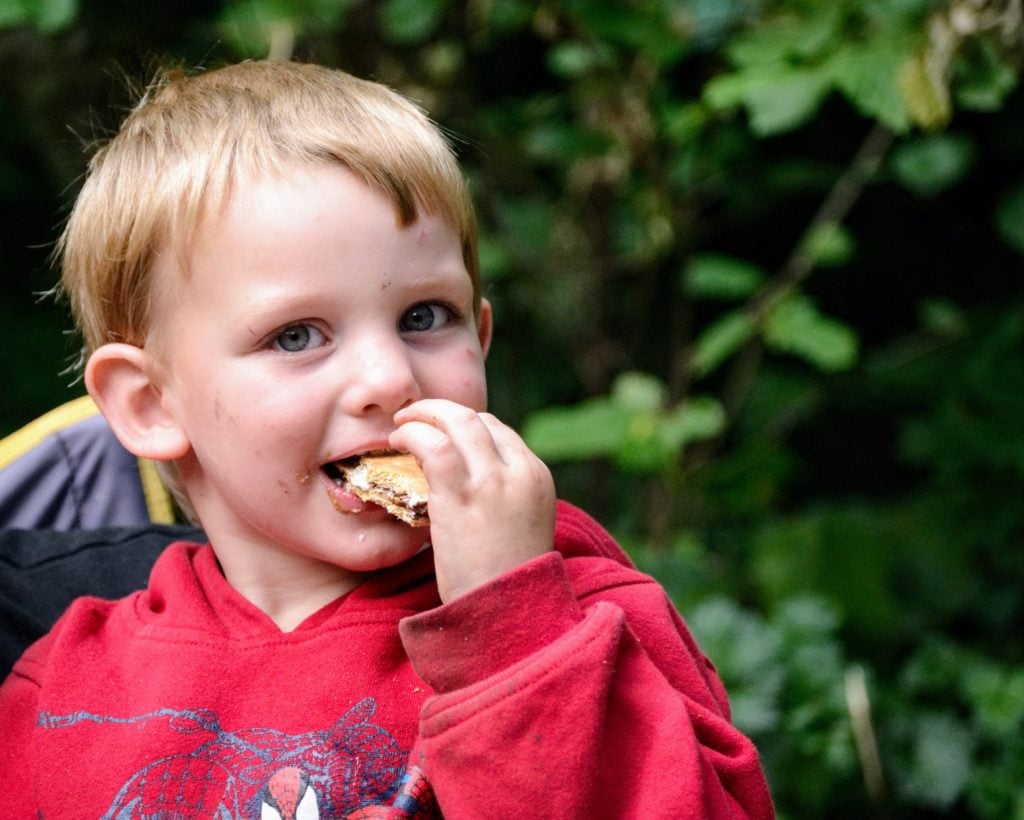
    If you’re like me, one of the best parts of camping is at night when everyone sits around the campfire and roasts marshmallows, make s’mores and tell stories. And of course, I love it when the kids try s’mores for the first time.  It’s love at first bite.  I think that’s how you’ll feel after you try S’mores Brownies too!

    boy eating s'mores for the first time
    My nephew trying s’mores for the first time.

    History of S’mores

    According to Wikipedia one of the earliest published recipes for s’mores was in the 1920s and it was called “Graham Cracker Sandwich.”  Can anyone say “boring?” In 1927, the Girl Scouts published a recipe called “Some More” and in the late 1930s, the conjunction s’mores was used in a summer camp cookbook. By the 1950s it was a regular term used by cookbooks, including the famous Betty Crocker cookbook.

    I know when my family goes camping, there is always someone who loves to say “can I have s’more please!”  The thing is, the only time I really eat s’mores is when I’m camping. They’re messy and even when I’ve tried them in the microwave, besides being messy, they just don’t have the same toasted flavor you get from the campfire ones.

    S’mores Brownie Recipe​

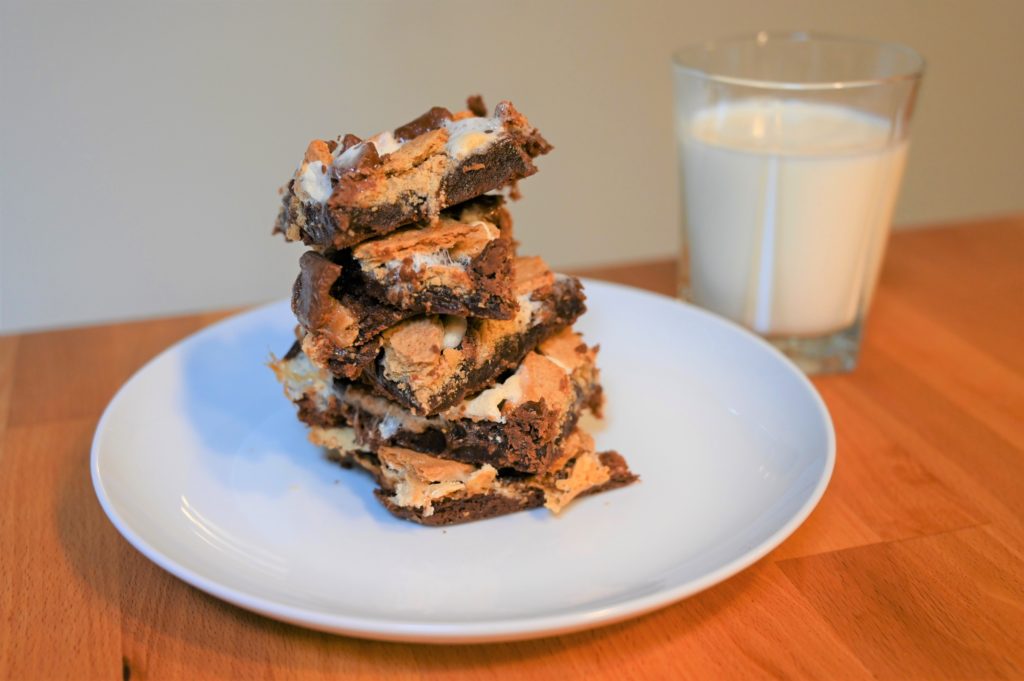
    So when I found this recipe for S’mores Brownies, I knew I just had to try it! And guess what? It was A-mazing! It was s’ mores without the mess and without needing a campfire.  I am not sure if this is a good thing or not, considering my husband and I ate a whole pan between the two of us!s'mores brownies with glass of milk

    I changed the original recipe just a little and I think it really works!  I made notes below on where I tweaked it and my tips for making these gooey and delicious treats!

    S’mores Brownies

    These gooey treats are sure to make you say YUM! No campfire needed.
    Prep Time 5 minutes
    Cook Time 26 minutes
    Servings: 12 people
    Course: Dessert
    Cuisine: American

    Ingredients
      

    • 1 box brownie mix Betty Crocker or Duncan Hines brands work well.
    • 3-4 tbsp water (amount will depend on the boxed recipe)
    • 2 large eggs
    • ½ cup vegetable or canola oil
    • cups mini-marshmallows
    • 1 pkg graham crackers (8 individual crackers) crumbled
    • 2 bars Hershey's chocolate broken into small pieces

    Method
     

    1. Make the brownie mix according to the box instructions. Spread in a 13×9 cake pan.
    2. Bake in 13×9 cake pan for 11-14 minutes (10 minutes less than the lowest recommended time on the box).
    3. Take the pan out of the oven. Layer remaining ingredients in the following order: sprinkle mini marshmallows over the top of the brownies, then crumble graham crackers on top of marshmallows and finally sprinkle the broken chocolate bars all over the top.
    4. Return to the oven and bake for another 10-12 minutes.
    5. Let cool completely and then cut into squares for eating.
    6. Try not to devour the whole pan by yourself!
    Here’s a quick overview of my changes to the original recipe:
    • I baked these in a 13 x 9 pan rather than the 9-inch square pan listed in the recipe.  This made them chewier. And by making the brownies a little thinner, I think it helps the flavors meld together better.
    • Instead of baking fully and then broiling, I baked the brownies for 10 minutes less than the brownie box called for.
    • Added extra marshmallows.
    • Sprinkled on the marshmallows, graham crackers and chocolate in layers, then baked for an additional 12 minutes.
    • I let the brownies cool completely before cutting and eating. I loved these cold, but you could also reheat individual squares in the microwave for about 10 seconds if you prefer warm.

    So there you have it.  S’mores without the mess that can be cooked any time of the year!  Please let me know in the comments below if you try the recipe and what you thought.  I’d love to hear from you!

    Happy Baking!

  • Exploring Kanazawa Japan in One Day on a Bike

    I knew nothing about visiting Kanazawa prior to my first trip to Japan. However, I am so happy I included it in our 14-day itinerary there as it was a favorite stop on our journey! 

    Kanazawa dates back to the 1500s and is fortunate enough to have been spared a lot of the destruction caused by WWII. So the city remains well preserved. Walk back in time when samurais ruled, and temples had secret trap doors, geisha wandered the streets and ancient castles governed from their high defensive positions. You will find all of this and more in Kanazawa, Japan.

    In this article, I share the things we did during our day of sightseeing in Kanazawa, as well as additional options you can choose if you have extra time.

    Getting Your Bike

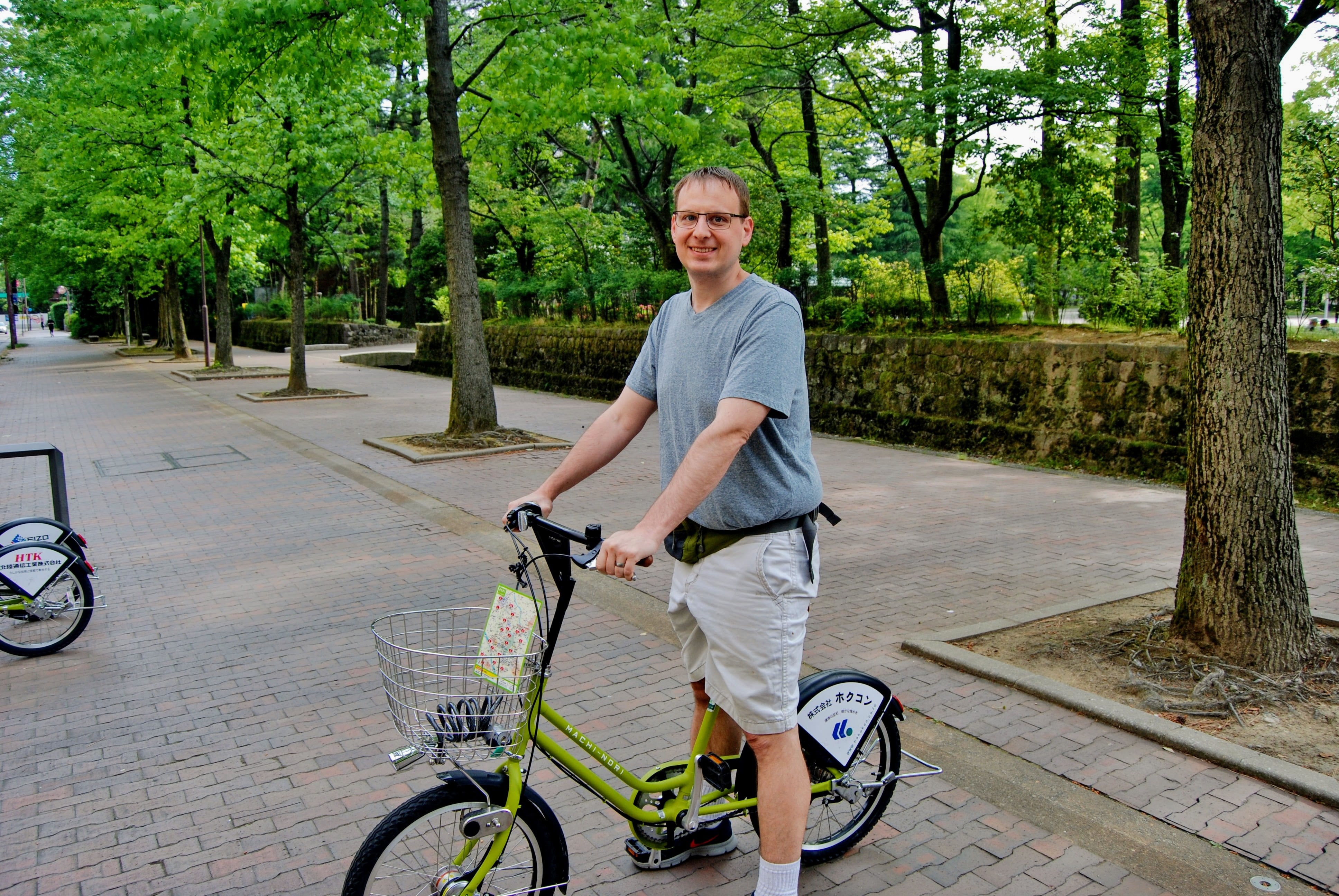
    Kanazawa is relatively flat, and because of this, it makes a perfect place to explore on foot or a bicycle. There are bike rentals for use throughout the city. Machi-Nori is the company that provides these bicycles, and you will see their name on the bike rental stations. You can also search for their stations on Google Maps to find the various locations. I provide a map at the bottom of the page that marks the closest options to the sights listed in this article.

    You pay 200 yen (about 2 USD), and you receive a code that unlocks the bikes from a locking bike rack. Check the bike back in at another bike station in less than 30 minutes, and you don’t pay anything extra!  It is a very affordable way to get around the city. Because Kanazawa is reasonably flat and the attractions densely located, it is easy to bike from destination to destination. 

    There are enough bicycle checkpoints that we never had to pay more than the initial 200 yen. It’s not too crowded, and the traffic isn’t bad if you stick to the side roads.  I wouldn’t try bicycling in Tokyo, but it was so much fun to do in Kanazawa. Read Misadventures in Kanazawa Japan, to learn more about our bicycling experience. It’s all fun and games until someone doesn’t get a bike!

    One Day Itinerary in Kanazawa, Japan

    This one-day itinerary is full of interesting sights, but it isn’t so packed that you feel rushed. Bicycling to all of the stops adds in a care-free element that makes the journey between stops an adventure! And the gardens you visit on this one-day itinerary provide a peaceful place for a relaxing stroll.

    First Stop: Kenroku-en Garden

    Find a bicycle rental and then you’re ready for the first stop of the day. Kenroku-en Garden connects to Kanazawa Castle and Park. There are multiple bicycle rental stations close by, making it easy to check one in and out before and after your visit. 

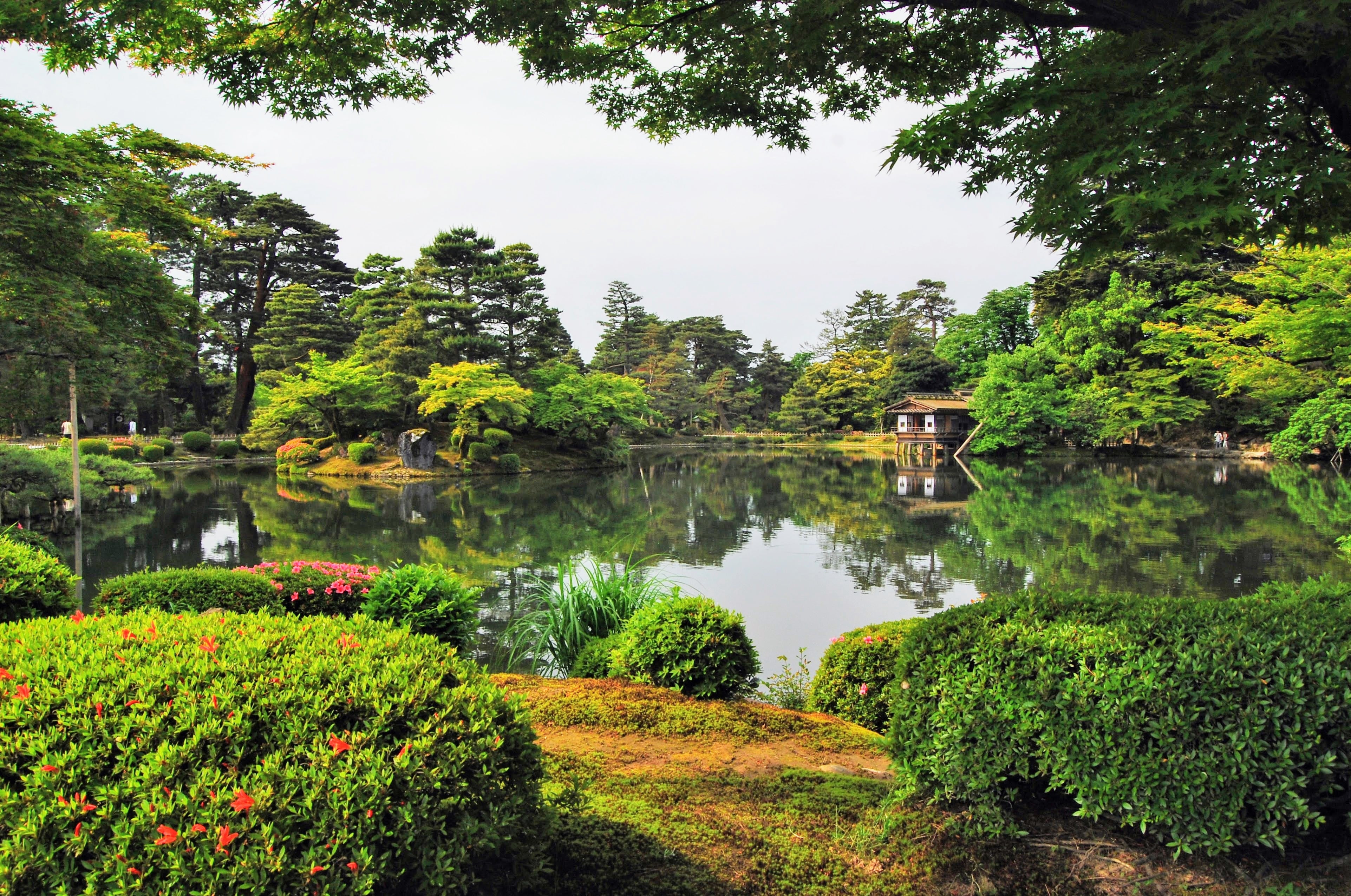
    Kenroku-en is one of the “Three Great Gardens of Japan.” It is a vast garden, immaculately cared for, with unique trees and beautiful views. There is also a tea-house dating back to the 1700s in the garden. This garden is worth the stop! Kenroku-en can get very busy, but by starting here in the morning, you will beat most of the crowds.  Plan to spend at least 1 hour strolling through the grounds, visiting the different buildings, ponds and more.

    Kanazawa Castle and Park

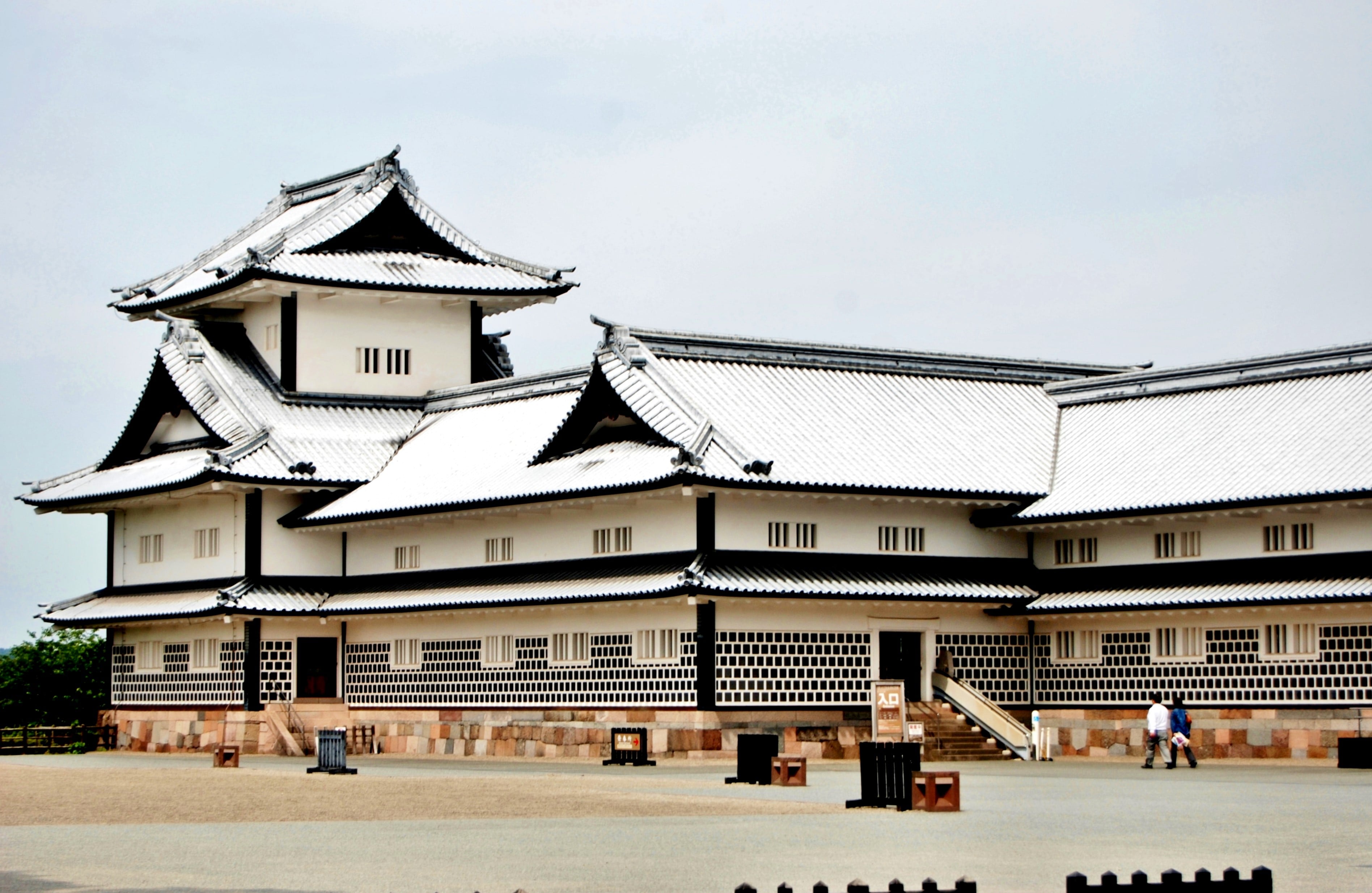
    Next stop is Kanazawa Castle & Park. They offer free guided tours by the ticket desk, and I highly recommend getting a guide.  They are extremely knowledgeable and make the whole tour far more interesting. Without knowing the history, you miss out on so much. It’s just a quick walk around an empty castle, but with a tour guide, you take a trip through history.  Learn about how they got the rocks that they built the foundation out of and the advanced engineering that went into this historic castle. You will leave feeling amazed at the human ingenuity and technology from so many centuries ago.  

    Lunch Break

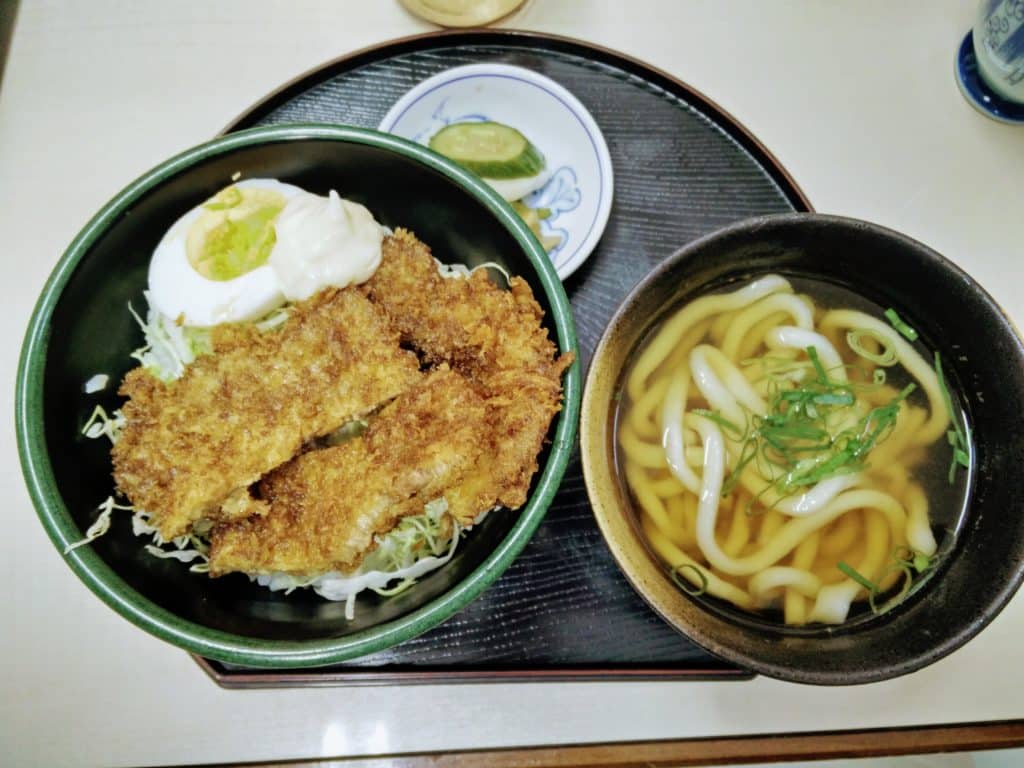
    After you complete your tour of the castle and wander around the park for a while, it’s an excellent time to take a lunch break.  There are a lot of wonderful udon noodle restaurants close by, so walk to one in the direction of your next stop and enjoy a much-deserved break! A hearty meal of homemade udon noodles and perhaps a side order of tonkatsu will fill you up and keep you going the rest of the day!

    tonkatsu and udon noodle soup

    Myōryū-ji (Ninja Temple)

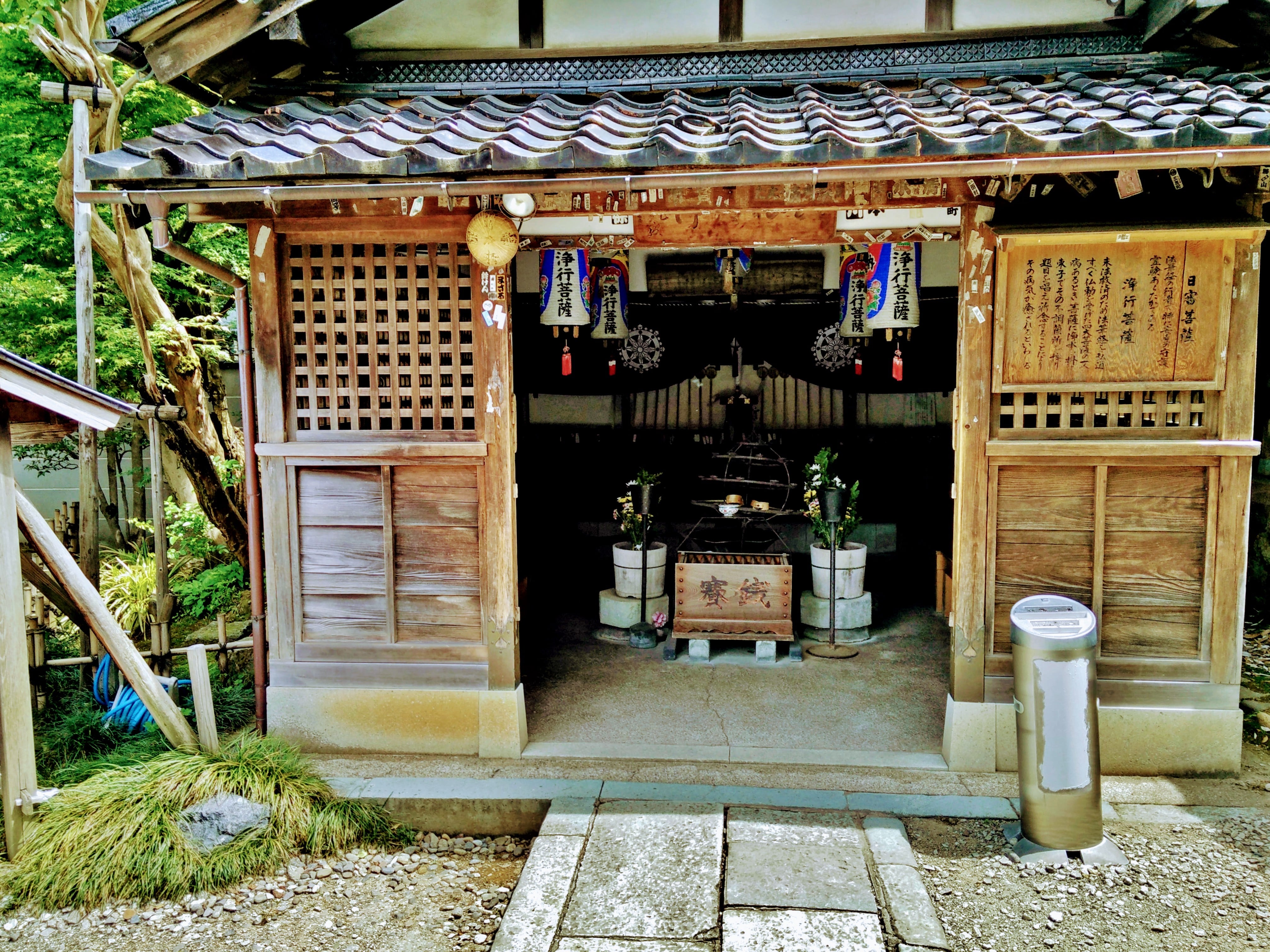
    Myōryū-ji (Ninja Temple) (Ninjadera) is your next stop. There aren’t any bicycle rentals for a few blocks, so you may need to return your bike to the nearest rental facility and walk the rest of the way. Also,  I recommend that you make reservations in advance, before your arrival in Kanazawa.  

    However, if you were unable to do this, sometimes they will have same-day reservations, so it is still worth calling or stopping by. If they have spots available, they will fit you into one of their groups.  They offer tours in English. No photography is allowed; however, it is a fascinating temple tour with hidden doors and traps. You’ll feel like you’re on the set of a martial arts movie.  

    Before finding the next bike rental station, you may want to stroll through the Nishi Chaya District before continuing to the next stop. It is only about a 5-minute walk from Myōryū-ji . You can admire the beautiful architecture from the Edo-period as you make your way to the home of one of the samurais who lived during this period.

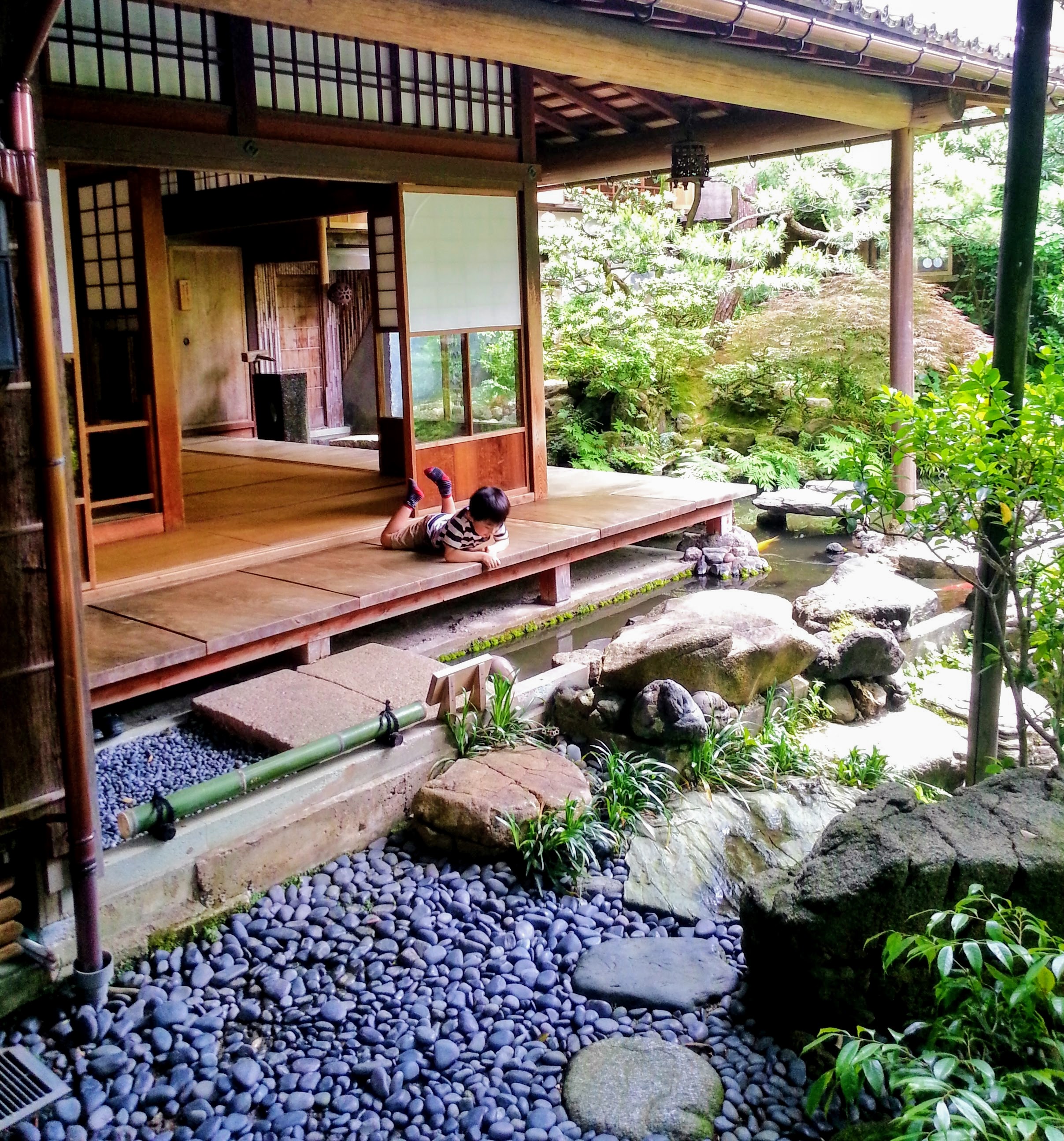
    Nomura Clan Samurai Home

    Find the nearest bike rental station and continue riding to the Nomura Clan Samurai Home. This home is an example of a samurai home during the Edo-period that spanned from the 1600s to 1800s. Walk thru the house and use your imagination to picture how this wealthy samurai family must have lived.  The size of the home and proximity to the castle were relative to the samurais rank. It is a fascinating period in Japanese history, and Kanazawa is a great place to explore this.

    Optional Sightseeing Stops if You Have Time:

    Higashiyama Higashi Chaya District: If you aren’t too tired after your day of sightseeing, take some time in the evening to visit this old part of town. There are many traditional tea houses you can visit, watch geisha performances or shop for beautifully crafted souvenirs. You could plan to have dinner here and combine it with some evening sightseeing. Higashi Chaya is another well-preserved section of the old city. It is worth seeing if you feel up to it!

    Omicho Market: If you like markets, this one is not too far from Kanazawa Castle. It closes around 5:00 p.m. though so you’d have to make an effort to squeeze it into your day of sightseeing. However, I don’t feel like it is something you will regret if you miss it.  Japan is full of wonderful markets, such as the one in Kyoto and the many choices in Tokyo. So I would not miss out on the other sights listed in this article to make time for this market.

    Dinner

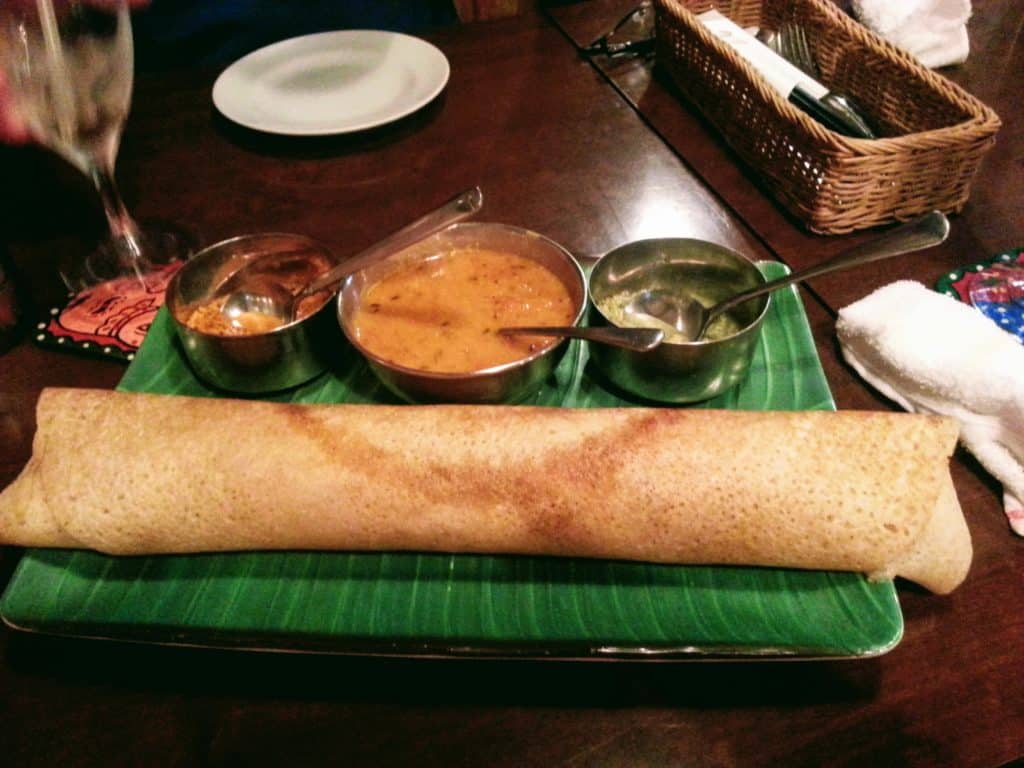
    If you want to try something other than traditional Japanese food, Spice Box Indian Restaurant is delicious! It is a small restaurant though, so reservations are recommended. If you’ve never tried Indian dosas, they are yummy! Kind of like a burrito with a thin, crispy wrapping and filled with potatoes and vegetables in a curry sauce. My husband became a new fan favorite after eating his first one here.indian dosas

    Getting Around Kanazawa, Japan

    We used bikes and walked around Kanazawa. It is a compact city that is easy to navigate without the use of other transportation methods.  However, they do have a bus system you could also use if that better suits your needs.

    If you are biking or walking, I recommend downloading Google Maps before your trip.  If you have Google Maps for navigation and a SIM card with a data plan, you are set!  You can also stop at the top-notch Kanazawa Station and get a tourist map at their tourist information center.

    Take pictures of the maps at the bicycle rental stations so that you have an easy way to see where all the various checkpoints are across the city.

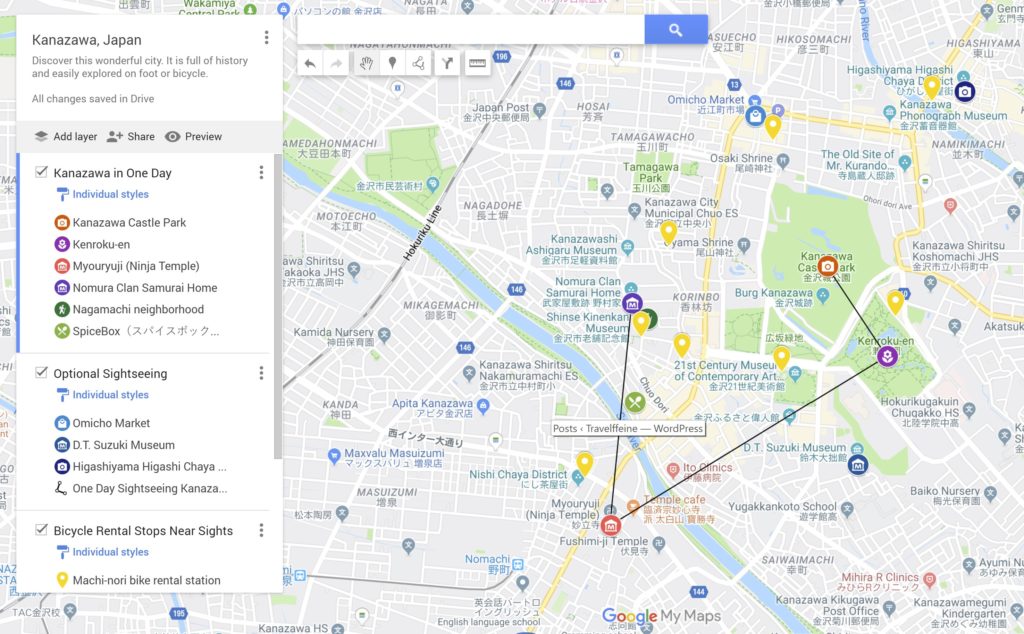
    There are bicycle stations near all the major attractions.  I think the furthest we walked was a few blocks. Click on the map below to open up Google Maps to all the stops listed here for one day in Kanazawa, as well as the closest bicycle rentals.

    Map of Kanazawa, Japan

    Getting to Kanazawa Japan

    Depending on where you are coming from, there are many train options when traveling to Kanazawa, Japan. If you’re coming from Kyoto or Tokyo, you will have high-speed train options allowing you to reach Kanazawa within 2-3 hours.

    We came from the town of Takayama, stopping in Shirakawa-go on the way. To go this route, you will need to take the bus, and it takes around 3-4 hours from Takayama to Kanazawa and about 2-3 hours if you’re coming from Shirakawa-go.  There are approximately 10 round trip buses that leave daily from Kanazawa to Shirakawa-go. If you have an extra day, you could even make a day trip there from Kanazawa.

    And I would always recommend to anyone visiting Japan to purchase the JR Rail Pass.  Purchasing the JR Rail Pass was one of the best decisions we made for our two week trip to Japan. It will save you a lot of money and time in booking individual train tickets. There are a few rules you need to know, such as which trains require advance seat reservations, but instructions are included with your rail passes. You can also use the Japan Official Travel App or Japan Travel App to navigate their public transportation system.

    Final Tips for Visiting Kanazawa, Japan

    Kanazawa is worth the stop during your trip to Japan. Especially for anyone who loves history, architecture and beautiful gardens.  And of course, anyone who enjoys a good bike ride too! You will have fun exploring this beautiful city. To me, Kanazawa had a lovely laid back feel of a local town back home.  It was a great way to spend a day, and I am so glad we didn’t skip this unique city!

    Plan to spend at least one night in Kanazawa and as mentioned earlier, it makes a great base to take a day trip to the historic town of Shirakawa-go.

    Give yourself around 1-2 hours at each attraction I have listed, and you will have plenty of time not to feel rushed when going from site to site.

    Please enjoy reading Misadventures in Kanazawa and if you’re looking for ways to stretch your travel budget just a bit further, why not check out 6 Ways to Save Money While Traveling.

    またね! (until next time!)

  • Our Misadventures in Kanazawa, Japan

    A Little Background

    During a recent visit with my mom-in-law, my hubby told his Mom about a funny mishap we had in Kanazawa during our trip to Japan.  His Mom enjoyed the story and suggested to me that I write about our travel, “misadventures.”

    You know the travel mishaps, near-disasters, those “uh oh, I lost my cool” moments that you laugh about later when you’re back home again.  This side is rarely seen on social media because it isn’t always “pretty.” Well, pretty or not, the truth is, when you travel, not everything is going to go according to your tidy little plan. So with that in mind, I am starting this series about the “behind the scenes” misadventures that I have experienced during my travels.

    Quick Note about Kanazawa

    We loved our time in this interesting city.  There is an ancient castle, samurai houses, ninja temple, and beautiful gardens. The city of Kanazawa is laid out in a way that is great for exploring on foot or as mentioned in this post, on bicycles! This one day itinerary for Kanazawa describes all the fascinating sights you can see when you visit.

    Misadventures in Kanazawa, Japan

    My husband and I were on a trip to Japan.  It was our first visit to Kanazawa and we were attempting to use the public bicycle transportation system.  We enjoy riding bikes and loved the idea of using this system to see the various tourist attractions around the city. There are bicycle rental stations scattered around the city near all the main tourist attractions. You pay 200 yen (about 2 USD) and are given a code that unlocks the bikes from a locking bike rack.

    As long as you check the bike in at another bike station in less than 30 minutes, you don’t have to pay any extra!  It is a very affordable way to get around the city. And the great thing about Kanazawa is that it is a reasonably flat city.  So it is easy to bike from destination to destination, and there are enough bicycle checkpoints that we never had to pay more than the initial 200 yen.

    girl on public bike in Kanazawa Japan
    Me at one of the bike stations in Kanazawa.

    We were walking when we spotted one of these of the bike stations. The only problem was, there was only one bike available, and there were two of us.  So we looked on the map they provided that showed the locations of other bike rental stations, and we saw that there was one located at a bus station not too far from us.

    My husband rented the one available bike and decided that he could ride ahead and make sure to get a bike at the other station before anyone else could get to it first.  I would walk there and meet him. This sounded like a reasonable plan.  That is until I watched him bike down the street and turn a corner only to disappear from view.

    Technology Gone Awry

    Usually, this wouldn’t be an issue, but one thing both he and I hadn’t thought about before he raced off, was that he was the only one with internet on his phone. He is a tech geek, and so he had our phones tethered together so that he only needed to purchase one SIM and one cell phone plan while we were in Japan.  And since we were normally always together, this had never been an issue.  That is until now.

    As soon as he rode down the street and turned out of view, I looked down at my phone. At that moment, I realized I no longer had the internet.  Which meant, I could no longer look up directions to navigate myself to the bus station we were meeting at.

    Which Way Did He Go?

    I hurried to the end of the road and made a right where I had seen him turn.  He was nowhere to be found.  I walked down the street a bit further thru a narrow lane with houses on each side — still nothing.  Well, now I was getting irritated with him.  How could he have just run off and left me like that! He and I were going to have a friendly chat when I finally met up with him!

    There were too many options for streets he might have turned down, and I didn’t want to get lost. So I turned around and made my way towards the main road we had been on before coming to the bike station.

    Language Learning to the Rescue

    I remembered the general direction of the bus station, so I walked up to the main road and then turned in the direction I knew the bus station to be.  A little while after turning down the main road, an older Japanese gentleman came walking by.  I excused myself and politely asked him if he could tell me where the bus station was.

    Now, thank God I had taken the two weeks before the trip to listen to my Pimsleur Japanese Language CDs. And thankfully I remembered the phrase to ask where the nearest bus station was!  It saved my bacon in this instance.  The man told me where to go (thankfully with hand gestures as I couldn’t understand everything he said). I thanked him and then made my way to the bus station with the information he provided.

    Now up to this point, I had an internal monologue inside my head of how I was going to let my hubby “have it” for abandoning me. Yes, it was an overly dramatic monologue. However, after getting some sense of direction and talking to the nice Japanese man, my spirit was picking up.

    The Meeting Spot

    Soon enough, I turned down another street, and just a little way up the road on the right was the bus station.  I saw the bicycle rack, but I didn’t see my hubby anywhere! And to be honest, that irritation I felt earlier, it morphed into full-on anger now!  I mean, isn’t the first rule that you wait at the designated meeting spot?! And yet, here he was nowhere to be seen, and I had no way of reaching him! So my internal monologue was going full speed ahead now, and he was going to get a severe tongue lashing when I saw him!

    man at bike station in Kanazawa, Japan.
    My hubby at a bike station.

    Back Together Again

    Well lucky for him he road up just a few moments after I arrived.  He realized his mistake and began searching for me. After not finding me, he circled back to the bus station to wait. So instead of giving him the planned tongue lashing, instead, I gave him a dramatic description of my being left alone. As we talked, I realized he, of course, had not meant to lose me and had tried to find me after realizing his mistake. My anger quickly defused, and we got our bikes and headed on our merry way!

    In spite of a rocky start, we had a lovely day riding around the city of Kanazawa.  Thankfully I did not let this silly event ruin the day. And although at the moment, it did not feel that funny, we now laugh about it. We also discussed what the protocol would be, should we ever get separated like that in the future.

    Emergency Protocol When Traveling

    This is something I would recommend you do if you’re ever traveling with someone else or in a group.  Know where to meet if you are separated or unable to reach the other person. This is a good idea even at home, have an emergency plan in place, just in case!

    Conclusion

    So there you have it, my hubby road off and left me, but a crash course in Japanese saved the day.  It shows how even a small amount of language learning may come in far handier than you’ll ever know! Also, these things happen, tempers flare, and pressure is turned up when traveling. Shake it off, talk it out and move on and enjoy your trip.  Then laugh about it when you get home.  You will find these are the moments you remember the most. I have learned a lot thru travel, and learning to adjust to change is an important lesson!

    I hope you enjoy these posts and I’d love it if you’d share some of your own misadventures with me.  You know, now that we can all laugh about them.

    さようなら (sayonara!)

  • 13 Fun Things to do at Kalaloch Campground

    If you are looking for a campground close to Seattle, look no further than Kalaloch Campground.  This campground is sure to become your family’s favorite getaway destination.  Long weekend? Summer vacation?  Head to Kalaloch Campground. It is the perfect Northwest getaway.  

    You’ve got miles of sandy beaches, piles of driftwood for building forts, tide pools for exploring the sea life, whale watching (depending on the time of year) and so much more!  And who doesn’t love waking up to the sound of the ocean? Keep reading as I share my favorite things to do when camping at Kalaloch Campground and why I keep returning year after year.

    1) Explore the Tide Pools

    This is one of my favorite things to do, even now as an adult.  I didn’t grow up near the ocean, so when I moved to Seattle at age 18, I had my first experience exploring tide pools.  The ocean fascinates me.  It is a beautiful “world” that we have barely explored. I know kids and adults alike will get excited seeing the sea anemones, colorful starfish, and barnacles in the many tide pools found at Kalaloch. You’ll see tiny crabs crawling out from under rocks, and you might even see the occasional sea otter foraging for food by the tide pools!

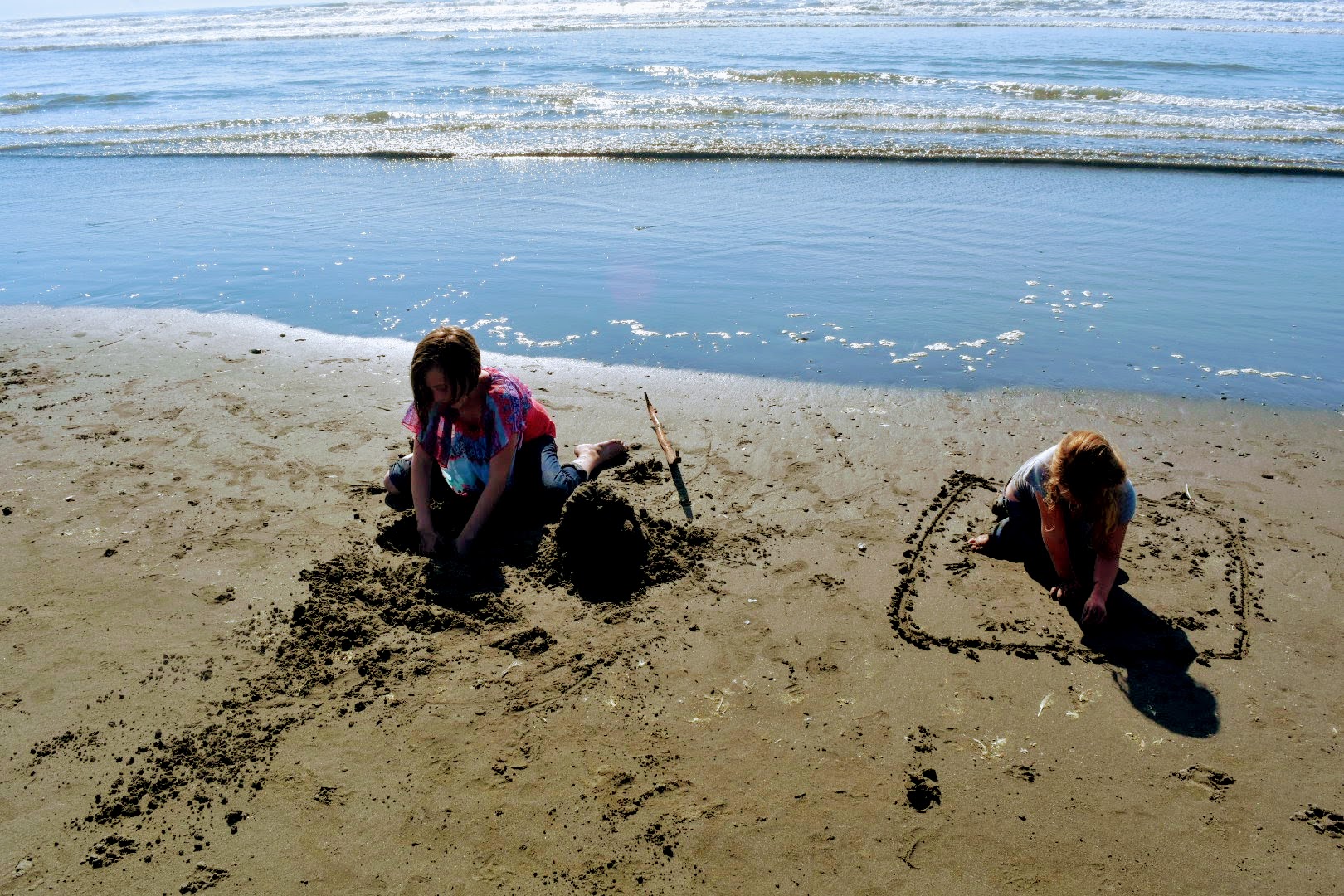
    2) Make Sandcastles on the Beach

    Okay, what’s a trip to the beach without time spent building sandcastles? I happen to believe that no trip to the beach is a success unless your suitcase comes home with a little sand in it.

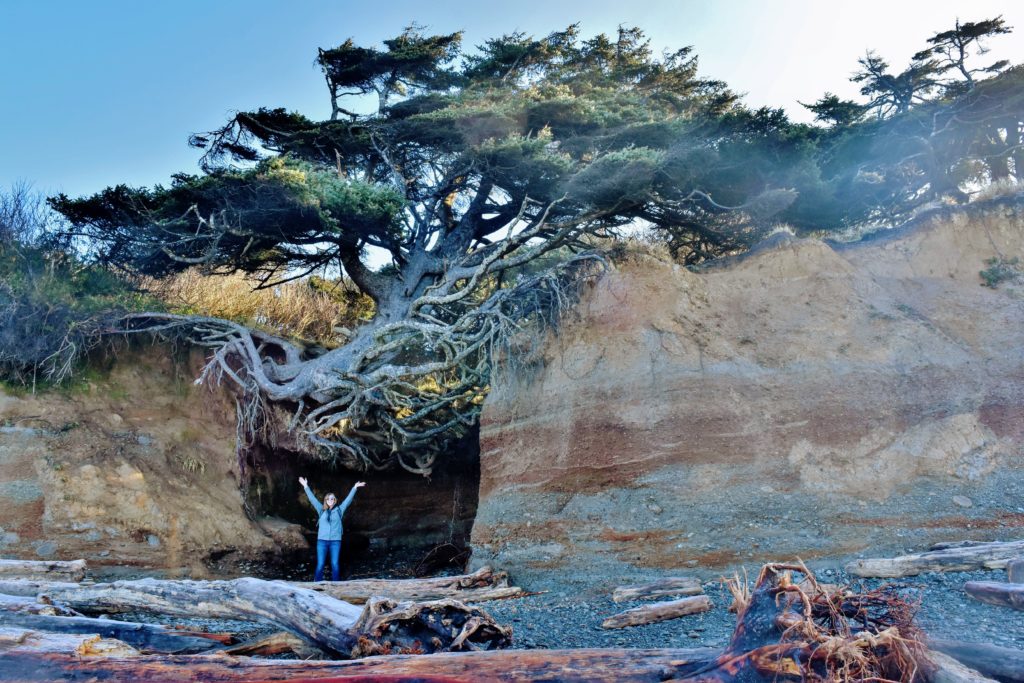
    3) Visit the Tree of Life at Kalaloch Campground

    The Tree of Life is one of the unique treasures found at Kalaloch Campground. It is a beautiful tree suspended above the ground with its roots growing down below.  I’m not sure how long it can continue to hang on against the eroding soil around it, but while it is here, you definitely need to check it out!

    Tree of Life at Kalaloch Campground

    4) Watch the Sunset on the Beach

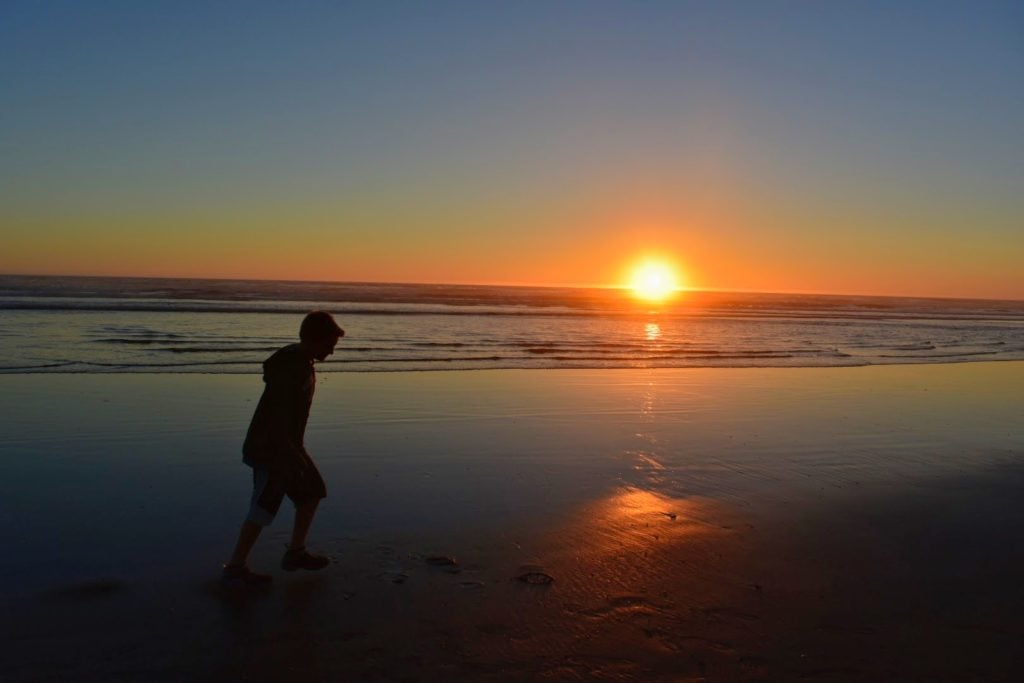
    Sunsets on the beach are beautiful at Kalaloch Campground. You have a vast sandy beach that reflects the light of the setting sun and casts orange and red light across the crashing waves.  I love watching the sunset over the ocean.  Whether I am here or in Maui, I’m a sucker for a good sunset!

    Oh, and in case you’re wondering, sunrises on the beach at Kalaloch are also spectacular! Cotton candy pinks mixed with baby blues reflected off the sand while the sunlight shimmers on the water. You feel the ocean breeze blowing in your face, and the glow of the sun warms you.  Yep, sunrises here are pretty great too!boy walking on beach at sunset

    5) Hiking at Kalaloch Campground

    The Kalaloch Creek Nature Trail connects to Kalaloch Campground. It is a short walk thru the beautiful wooded area surrounding the campground. The hike is less than a mile and is accessed from the campground’s Loop A.  Follow signs and be very careful when crossing Highway 101.

    The rangers also offer guided hikes depending on the time of year you go.  So definitely check in with them to see what is happening while you’re there.  I think it is fun for adults and kids alike to go on a guided walk with a ranger who knows the area. You learn fun facts and interesting information about the local habitat.

    6) Fly Kites on the Beach

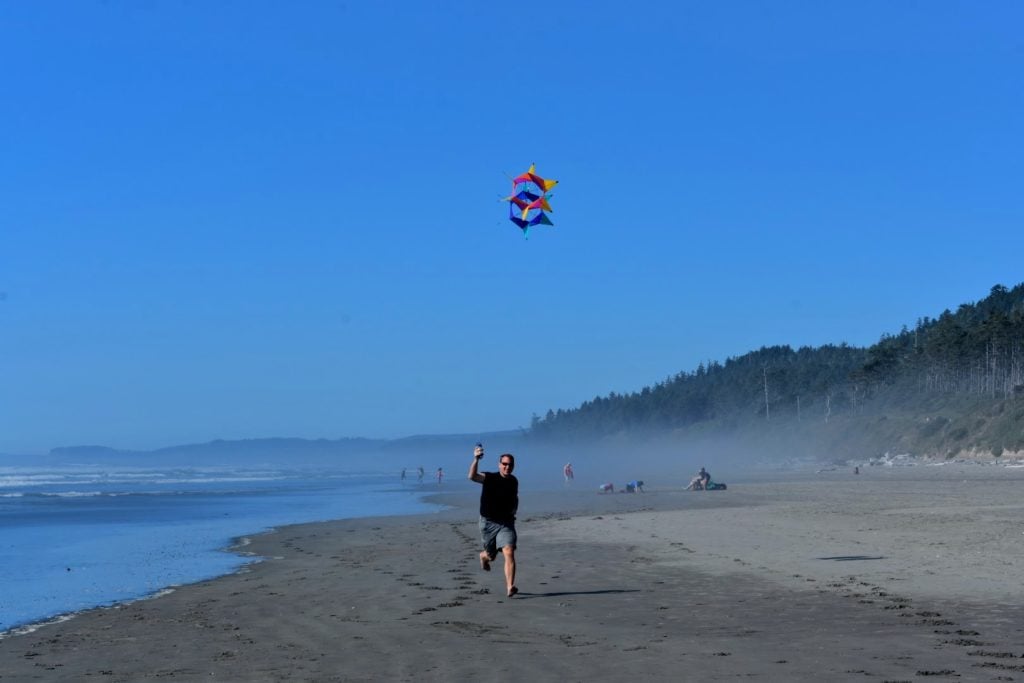
    Plan ahead and pack your kite!  Now sing along with me: “let’s go fly a kite, up to the highest heights…”  Okay, if you haven’t seen the original Mary Poppins, stop reading now, watch it and then come back and finish reading this post.  Flying kites is such a fun family activity, and the beach in front of Kalaloch Campground is perfect for this at low tide. You will have a huge sandy beach to fly your kites to your heart’s content!

    flying a kite on the beach at Kalaloch

    7) Go Stargazing

    One benefit of taking a family vacation away from the city is viewing the stars at night. Away from light pollution, you begin to see the vast sea of stars above you.  Grab a blanket and some hot cocoa and find an open spot to admire these twinkling lights. We have made trips to Kalaloch just for this purpose. 

    My husband loves stargazing, so we bring a small telescope, along with our cameras and tripods and practice our astrophotography. You can stargaze at the Kalaloch Campground day-use parking lot, or if it’s low tide, then the beach makes a great place to bring your thermos of cocoa and blankets.  Just don’t forget your flashlights!

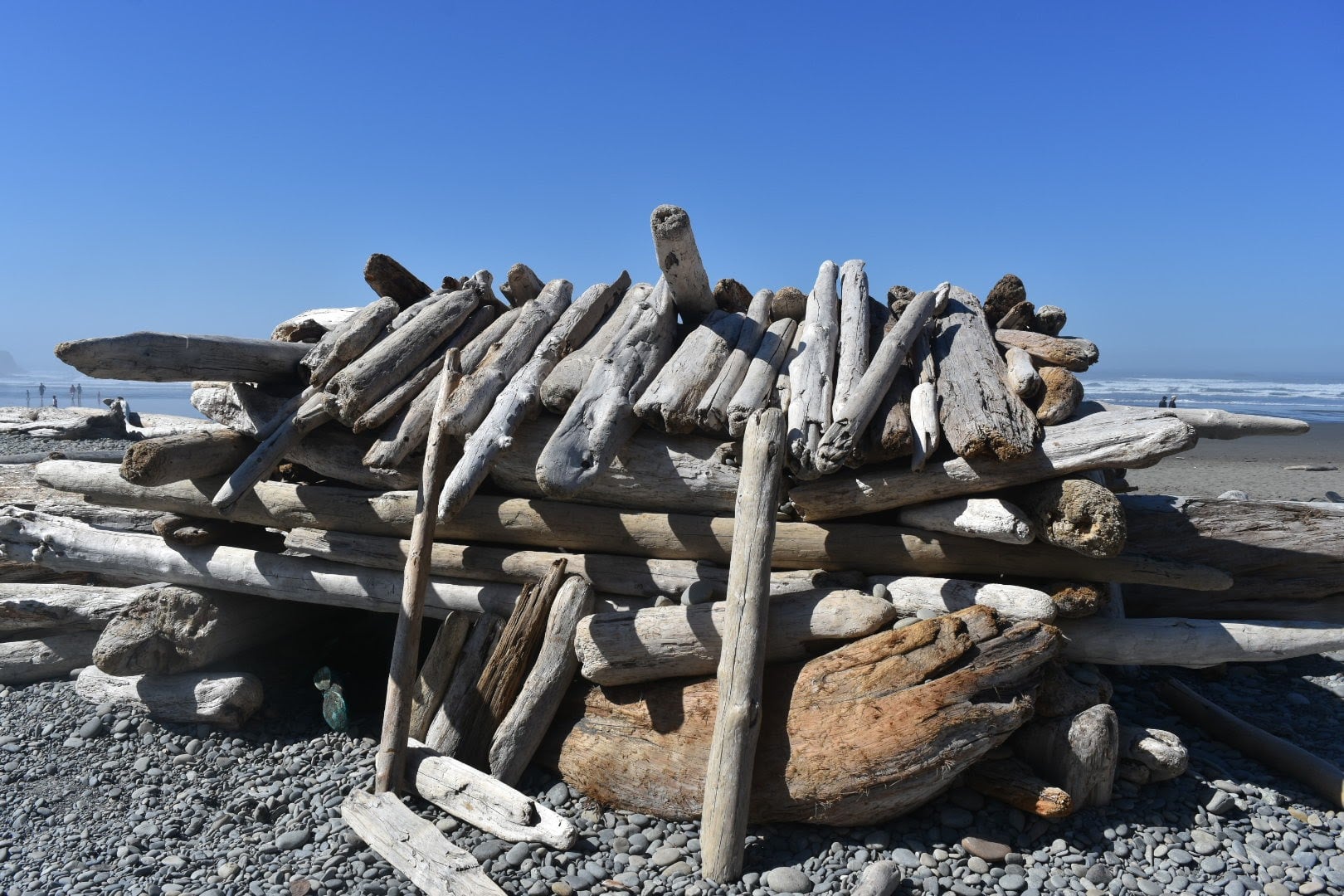
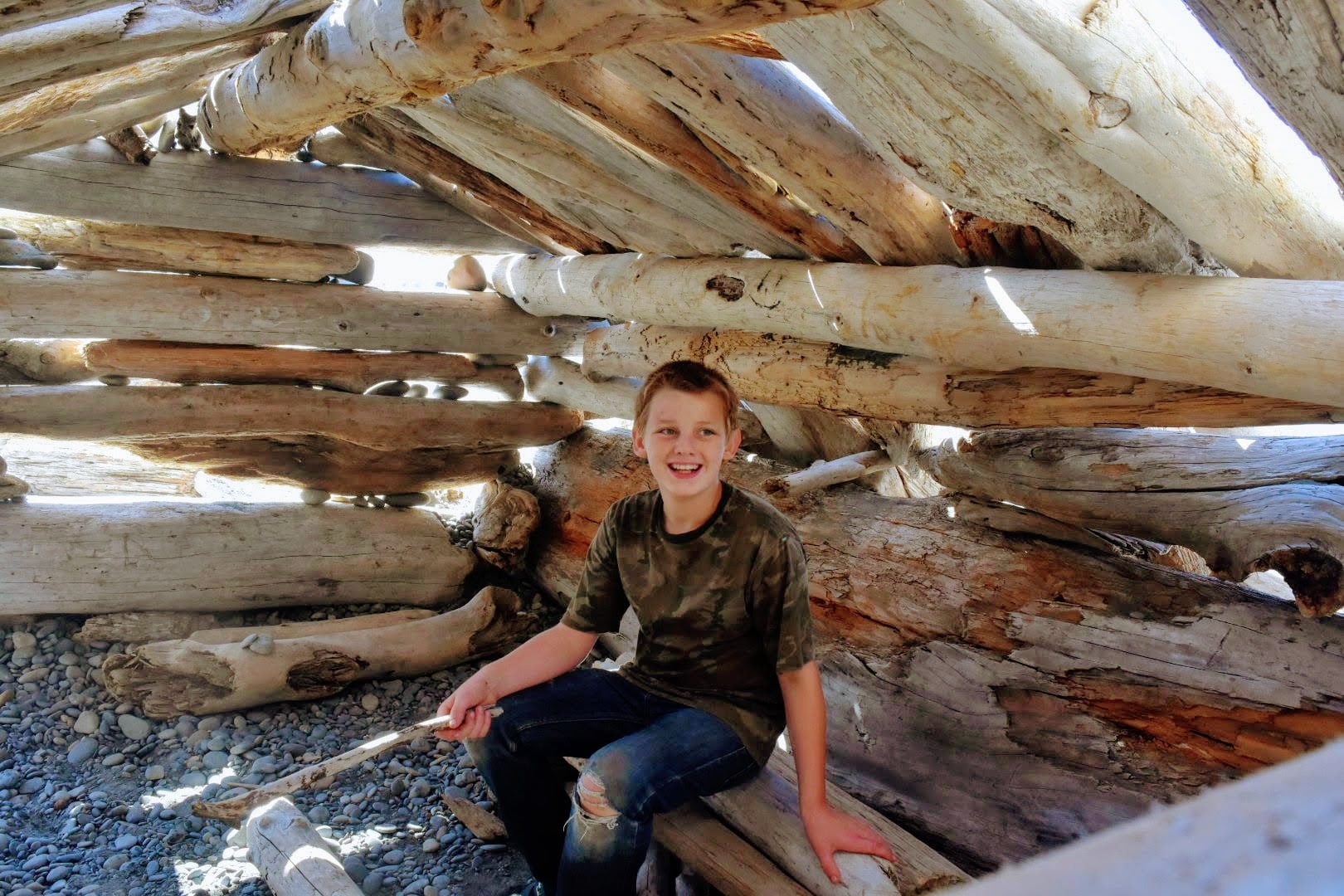
    8) Build a Fort on the Beach from Driftwood

    There is so much driftwood on the beaches surrounding Kalaloch campground, and with some teamwork and ingenuity, perhaps you will build yourself a fort that is discussed inside family circles for years to come! Come on, think big!

    9) Watch Whales Migrating

    Depending on the time of year you can watch grey whales migrating from the beach in front of Kalaloch Campground.  It is so much fun to watch them breach and see water shoot up from their blowholes.  Bring some binoculars so you can enjoy them close up. Typically the months of May, October, and November are the best months to watch grey whales at Kalaloch. However, believe it or not, we got to see them once during a camping trip at the end of August!  So you never know!

    10) Build a Bonfire on the Beach

    Who doesn’t love a good bonfire on the beach? This is the only time you can use driftwood for your fires.  You are not allowed to bring driftwood off the beach to use for your campfire, but you can use it on the beach. So bring your marshmallows and supplies for s’mores and enjoy a bonfire on the beach. Check with the rangers at Kalaloch Campground earlier in the day to make sure there are no fire restrictions during your stay.

    And of course, practice safety and make sure to extinguish your fire before leaving.  Be careful to cover all the hot coals with sand so that no one accidentally steps on them, during their nightly stroll on the beach.

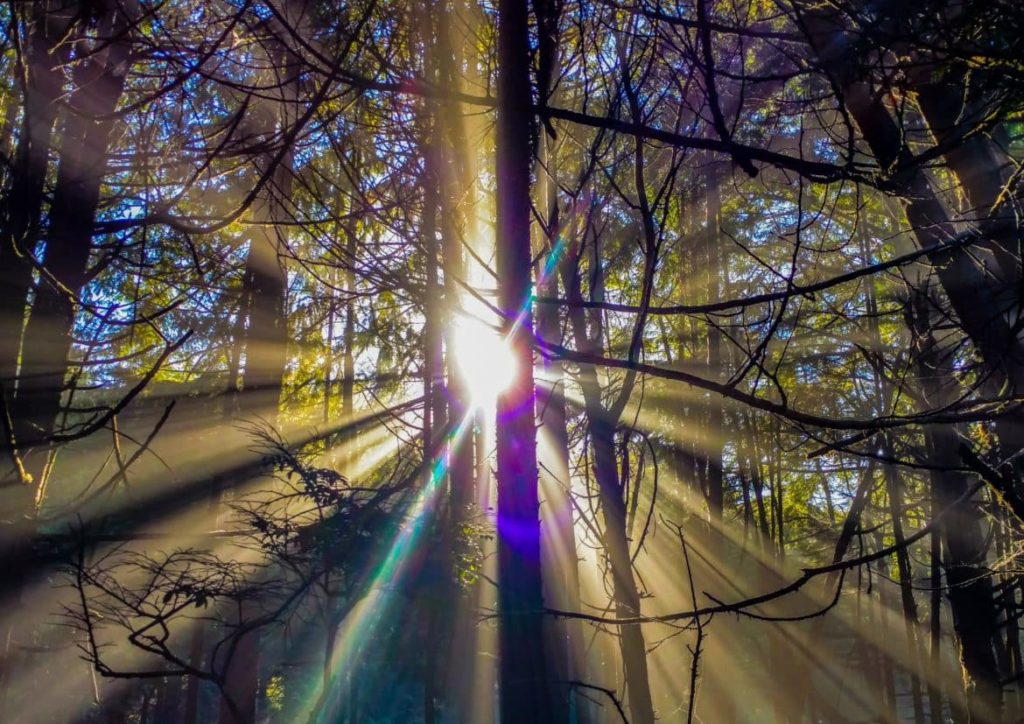
    11) Wake up to Sunlight Streaming thru the Trees

    This is one of the joys of camping. Waking up to the sounds of birds, the smell of fresh air and sunlight streaming in thru the trees.  It says, “it’s going to be a great day!” Everyone starts stirring around; you grab a cup of coffee as you get the fire going for breakfast; it is a magical time in the stillness of the morning.

    Sunlight thru trees at Kalaloch Campground

    12) Biking Around Kalaloch Campground

    If you have the room to bring bikes, this is something fun that kids will enjoy.  Biking around Kalaloch campground.  It is something I see no matter where I go camping.  Kids off on their own adventure just cycling around the campgrounds with the carefree hearts that camping brings. They have huge smiles on their faces, and they are usually laughing and talking with each other.  I have even witnessed young kids who are just learning to ride their bikes for the first time.  It is fun for both them and their parents.

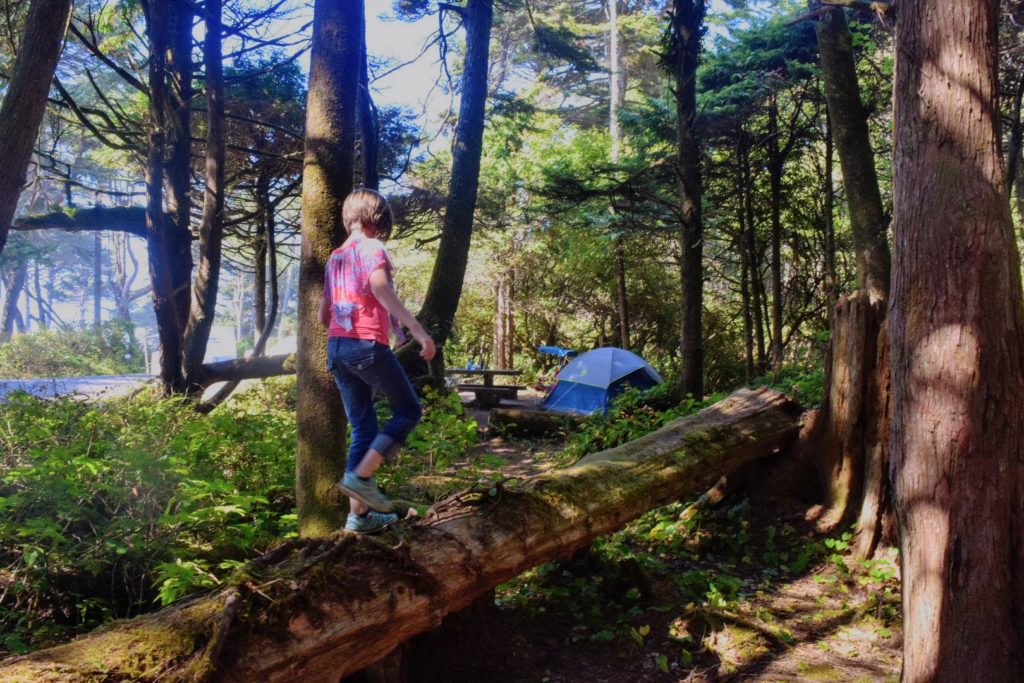
    13) Hanging out at the Campsite

    One of the things kids love to do is hang out at their campsite and explore the area surrounding it. Climbing trees, playing hide-and-seek and of course playing in the tents. I love watching their happy faces as they enjoy being outdoors. It makes the work involved in planning a camping trip all worth it!

    girl exploring area by campsite at Kalaloch Campground

    Important Information for Camping at Kalaloch Campground

    Make reservations in advance! This is a favorite campground for people who live in the Seattle area, and it fills up quick during the summer months. So plan ahead and reserve your campsite months in advance, if possible.  I booked our campsite in May, for an August visit.  The reservation period is from May to September, and you can reserve your spot online during this time frame. During the off-season, they don’t accept reservations. During this time, campsites are assigned on a first-come-first-served basis.

    You can purchase firewood at Kalaloch Lodge which is about a 1/2 mile from Kalaloch Campground. They also have a small store where you can buy snacks, drinks, and miscellaneous supplies you may have forgotten to pack.

    Always check the tide charts posted at the campground when making plans for your daily activities.  You never want to get caught on the beach during high tide.  Besides the strong currents, there are lots of large trees and driftwood that could easily knock a person out if you were to be hit by one.  So know when low tide and high tide are and stay safe!

    Getting to Kalaloch Campground

    Kalaloch Campground is located off Highway 101 about  34 miles from the town of Forks, Washington. It is around 3-4 hours drive time from Seattle. Depending on where you’re coming from you will either head north thru Bremerton and over to Highway 101 or south thru Olympia, cutting over to Highway 101.  I find driving south past Olympia and then cutting over to Highway 101 around Montesano is the quickest way for me.

    Kalaloch Lodge Address is: 157151 US-101, Forks, WA 98331 (Kalaloch campground is about a half-mile north from the lodge.)

    Conclusion

    No matter what you decide to do when visiting Kalaloch Campground, there is a lot to occupy your time and so many fun ways to create wonderful memories with your family. If you need more ideas for things to do near Kalaloch Campground check out these awesome beaches near Kalaloch.

    Happy Camping!

  • Vietnamese Iced Coffee Made Three Ways

    I like to sample the local caffeinated beverage of choice when I’m traveling and although I have yet to visit Vietnam, I tried Vietnamese iced coffee at a Phở restaurant and it was love at first sip! So I decided to learn to make these at home since I liked them so much.  Below I give step-by-step instructions for how you can make this delicious Vietnamese Iced Coffee at home too. 

    In addition to the original Vietnamese iced coffee recipe, I have also included instructions for two additional drinks you can make using variations of this recipe. Soon you will be able to make Vietnamese Iced Coffee, Vietnamese Coconut Iced Coffee, and a delicious Vietnamese Affogato. 

    A Quick Overview

    Vietnamese iced coffee or cà phê sữa đá as it is called in Vietnamese is a strong, bitter robusta coffee mixed with sweetened condensed milk and poured over ice.

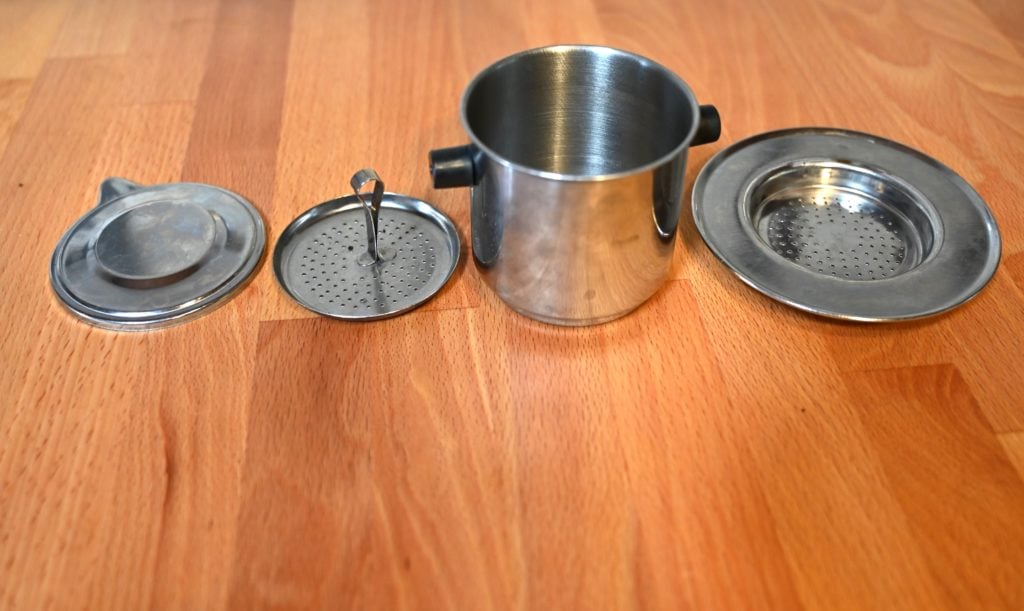
    It uses a special Vietnamese Coffee filter also called a phin. The phin has three main parts: the brew chamber with drip tray, the spreader, and the lid. The brew chamber is where you put the coffee, the spreader is placed on top of the ground coffee and the lid is placed on last after the hot water has been poured over the grounds.

    You can purchase the Vietnamese Coffee Filter/Coffee Maker on Amazon.  And in case you’re not ready to buy one just yet, I will also include tips on how to make this recipe using a French press. So let’s get started!

    Vietnamese phin parts
    From left to right the parts are as follows: lid, spreader, filter and drip tray.

    Vietnamese Iced Coffee Step-by-Step Instructions

    This Vietnamese iced coffee recipe is simple to make.  The thing that sets this recipe apart is the type of coffee you use.  Purchase a medium-coarse ground robusta coffee for best results. Robusta coffee has a strong bitter flavor that pairs nicely with the sweetened condensed milk.  If you want to learn more about robusta coffee, this article does a great job of explaining the differences between arabica (most common) and robusta coffee beans.

    My personal coffee preference for this recipe is either the Trung Nguyen coffee brand or the Cafe Du Monde brand. You can use a French roast as a substitute if you can’t buy the previously mentioned brands. However, you must use a strong flavored coffee. 

    Step 1

    Boil water. The best temperature to use for this recipe is approximately 200º Fahrenheit. I use this tea kettle to boil water and love that it has different temperature settings! I also recommend for all of the following recipes, that you pour a small amount of hot water in your glass or mug and swirl it around.  This will prevent your hot coffee from cooling down too much as it won’t be going into a cold glass.

    Step 2

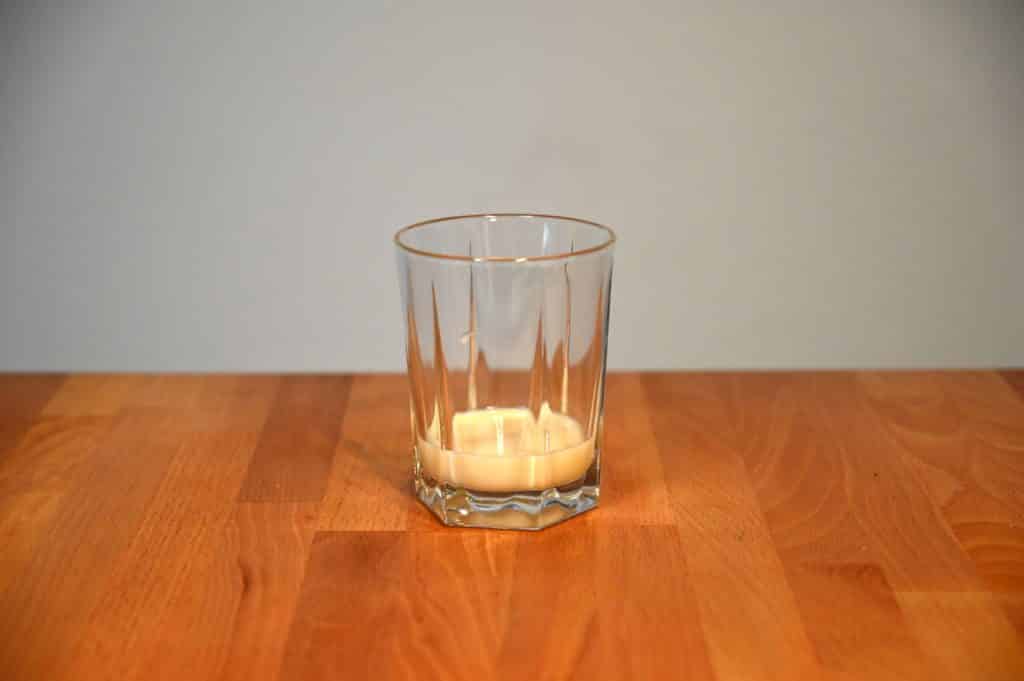
    Prepare a heatproof glass or mug by adding 3 tablespoons of sweetened condensed milk to the glass. You can put more or less sweetened condensed milk based on how strong you want your coffee. The purpose of this step is to offset the bitterness of the Vietnamese coffee.

    glass with sweetened condensed milk
    I typically use about 1/4 inch layer of sweetened condensed milk.

    Step 3

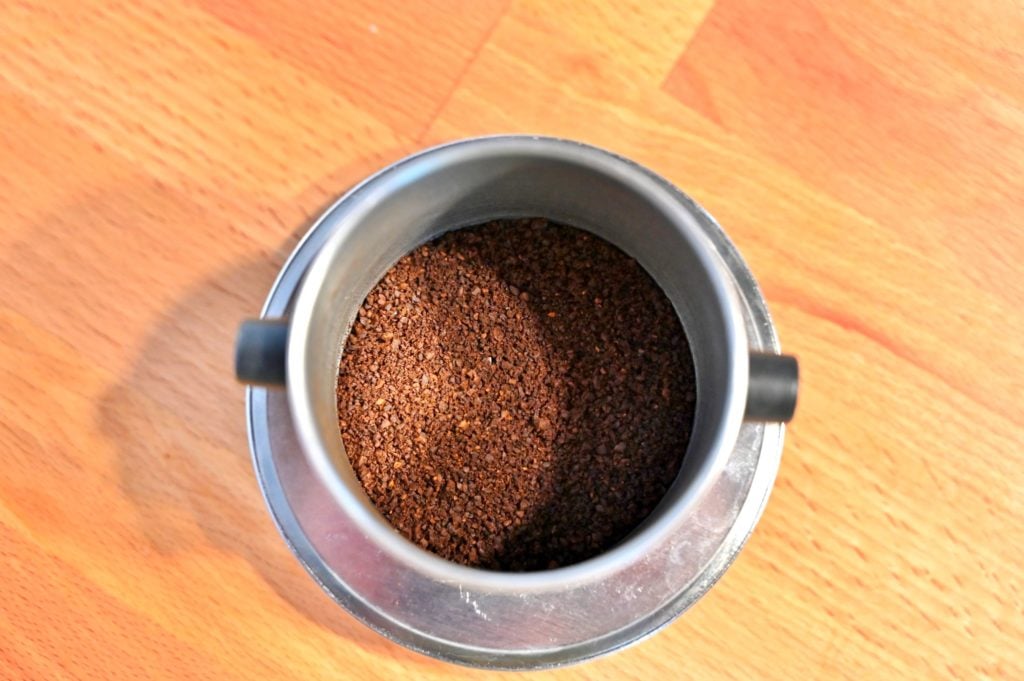
    Add 3 tablespoons (you can adjust to your personal taste) of medium-coarse ground coffee to your Vietnamese coffee filter.

    Vietnamese coffee filter with coffee
    Give your filter a slight shake to even out the layer of coffee grounds.

    Step 4

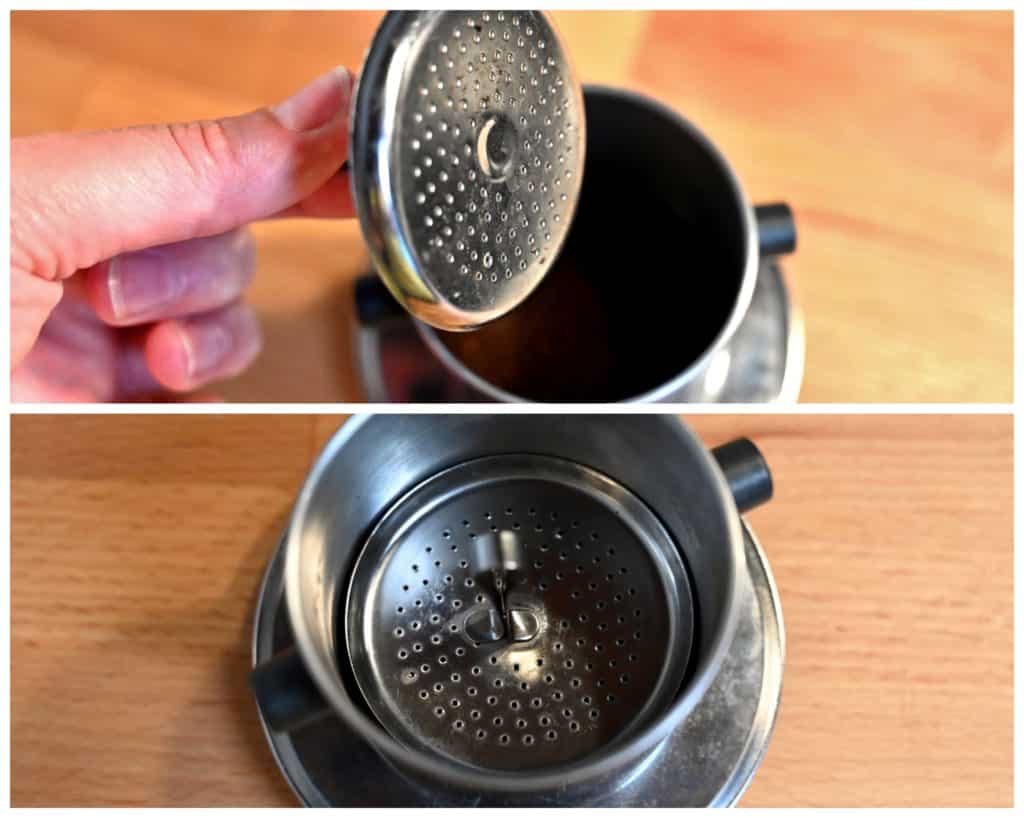
    Place the spreader (see below photo) on top of the coffee and gently press down and give it a slight turn. This is also referred to as tamping. When you tamp coffee you compress it and give it an even layer, this produces a stronger brew. 

    It is important to note that the tighter you pack down the coffee the longer your brew will take.

    Vietnamese phin filter
    I’m holding the “spreader” in the top photo, then I place on top of the coffee before adding in the hot water.

    Step 5

    Place the coffee filter with spreader over the glass of sweetened condensed milk. Then add a small amount of the hot water to the brewing chamber. (Approx. 1 ounce or 2 tablespoons)  Wait about 20-30 seconds for the coffee to “bloom“. This causes the coffee grounds to swell and expand.

    Step 6

    Fill the brewing chamber with hot water to just below the top. Then place the lid on top. Watch as it begins to brew.  It will take 3-5 minutes to finish brewing. (How firmly you packed your coffee as well as how course your coffee is, will affect the brew time.)

    Vietnamese phin filter over cup
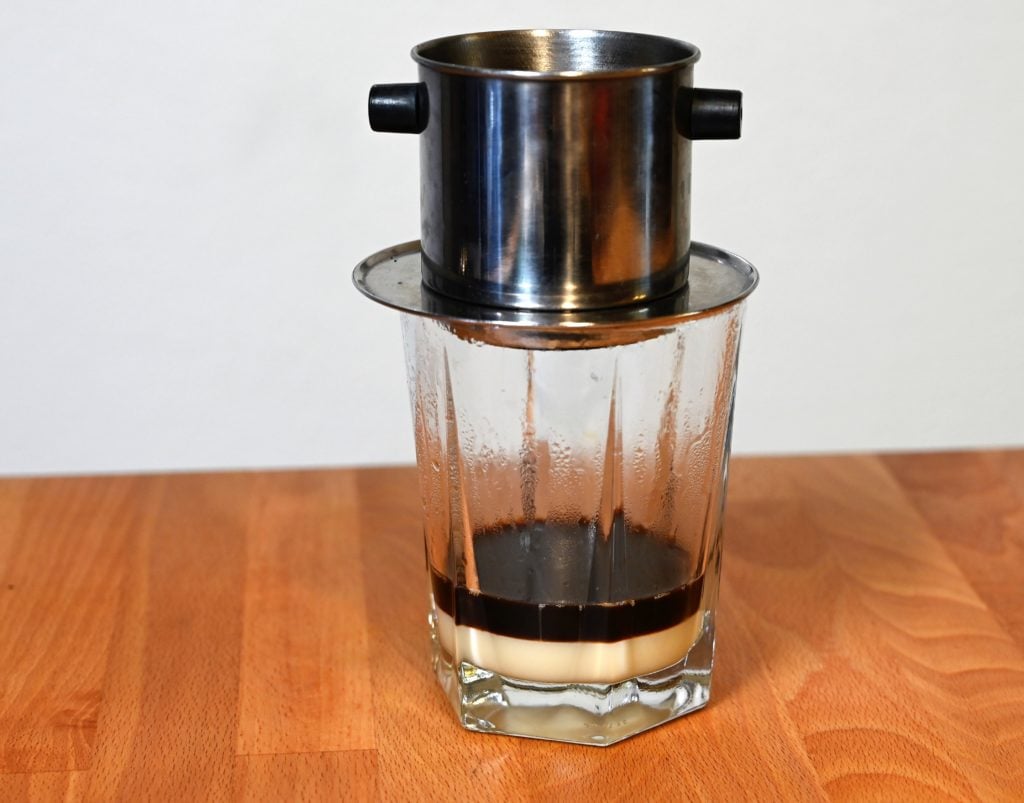
    It’s fun to watch as the coffee drips down into the glass creating the contrasting layers.

    Step 7

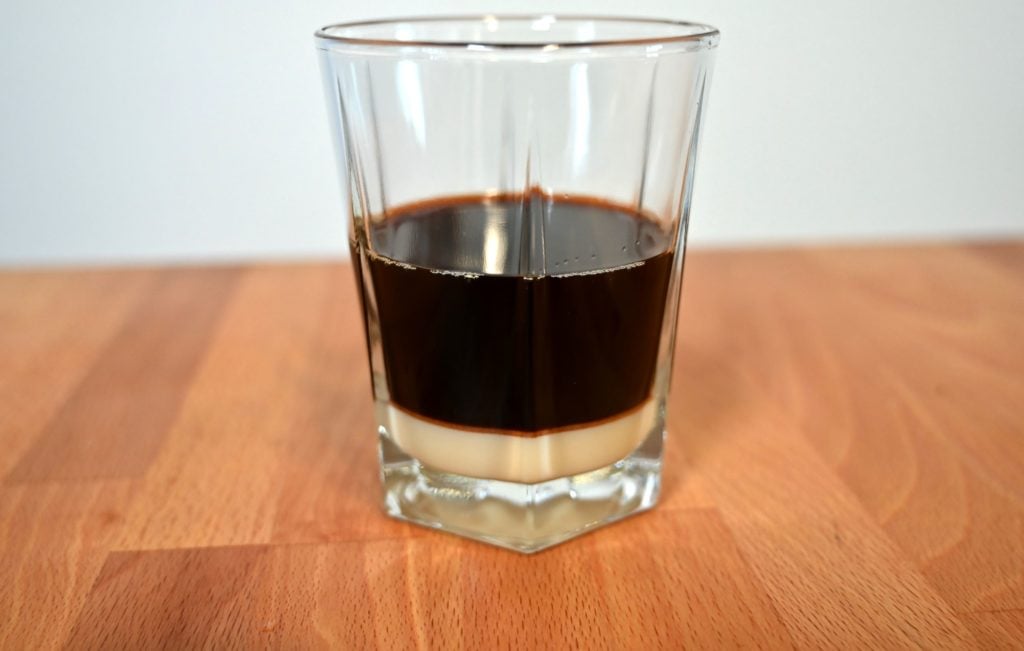
    Once all the water has dripped thru, you will have a beautiful layer of coffee and sweetened condensed milk. Stir the coffee and milk together. Pour over ice and enjoy!

    Vietnamese coffee with sweet milk
    Look at that beautiful layer of coffee and sweetened condensed milk!

    How to Make Vietnamese Iced Coffee with a French Press

    If you don’t have access to a Vietnamese Coffee Filter, you can use a single-serve french press to brew your Vietnamese iced coffee instead. Add 3 tablespoons of coffee to your French press and then add about 3/4 cup of hot water (don’t forget to prime the glass by first swirling a little hot water around in your french press prior to adding the boiling water and coffee).  Let sit for approximately 3 minutes. Then pour into a glass with sweetened condensed milk, stir and add ice.

    You could also use the smallest cup setting on your Keurig K-cup machine (mine is 4 oz) and brew a French roast blend or if you have a re-usable K-cup you could fill it with a Vietnamese coffee.  Then mix this with the sweetened condensed milk and add ice.

    Subscribe to Our Newsletter

    Join Travelffeine today and receive our monthly newsletter with travel tips, latest blog updates, recipes and more!

    Vietnamese Coconut Iced Coffee Step-by-Step Instructions

    This version makes a creamy iced coffee with a hint of coconut flavor. To make this coconut iced coffee you will follow the steps above for making Vietnamese Iced Coffee, but with a few adjustments.

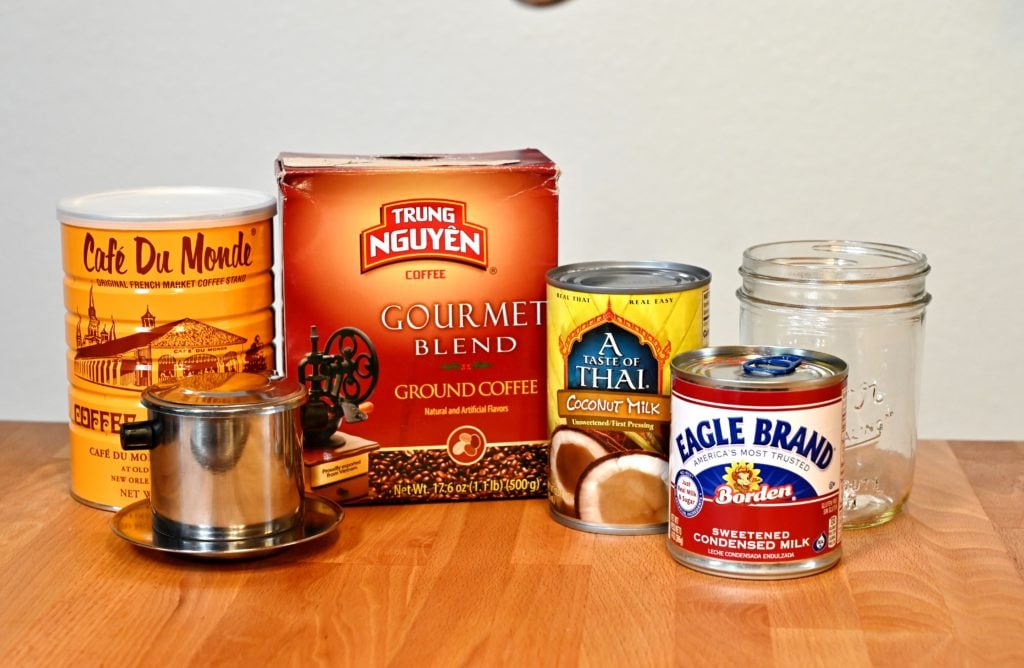
    Vietnamese coconut coffee ingredients
    Here are the supplies I used for this recipe.

    Step 1

    Brew your coffee as instructed above thru step 6 (Do not add the sweetened condensed milk to the glass in step 2 of the iced coffee instructions).

    Step 2

    While your coffee is brewing, in a blender mix together 1 cup crushed ice, 3 tablespoons of sweetened condensed milk and 1/4 cup coconut milk (I stir my can of coconut milk first, so the thick cream and “water” mix together). Blend until a creamy mixture is achieved.  

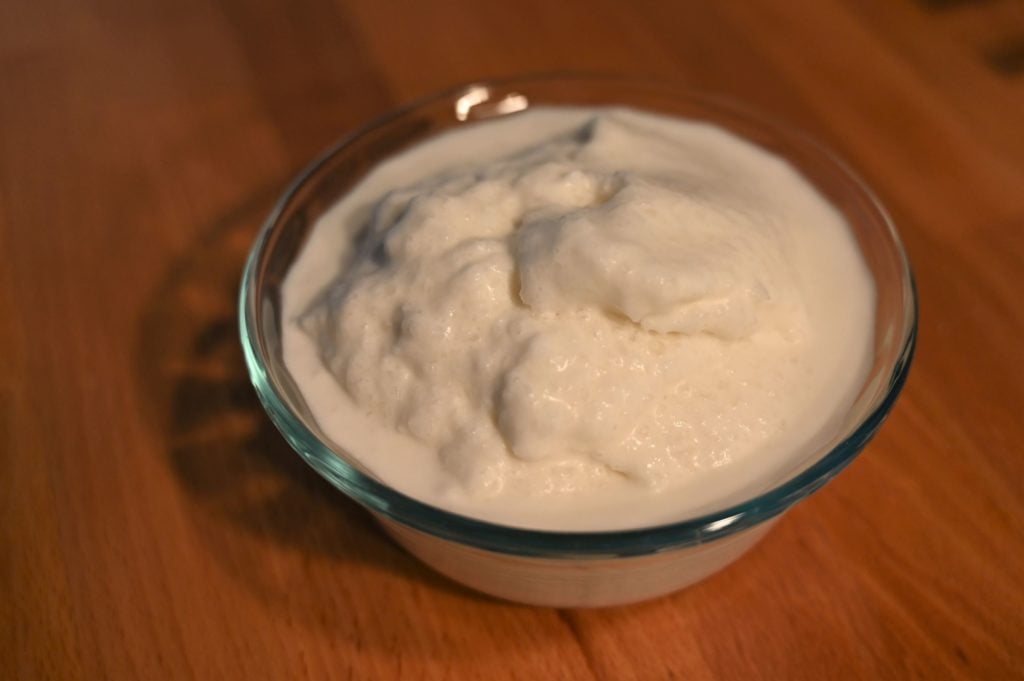
    creamy coconut mixture for Vietnamese Coconut Coffee
    The mixture will look something like this prior to place it in your freezer.

    Step 3

    Place this mixture in the freezer for about 1 hour.

    Step 4

    After about 1 hour your mixture should be more like a soft-serve ice cream texture.  Scoop this out and add to your now cold coffee.  Enjoy!

    Vietnamese coconut coffee
    This creamy coconut flavored “ice cream” mixed with the rich coffee is YU-mmy!

    Vietnamese Coffee Affogato Step-by-Step Instructions

    This variation is the simplest of all.  We’re taking the standard Italian Affogato, which is at the basic level, just brewed espresso poured over vanilla ice cream, but instead substituting the rich flavor of Vietnamese coffee.

    Step 1

    Brew the Vietnamese Coffee as instructed in the Vietnamese Iced Coffee Recipe thru step 6 (Do not add the sweetened condensed milk to the glass in step 2 of the iced coffee instructions).

    Step 2

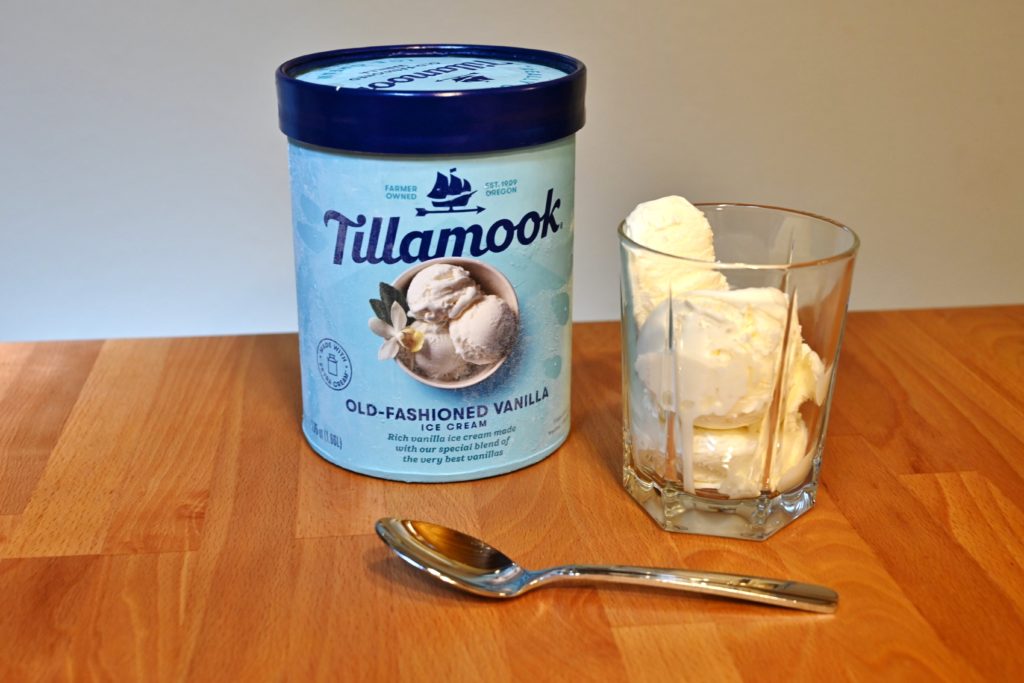
    While your coffee is brewing, take your favorite brand of vanilla ice cream and place two scoops into a glass.

    Tillamook Vanilla Ice Cream
    Tillamook ice cream (and cheese) is a favorite choice here in the Pacific Northwest.

    Step 3

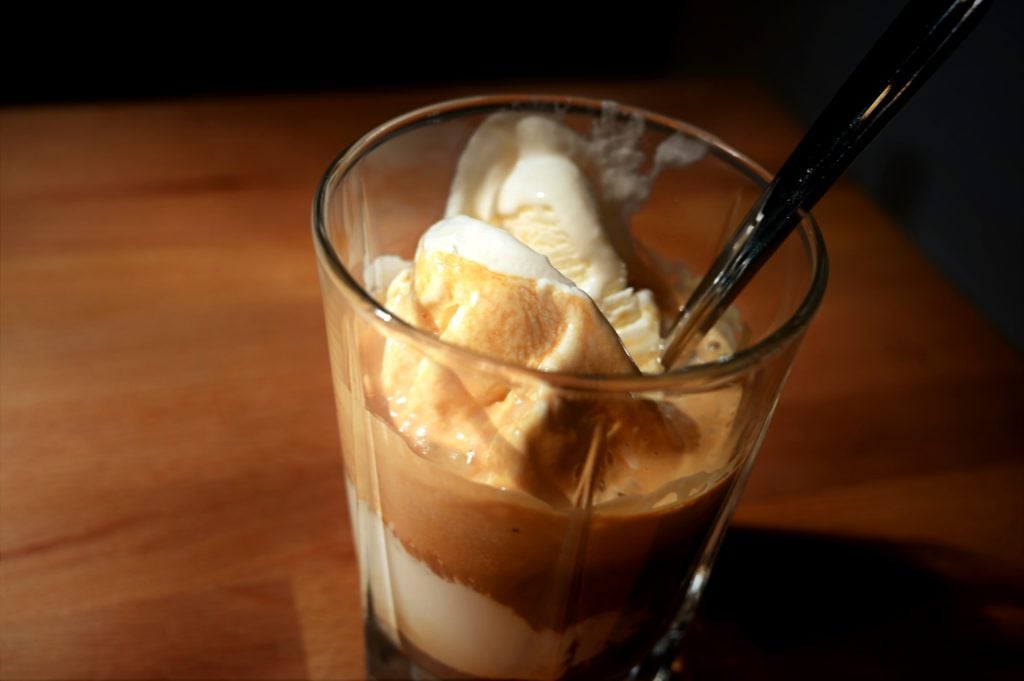
    When your coffee has finished brewing, pour the hot coffee over the scoops of vanilla ice cream.

    Enjoy this easy and delicious dessert!

    *Optional: Add shaved chocolate on top or try a sprinkle of cinnamon for something different. If you really enjoy a strong coffee flavor, I recommend trying this with an espresso ice cream for a real pop of coffee.

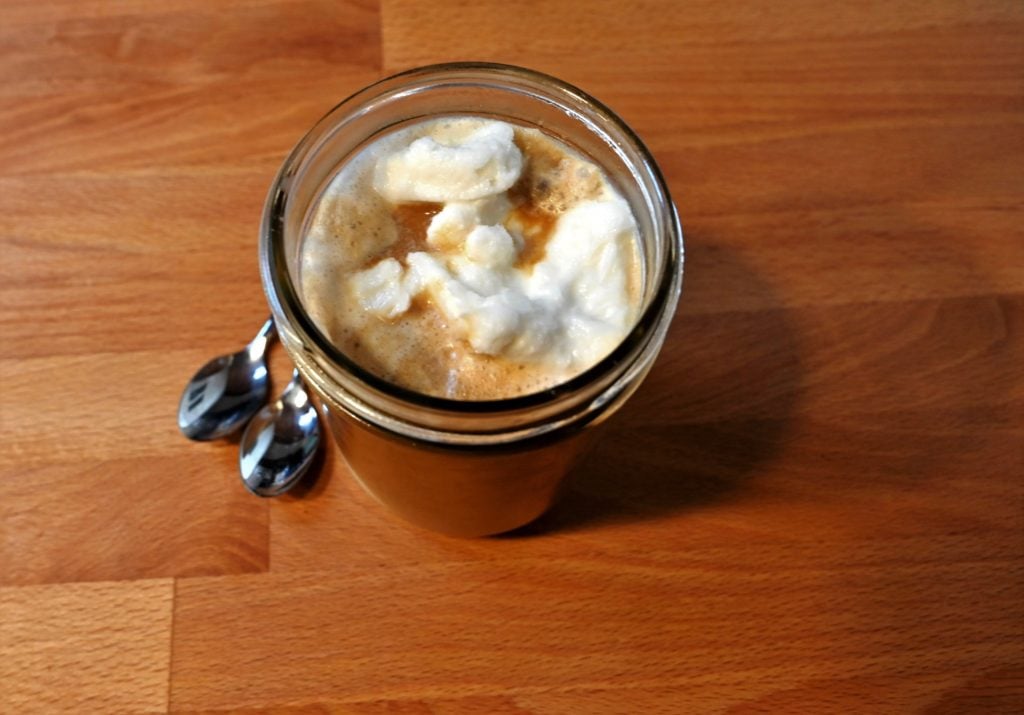
    Vietnamese coffee affogato
    Dessert or drink? You make the call!

    Recipe Tips

    Purchase a Vietnamese Robusta style coffee for the most authentic version.  You can find the Trung Nguyen brand at your local Asian market or online.  Many grocery stores carry the Cafe du Monde brand if you are unable to find Trung Nguyen.

    You can use a French press as explained in the above post to make this recipe if you do not have a Vietnamese coffee filter.

    For the coconut iced coffee recipe, try to find a good brand of coconut milk.  This will make the difference for that coconut flavor.  You may need to try a few brands to find your favorite.

    If you do not have a blender you can serve the coconut coffee over a glass of ice instead. Just mix together the coffee, coconut milk and sweetened condensed milk and pour over ice.

    Happy Caffeinating!

    Printable Recipes Below

    Vietnamese Iced Coffee (cà phê sữa đá)

    5 from 3 votes
    Quick and easy recipe to make Vietnamese iced coffee at home.
    Prep Time 5 minutes
    Cook Time 4 minutes
    Servings: 1
    Course: Drinks
    Cuisine: Vietnamese

    Ingredients
      

    • ¾ cup hot water (200° F)
    • 3 tbsp medium-coarse ground coffee (preferably Trung Nguyen or Café Du Monde Coffee)
    • 3 tbsp sweetened condensed milk (adjust according to taste preferences)
    • 1 cup ice cubes

    Equipment

    • Vietnamese Coffee Filter (phin)

    Method
     

    1. Boil Water.
    2. Add sweetened condensed milk to heatproof glass or mug.
    3. Place the coffee filter on top of the glass of sweetened condensed milk.
    4. Add the coffee grounds to the filter, give a slight shake to even out coffee grounds. Place spreader (filter press) on top of the coffee. Push slightly and give a small turn to tamp down.
    5. Add 2 tablespoons of the hot water to the filter, pouring on top of the spreader.
    6. Wait 30 seconds to "bloom". Fill the coffee filter with remaining water to just below the top.
    7. Place the lid on top of the filter and wait about 4 minutes for coffee to brew.
    8. After the coffee has finished brewing, remove the coffee filter and stir together the coffee and sweetened condensed milk.
    9. Pour over ice and enjoy!

    Notes

    Please see the instructions in the above post for using a French Press to make this recipe if you do not have a Vietnamese Coffee filter (also called a “phin”).

    Vietnamese Coconut Iced Coffee

    5 from 3 votes
    A delicious, creamy iced coffee with a hint of coconut!
    Prep Time 1 hour
    Cook Time 4 minutes
    Servings: 1
    Course: Drinks
    Cuisine: Vietnamese

    Ingredients
      

    • 3 tbsp medium-coarse ground coffee (Vietnamese Robusta coffee is preferred)
    • ¾ cup hot water (200° F)
    • 1 cup crushed ice
    • 3 tbsp sweetened condensed milk
    • ¼ cup coconut milk (mix together the coconut cream and water first)

    Equipment

    • Vietnamese coffee maker (phin)
    • Blender

    Method
     

    1. Boil water.
    2. Place the filter over a heatproof glass. Add coffee to filter and gently shake to create an even layer of coffee. Place spreader (removable filter insert) on top, push down and turn slightly to tamp.
    3. Add 2 TB of the hot water to the filter and wait 30 seconds for the coffee to expand. Then add the remaining hot water to the filter and place the lid on top.
    4. While the coffee is brewing add crushed ice, sweetened condensed milk and coconut milk to a blender. Blend until soft, creamy consistency.
    5. Place mixture in the freezer for approximately 1 hour. After one hour the ice mixture should be a soft ice cream-like texture. Spoon this mixture into your cold coffee and enjoy!

    Notes

    If you don’t have a blender you can serve over ice. Stir together the coffee, coconut milk, sweetened condensed milk and pour over ice.  Add a little shredded coconut for a flavorful garnish.

    Vietnamese Coffee Affogato

    5 from 3 votes
    Enjoy this Italian treat served with the rich flavor of Vietnamese coffee.
    Prep Time 5 minutes
    Cook Time 5 minutes
    Servings: 1
    Course: Dessert, Drinks
    Cuisine: American

    Ingredients
      

    • ¾ cup hot water (200° F)
    • 3 tbsp medium-coarse ground coffee (Vietnamese Robusta blend is best)
    • 2 scoops vanilla ice cream

    Equipment

    • Vietnamese Coffee Filter (phin)

    Method
     

    1. Boil water.
    2. Place the coffee filter over a heatproof glass.
    3. Add coffee to the filter, gently shake to even out the coffee. Place spreader on top, push down and turn slightly to tamp.
    4. Add 2 tablespoons of the hot water to your filter and wait 30 seconds to let the coffee "bloom" or expand.
    5. Fill the filter with the remaining hot water to just below the top. Then add the lid to the top of the filter and wait about 4 minutes for the coffee to finish brewing.
    6. Add two scoops of a good quality vanilla ice cream to a heatproof glass. When the coffee has finished brewing, remove the filter and pour hot coffee over ice cream and enjoy!

    Notes

    Use a Vietnamese robusta style coffee for best flavor. Trung Nguyen brand or Cafe du Monde coffee make for great choices.  Also use a good quality vanilla ice cream with lots of flavor.  Feel free to add some shaved chocolate on top for some extra flavor. 
  • My Favorite Olympic Coast Beaches near Kalaloch

    If you were to ask me to recommend a place by the ocean, but close to Seattle. I’d tell you to drive to the Olympic Coast. And then I’d share with you my favorite spot to visit year after year, for the past 20 years. It is my happy place near Seattle, my ocean fix when I can’t travel to Maui.

    My favorite go-to spot on the Olympic Coast is Kalaloch. It is a beautiful area about 40 miles south of Forks, Washington. I fell in love with the whole area around Kalaloch on my first visit. It has some of the most beautiful beaches along this stretch of coastline. Windswept trees, ocean-carved rocks, and incredible forests of old-growth cedars.  I am positive if you visit, it will become a favorite of yours too.

    Top 5 Olympic Coast Favorites near Kalaloch, WA

    Kalaloch Beach and the Tree of Life

    Just below the Kalaloch Campground and Kalaloch Lodge is Kalaloch Beach. This long, wide, sandy beach is perfect for a leisurely stroll or a morning run. Make sandcastles with the kids, have a bonfire or if you’re lucky enough, watch whales as they surface just beyond the shoreline. And the bonus for this beach is an incredible tree that is often overlooked.

    It is called the Tree of Life.  The tree is suspended above the ground with its roots hanging down below.  You can walk underneath the tree and admire its unique beauty.  It is a rare sight and should not be missed when visiting the Olympic Coast.

    Location: The Tree of Life is located down a short trail from the Kalaloch Campground parking lot. Walk down the trail in front of the parking lot and make a right at the bottom.  Walk just a little further down the beach and you will see it on the right.

    Tree of Life tree suspended above ground
    Don’t miss this incredible tree! You never know how long it can keep hanging on.

    Kalaloch Beach 3

    In addition to Kalaloch Beach, heading north along Highway 101 you will see signs for Beach 3.  Kalaloch Beach 3 has some fantastic rock formations for climbing and exploring the tidepools. Wander along the coast and admire all the uniquely shaped driftwood that has come ashore with the latest tide.

    Location: Approximately 3 miles north of Kalaloch Lodge on Highway 101.  Look for signs for Beach 3 and a little pull-off area alongside the road. Kalaloch Beach 3 only has a dirt area to pull off on the side of the road and park.  Then you follow a trail down to the beach.  Make sure you’re wearing good shoes for walking as it can get a little steep.

    Tip: Always check the tide charts before heading out.  Besides the strong currents along the Olympic coast, entire trees are washed ashore and the waves are full of debris.  If you need help understanding the tides and when it is safest to explore the beaches ask a Park Ranger, they will be happy to help!

    huge stump at Kalaloch beach 3
    So many beautiful pieces of driftwood along this beach. This tree must have been huge!

    Kalaloch Beach 4

    Kalaloch Beach 4 has tidal pools, incredible rock formations, and a small “island” (for lack of the proper word) for climbing just off the beach (only accessible at low tide).  At low tide, you can climb up to the top of this island (only advised for older kids and fit adults) for views of the beach and the Destruction Island lighthouse. Even if you don’t feel comfortable making the climb, the tidepools are fun to walk around, with sea anemones, barnacles, and starfish.

    To reach the best of the tidepools, you will cross the bridge at the end of the trail (small children will need help getting down) and then turn right and walk up the beach, past a bunch of rocks in the water and around the tip of land that juts out. You will see the large landmass rising out of the water and a bunch of smaller rocks around it. The kids will have a blast exploring here!

    Kalaloch Beach 4 has the best parking of the numbered beaches.  It also has restrooms and picnic tables.  It is important to know that at the bottom of the trail there is a bridge that was built using some of the rock formations as a platform.  This creates a somewhat difficult descent to the actual beach. You need to be able to climb down some rocks at the end of the bridge. It is probably around a 3-foot difference from the bridge to the beach. For most this will not be a problem, but for those with mobility issues, it is not recommended.

    Location: A little over 3 miles north of Kalaloch Lodge. Or about a 1/2 mile past Kalaloch Beach 3 up Highway 101. Look for the Beach 4 sign and you’ll see a pull-off to the paved parking area and trailhead.

    A view of Olympic coastline
    View from the top of the “island” on Beach 4 with tide pools.

    Ruby Beach

    If I had to choose only one of these Olympic Coast beaches to visit on a single trip, I’d probably choose Ruby Beach.  It is hard to choose one as they all offer something special.  Ruby Beach is a gem though.  See what I did there?  Okay, sorry, but it is really is such a treasure.  Okay, that was the last one, I promise.

    Ruby Beach is full of colorful driftwood and it has an inlet of water that is protected at low tide so even children can splash around in it. Ruby Beach also has an island that is only accessible at low tide.  It is a beautiful stretch of beach, perfect for spending a few hours during low tide. My family always enjoys exploring the island and the boulders that surround it, looking for colorful starfish and crabs darting around.  It is so much fun!

    Location: Approximately 8 miles north of Kalaloch Lodge. Watch for signs for the Ruby Beach turn-off.  You will turn down a dirt road and follow it to a large dirt parking area where you will see a trailhead sign for the beach and lookout areas.

    Ruby Beach on Olympic Coast at high tide covered in water
    Ruby Beach at high tide in the winter. You can see the little island thru the trees to the left. At low tide, this is a sprawling sandy beach perfect for exploring.

    The Giant Cedar Tree

    Okay, I know this one isn’t a beach, but I had to list it since it is in such close proximity to these beaches and because these trees are just too beautiful to miss. First up on this trail you will find the Big Cedar Tree. Unfortunately, it has partially fallen, but it is still a magnificent tree to admire, straining your neck to gaze upward at it’s top.

    When your neck stops hurting, continue down the trail to find more stunning trees, some of which had to be the inspiration behind the Keebler Elves treehouse.  This is a very easy flat trail and makes for a fun variation to your beach time on the Olympic Coast.

    Location: About 4 miles north of Kalaloch Lodge. You will pass Kalaloch Beach 3 & Beach 4 and go about one mile. You will see signs for the turn-off, follow the dirt road all the way to the end and park near the trailhead.

    Looking up at a huge cedar tree.
    These old-growth cedars have so much character.

    Where to Stay on the Olympic Coast

    The wonderful thing about Kalaloch is its close proximity to Seattle. In a little over 3 hours, you can go from the city to the rugged Olympic Coast. It makes a great getaway no matter what time of year you go.

    Kalaloch Lodge

    In the winter I stay in the cabins at the Kalaloch Lodge, also a part of the Olympic National Park. In addition to their cabins, they also have rooms in the lodge. You need to make reservations in advance. It is such a cozy spot to stay, especially in the winter. The cabins come with fireplaces stocked with wood and the lodge has a warm fireplace with comfy chairs.  The park rangers are always willing to share advice on places to hike or see closeby.  And if you get a chance to have breakfast at the Kalaloch Lodge, you absolutely have to try their Dungeness crab benedict. It is SO good!

    Address: 157151 US-101, Forks, WA 98331

    Kalaloch Beach Campground

    In the summer I like to camp at Kalaloch Campground.  It is one of two campgrounds within the Olympic National Park that accept reservations.  You will need to book these out well in advance though, as word has got out about this incredible spot on the Olympic Coast.  They do have a few first come first served spots. So if you want to try to snag one of those, I’d say to come early on a weekday for your best chance at getting a spot.

    Location: Approximately 1/2 mile north on Highway 101 from Kalaloch Lodge.

    Tip: If you can’t get a spot at Kalaloch Campground, you can always try South Beach Campground which is south of Kalaloch Campground.  You won’t have the beautiful forested sites, but you’ll still get to fall asleep to the sounds of the ocean.

    How to Get Here

    You can either come around from the North thru Bremerton and Port Angeles. Or down and around from the South passing by Olympia before cutting over.  Typically going down towards Olympia and then cutting over to the coast is the fastest way.  It will depend on your starting destination and time of day.  Use the above Google Map to get directions and plan your trip.  You can always drive in one way and back the opposite to see new scenery.

    Important Things to Know

    Kalaloch and all the areas I have mentioned are within the Olympic National Park, which means no drones are allowed. You can build a fire on the beach using driftwood, but you cannot collect driftwood for your campfire. Always check with the rangers first to make sure there are no fire bans in place.

    One of the most important things is to always check the tide charts! Make sure you know when it will be low tide and when it will be high tide.  Then make sure you get off the beach with plenty of time to spare before high tide.  The ocean is powerful and along the Olympic Coast, it is full of enormous logs and other driftwood materials.  Watch from high above the coast where it is safe.

    Perfect Getaway to Make Some Memories

    The Olympic Coast makes a perfect place for a family vacation or weekend getaway. Kids and adults alike will enjoy exploring the tidepools, sorting through beach wood and looking for the perfect rock souvenir.  It is so much fun! On the Olympic Coast, you get the best of Western Washington — the trees and water all in one beautiful place.

    Happy Beachcombing!

  • 6 Ways to Save Money While Traveling

    Let’s face it, most of us don’t have an unlimited supply of money, so we use a budget to plan the things we want to do.  And for me, I want to travel, so if that means I eat pb&j sandwiches a few times to have one more day of vacation, I’ll do it! There are things you can do to save money when planning a trip, but there are also a lot of ways to save money while traveling too.

    Below I have listed six of the ways I save money while traveling. I use these options for all my travels. Whether it’s a trip to Disneyworld, Maui or Europe, these tips work for all travel destinations. And the great thing is they save you not only money, but also time, and that’s the best kind of savings you can get!

    1) Save on Breakfast

    Free Breakfast

    An easy way to save money while traveling is to book a hotel that includes free breakfast. This will save you time and money in the morning as you won’t need to search for a breakfast spot before starting your day.

    Pack it From Home

    Another great way to save money while traveling is to pack your own breakfast. I like to pack oatmeal packets from home. Most hotels or Air BnBs will have either a tea kettle or a coffee maker that you can use to heat the water for the oatmeal. This is so quick, easy, and cheap!

    Go to the Grocery Store

    If you are staying in one place for at least a few days, buy some groceries. Bread with peanut butter and jam, gives you toast for breakfast and sandwiches for lunch later in the day. A carton of eggs or milk and cereal also make great options depending on what kitchen equipment you have in your room.

    Make Coffee in Your Room

    And of course, don’t forget your coffee. Pack instant coffee, or bring ground coffee from home. I often pack a French Press from home. This saves me time and money. I can always have another coffee when I’m out sightseeing, but this allows me to enjoy a cup of coffee in my room before I head out. Plus most hotels and BnBs offer a coffee maker. Buy your coffee local and sample some new roasts.

    Oatmeal packets and single use french press
    I pack these instant oatmeal packets and this single-serve French Press.

    2) Pack a Lunch

    Get Easy to Go Options & Make in Your Room

    As I mentioned above, a fantastic way to save money while traveling is to buy some groceries at the local grocery store. Peanut butter and jelly sandwiches are so easy to make and to pack. I love having these as a go-to meal, whether it’s a long day at Disneyworld or a hike in the Swiss Alps. They are not only adult-friendly but kid-approved too!

    Pack Snacks

    Fruit, nuts, and jerky. These three combinations can make for a quick snack or a meal. Buy some apples, bananas, or try a new local fruit. On a recent trip to Thailand, I tried mangosteen, and it became an instant favorite of mine! Nuts and jerky offer portable protein options that can quickly be eaten on the go. Carrying snacks can also give you the energy boost you need to keep going. Typically our blood sugar drops, and we feel a slump in energy, this makes us tired, and often a little cranky.  A well-timed snack can eliminate this problem.

    3) Book the Right Hotel or Air BnB

    Get a Room with Kitchen Amenities

    Since I’ve mentioned ways to save money by packing snacks and food, getting the right hotel goes along with this. Book a hotel that has some kitchen amenities in your room. Whether this is just a microwave and small refrigerator or a fully stocked kitchenette, you can save so much money if you can eat some meals in your room as well as prep and store meals to take on the go.

    Location. Location. Location.

    Research the location of your accommodations. Often it is worth spending just a little more per night to get a room that is within walking distance to your sights or at least one that is close to public transportation. Although you might be spending a little more upfront, you will save money on travel costs at your destination.

    Do Your Laundry

    Another great way to save money while traveling is booking accommodations with laundry facilities. I know, doing laundry while traveling does not sound fun, however, if you pack light, you can save money on checked baggage fees and you’ll save time spent waiting for your bags at the luggage carousel. You might be surprised just how quickly baggage fees can add up!

    4) Walk or Use Public Transportation

    Walk Away the Pounds

    Okay, in my case, I’m walking away the latest macaron or local baked good I’ve just eaten. I see walking while traveling as an added health benefit, as well as a great way to see the sights. Instead of spending your money on taxis or even car rentals, try walking to the sights. If you plan ahead and book a hotel near the tourist attractions, you will save money on taxis and car rentals, and it is a wonderful way to explore the city you’re in.

    Public Transportation

    Use public transportation whenever walking is not possible, or perhaps it’s just too far, or you’re too tired. Buses, subways, and trains are great ways to save money when traveling. The good news is that if you’re traveling outside the US, it is often more convenient to use public transportation than driving.

    Discount Passes

    Often there are additional money saving options provided to tourists, like rail passes and tourist transit passes. I purchased the Eurail Pass before a recent trip to Europe, and it saved me so much money on train tickets.  The same went for my trip to Japan. They have a special Japan Rail pass only purchasable by tourists, and it’s an incredible saving! In Lisbon, they had city passes that also included all forms of transportation around the city. Make sure to research in advance, and also ask about any discount passes available at the local tourism center or your hotel.

    Pedestrians walking on Budapest Bridge
    Walking across this bridge in Budapest gave me views I wouldn’t have seen from a car.

    5) Research Free Activities

    The Best Things in Life are Free

    Research free activities, such as free museums, farmer’s markets, hiking trails, snorkeling, local parks, free walking tours, etc. Include a couple of “must-see” sights that cost money, but mix in other free activities so that you’re not spending money on every activity, every day. And I think you’ll discover that some of the free things will turn out to be your favorite experiences.

    Discount Cards

    Look for coupons and discount activity cards. Some cities offer multi-day passes, like these City Passes, that includes all of the major tourist attractions for a discount. These can be a great way to save money when you have a lot of major tourist attractions that you want to see, but they all cost money.

    For all of these types of discount cards, you will first want to make a list of the places you want to see, then calculate the individual ticket costs and compare with the price of the discount card to determine if it will save you money or not.  In some cases, it does not make sense, and you are better off paying the individual ticket prices.

    6) Talk to the Locals

    Where Do They Eat

    One of the best ways to save money while traveling is by reducing your food costs. A great way to do this is to find out where the locals eat. Go off the beaten path and look for restaurants where the menu isn’t in English, or restaurants filled with locals. This usually means the food is good, and it is more reasonably priced.

    What Are Their Favorite Activities

    Ask locals what their favorite activities are, what hikes or parks they might recommend. You will not only get some great advice on seeing their city, but you will also have a chance to learn more about the local culture, and perhaps even make a friend. And that is one of the most valuable things you can get from traveling.

    I hope this list helps you save money and stick within your budget. Sometimes, it’s the little things that add up to significant savings. It can make the difference in more time or provide the money for those special experiences you couldn’t afford otherwise.

    For more ways to save, check out Book Your Flight & Find the Best Deals. And as always I’d love to hear from you in the comments below or send me an email if you have any questions or comments you’d like to share.

    Happy Saving & Happy Travels!

  • Best Maui Beaches for Snorkeling and Swimming

    One of the top things to do when vacationing in Maui is to go to the beach! It is the primary reason most people visit Maui and the Hawaiian islands. This article will go over the best Maui beaches for both snorkeling and swimming. There are some incredible beaches in Maui, but just because one is good for snorkeling, doesn’t mean it’s also good for swimming and vice versa. So I am here to share some of my favorite beaches in Maui no matter what you want to do. Most of the beaches in Maui that I list here are located in West Maui. So plan ahead if you are commuting from South Maui.


    *How to use this map: Click on the star next to “Best Maui Beaches” and save this to your personal Google maps or click on the icons to pull up more info and driving directions.

    Best Maui Beaches for Swimming

    D.T. Fleming Park

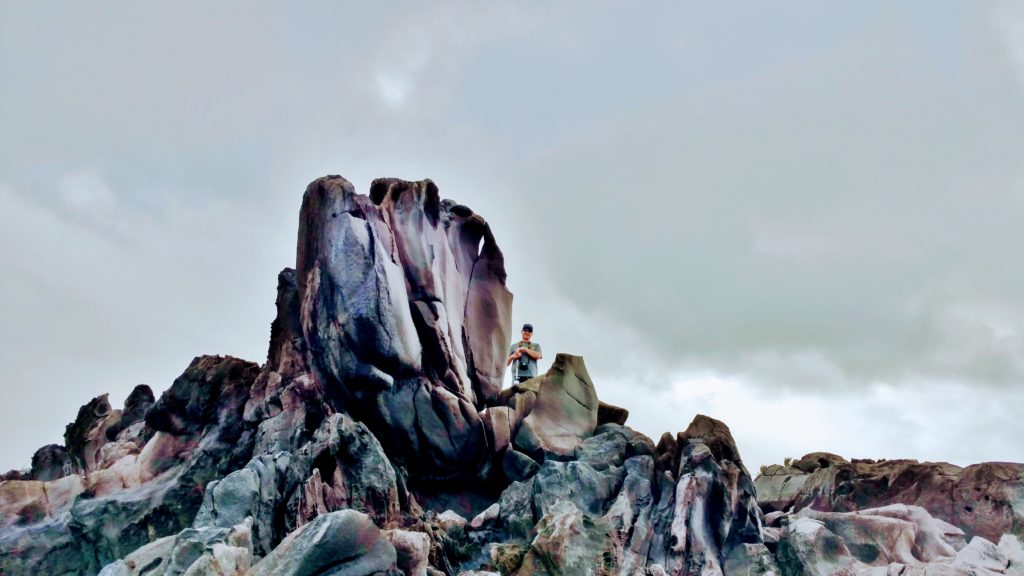
    This park is a great place to spend the day. It has shade trees at the back of the beach, picnic tables, BBQ grills, restrooms and lifeguards on duty. There is also the Burger Shack for food, and if you want, you can walk up to the Ritz-Carlton and eat at The Banyan Tree restaurant. D.T. Fleming Park also connects to the Dragon Tooth Trail which has beautiful views of the ocean and some incredible volcanic rock formations. It is a favorite stop of mine for any Maui itinerary. It has a beautiful stretch of white sand perfect for sunbathing. Make sure to bring your beach gear and enjoy one of the best beaches in Maui!

    Address: Lower Honoapiilani Rd, Lahaina, HI 96761

    Tip: Check out Maui Babe’s browning lotion and after browning lotion (I use this for sunburns too). It works great! And make sure you always wear sunscreen!

    Napili Bay

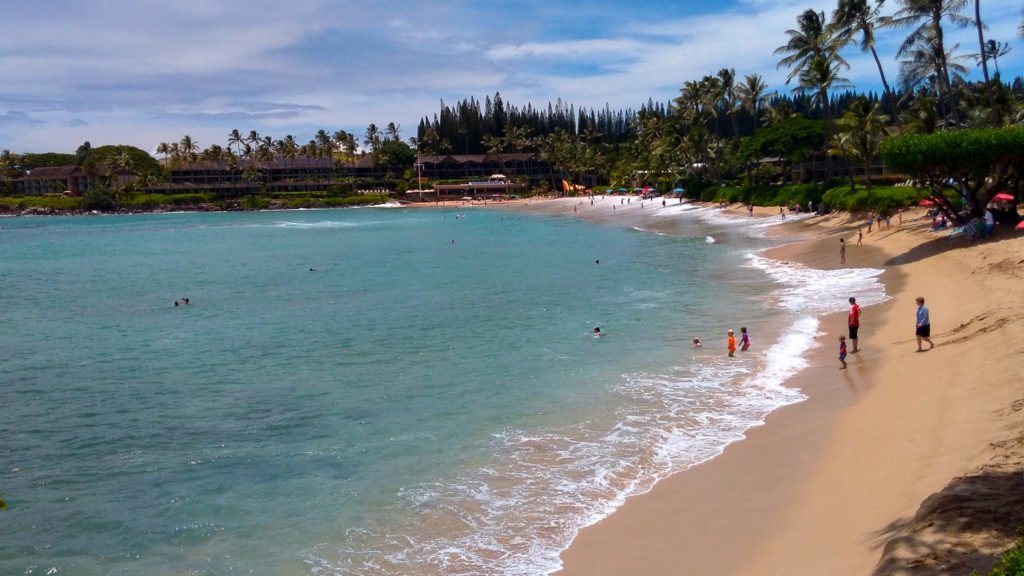
    This is a beautiful stretch of beach! It is on my list of best Maui beaches because of its sandy beach, and mostly rock-free water (in the center, not on the sides). It is located next to my favorite breakfast spot in Maui! The Gazebo restaurant. Just thinking of those piles of hot pineapple macadamia nut pancakes have my mouth watering. Depending on the time of year you visit, the waves can get really big. I mean REALLY big.

    It is so much fun to body surf here, but be safe and respect the ocean’s power. When the weather is calm, it is a perfect place to go for a swim. I suggest you grab breakfast at The Gazebo, then drive over to Napili Bay and snag a good spot on the beach. You can relax here while you let your breakfast settle. There is parking for Napili Bay on the street leading down to the beach. The limited parking is probably the one drawback of this beach. However, you can usually find a spot along the road and then it is just a short walk to the end of the road where you’ll find the trail to the beach.

    Address: 53 Hui Dr, Lahaina, HI 96761

    Napili Bay in Maui
    Napili Bay. Keep your belongings as high up on the beach as possible to avoid getting wet. Even then, it may not be high enough.

    Pohaku Park

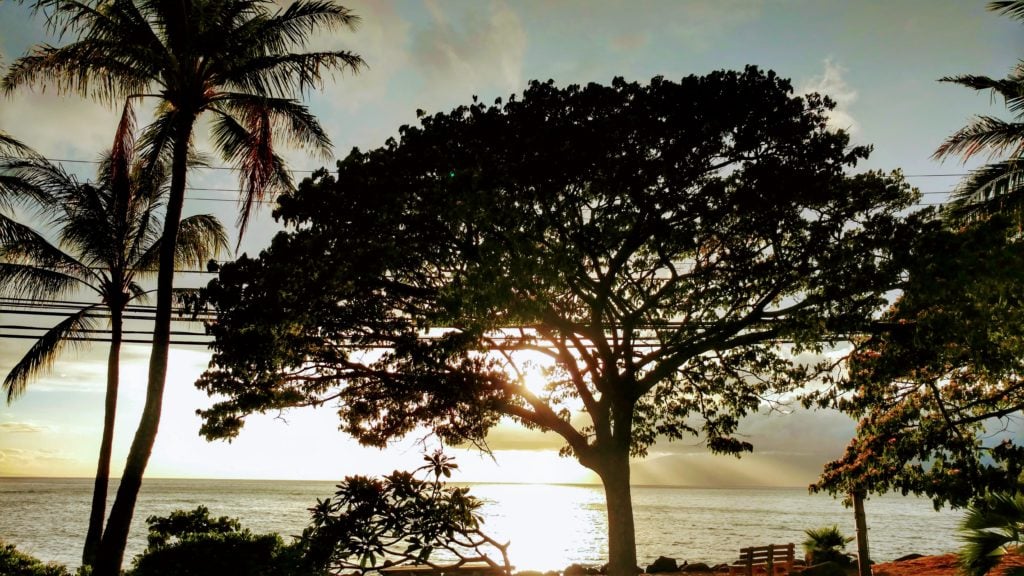
    This small park is sometimes referred to as S-Turns. It is a great place to watch the sunset and sits across from the island of Molokai. It is also a great area to go whale watching in the winter months. And sea turtles are often frequently spotted here. For swimming, I recommend you swim to the right of the park to avoid the rocks. Kahana Beach, which is just to the right of Pohaku, is a great stretch of beach for swimming. You will see the Kahana Beach resort next door to Pohaku Park.

    There is a public access trail to Kahana Beach in between the Kahana Beach resort and the Sands of Kahana. This long sandy beach is great for swimming! It gets deep immediately in front of the Kahana Beach resort, but if you have kids or prefer a shallower entry, move a little further down the beach in front of the Sands of Kahana, and you’ll have a shallow entry.

    Address: 4085 Lower Honoapiilani Rd, Lahaina, HI 96761 (*Pohaku has a few picnic tables and only a porta-potty for a restroom)

    Trees at Pohaku or S-Turns Park
    Pohaku Park at sunset.

    Best Maui Beaches for Snorkeling

    Kapalua Bay

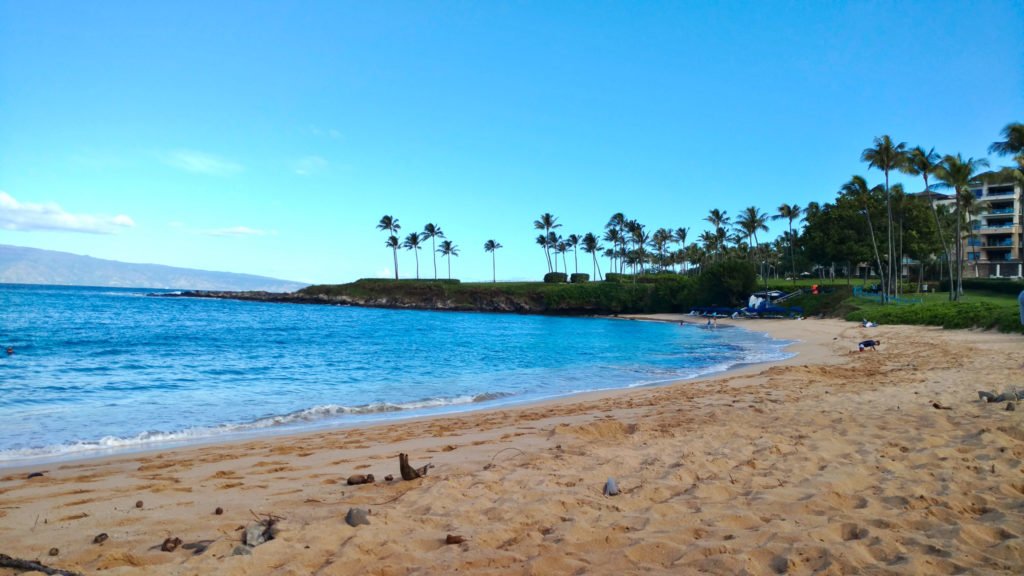
    Just a little further north from Napili Bay is Kapalua Bay. I go to this beach every time I visit Maui. It has excellent snorkeling (go in the morning) and such a picturesque setting. There are restrooms as well as an outdoor shower. It has a nice sandy beach with a few shady spots, plus it is alongside the Kapalua Coastal Trail so if you get tired of laying on the beach, you can go for a beautiful “hike” along this trail.

    I think this beach is a little too rocky for swimming, but it is a favorite for snorkeling. I’ve seen turtles, eels, and all sorts of colorful fish here. They also rent kayaks and stand up paddleboards.

    Address: Kapalua Coastal Trail, Lahaina, HI 96761

    Kapalua Beach Maui
    Kapalua Beach in the morning before the crowds arrive.

    Tip: Snorkel early in the morning between 7 a.m. to 11 a.m. for the calmest and clearest snorkeling conditions.

    Honolua Bay

    Honolua Bay is an amazing snorkel spot in a marine life conservation area. It’s a bit of a drive to get to this protected bay, but it’s worth the trip! You have a short walk through a “jungle” before reaching the rocky beach. This is not your typical sandy beach either; it is covered in rocks, so be careful as you enter the bay. Its limited facilities and rocky beach make it best suited for snorkeling.

    Snorkeling is best on the right side of this protected bay. You have to swim about 600 feet offshore to get to the reefs, so I recommend you wear a life vest if you have any concerns at all about swimming that far. Plus sometimes it is very shallow over the vast reefs, so I like a life vest as it helps me float over the reefs and avoid touching them.

    There are portable toilets at the beginning of the trailhead, but no other facilities at the beach. Make sure you’ve got all your essentials packed in a beach bag, including good walking shoes.

    Address: Bay Drive, Lahaina, HI 96761

    Tip: Purchase a rashguard before coming to Maui. You will be so grateful to have this extra bit of sun protection when you’re out snorkeling for hours at a time.

    Olowalu

    Olowalu at mile marker 14 is another excellent option for snorkeling. You can book kayak tours here or rent a stand-up paddleboard and paddle out to the reef. The best snorkeling is about 100 feet offshore. So I would recommend bringing a life vest. There is also a blacktip reef shark nursery here; however, I have gone here multiple times and have never seen one. I have, however, seen turtles and plenty of interesting coral and colorful fish. Afterward, get some of the best pie in Maui at Leoda’s Kitchen & Pie Shop. I highly recommend the banana cream pie and coconut cream pie.

    Address: Olowalu, look for dirt parking at Mile Marker 14. Leoda’s: 820 Olowalu Village Rd, Lahaina, HI 96761

    Lava rocks at Dragon's Tooth Trail by D.T. Fleming Park
    Lava rocks at Dragon’s Tooth Trail near D.T. Fleming Park. It’s easy to see where the name came from.

    Best Maui Beaches for Both Snorkeling and Swimming

    Ka’anapali Beach & Black Rock

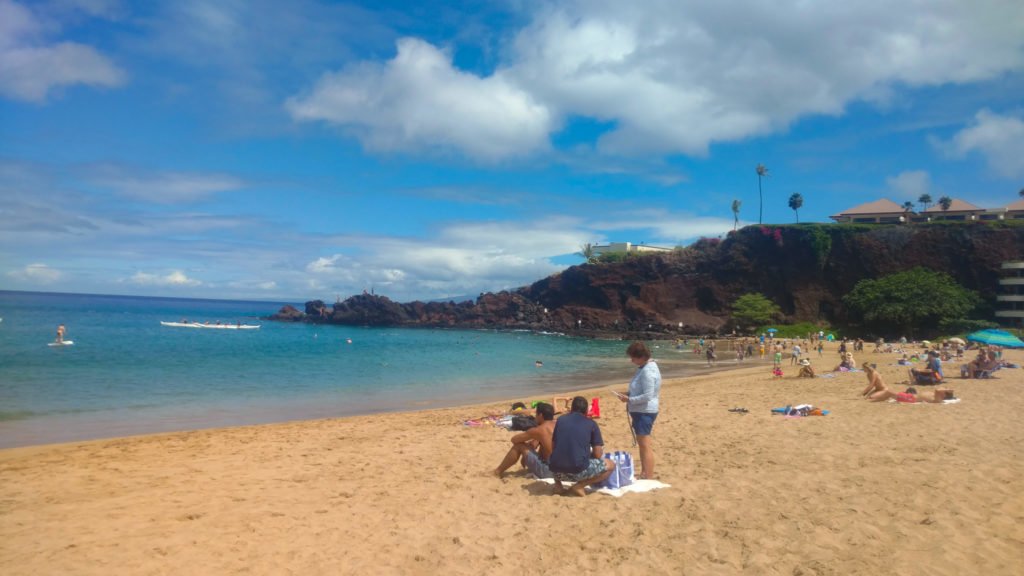
    This is one of the largest and most popular beaches in Maui. This beautiful sandy beach stretches for almost a mile. It is also where the famous Black Rock is located. Get an early start and snag a free parking spot if you can. There are a few public parking areas scattered along Ka’anapali Pkwy. Look for beach access signs near the parking garages to find your way to the beach. Additionally, you can park in the parking garage for Whalers Village, where you can get a 3-hour validation if you purchase something at one of the stores.

    There is excellent snorkeling at Black Rock when the conditions are calm. Just be careful as this area can also get some massive waves and currents near the rock. Watch the adventurous people who make the climb up Black Rock to jump off. Be careful if you are snorkeling and keep an eye on those jumping to make sure you don’t get in their way. I have seen eels, shark, turtles, octopus, and lots of fish all around Black Rock. Even if the snorkeling isn’t great during your visit, it is still a spectacular beach for swimming and sunbathing.

    Ka’anapali is the perfect beach to spend the day. Sunbathing, swimming, snorkeling, and reading your favorite book are all perfect ways to spend the day here. There are also lots of restaurants and places to eat at Whalers Village, in addition to shopping. So make a day of it!

    Address: 2525 Kaanapali Pkwy, Lahaina, HI 96761 (the beach is in front of a row of resorts, look for public parking signs along the Ka’anapali Pkwy)

    Black Rock at Kaanapali Beach Maui
    Black Rock at Ka’anapali Beach. Snorkeling is best near the rock and around the tip. Just be careful of the currents near the rocks.

    Kamaole Beach I, II or III

    The Kama’ole beaches are a great set of South Maui beaches in Kihei. You will enjoy easy access to good food and shopping in addition to some of the best Maui beaches. Each beach offers its mix of swimming and snorkeling. I think Kama’ole I and Kama’ole II are better for snorkeling than III.

    There are lots of unique lava rock formations in the water where you’ll find all sorts of fish, turtles and perhaps even an octopus all curled up. The beaches also have showers, bathrooms, and lifeguards. Depending on the time of year, you may find these beaches better for boogie boarding than snorkeling or swimming. They are worth checking out when in South Maui.

    Address: S Kihei Rd, Kihei, HI 96753

    Tip: Make sure you purchase reef safe sunscreen. In 2021, Hawaii will implement a ban on the sale of sunscreen containing the coral-harming chemicals oxybenzone and octinoxate.

    Maui Sunset looking across at the island of Molokai
    Maui Sunset looking across at the island of Molokai

    Funny Beach Experience You May Wish to Avoid

    In case you’re as “lucky” as I was, to be on the beach in Maui on the first working day of the month, you may hear a loud siren. Yep, I was in the water snorkeling to my heart’s content at Kama’ole Beach II when I heard this loud siren go off. My first thought was “SHARK!” You have never seen anyone swim so fast to the shore! My husband says I pushed a young boy out of the way in my hurry, I, of course, deny that. Everyone in the water was scrambling for the beach like mad!

    By the time I made it to the beach, I had overheard a local Hawaiian telling a visitor that it was “just” a tsunami drill. I am sure they are entertained each month to watch visitors race for the shore each time they test this essential warning system. I appreciate that they have the system in place, and honestly when my heart stopped trying to pound out of my chest, my friends and I all had a good laugh at each other and our moment of panic. It’s funny, but the thought of a tsunami didn’t scare us as much as the thought of a shark did!

    What to Bring to the Beach

    snorkel gear (rent or pack from home)
    sunscreen
    bug spray
    water bottles (I like to freeze some the night before)
    chapstick
    snacks
    rashguard (the Hawaiian sun can be brutal)
    hats
    beach umbrella (most condos supply these)
    beach mats & towels
    underwater cameras
    good book
    sandcastle building set
    beach bag
    swimsuit cover-up
    flip-flops
    sunglasses
    picnic lunch (optional)
    beach ball
    baby shampoo (use this inside your snorkel goggles to keep them from fogging)

    Final Thoughts

    Maui has many incredible beaches. As always, please make safety your priority. Don’t swim or snorkel alone; it’s always nice to have a buddy. When in doubt, stay out. If the waves look too big, or the situation doesn’t feel right, don’t go in. Ask a local, read weather reports, and take the necessary precautions to give yourself the best possible trip to Maui.

    This list of beaches is what I consider to be the best Maui beaches for swimming and snorkeling. However, you should discover for yourself your favorite Maui beach. You’re going to want to return, so why not begin creating your future list of favorite places. If you’re like me, Maui will soon feel like your home away from home.

    A hui hou! (Until we meet again!)

    best Maui Beaches
    Best Maui Beaches
  • Road to Hana: An Unforgettable Maui Day Trip!

    The Road to Hana is one of the best day trips you can take while in Maui.  No Maui itinerary would be complete without including the road to Hana. The drive is an adventure in itself. It has 620 curves in its short 52 miles!  You will see gorgeous waterfalls, hike thru dark lava caves, walk across black sand beaches and so much more!

    How to Plan for the Road to Hana

    Plan the whole day for your drive to Hana. Make sure and get up early to beat the crowds and tour buses. You won’t regret getting an early morning start when you have one of the many waterfalls all to yourself. Also, the sooner you go up, the more time you have to enjoy all the stops along the way and still be able to make it down before dark.  I think you’ll find, it’s a road you prefer to drive in the daylight.  So first things first, fuel up!  There is only one gas station in Hana, so fuel up before heading up the mountain.

    Getting to Hana

    It’s about 1 hour to mile marker zero from Lahaina and around 40 minutes from Kihei.  The beginning of the road to Hana starts just outside the town of Haiku. Haiku is where my recommended supply stop, Jaws Country Store, is located. You can use the embedded map below to get driving directions from your hotel or condo and plan for how long it will take you to get to the starting point. Even though it may only take around 3 hours to drive straight to Hana from West Maui, you will be making lots of stops along the way, which is why you need to plan for this to take up your whole day. And I can’t stress enough how important it is you get an early start!

    What to Pack

    If you are prone to motion sickness, I would recommend bringing Dramamine and riding up front if possible. Pack a picnic lunch (see my recommended stop below) as well as extra water and snacks. You have a full day ahead of you and it’s good to be prepared for any delays or emergencies that could come up. I also like to wear my swimsuit underneath a pair of shorts and a t-shirt, that way I am always ready to jump in the next swimming hole that tickles my fancy. Additionally, some of the hikes are best suited to strap-on sandals or tennis shoes, so bring something good for hiking as well as your flip-flops.

    Road to Hana Packing Guide
    Swimsuits
    Rain Jacket
    Sunglasses
    Tennis Shoes or Strap-on Sandals
    Sweatshirt
    Hat (sun protection)
    Flip-flops
    Drinks/Water
    Dramamine
    Cameras
    Bug Spray
    Hairbrush/comb
    Towels
    Snacks
    Smartphone
    Sunscreen
    Picnic Lunch *Jaws Country Store on the map
    *Optional Change of Clothes (for dinner that evening)

    Self-Driving Guide

    I have included some of my favorite stopping points along the road to Hana on this Google Map. You may also want to download a self-driving guide from the app store. Shaka Guide or GyPSy Guide to Hana are both excellent app choices. You can download these to your phone for offline use. This saves battery and you will avoid losing connection in case your cell service doesn’t work on the road to Hana. These apps are great as they will not only recommend areas of interest along the road to Hana, but they will also give you historical information that you would otherwise miss on your own.

    Stops Along the Road to Hana

    How to use this map: Click on the star to the right of “Road to Hana” to add this to your own Google Maps. You can also click on the icon to the left of “Road to Hana” for a drop-down menu of all the places I have marked on the map. Click on any of the icons on the map to pull up driving directions and specific information.

    Jaw’s Country Store

    This one is actually before the official start of the road to Hana, however, it is a great place to pick up that picnic lunch I mentioned before. It is the perfect one-stop shop to begin your drive to Hana.  Chances are you missed breakfast in your effort to get an early start.  No problem!  Jaw’s Country Store has you covered!  Get your coffee fix and breakfast while you pick out your picnic lunch for later today.

    Twin Falls Maui Waterfall

    I stopped here on my very first trip to Maui and although I had a lot of fun here, I recommend you skip this on your way up to Hana. There are so many great waterfalls along the road and this one takes a bit of time walking to it and back. It can also get busy with tour buses stopping here.  So continue past it and instead stop if you have time on the way back and want to see one more waterfall and swimming hole.

    Garden of Eden

    I stopped here with my husband on our first trip to Hana and we had the whole place to ourselves (thanks to an early start). It was such a beautiful garden to wander thru, admiring the views, the bamboo “forest” and an array of native plants. They have chairs you can lounge in and relax before returning to your drive to Hana. It was well worth the stop!

    Kaumahina State Wayside

    This is a great rest area to stop and use the restroom. Enjoy the scenic viewpoint and stretch your legs before continuing on your journey to Hana.

    Ke’anae Lookout

    This stop is a small detour off of the road to Hana, but I think it is well worth the extra effort.  Turn off the Hana Highway on to Ke’anae Road and follow the road all the way to the end where you will turn around and come back the same way when you are finished.  Make sure to stop at the different viewing areas to watch the waves crash against the shore.  Towards the end of Ke’anae Road, you will find the Lanakila Ihiihi O Iehowa Ona Kava church, it is the only building to survive the massive tsunami that wiped out this village in 1946.

    Take time to read the plaques posted that share information about this historic event. This short, beautiful detour, is full of historical significance.  Oh and in case you didn’t take a bathroom break at Kaumahina State Wayside, they do have public restrooms.  There is also a food stand where you can get banana bread and shave ice in case you need a snack.

    Keanae Church on the road to Hana
    The historic Lanakila Ihiihi O Iehova O na Kaua Church.

    Ching’s Pond

    If you’ve been anxious to go for a swim, here’s your chance.  If you can handle the “refreshing” (aka very cold) water at Ching’s pond it is a beautiful spot for a quick swim and waterfall photo opp. This is a popular swimming hole with locals and visitors alike.  The climb down is a little steep, so I recommend wearing your strap-on sandals or sneakers for the climb down. This is a fun stop on the road to Hana and I think it’s worth the icy plunge! Don’t expect to spend too much time here though, it’s more of a quick jump in, take photos, get back to the car and warm up, kind of stop.

    Pua’a Ka’a State Wayside & Falls

    The Pua’a Ka’a State Wayside is another great rest area stop along the road to Hana.  There are restrooms and picnic tables, not to mention more waterfalls, making this a great option to eat that picnic lunch you brought.  Eat lunch and enjoy the waterfalls (and lots of feral cats roaming around) before continuing towards Hana.

    Waterfalls on the road to Hana
    Exploring the Pua’a falls after our picnic lunch.

    Hana Lava Tube

    This was one of my favorite stops on the Road to Hana.  I mean, how often do you get a chance to walk thru a cave that was carved out by hot lava?  You get a chance to experience the darkness of the lava tube as well as discover some interesting facts about what has learned to live in these dark tunnels. This will be a fun stop for adults and kids alike!

    Waianapanapa State Park

    You definitely cannot miss stopping at Waianapanapa State Park!  This beautiful state park is famous for its black sand beach.  It also has a blowhole, multiple hiking trails, and campground. Stop here and enjoy the blowhole, take photos of this gorgeous stretch of coastline and if you want, go for a swim off the black sand beach. Just be careful as there are no lifeguards and the waves are big and the currents often strong, so use caution! Additionally, you can take the short paved trail to the Wainapanapa caves.  Wainapanapa State Park is your last stop before reaching Hana.

    black rock beach at Wainapanapa State Park in Hana
    The black sand beach at Wainapanapa State Park.

    Hana

    You made it! Pat yourself on the back! Now check out this town that had a highway named after it.  If you need more snacks or drinks for the trip back, try Hasegawa General Store or the Hana Ranch Store. For most people who drive the road to Hana, this is where they turn around to head back down the mountain.

    However, for some, they have one more stop on their list– the Pools of O’heo or the Seven Sacred Pools. Now I only recommend doing this, if you left early enough in the day, as it adds a little over 1-hour round trip drive time from Hana. Plus another 30-minute round trip hike to see the pools and then any additional time should you decide to swim (conditions permitting).

    Tip:To see the Seven Sacred Pools at Ohe’o before the crowds arrive, drive all the way here first, then see all the sights in reverse order back down.  Better yet, camp at Wainapanapa State Park (reservations required) or snag a first come first serve site at Kipahulu Campground.

    Pools of Ohe’o (aka Seven Sacred Pools)

    To get to the Kipahulu Visitor Center, and the trailhead for the Kūloa Point Trail which takes you to the Pools of Ohe’o, you will need to drive about 40 minutes past Hana.  You will also need to pay an entrance fee for Haleakala National Park. If you plan to see the sunrise in Haleakala National Park, make sure to hang on to your receipt and as long as you go during the 3-days your receipt is good for, you won’t need to pay the entrance fee a second time.  This, of course, works the other way as well, if you just visited Haleakala for the sunrise, and have a valid receipt, you can use that here and avoid paying another entrance fee.

    Driving Back Down

    Hopefully, you started your day early enough that you are now driving back with some daylight to spare.  Either way, make sure to take it slow, watch out for pedestrians and be mindful of the locals who live on these roads.  They tend to drive a lot faster and know the roads much better than we do.  So if you see them wanting to pass, and can give them any space, go ahead, but otherwise, don’t worry, when they feel they can pass they will, whether you pull over or not.  Once you have made it all the way back down, you can then officially congratulate yourself for surviving the road to Hana!

    Tip: Plan ahead and reserve a table at Mama’s Fish House for dinner, it will make a wonderful ending to your day.  Just don’t forget to reserve ahead of time and to pack that *optional change of clothes I listed.

    Safety Tips for the Road to Hana

    Fuel up in Paia before beginning the drive to Hana.  There is one gas station in Hana, but it’s going to cost you! It makes a lot more sense to fuel up before starting your drive. Plus, it’s always a good idea to start any road trip on a full tank of gas.  If you get to Hana or take the extra trip to the Pools of Ohe’o, check your fuel levels then, and you can decide whether you need to fuel up again before making the drive back.

    Drive carefully and pull over when it is safe to do so to let other drivers pass.  Locals who live off the Hana Highway are often on their way to work or on their way home, so give them preference. Do your best to get an early start for your drive to Hana so you can make the return trip before dark.

    Swim with caution. There are some fun spots for swimming, but this area gets a lot of rain and the currents can be dangerous.  So if in doubt, stay out.

    When parking on the side of the road and walking to see waterfalls, exercise caution and watch out for vehicles.  And the same applies when you are in your car, watch out for fellow pedestrians and take it slow around the 600+ curves as you never know what’s on the other side.

    Final Thoughts on the Road to Hana

    Driving the road to Hana and seeing the sunrise at Haleakala are both day trips that shouldn’t be missed on your visit to Maui.  They are worth the extra effort. Just plan ahead and remember, the road to Hana is about the journey, not the destination. And what a journey it is!