author.travelffeine.com

Category: Travel


“Twenty years from now you will be more disappointed by the things that you didn’t do than by the ones you did do. So throw off the bowlines. Sail away from the safe harbor. Catch the trade winds in your sails. Explore. Dream. Discover.”     — H. Jackson Brown, Jr.

  • 16 Memorable Things to Do in Krakow Poland

    Krakow, Poland, is an incredible place to visit, and I loved my time there!  One of the things I love about travel is arriving at a completely new destination, unsure of what to expect, and then leaving with a new fondness for that place in which only days before had been unknown to me.  

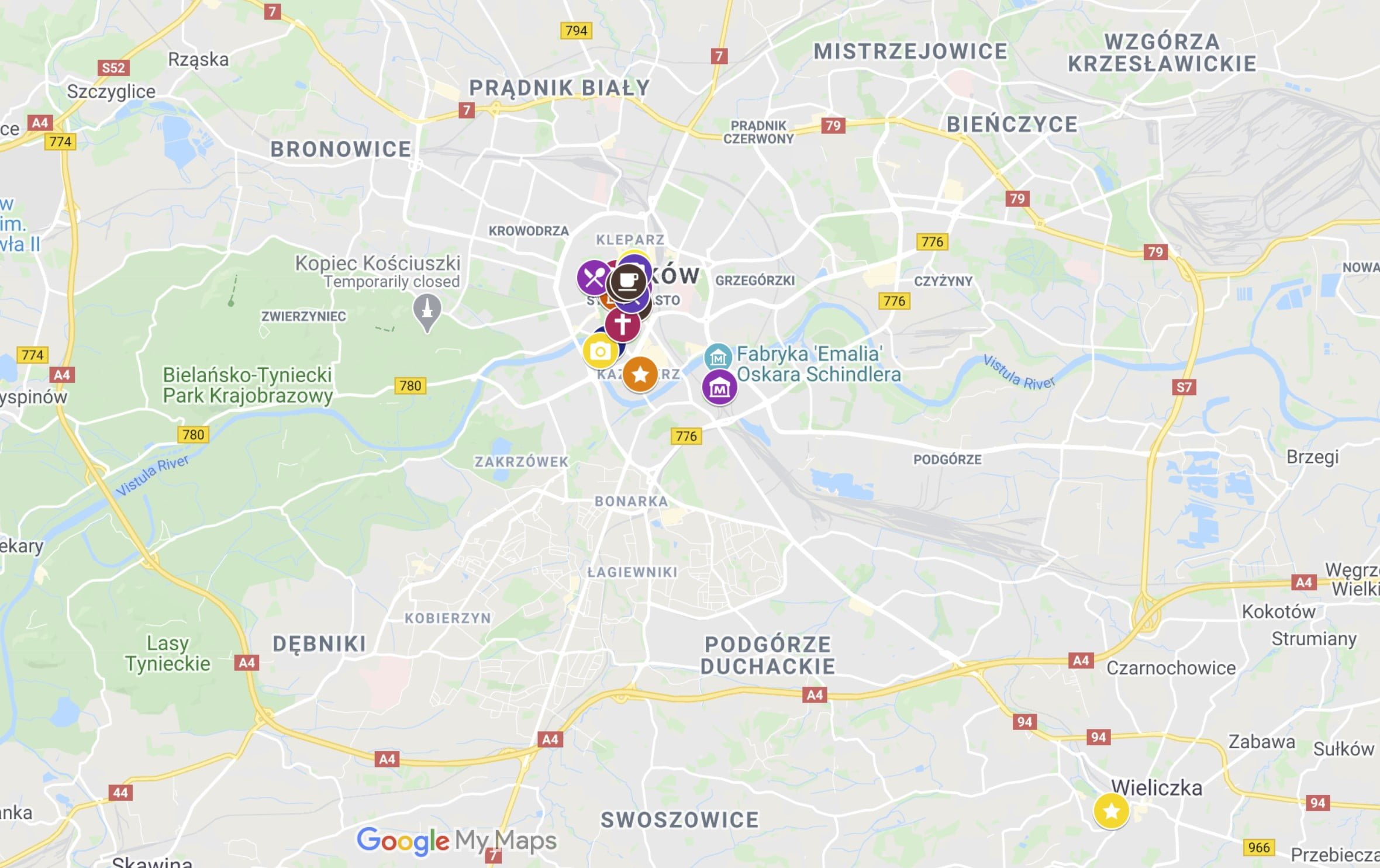
    Krakow was like that for me.  There are so many memorable things to do in Krakow you cannot possibly see them all with only two or three days. This article provides an overview of Krakow’s highlights to help you create an itinerary for your adventure there.

    Brief History of Krakow, Poland

    Krakow dates back to the 11th century (possibly even earlier) and was once the capital of Poland. It was where the kings of Poland ruled from high above the city at Wawel Castle. 

    Explore the ancient fortifications dating back to the 15th century, the castle built in the 13th century, and the largest medieval square in Europe! Krakow is teeming with history and beauty. You do not want to miss visiting this extraordinary city!

    Memorable Things to Do in Krakow

    #1 Old Town (Stare Miasto)

    Wander around Old Town (Stare Miasto in Polish) and admire the gorgeous architecture and cobblestone streets. Old Town is a great place to shop for souvenirs, get a bite to eat or even better, try some gelato (I recommend Lodziarnia Donizetti)! It is also the location for many of Krakow’s main attractions.

    #2 Rynek Glowny (Main Market Square)

    Rynek Glowny is the heartbeat of Krakow. It is a beautiful place to explore, and to spend an evening admiring the architecture and taking in the hustle and bustle of the square. Watch a street musician perform, take a horse and carriage ride along the Royal Road or just sit back and people watch. 

    Rynek Glowny is probably the most iconic space in Krakow and home to several of Krakow’s top sights. You’ll find Saint Mary’s Basilica, the Cloth Hall, Rynek Underground, and more located here.
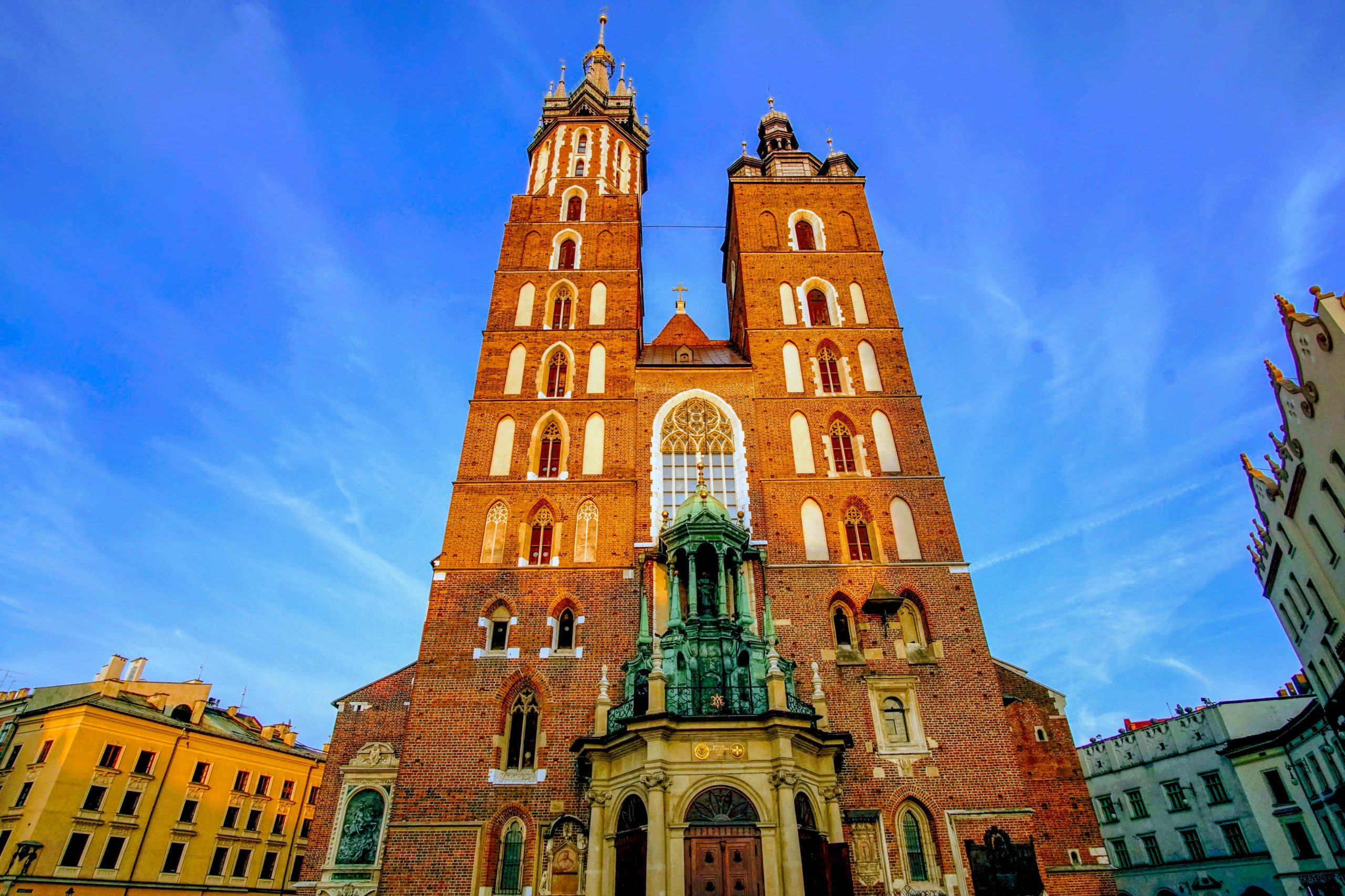
    Saint Mary's Basilica
    Saint Mary’s Basilica

    #3 Saint Mary’s Basilica

    This beautiful Gothic cathedral rises on the edge of Rynek Glowny (Main Market Square).  It is easily recognizable by its twin spires and red brick facade. You can tour the inside of the basilica and see the stunning wooden altar (at the time of this writing it is undergoing renovations). 

    You can also tour one or both of the towers. Choose from the Bugle Call Tower, the tallest of the two towers, or the Bell Tower and see the historic cathedral bells. Every hour in the square, you can hear the bells ring and a trumpeter playing St. Mary’s Bugle Call from the Bugle Tower. 

    Both towers offer you beautiful views of the square below and are my recommendation for the best bird’s eye view of the square. So grab your camera and a pair of comfy walking shoes (no elevator) and get ready to climb to the top.

    #4 Cloth Hall (Sukiennice)

    Krakow’s Cloth Hall was once the hub of international trade in Poland. It is the centerpiece of Rynek Glowny and now houses shops and an art museum. It is here you’ll find the Visitor’s Center and useful information for tours.

    You can also tour the Rynek Underground museum located beneath the Cloth Hall.  The Rynek Underground offers you a glimpse of what medieval Krakow was like — and it’s all below the historic Cloth Hall!
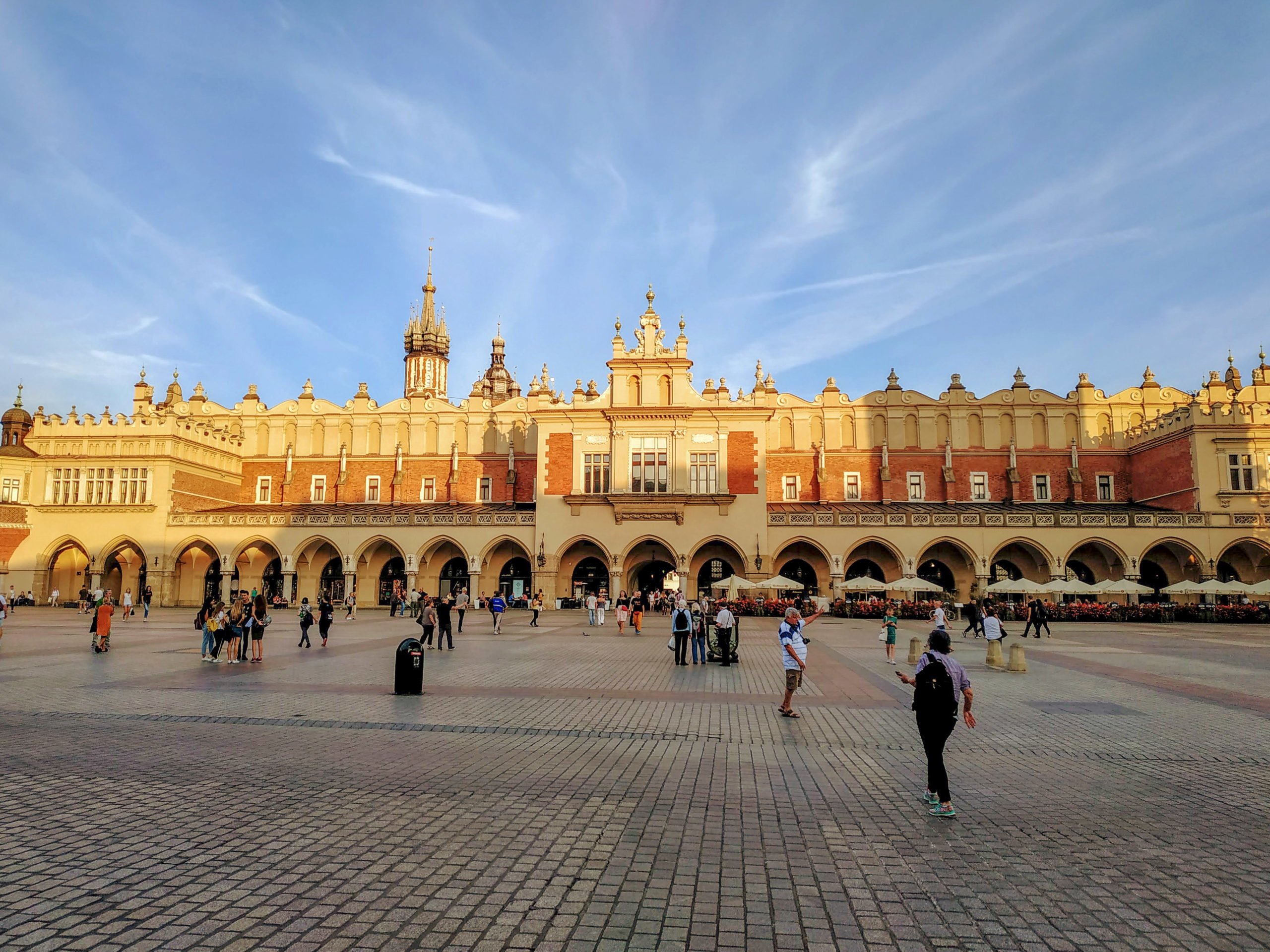
    Krakow's Cloth Hall
    Krakow’s Cloth Hall

    #5 Planty Park

    Take a break in the shade of one of the many trees in Planty Park, and people watch from a park bench while enjoying this green space. Planty Park resides in the area that was once the moat from the medieval walls that encircled the city.  

    The moat was filled with soil to create Planty Park, which now encompasses Old Town (Stare Miasto) in an over 2-mile loop. If you’re looking for an excellent place for a morning run, this is it! 

    #6 Wawel Castle

    Wawel Castle sits high atop Wawel Hill, and the castle complex includes a variety of attractions from which to choose.  You’ll pay to see only the tours you’re interested in, such as the treasury, cathedral, royal apartments, etc.  

    You can also stroll the castle grounds and admire the gardens and architecture for free if you don’t have any interest in the tours. 

    There is a scenic viewpoint to one side of the castle complex that provides terrific views of the Vistula river and city.  From here you can walk below and see a fire breathing dragon!
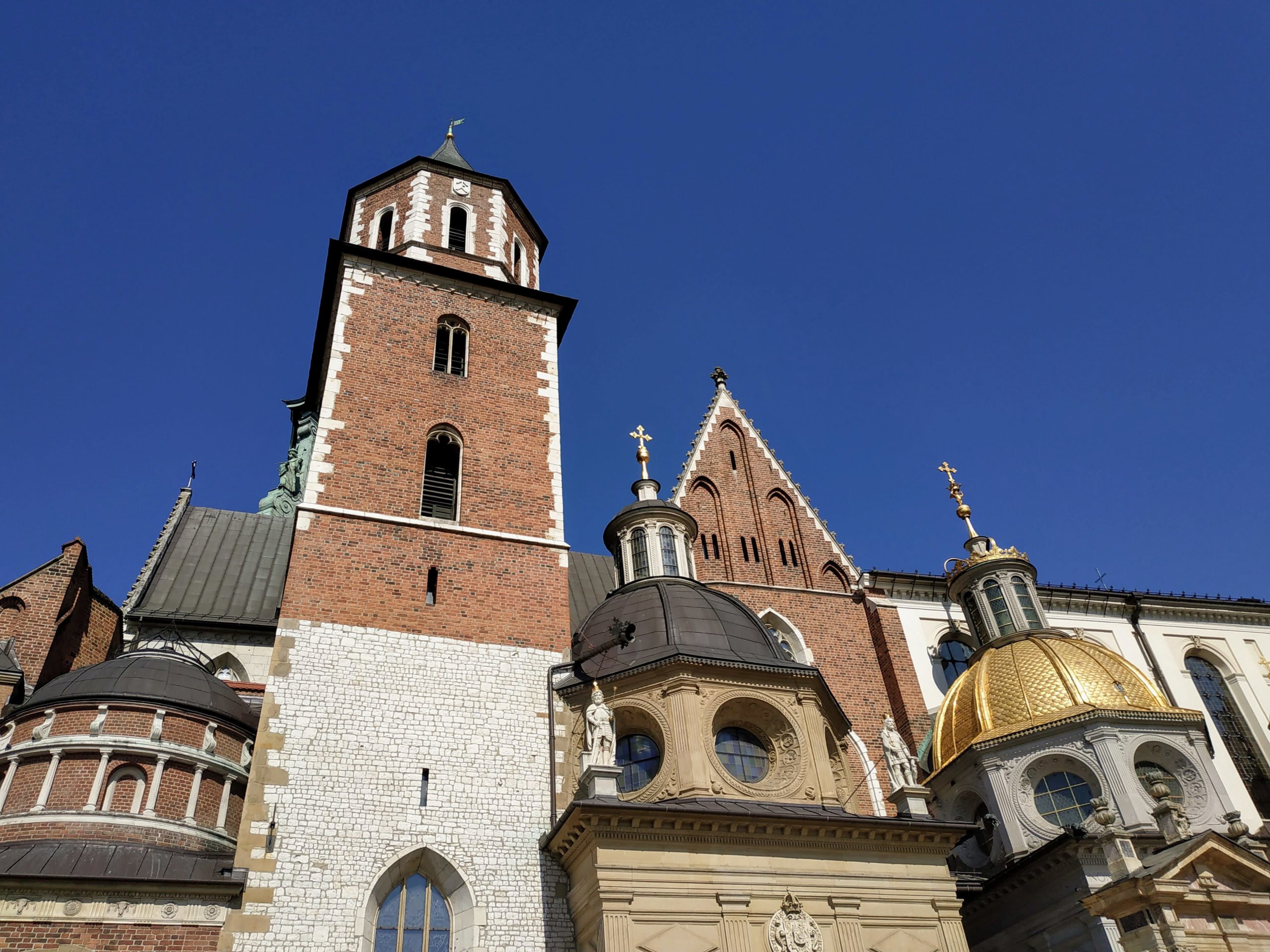
    Wawel Castle
    Wawel Castle complex

    #7 Smok Wawelski

    Don’t miss the fire-breathing dragon located alongside the Vistula river just below the Wawel castle grounds. You can even walk through the dragon’s den to reach this fire-breathing statue (the den is not stroller friendly or wheelchair accessible).  Kids will especially love seeing the dragon breathe fire and will enjoy crawling through the cave, plus it’s free!

    #8 Attend a Chopin Concert

    Fredrick Chopin is one of Poland’s most celebrated composers and pianists. I love Chopin’s music, and since my trip to Poland wouldn’t include Warsaw (planning that for next time), Fredrick’s birthplace, I knew I wanted to attend a Chopin concert while in Krakow. 

    I booked my tickets at the Chopin Concert Hall.  It is a small intimate setting and a beautiful way to spend an evening. I highly recommend it!
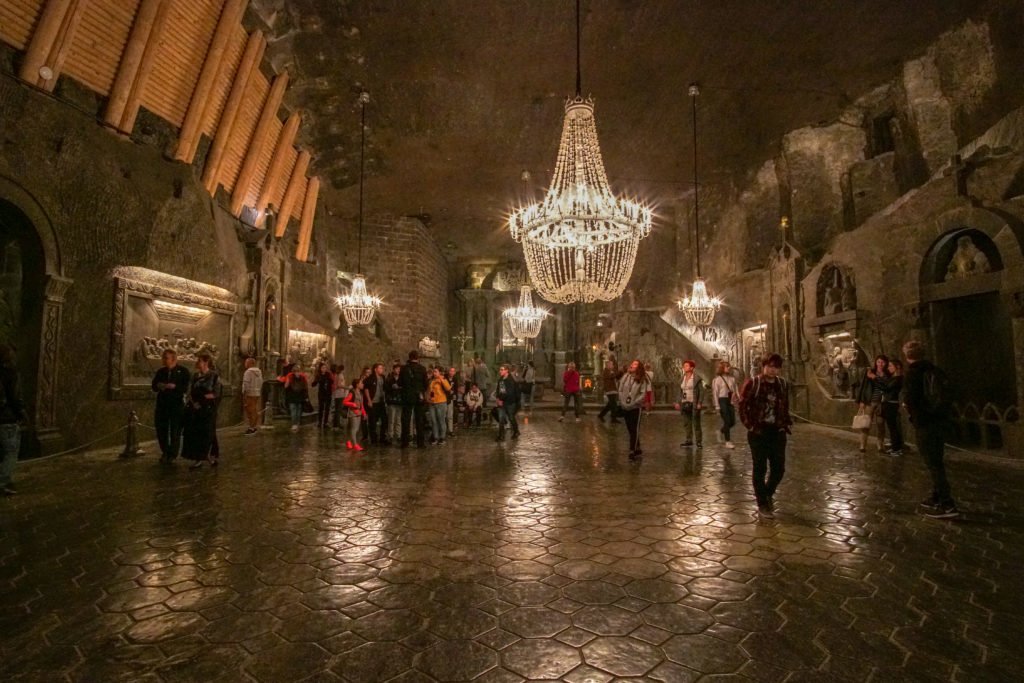
    Wieliczka Salt Mine Chandeliers
    Wieliczka Salt Mine St. Kinga’s Chapel

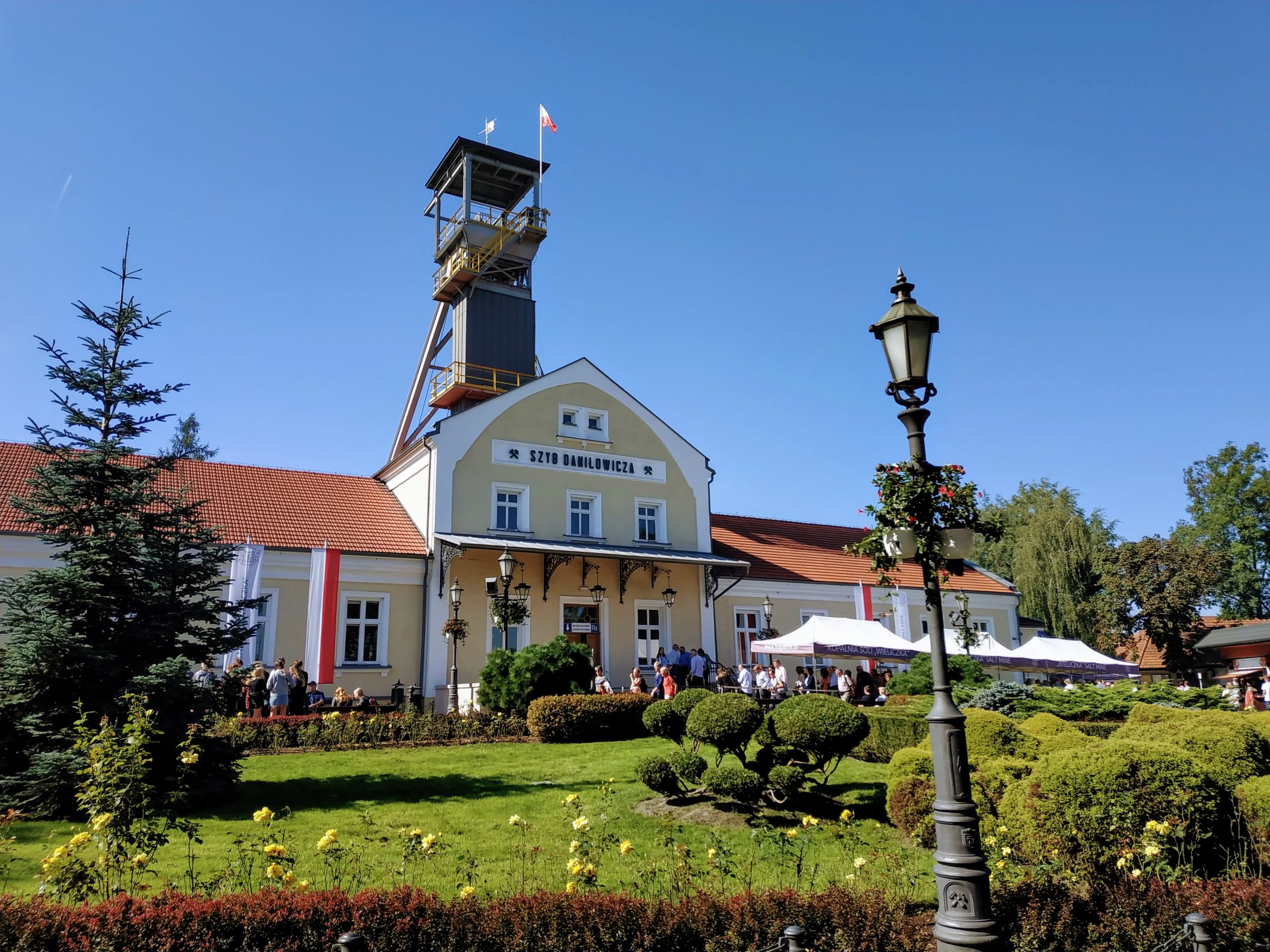
    #9 Wieliczka Salt Mines

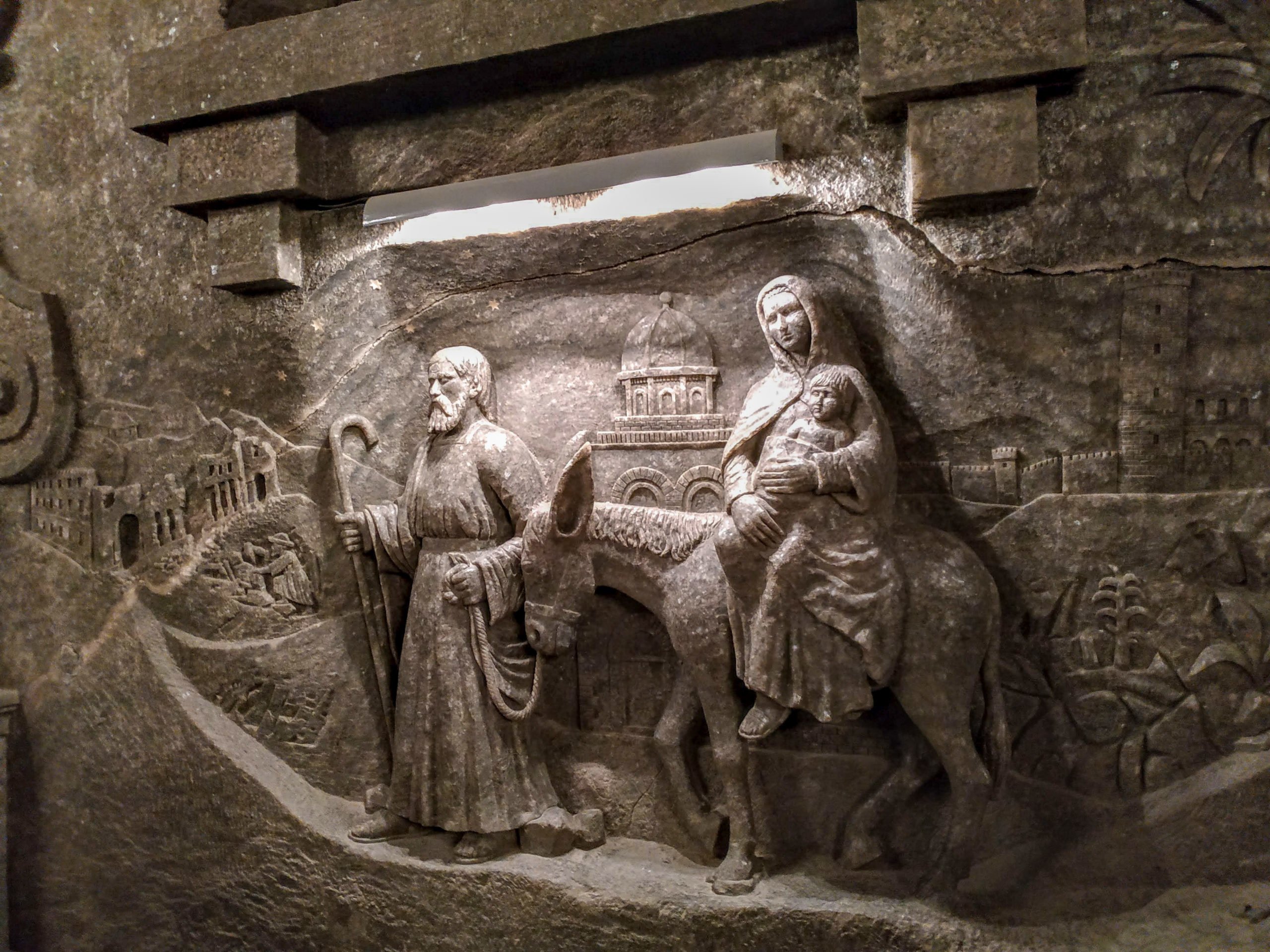
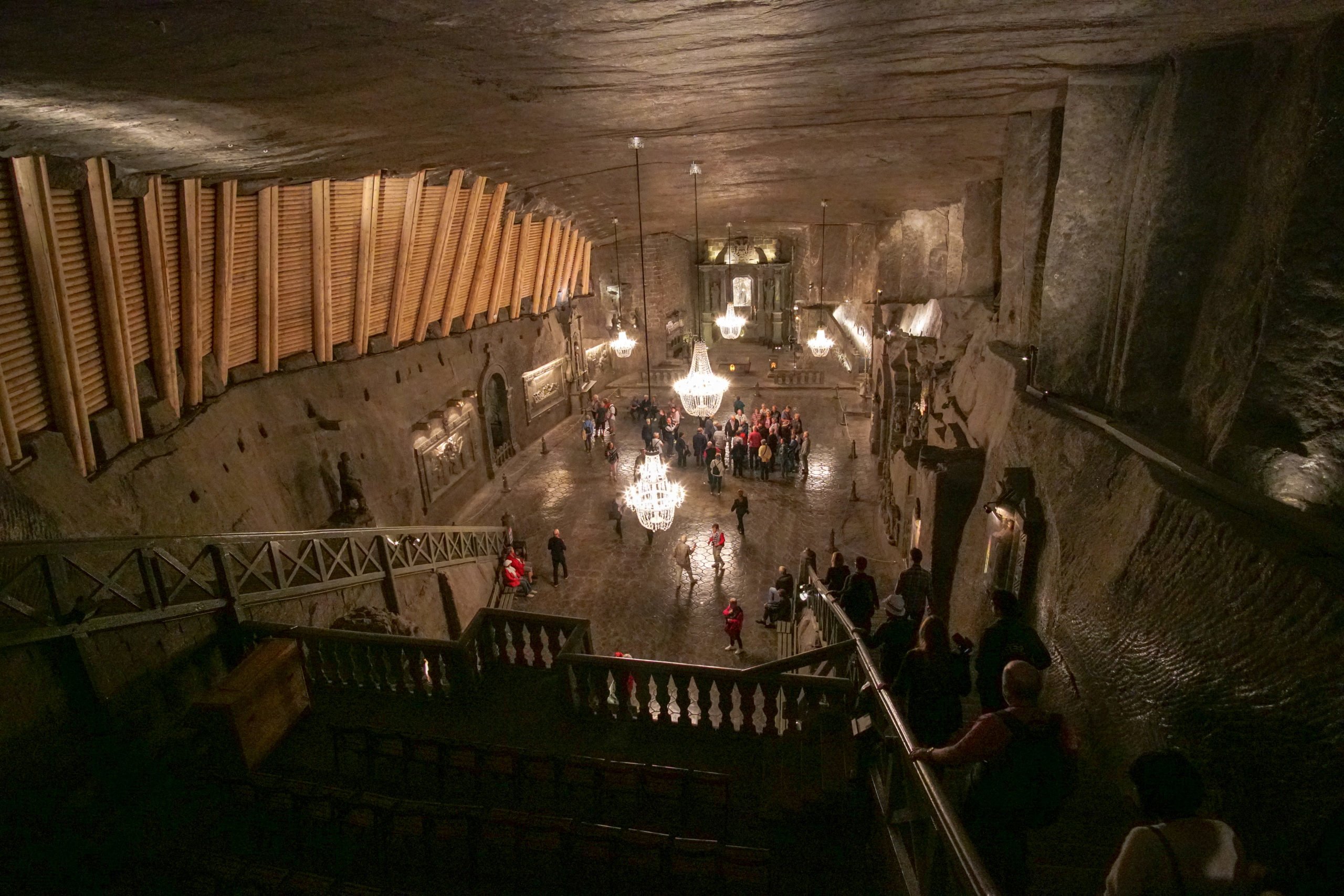
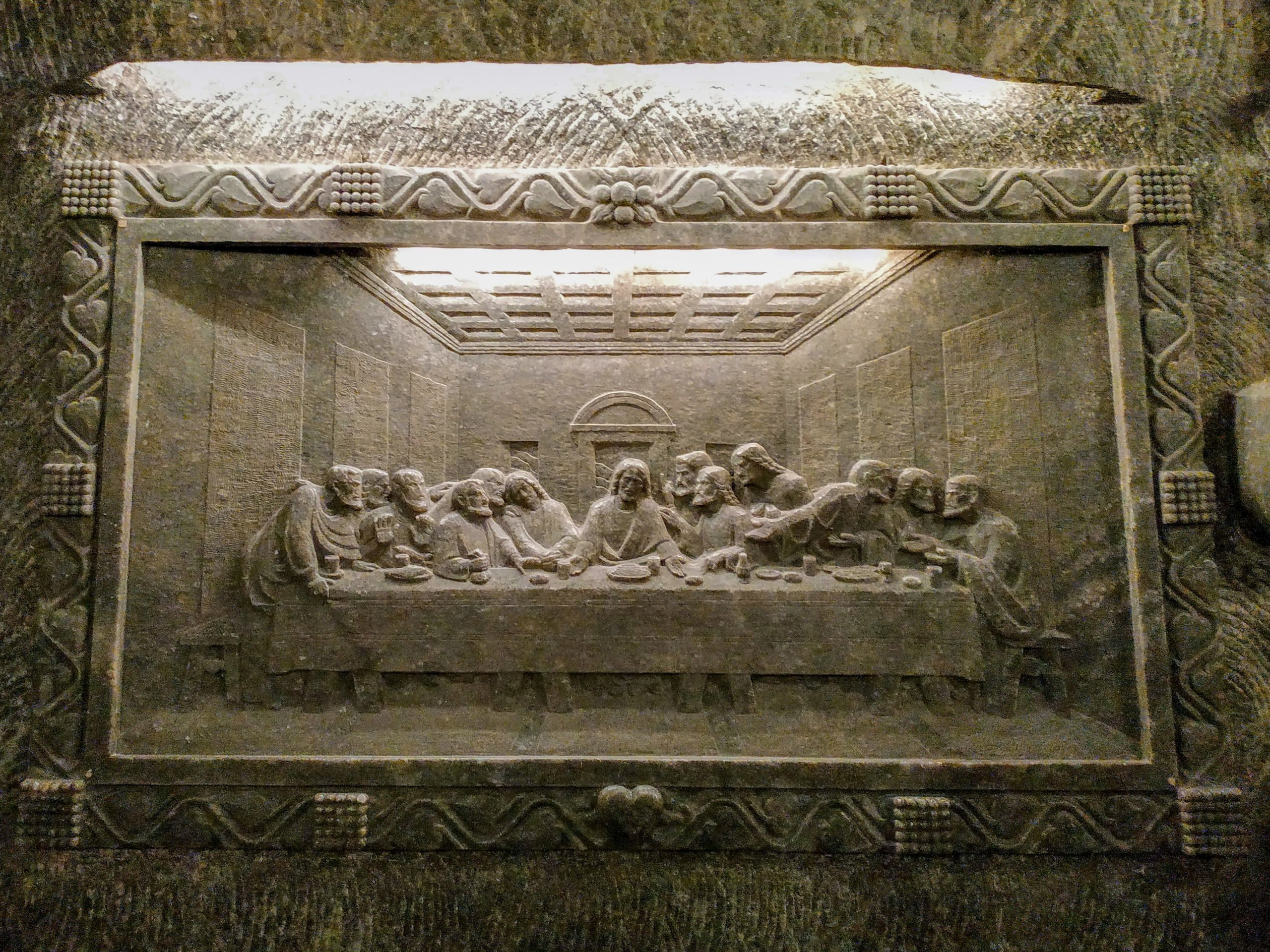
    The Wieliczka Salt Mines are a UNESCO World Heritage Site. These mines are incredible to behold. You will see chandeliers, statues, beautiful wall carvings, and more–all made from salt! 

    I don’t know where else you’ll have a better opportunity to learn about the history and importance of salt as well as to observe some of it’s more unusual uses. 

    Read Tips on Visiting the Wieliczka Salt Mines to learn how to plan your visit and make your own memories walking on floors made of salt.

    #10 Krakow Barbican

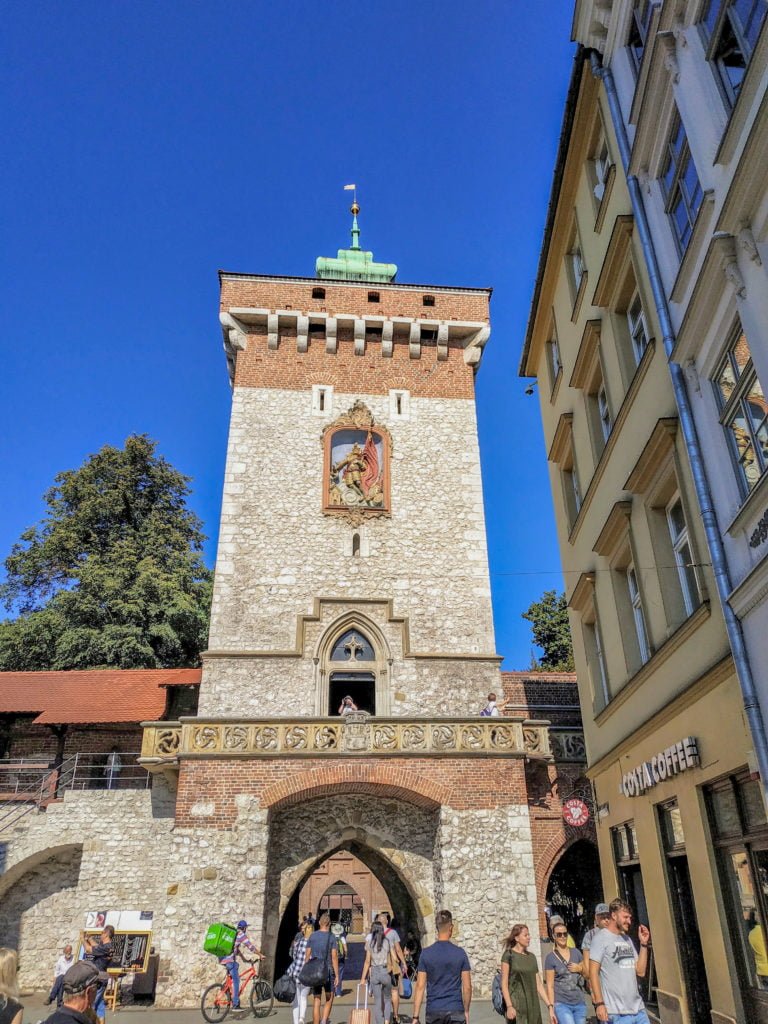
    Explore this medieval fortress of Krakow located just outside the historical Saint Florian’s Gate.  The Krakow Barbican was built around 1499 and is an impressive example of human engineering. It was an impenetrable defense for the city and had underground passageways that led to the city gates. This fortified gateway helps display the diverse history of Krakow and the many facets of this stunning cultural city.
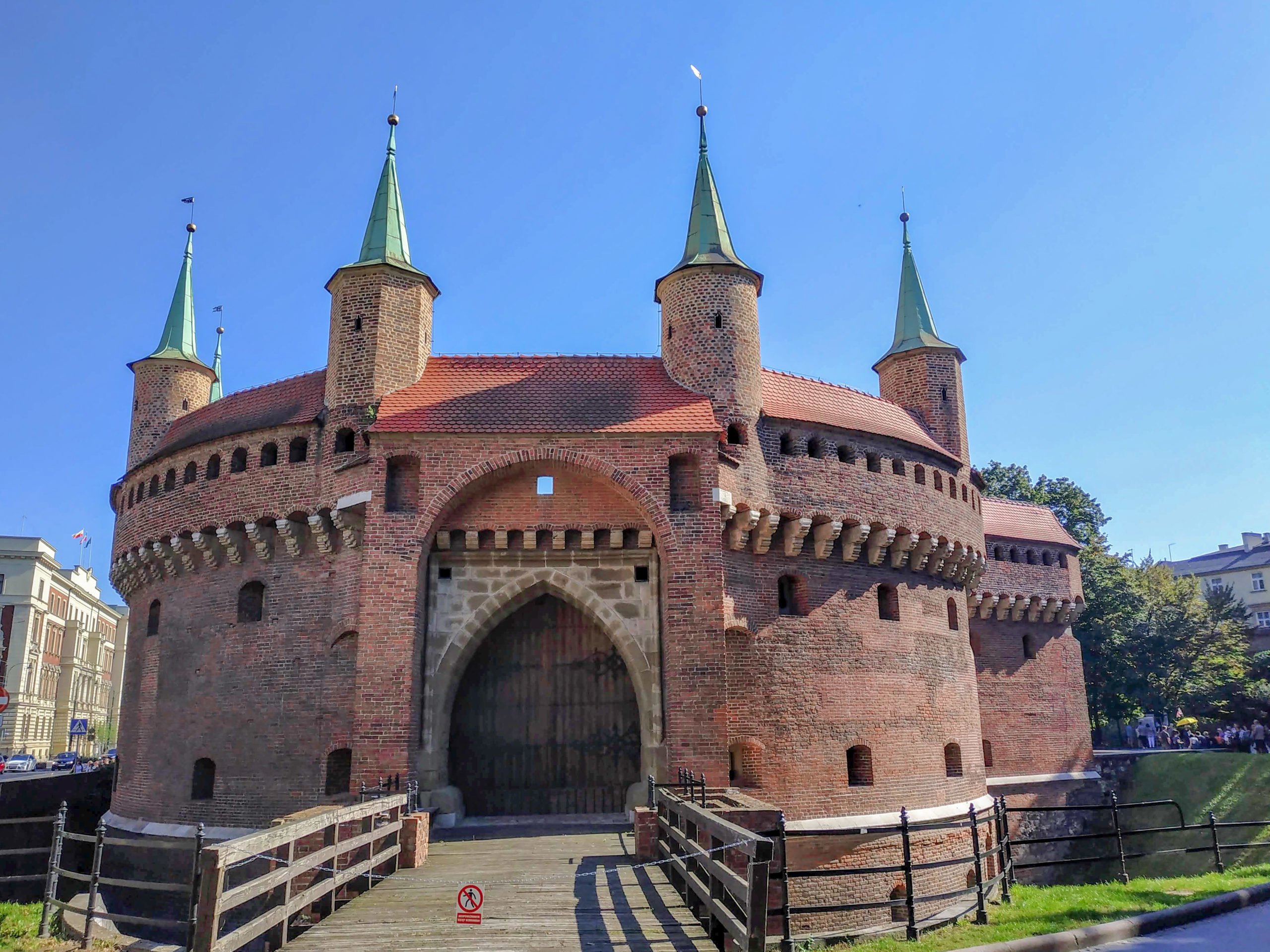
    Krakow Barbacan
    Krakow Barbican

    #11 St. Florian’s Gate

    This Gothic tower was the main entryway to the city of Krakow. It was one of the multiple gates along the city’s defensive walls. Where these walls and moat once stood is now home to Planty Park. The tower is about 110 feet tall and is a beautiful piece of architecture and history. I recommend you make time to explore this historic area of Krakow.
     
    Saint Florian's Gate

    #12 Oskar Schindler’s Enamel Factory

    The factory currently houses two museums, the Museum of Contemporary Art and Schindler’s Factory Museum.  The Factory Museum gives an in-depth look at the effects of WWII on  Krakow and the atrocities the Nazis committed against the Polish Jews.

    #13 Kazimierz Jewish Neighborhood

    This Jewish neighborhood once had over 3 million Jews who lived here. However, due to the extermination of the Jews during WWII, only about ten percent of them survived. 

    Plan to visit the Old Synagogue and the Galicia Jewish Museum to learn more about the lives of the Jewish community in Krakow before WWII.  Also, make sure to visit the Ghetto Heroes Square and the monument dedicated to their memory.  

    In addition to the historical sites of the Kazimierz neighborhood, it is also a great place to shop.  Explore its distinctive architecture and eclectic shops to find unique souvenirs to take back home.

    #14 Eat Polish Food

    Don’t miss trying authentic Polish food while in Krakow!  I recommend trying Polish Sour Bread Soup (Zurek). I ate this at Bar Smak and loved it! 

    Another popular street food is a Krakow bagel (Obwarzanki Krakowski). These make good on the go snacks to fuel your busy day of sightseeing.  

    Zapiekana is another delicious street food to try. They are like open-face sandwiches, long baguettes cut in half traditionally topped with mushrooms, cheese, and your choice of sauces. 

    These are just some of my recommendations, be adventurous, and try something new!

    #15 Church of Saint Peter and Paul

    Saint Peter and Paul’s Church is in Old Town. This historic baroque cathedral was built during the 16th century. Outside the church, sculptures of the 12 apostles line the gated entrance. 

    Once inside the church, you can purchase an audio guide that tells you more about the church history and also the crypt beneath the church, which is open to tour as well.

    Directly next to the Church of Saint Peter and Paul, is the 11th-century church of Saint Andrew. St. Andrew’s church is one of Krakow’s oldest.  Take time to step inside this ancient cathedral and admire its architecture before moving on.
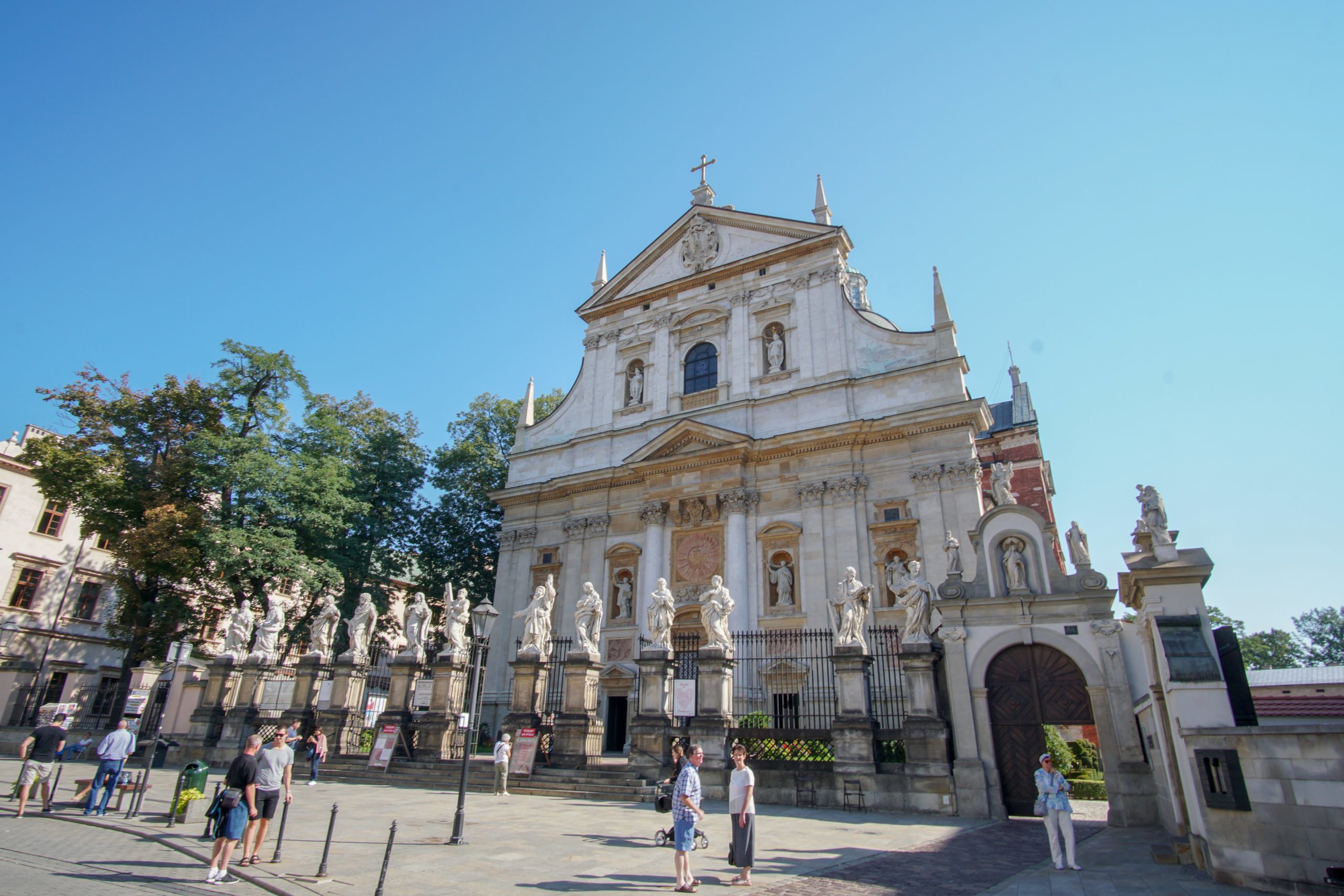
    Church of Saints Peter and Paul
    Saint Paul and Peter’s Church

    #16 Auschwitz-Birkenau Concentration Camps

    Last, but certainly not least, is something I feel should not be missed during a visit to Krakow.  The Auschwitz-Birkenau concentration camps are not in Krakow, but rather near the city of Oswiecim. However, you can easily take a bus from Krakow to Auschwitz.  

    The journey takes 1-1.5 hours—plan for your visit to the camps to take an entire day. Depending on which tour option you choose, it may take more or less time, however, given the solemnity of these memorial sites, it is good to give yourself time for some restful reflections rather than pack a bunch of sightseeing in afterward. 

    Make sure to book your tour well in advance of your trip to Krakow as the tours do book up. You can take a self-guided tour, but only during certain hours of the day.  I chose the 6-hour study tour and I highly recommend it! The guided tours offer insightful commentary and information I feel one might miss by going on their own, but each person will have their reasons for choosing which type of tour they take.

    Suggested Itinerary for 3 days in Krakow

    Day One: Visit Auschwitz, have dinner in Krakow and enjoy Rynek Glowny (Main Square) at night. Consider attending a Chopin Concert.

    Day Two: Visit the Wieliczka Salt Mines in the morning, get some lunch and then see Saint Mary’s Basilica, visit the Cloth Hall, and then head to the Kazimierz neighborhood and have dinner there. Explore the area and do some souvenir shopping, then head to Schindler’s Factory Museum (it’s open until 8 pm most nights).

    Day Three: Explore Old Town, tour Saint Paul’s Cathedral, Wawel Castle, see the dragon, and then take a relaxing stroll through Planty Park before heading to see Saint Florian’s Gate and the Krakow Barbican. You’ll still have time for shopping in the Main Square if desired.

    Recommended Places to Eat

    Moa Burger

    Address: Mikołajska 3, 31-027 Kraków, Poland

    Moa Burger has delicious and unique burger choices.  I tried a burger with beets and pineapple on it, it was delicious, and I don’t even like beets!

    Bar Smak

    Address: Karmelicka 10, 33-332 Kraków, Poland

    This is the place I tried the traditional Polish sour bread soup, and I loved it!  Stop here if you want to try some authentic Polish food.

    India Masala

    Address: Mały Rynek 2, 31-041 Kraków, Poland

    Delicious Indian food a short walk from Rynek Glowny in the heart of Stare Miasto.

    Milkbar Tomasza

    Address: Świętego Tomasza 24, 33-332 Kraków, Poland

    This is another option when looking to try some traditional Polish food. They are a popular spot for breakfast and also serve delicious pierogis.

    Cafe Camelot 

    Address:  Świętego Tomasza 17, 33-332 Kraków, Poland

    If you’re looking for a place to get some delicious coffee and dessert, look no further than Cafe Camelot. This Cafe is close to St. Mary’s Basilica.

    Żarówka Cafe

    Address: Floriańska 20, 31-021 Kraków, Poland

    Żarówka Cafe is around the corner from Cafe Camelot and has a lovely outdoor seating area.  Enjoy coffee, a sandwich, and dessert while giving your feet a rest.
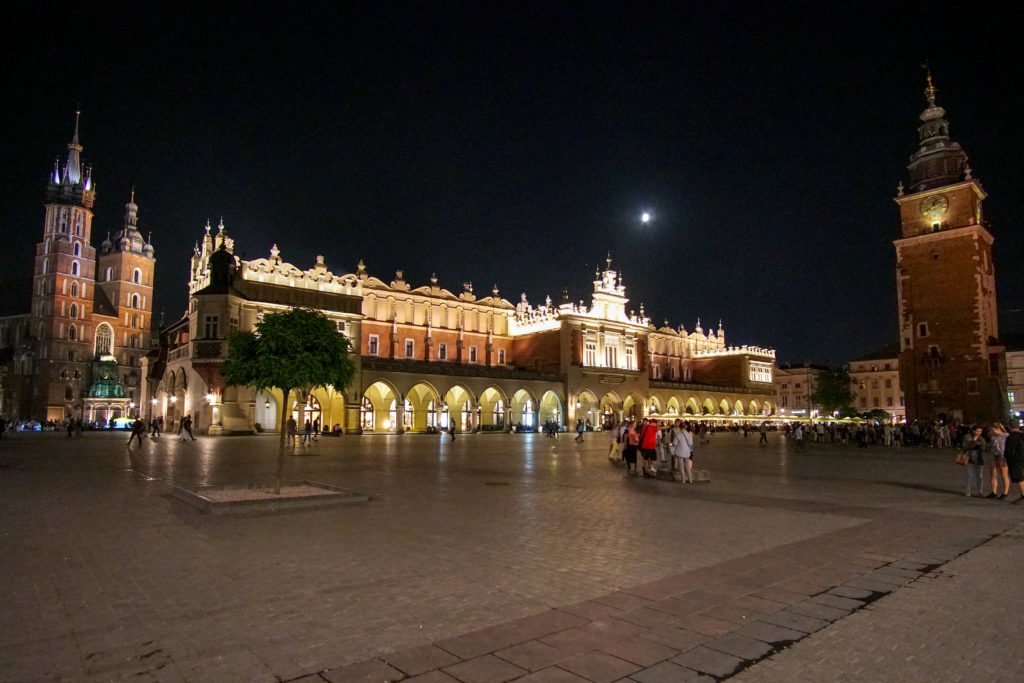
    Rynek Glowny at night
    Rynek Glowny (Krakow’s Main Square)

    Tips for Getting Around Krakow

    I was pleasantly surprised to discover how cheap it was to use Uber in Krakow. I tend to use public transportation for its cost-effectiveness and convenience. However, in Krakow, Uber was often more convenient (at least from where I was staying) and very affordable. 

    Plus, since I was traveling with a friend, we split the cost, which made it that much more cost-efficient.  Obviously, as a solo traveler, you’d need to determine what makes the most sense for your budget, but always consider the time it will take you to get to/from a destination when weighing the cost vs. benefit of a service like Uber.

    I also used the bus. Bus 304 is a good one for visiting the Wieliczka Salt Mines.

    Where to Stay

    I stayed in Old Town during my visit to Krakow. I loved being around the corner from the Main Square, Planty Park, and the various sights located in Old Town.  It was a little further from the main bus routes or the bus station, but otherwise very conveniently situated to Krakow’s main attractions.  

    Old Town can get quite noisy at night though, so be aware of that, the Airbnb that we stayed at was above an area with restaurants below and needless to say people were out enjoying themselves until two or three a.m. If you’re not a light sleeper like myself, then perhaps this won’t be an issue for you.  All in all, though, I’d stay there again for the convenience of being in Old Town.

    In addition to Old Town, you may also want to consider staying in Kazimierz, it’s close to Schindler’s Enamel factory, and has a more eclectic feel than Old Town. It is also in a touristy area, though, so expect it to be busier.  If you want to stay somewhere outside the main tourist area, but still in close walking distance to Old Town, then consider staying in Kleparz. Kleparz is just a short walk outside of Old Town, so you’re out of the touristy area, but close enough, you can easily walk there.

    Final Thoughts

    If you haven’t yet put Krakow on your list of places to visit, do it now. Once you visit, you’ll wonder what took you so long to go, and you’ll begin making plans to explore more of this unique country.

    Have Fun Exploring!

  • Tips on Visiting the Wieliczka Salt Mines in Krakow

    I first learned about the Wieliczka Salt Mines reading the book 501 Must-Visit Destinations. Upon viewing the photograph of the salt chandeliers in the book, I knew I needed to see them for myself. After touring the Wieliczka Salt Mines, I feel I gained a new appreciation for salt and miners in general. 

    Imagine a tour that combines history, salt, sculptures, miners, and royalty, all from a dark labyrinth beneath the earth. Well, that’s what you get on a tour through the Wieliczka Salt Mines. This guide will help you plan your trip to the mines so you can see the salt carved chandeliers, walk on floors made of salt, and even taste the salt for yourself.

    Brief History of Wieliczka Salt Mines

    The Wieliczka Salt Mines are over 900 years old and still in operation today. Their history spans kingdoms and world wars and various periods of technological advancement. They are an impressive example of ingenuity and creativity. There are nine levels to the mine, and they descend to a depth of 327 meters (over 1,000 feet). Your tour will allow you to see only 2% of the mine.  After you complete your visit, you will realize the significance of that and the vastness of the Wieliczka Salt Mine.  Thankfully you are always with a guide. Otherwise, it is easy to see how one could get lost amidst the labyrinths of salt carved tunnels.

    The Tour Experience

    First off, let me say, if you struggle from claustrophobia or a fear of dark places, you may want to reconsider visiting the mines.

    Although there are plenty of open spaces within the mine, you will need to travel down (and back up) in a somewhat cramped elevator and, in my case –an extremely crowded elevator. Then you’ll descend a lot of stairs to go even deeper into the mine before your guide will take you along paved pathways and into the various chamber areas.

    You’ll have your choice of two tours in the mine.  The Miner’s Tour and the Tourist Route.  Both of these tours are approximately 3 hours in length.

    The Miner’s Tour

    As the name suggests, it focuses more on the mining aspect of the Wieliczka Salt Mine. You receive working suits and miner’s gear before you’re taken on a mining adventure! You’ll get to “mine” for salt and learn firsthand about the life of a salt miner. This tour is not suited for those with disabilities, and children need to be ten years old and older and accompanied by an adult. Reservations are recommended for this route and can be made online.

    The Tourist Route

    This is the route I chose during my visit. The tour gives you an overview of the history of mining and the technological advancements over the years. There are various displays along the way to illustrate what mining would have looked like during the early years.  You’ll also tour beautiful chapels carved by miners throughout the mine’s history.  You’ll see saline lakes and admire the raw black salt used to carve the many sculptures, artwork, and chandeliers.

    Our guide was very knowledgeable and had a great sense of humor.  The pace of the tour is steady, but not too rushed.  If you want more time taking photos, then move to the back of the tour group so you can take your pictures and then catch back up. 

    Looking down into St. Kinga's Chapel.
    Looking down into St. Kinga’s Chapel.

    St. Kinga’s Chapel

    The highlight of the tourist route is a visit to St. Kinga’s Chapel. St. Kinga’s is the largest underground chapel in the world (there are 20 total chapels within the mine). You’ll descend stairs into this enormous space 350 feet underground. Everywhere you look, you see salt.  You walk on floors made of salt and admire sculptures and chandeliers carved from rock salt.  It’s stunning!

    Please note that this tour requires you to descend 800 stairs.  Children are allowed on the tourist route. If you have disabilities, please contact the mine ahead of time so they can create a specialized tour, as only certain portions are wheelchair accessible. Reservations are not required for the tourist route.

    Luggage Storage

    Plan to store your bags in the provided luggage lockers.  Small purses (35cm x 20cm x 20cm or smaller) are allowed, but no large day bags—plan to pack your camera gear and jacket and leave the rest in your locker.

    Tips on Touring Wieliczka Mine

    Photographs

    Due to the dim nature of the mine, you may find it challenging to take photographs. Try to steady yourself as best you can. A monopod or walking stick will help immensely (if you have one). The main thing is that you don’t rush taking your shots; otherwise, you will end up with blurry photographs. It is important to aim for in-focus shots, and then you can always edit later for brightness.

    Eating

    There is a cafeteria inside the mine with a variety of dishes, desserts, and beverages to choose from should you get hungry.  Plus, how often can you say you ate lunch at over 400 feet underground?

    How Much Time You Need

    Each tour takes around 3 hours, plus any extra time you may spend eating in the cafeteria, or looking at souvenirs. So I recommend you plan for about 4 hours for your visit to the Wieliczka Mines. Additionally, you’ll want to factor in at least 1-hour round trip travel time getting to/from the mine.  

    What to Wear

    Depending on which tour you choose, you will walk between 1-2 miles during your visit, so make sure to wear comfortable walking shoes. Additionally, the mines are around 57-60 degrees Fahrenheit, so you may also want to pack a light jacket.

    Restrooms

    There are two restrooms within the mine that your tour will take you past.  Your tour guide will give everyone a chance for a break about midway through the tour, and then you’ll have an opportunity again toward the end of the tour.

    Getting to Wieliczka Salt Mine

    Most people visiting the Wieliczka Salt Mine come from Krakow’s city center. Wieliczka is on the outskirts of Krakow and takes 30-40 minutes by bus from Krakow’s touristy areas. You can take bus #304 to get there, and it lets you out just a short walk from the main entrance. The same bus route will return you to Krakow’s city center.

    Another alternative to the bus is using Uber.  My friend and I did this going to the mine and then took bus #304 when returning to our Airbnb. Uber is surprisingly affordable in Krakow, especially if you can split the cost with a traveling companion.

    Hours of Operation

    Make sure to check the Wieliczka Salt Mine website in advance to see what their current hours of operation are and plan accordingly.

    Final Thoughts

    A tour of the Wieliczka Salt Mines is certainly something you’ll never forget.  It is an excursion the whole family will enjoy as long as you are prepared for it in advance.  As mentioned before, the mine is dimly lit, and for those suffering from claustrophobia, you may not find it to be an enjoyable experience. 

    Visiting the Wieliczka Salt Mine is an adventure you are unlikely to experience anywhere else and I highly recommend it for any visit to Krakow.

    For more articles that might interest you check out Ways to Save Money on Food While Traveling and Trip Planning 101.

    Happy Spelunking!

  • 13 Ways to Save Money on Food While Traveling

    One of the biggest expenses, when traveling, is our food budget.  Hey, it’s one of the biggest expenses we have when we don’t travel! So it comes as no surprise that if you want to stretch your travel budget, a good place to start is with food. Here are some easy ways to save money on food and stretch your budget a little further when you’re traveling.

    Top Ways to Save Money on Food While Traveling

    Book a room with a kitchen

    This is my favorite way to save money on food while traveling, particularly if I’m staying in one place for an extended period of time. 

    For example, when I go to Maui, I stay away from the large resort hotels and instead book a condo with a kitchen and an outdoor grill.  This saves me a ton of money on eating out!

    Even when staying in a place for only 2 or 3 nights, I try to book a room with a kitchenette.  That way, I have a microwave and a mini-fridge, so I can still make simple meals from my room if needed.

    Go to the grocery store

    Grocery stores are a great way to save money on food while traveling.  Whether you have a kitchen or not, you can purchase food to eat throughout your travels.  

    Fruit, snack bars, bread, peanut butter, nuts, bottled water, and so on are excellent options that save you money on food. Plus, many grocery stores also have a deli where they serve fresh salads and hot dishes too.  This is another option that is cheaper than eating out.  You can even purchase stuff for a picnic and turn it into an experience rather than just a meal.

    Pack snacks and water

    Often when I’m traveling, I will spend the entire day sightseeing.  I’ll leave after breakfast and won’t return until late afternoon.  One of the best ways I keep going and keep from getting hangry is to pack snacks and water in my day bag. This not only saves money on food and drinks, but it also makes sightseeing more enjoyable.  

    I’ve personally found that when my blood sugar dips down, I get tired and uninterested in seeing stuff.  If I can take a short 10-minute snack break, it turns my energy level around, and I’m ready to go again for at least another couple of hours.

    Pack a refillable water bottle or, as mentioned above, purchase bottled water at the grocery store and keep it in your room to take with you each day.  This saves a lot of money vs. buying single bottles at a time.

    Split meals with your traveling companion

    If you’re traveling with another person, why not consider splitting a meal.  My hubby and I do this when we travel and also when eating out near home.  We’ve found that the portion sizes at most places are more than enough for two people to share.  It’s a great way to save money and still have the experience of dining out.

    Book hotels with free breakfast

    Another easy way to save money on food while traveling is to book a room with breakfast included. This not only saves you money but also saves you time.  It’s very convenient to get up in the morning, grab breakfast at the hotel, and then head out for the day.  Some hotels even offer takeaway fruit options so you can have a snack for later.

    Farmers Markets

    Farmers markets are a fantastic way to support local farmers and artisans.  I enjoy browsing these markets for homemade souvenirs as well as for food you might not find anywhere else.  Often you’ll find seasonal fruit, baked goods, and a variety of food vendors.  It’s a fun local experience that gives you a feel for the neighborhood you’re visiting.

    Eat lunch rather than dinner

    Okay, I’m not suggesting you need to skip dinner altogether, but rather than you eat lunch at a restaurant rather than dining in for dinner.  Often, you can get the same menu for lunch as you would for dinner, but at lunch prices.  

    Many restaurants even offer lunch specials that come with a small appetizer and your main dish for much less than you would pay at dinner.  Ask about specials before ordering.

    Subscribe to our newsletter

    No kitchen, no problem

    If you’ve got a room with a coffee maker and a mini-fridge, you can still save money on eating in even if you don’t have a microwave or kitchen. I use the coffee maker to make oatmeal for breakfast and ramen noodles for lunch or dinner. 

    Additionally, if all I have is a mini-fridge, I purchase bread, peanut butter, and jam and make sandwiches to take on the go.  Just make sure you don’t forget to pack a knife and some zip lock bags for your sandwiches.  Bagels with cream cheese, yogurt, and bottled smoothies are also great options when all you have is a mini-fridge.

    Eat where the locals go

    If you eat at restaurants close to the main tourist attractions, you can be sure you are paying a higher price than if you were to go off the beaten path.  

    Try to find out where the locals eat.  Ask around and take a little extra time to walk a few blocks out of the tourist areas. If you look in a restaurant and you notice a lot of locals, the chances are that it’s cheaper and that the food is good!

    Eat with a local

    Several websites and apps allow you to meet with a local and share a meal or take a cooking class in someone’s home. This provides you with a unique experience to get to know the local culture better and to make a new friend.

    • Couchsurfing has been around for a while now, and although primarily used to find cheap lodging, you can also use it to find someone to share a meal with or tour the city with a local. Karen from Wanderlustingk explains how to do this, and gives some useful tips for staying safe.
    • Travelingspoon is another excellent way to meet a local and learning to cook a regional dish. Although this isn’t the cheapest option, if you look at it as both a meal and an experience, it’s a pretty good deal.  You will often spend as much on a meal at dinner as you will for the price of a cooking class through Travelingspoon.  Prices generally start around $20 and up.
    Also, make sure to ask around before your trip and see if anyone you know has any friends or relatives living in the destination you are visiting.  I’ve done this before, and it is a great way to save money and also to meet someone who lives in your destination.  They are an excellent resource for useful tips, recommendations, and history of the area you’re visiting. 

    Look for specials

    Restaurants in many cities offer prixe fixe menus.  These offer you an incredible fixed price on a three-course menu that includes your appetizer, main dish, and dessert.  This is a great way to try a fine dining restaurant without spending a ton of money.  

    Also, look for restaurants offering brunch specials and weekly dinner specials.  Many restaurants have once a week dinner specials where they serve a meal, say lobster, at a reduced rate.

    Plan for special experiences

    I understand that eating isn’t just about getting in your daily calories.  Food can be an experience too.  It’s a wonderful way to experience the local culture. So when you’re planning a trip, if you know, there is a particular food you want to try at your destination, plan ahead and pick out the best place to eat it.  Then budget for it. 

    You can eat peanut butter and jelly sandwiches for most of your trip but then splurge on those special occasions. I try to save money on food while traveling, but I allow for a couple of unique dining experiences.  This makes eating out more memorable.

    I’ve splurged on Peking duck in Beijing (at lunch to save money), a five-course meal in Italy prepared by a prince (no kidding), and a fondue dinner in Switzerland (nothing is cheap there).  I sacrificed eating out each day, to save for a few special meals.

    Skip Starbucks

    Okay, don’t worry, I’d never tell you to skip coffee, however planning to make coffee in your room will save you a lot of money. Pack a travel french press from or an Aeropress, then all you need is some hot water and ground coffee, and you’re good to go! You may also want to bring a collapsible mug or refillable bottle that works for both hot and cold drinks.

    Even if you use the coffee maker at your hotel or Airbnb, you may want to purchase some local coffee beans at the grocery store or if you’re lucky enough–a local coffee roaster. 

    If you do plan to grab a cup of coffee at a cafe, order the roast of the day and get a drip coffee to save money. There are, of course, times where splurging on your favorite coffee is warranted. However, these are ways to save money on coffee for the rest of the time.

    Suggested Meals You Can Make to Save Money on Food

    Here are some ideas for foods you can make in your room.  Make sure to plan ahead and pack utensils, refillable water bottle, and any coffee filters or gear you need. It may take a little extra planning, but it can save you hundreds of money during your trip.

    Breakfast

    • Breakfast bars
    • Bagels
    • Toast
    • Eggs
    • Cereal
    • Oatmeal packets (I pack from home)
    • Fruit
    • Muffins/bakery items
    • Yogurt

    Lunch/Dinner

    • Meats, cheeses and crackers from local grocery store or charcuterie
    • Peanut butter and jelly sandwiches
    • Instant noodles
    • Salads (from deli or produce section)

    Snacks

    • Jerky
    • Nuts
    • Fruit
    • Snack bars

    Final Thoughts and Tips

    Here are a few final tips to save money on food while traveling. 

    Drink water with your meals. It’s amazing how much that one act can save you.  I ask for lemon slices in mine and pretend it’s lemonade.

    Get take-out vs. dining in. Take your food to the park, or plan a cozy meal in your room. These little changes can add up to significant savings.

    Look for food trucks street food.  You can try food you’d never eat at a restaurant and make fun memories doing it. Have you ever tried scorpion?  I have, it tasted like salted popcorn.  What about squid stuffed with a quail egg, okay, take it from me and skip that one.  If those don’t sound appealing, never fear there are other less adventurous options at street food markets too. It’s a great way to try a bunch of different foods and eat cheap!

    This guide isn’t about never eating out or splurging, but on saving money and intentionally choosing to spend it on experiences that will provide memories to re-live when you’re back home.

    Bon appetit!

  • 32 Travel Movies & Shows to Inspire Travelers at Home

    Travel movies filled with beautiful cinematography and adventures in new places make me smile! It is one of the ways I “travel” when I can’t actually travel.

    I watch as the people in the films pursue a passion, whether it’s traveling to a dream destination or accomplishing a goal of hiking a mountain or spending a year surfing.  It’s all about people with the courage to let go of their comfort zones and chase their dreams.  

    As I sit at home, watching their stories unfold, I imagine myself doing what they are doing, packing their bags and hitting the road.  For that one to two hours, I am traveling with them.

    That’s the power of a good story and why watching travel movies and reading books on travel are two of my favorite ways to take a journey when I’m stuck at home.  

    Below are some of my favorite travel movies and television shows. I list them by category, so you can choose whichever genre you are in the mood to watch right now. Let’s jump in and start our travels!

    Classic Travel Movies

    I’m a sucker for classic movies, and these are some of my favorites. If you avoid black and white films or only stick to recent releases, you’re missing out! These classics are set in different countries and bring back some of that Old Hollywood charm. 

    Sometimes all you need for a good travel movie is a great location and your favorite actors. These are perfect for a movie night when you want to watch something fun and light-hearted.

    Roman Holiday 

    Roman Holiday

    Audrey Hepburn and Gregory Peck star in this film about a princess who sneaks out and spends the day with an American news reporter. 

    Princess Ann (Hepburn) wants to spend one day as an ordinary (aka not a princess) person.  While Joe Bradley (Peck), the news reporter, hopes to get the inside scoop of his life! You’ll feel like you’re spending the day sightseeing in this romantic comedy set in Rome.

    Charade

    charade movie poster

    Audrey Hepburn’s character travels to France on a ski trip only to be caught in a web of mystery and intrigue in this classic romantic comedy.  This movie also stars Cary Grant, Walter Mathau and James Coburn. Charade is one of my favorites! 

    Hepburn had several films set in Paris; Funny Face is one of them and another favorite of mine. If you haven’t seen it, I recommend you watch it. The satirized beatnik dance scene with Hepburn’s character cracks me up! (I’m kind of a Hepburn fan if you hadn’t noticed.)

    To Catch a Thief 

    To_Catch_a_Thief

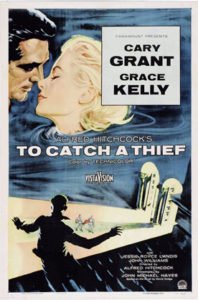
    Okay, so I guess I’m also a Cary Grant fan. This Alfred Hitchcock mystery is set in the French Riviera, where John Robie (Grant) is a retired cat burglar who must clear his name after a string of burglaries make him the prime suspect.  

    He follows, Francie (Grace Kelly), who he suspects will be another victim, in an attempt to track the real burglar and clear his name. Race along the Riviera in this fun rom-com thriller.

    The Endless Summer

    The Endless Summer travel movie poster

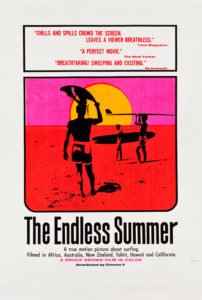
    Okay, technically, this should be under Documentaries, but it’s also kind of a classic, so I guess we’ll call it a Classicmentary? Docuclassic? Well, whatever genre you choose, if you want to chase the warm breezes year-round, then have fun watching this surfing classic.  

    This travel movie follows surfers as they chase the sun to Hawaii, New Zealand, and South Africa. I love the cheesy voice dub-overs that are indicative of this period.  This one combines humor, sunshine, and big waves to create a fun docu-classic (or whatever term we decided on). It’s guaranteed to make you smile!

    Travel Comedies

    Need a fun night filled with silly antics, adventure, and a lot of laughter? These travel movies are sure to hit the spot!

    Romancing the Stone

    movie poster

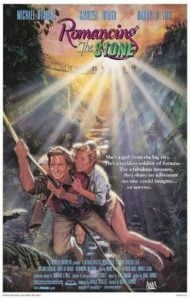
    Romancing the Stone is an 80’s movie starring Michael Douglas and Kathleen Turner.  Their adventure takes place in the Colombian jungle where city girl and romance novelist, Joan Wilder (Turner), attempts to rescue her sister Elaine from kidnappers in Colombia. 

    She meets up with Jack T. Colton (Douglas) and, in a typical opposites-attract romantic comedy the two dodge bullets, find a treasure and rescue her sister. If you like the Indiana Jones movie series, you will most likely enjoy this one too.

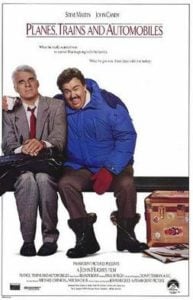
    Planes, Trains, and Automobiles

    Planes, trains, and automobiles travel movie poster

    This classic comedy portrays hectic holiday travel in the United States. Neal Page (Steve Martin) travels home to be with his family for Thanksgiving and ends up with a very talkative Del Griffith (John Candy) as his annoying travel companion. Holiday travel is stressful enough, but these two experience it at an entirely new level! 

    You can’t help feel bad for Steve Martin’s character as he deals with Griffith’s bumbling antics. However, in the end, the writers have us cheering for John Candy’s lonely character and remembering what the holidays are all about.

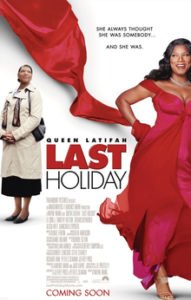
    Last Holiday

    last holiday movie poster

    If you only had a few months to live and money was no object, what would you do?  In Last Holiday, Georgia Byrd (Queen Latifah) quits her job, empties her bank account, and travels to the Czech Republic to stay at a luxury resort and spa. 

    She fulfills lifelong dreams as she makes the most of what life she has left. This travel movie will have you imagining your dream trip, too – just don’t wait until you’re dying to make it happen!

    Catch Me If You Can

    Frank Abagnale, Jr. (Leonardo DiCaprio) is a world-class con artist. He’s robbing banks at 17 years old, impersonating doctors, lawyers, and pilots. 

    This film has the viewer joining the chase as FBI agent Carl Hanratty (Tom Hanks) follows Abagnale all over the world in an effort to apprehend him for his many crimes. 

    Abagnale is something of a genius really, and you can’t help but cheer for him as he outsmarts the FBI and attempts to live his dream life (albeit as a criminal). 

    Travel Documentaries

    My favorite travel movies fall under the documentary category. Why? Because it’s real people, pursuing their passions, and showing us that we can do it too!  

    I love watching people live out their dreams. It makes me happy! Documentaries more than any other genre capture the spirit of travel and its many benefits. If you don’t usually watch this type of movie, I highly recommend you start with these!

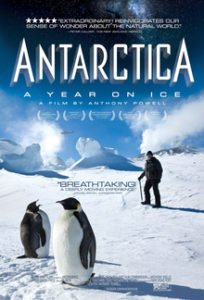
    Antarctica: A Year on Ice

    Antarctica travel movie documentary

    Travel to Antarctica and learn about the people who live there and work there year after year.  I think you might be surprised how inspiring this documentary is. 

    It left me thinking more about how I want to travel to this cold and remote continent to see for myself what makes it so unique. Plus, getting to see all the penguins would be pretty cool too! I do know one thing, though–I only want to visit in the summer, I’m pretty partial to sunlight!

    Maidentrip

    This documentary is about Laura Deckker, who, at 16 years old, became the youngest person to sail solo around the world. Maidentrip documents the hurdles she overcame to accomplish this incredible feat. Sailing was in Deckker’s blood. 

    She was born on a sailing trip and lived on a sailboat until she was 5. Her father encouraged her sailing dreams, and her tenacity and determination made her dreams a reality. 

    Although I don’t recommend that kids leave school to embark on solo trips around the world, you can’t help admire Deckker’s courage and commitment to her dreams. You can also purchase her book about her sailing adventure, “One Girl, One Dream.

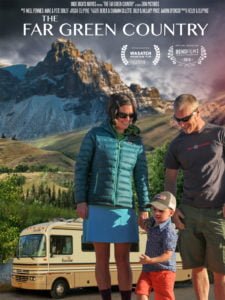
    The Far Green Country

    the far green country travel movie

    This travel documentary follows Eli & Kelly Pyke and their son Dakota, as they document their decision to live in an RV for one year. Their journey takes them through many of the U.S. National Parks as well as parts of Canada.  

    The Far Green Country depicts the ups and downs of long-term travel, but also the benefits of slow travel. It tells the story of a family falling apart only to be healed by slowing down and connecting through travel and nature. The Pykes invite you to take the journey with them in this intimate travel movie.

    The Far Green Country inspired my husband and me. As we watched it, he turns to me and asks, “how much would we need to do that?”  This is why I watch travel movies — they inspire us even when we’re sitting on the couch at home, and they cause us to dream about all life’s possibilities.

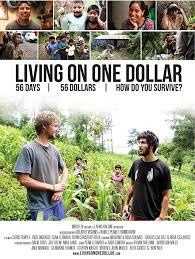
    Living on One Dollar

    1.1 billion people live on one dollar a day.  It was this statistic that inspired four college students to travel to Guatemala, where they lived for two months, experiencing firsthand what it was like to live on one dollar a day.

     They created this documentary as a way to bring awareness to the needs of impoverished countries. These four young men went to Guatemala out of empathy and curiosity, and what they received in return was so much more than they anticipated.  

    During their stay in Guatemala, they experienced what it was to be poor, without food, sick, and without money for a doctor.  However, even more important, they encountered the beauty of the human spirit.  They were recipients of the generosity of a Guatemalan family who, although poor, opened their homes up to these students, embracing them and sharing with them the very best of what they had.  

    This family gave from the generosity of their heart, forged from the value and necessity of living in community with others. Travel allows you to see this beautiful side of humanity that we often lose sight of here at home.

     When you travel, you have an opportunity to walk in someone else’s shoes, albeit briefly, it changes you and creates an awareness larger than yourself. Living on One Dollar is an inspiring and educational documentary perfect for a family movie night!

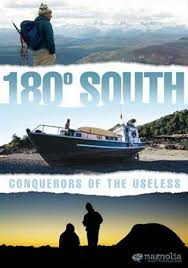
    180 Degrees South

    180 degrees south travel documentary

    180 Degrees South  follows Jeff Johnson as he retraces the 1968 journey to Patagonia by Yvon Chouinard and Doug Tompkin.   

    After his trip to Patagonia, Chouinard went on to start the outdoor clothing company Patagonia. Tompkin, who was the founder of The North Face company, returned to Chile to focus on preserving wildlands in Chile and Argentina.  It’s no wonder these two men inspired Johnson with their love of nature and life.

    Johnson sets sail from Mexico, stops at Easter Island, and then continues to Patagonia, where he meets up with Chouinard and Tompkin.  The documentary combines audio and visuals from the original 1968 trip with Johnson’s experiences and pursuit of climbing the Corcovado Volcano in Chile. 

    Johnson realized he had to make his dream happen. He learned from Chouinard and Tompkin that there’s a time for books and movies, but then there’s a time for experiencing life for yourself.  180 Degrees South documents his journey from planning to doing and invites you to do the same.

    Family Travel Movies

    Here are some travel movies perfect for a family movie night and are suitable for kids of all ages. Movies are a way to teach kids about the beauty of travel and to have the courage to chase their dreams. 

    Up

    UP movie poster

    Up is a heart-warming movie the whole family can enjoy. It’s filled with dreams, adventures, and a carpe diem message that says chase life now! You never know what will happen, so seize the day and don’t wait for your someday life, as it may never come. 

    Paddington

    paddington bear

    I was surprised at how much I enjoyed this “real life” adaptation of the beloved children’s story. Paddington bear travels from his home in the Peruvian rainforest to England, where the Brown family adopts him as part of the family.  This movie is silly and heart-warming. I think it will bring smiles to kids and adults alike.

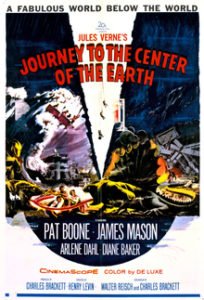
    Journey to the Center of the Earth

    There are multiple versions to choose from when watching this Jules Verne classic.  My favorite is the 1959 movie with Pat Boone. Go on an adventure to Iceland and journey to the center of the earth to discover dinosaurs, exotic plants, volcanoes, and more!

    The Swiss Family Robinson

    This Disney classic has young and old, imagining what life would be like on some exotic and remote island where water and food are plentiful. So, as long as you enjoy your family as your only source of company–you’re set! (The current COVID-19 lockdown has me putting that theory to the test.)

    Around the World in 80 Days

    around the world in 80 days travel movie

    Well, the name says it all.  Join Phileas Fogg in yet another Jules Verne novel turned movie as he attempts to circumnavigate the world in 80 days! You can choose from the 1956 movie version or the 2004 version.  

    Jules Verne’s book has inspired numerous people since its publication in 1873 to make real-life attempts of Fogg’s route.  Even today, there are tour companies that help you book around the world tours following his path.

    Togo

    In this recent Disney movie, we learn more about the story behind the historic effort to save the Alaskan town of Nome. Those of you who watched Disney’s Balto, released in 1995, might be familiar with the story. However, in the words of Paul Harvey, I encourage you to watch Togo and learn “the rest of the story.”

    I’m not sure if the movie will inspire you to visit Alaska or not, but perhaps if it does, you’ll want to try dog sledding when you do.  Togo displays the determination and courage of those who call Alaska home, as well as the connection humans have with dogs. It’s an exciting and heart-warming true story for the whole family! (Currently, it is only available on Disney+.)

    Travel Dramas

    These travel movies are a mixture of bitter-sweet moments.  The desire to travel doesn’t start the same way for everyone. However, adventure is something that calls out to us until the day we die.  If only we are brave enough to answer.

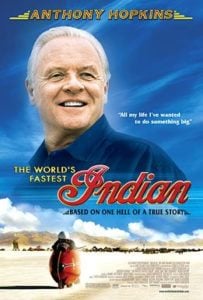
    World’s Fastest Indian

    Burt Munro (Anthony Hopkins) is a New Zealand man who dreams of traveling to the U.S. to race his Indian Scout motorcycle at the Bonneville Salt Flats in Utah. He finally scrapes together enough money to take himself, and his bike, on a ship to America.  America isn’t exactly what he expected (destinations rarely are), and he faces numerous hurdles in the journey to fulfill his dream.  

    He makes it to the salt flats, though, and achieves his dream in this inspiring movie.  Most people would have given up on their goals by the time they were Burt’s age, but he didn’t let age, money, or the opinions of others keep him from going after what he wanted.

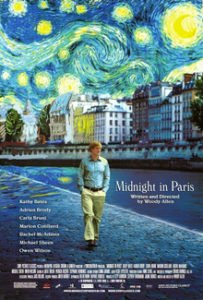
    Midnight in Paris

    This movie follows Gil Pender, who, on a visit to Paris, travels back in time to the 1920s and bumps into writers like Ernest Hemingway, Scott Fitzgerald, and Gertrude Stein. It’s a unique story that blends the present with the past and inspires you to book the next flight to Paris and write that novel you’ve been putting off! Okay, perhaps that’s just me. 

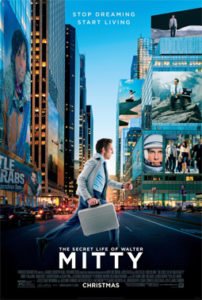
    The Secret Life of Walter Mitty

    This movie is full of beautiful landscapes and cinematic shots that create that sense of awe and wonder that travel provides. Its message is to stop daydreaming about living life and to live it. Begin your bucket list adventures and embrace life now. What some may not know, is the original movie came out in 1947 starring Danny Kaye. 

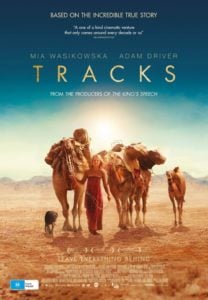
    Tracks

    This travel movie is based on the memoir of Robyn Davidson. Tracks portrays the real-life journey Robyn took in 1977. Robyn, with her four camels, and a dog, walked 1,700 miles across Australia to the Indian Ocean. This 9-month journey was a dream of hers.  A dream few understood, but it was something she felt she had to do. Dreams are like that sometimes, people won’t always understand the “why” behind your decisions, but as long as you do, sometimes that is enough.

    Robyn’s courage inspired me.  I don’t want to walk across Australia (snakes and spiders are not my cup of tea), but I do want to be courageous enough to go after my dreams.

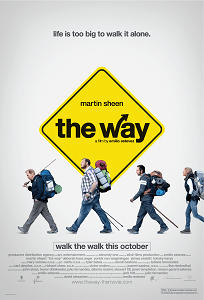
    The Way

    the way movie poster

    In this moving story of love and loss, Thomas Avery (Martin Sheen) travels from America to France to recover the body of his son, Daniel (Emilio Esteves), who died while walking the Camino de Santiago. While in France, Avery decides to pay homage to his son by completing the 500-mile pilgrimage to the city of Santiago de Compostela.  

    If you’ve ever considered taking a long-distance hike, but aren’t exactly ready to reenact Reese Witherspoon’s role in Wild, then consider walking the Camino de Santiago. This almost 500-mile trail stretches from France to Spain in a mostly flat path that winds its way through various towns. You can even sleep in a bed every night if you’d prefer not to rough it in a tent. 

    The other advantage of this is that you don’t have to pack as much as you would on a typical backpacking adventure as you can eat in the towns along the way. You can even cycle the Camino de Santiago, but first, watch The Way and see a glimpse of what the journey holds.

    Travel Television Shows

    These are some of my favorite travel shows, and yes, most of them revolve around food.  What can I say? I enjoy eating, and I feel that food is in itself a mode of travel.  Food takes us on a journey through cultures, families, and communities.  It encapsulates the whole experience of travel in a bite.

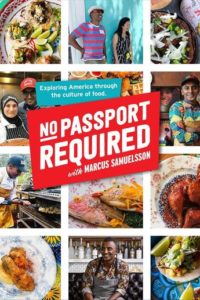
    No Passport Required

    I love the idea behind this show, and it goes perfectly with the theme of this article. We can travel somewhere new, even while we’re at home. Chef Marcus Samuelsson visits cities across America and learns about different American cultures, their history, and the food that is unique to them.

    For example, he filmed an episode here in Seattle, where he explored the Filipino American culture.  We learned how Filipinos migrated to America and about the role of food in their culture. No Passport Required will inspire you to seek out new cultures and places close to your home and to learn about those around you.

    Somebody Feed Phil (I’ll Have What Phil’s Having)

    You can’t help but smile along with Phil as he shares his genuine (and expressive) love of food and travel. This is a light-hearted show, Phil is not the cranky, seasoned traveler you might be used to seeing.  His childlike joy of food and life is infectious! (you can watch on Netflix, and if you like it, you can purchase the DVD from his earlier series “I’ll Have What Phil’s Having”)

    Rick Steves’ Europe

    My grandma, who is 96 years old, loves traveling around Europe with Rick Steves.  She, of course, does it from the comfort of her recliner at home, but she travels nonetheless! Rick Steves has been traveling around Europe and taking us with him for almost 20 years. If Europe is on your bucket list, his videos are a good place for you to start planning your trip.

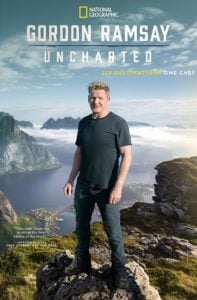
    Uncharted with Gordon Ramsay

    Follow Gordon Ramsay as he explores the world experiencing new cultures, foods, and local experiences on his quest to create his own dish with his unique flair in a friendly showdown with a local chef. It’ll have you wanting to travel and eat all in the same show! (Currently, this is only available on Disney+.)

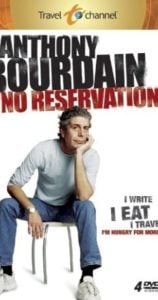
    Anthony Bourdain – No Reservations or Layover

    If you prefer the more edgy travel host, then look no further than Anthony Bourdain. He’s no Phil and certainly no Rick Steves, but he was a prolific traveler, chef, and writer. He’ll have you drooling over the sumptuous meals he eats during his travels as well as daydreaming about traveling the world full-time. He gives you his opinion straight up and shares a life that few will ever know.

    The Kindness Diaries

    This reality/documentary-style travel show transports you around the world with Leon Logothetis. Leon sets out to travel the world without money, relying solely on the kindness of strangers. This beautiful series shows us that there are still good people in the world.  That generous humans do still exist, and we can all do our part to add a little kindness to the world around us.

    The Amazing Race

    In The Amazing Race, contestants compete for the grand prize in a non-stop race around the world. The contestants compete in pairs consisting of a parent and child, husband and wife, brother and sister, and so on. My hubby and I applied to the show once, later realizing what a hot mess that would have been, we were thankful just to watch it at home rather than be on the show.

    Anyone who travels knows how stressful travel can be. The Amazing Race takes that stress to a whole new level! Plus, you get to see beautiful and unique destinations and learn about giving back while you travel too.

    Long Way Down
    long way round travel tv show

    In this T.V. mini-series starring Ewan McGregor and his friend Charley Boorman, the two men set out on a 19,000 mile trip from London to New York City on their motorcycles. This movie had a small part in my hubby and I choosing our BMW dual-sport motorcycles. It’s a great adventure through Europe, Asia, and then the United States.

    Disclaimer: This TV mini-series has so much bad language it might make a sailor blush.  So do not watch this with kids around, or perhaps just watch it on mute.  

    Travel Movies & T.V. Shows

    I’ve highlighted some of my favorites travel-related movies and television shows that I feel inspire the dreamer within. However, there are so many travel movies and television shows to choose from and these are just a small portion of what you can explore. 

    If you have a favorite I didn’t list, let me know.  I’m always on the hunt for a good movie, so I love hearing recommendations.

    If you’re looking for more ideas, read 15 Inspiring Things to Do When you Can’t Travel for ways to transport yourself to another destination.  There are so many ways to feed our appetite for travel if we’re willing to put forth a little effort and use our imaginations!

    “To Infinity & Beyond!”

  • Exciting Misadventures in Harbin, China

    Facebook
    Twitter
    Pinterest

    At the end of my senior year in college, I received a scholarship to study the Mandarin Chinese language in China for one semester.  At the end of my semester, my friend Angela met me in Beijing, where we started our one-month travel around China.

    This would be our first international trip together (unless we count Canada), and we were both excited to be going on this adventure together!  This post is about our misadventures in China and, specifically, our trip to Harbin, China.

    About Harbin, China

    One of the final places we visited during our one month travel in China was Harbin. Harbin is in northeastern China, in the Heilongjiang province. It is known for its cold weather.  How cold, you ask?  Well, considering one of its nicknames is the “Ice City,” you can guess it gets pretty cold. 

    According to Travel China Guide, “The snow season can last as long as half a year. Harbin weather in January is the coldest with temperatures dropping to -38C (-36F), while it is just 20C (68F) on average in summer.” So, there you have it–it’s cold! They can build entire ice villages and not worry about them melting for months.  

    It was because of their cold weather that I wanted to visit.  Well, not the cold weather, but rather the Harbin Ice Festival.  The Harbin Ice Festival started over 36 years ago and is now the world’s largest ice festival. They construct entire buildings out of ice to create a life-sized ice village. They also add colorful lights to the ice sculptures to create a magical ice wonderland.  It is awe-inspiring!  Here are some photos from a BBC article about the Harbin Ice Festival.

    Moe and I were visiting in mid-December, so we knew there was little chance that we’d get to see any of the ice sculptures since the festival doesn’t kick off until January. However, with our flight back to the States leaving in a week, this was our only chance to see it. So, with hopes of seeing some ice sculptures, and intent on exploring a new city, we boarded a plane to Harbin. 

    The Misadventures Begin

    Our misadventures in Harbin start with our flight. To begin with, the flight left one hour late (not unusual when flying in China). Then, 20 minutes before landing in Harbin, they announced we were diverting to Qingdao for an emergency landing. O-K. However, 30-minutes before landing in Qingdao, we’re informed that we are diverting to a different airport. 

    We land in a dark and deserted airport and we are told the emergency landing is due to bad weather in Harbin.  So now our plane sits in a dark, empty airport, in who-knows-where, China.  

    The Chinese passengers start chatting with each other. They also thought it was strange and didn’t sound too happy about it.  They began making phone calls to family in Harbin, and from what I could understand (from my limited Chinese vocabulary), the people they phone in Harbin had no idea why the plane wouldn’t have come straight there as the weather was okay–no storms.  

    Abandoned airport in China
    This photo was taken through the airplane window while waiting on the empty runway.

    Here’s an audio file of our experience as we sat on the plane. 

    To hear the reports that there appeared to be no reason why they didn’t take us straight to Harbin, was not exactly comforting.  So we sat there, contemplating why we landed in this deserted airport while listening to the frustration of our fellow passengers. Thankfully, about 30 minutes later, we continue to Harbin as planned.

    I’ll still never know why we landed on that empty runway, and I guess it doesn’t matter.  It was all part of the adventure!

    Exploring Harbin

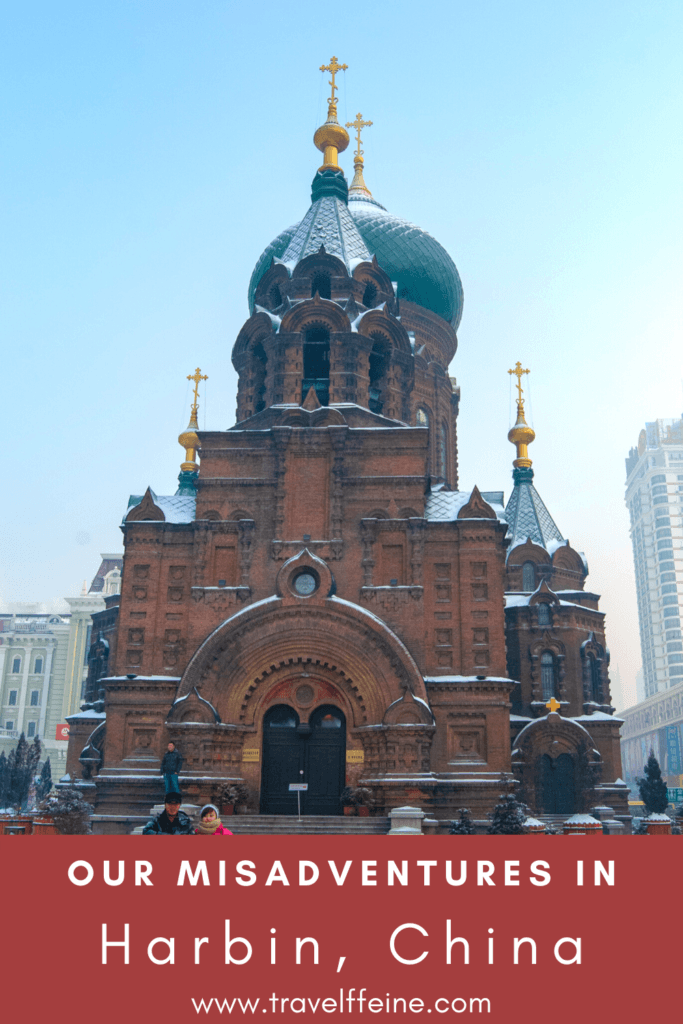
    We have only one full day in Harbin, so we have to limit our sightseeing activities and maximize the time we have.  We got up early that morning and started our day by visiting the Saint Sophia Cathedral. This former Russian Orthodox church is over 100 years old. It is now an art gallery.  When I stood there looking up at the cathedral, I felt like perhaps I’d taken the wrong flight and landed in Russia. The cathedral really stands out among the surrounding architecture.

    Saint Sophia Cathedral Harbin China
    Saint Sophia Cathedral

    After exploring the Saint Sophia Cathedral, we walked to Zhaolin Park. We watched the workers cutting large blocks of ice with which to build the massive ice structures for the upcoming Harbin Ice Festival. Although we couldn’t go inside the park, we saw a lot of the buildings being constructed as we walked around the park.

    We continued walking to Stalin Park on the banks of the frozen Songhua River.  The Songhua River is used to supply the ice needed to make the enormous ice sculptures for the ice festival.  The workers come to the river and then carve out huge blocks of ice, which they then use to create ice bricks to form the buildings. Although we would love to have seen the actual ice festival, it was still fascinating watching the behind the scenes construction that goes into creating it.

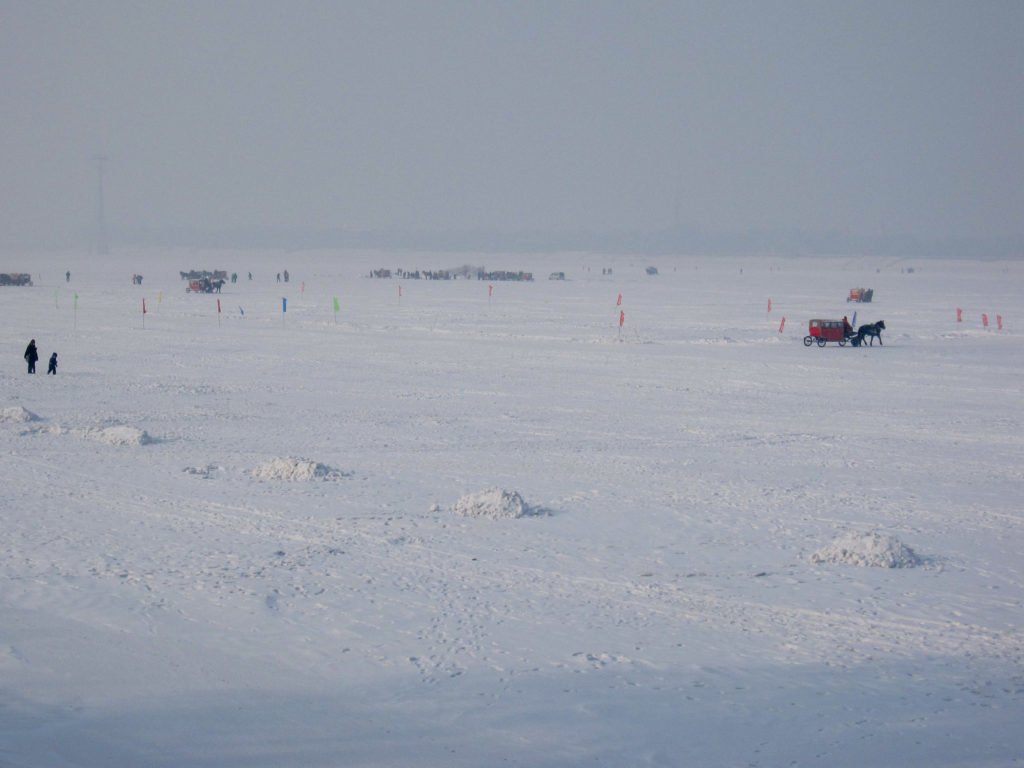
    People were out walking on the frozen Songhua River. You can also take horse-drawn carriage rides across the river. During the Harbin Ice Festival, in addition to the horse-drawn carriage rides, they have dog sleds, ice swimming, and other activities on the Songhua River.  

    Frozen Songhua River in Harbin China
    The frozen Songhua River.

    An Afternoon Adventure

    After returning to our hotel, we made arrangements to have a taxi take us to our next stop, the Harbin Siberian Tiger Park. I love tigers, and this is one of Harbin’s recommended attractions, so we decided to check it out. 

    The drive to the Siberian Tiger Park was about a 30-minute drive outside of Harbin. Our driver turned off the highway and then turned down a side road before turning around to find the right road to the Siberian Tiger Park. It’s never a good sign when your taxi driver isn’t sure where your destination is.

    We turned down a dirt road with tall brush on both sides. This excursion was starting to feel very remote.  I guess I should have considered that they wouldn’t keep a bunch of Siberian tigers in the middle of town. The taxi driver lets us out at the main entrance, we pay him and then see about purchasing our tickets.

    Subscribe to our newsletter

    Harbin Siberian Tiger Park

    We paid for the standard tour before heading to the waiting room inside. You can choose a variety of experiences, including purchasing live chickens and goats that are fed to the tigers while you watch.  We skipped that. Instead, we’re taking a small bus tour that drives us through the park, where the tigers roam freely.

    As we wait for our tour, I overhear two men conversing in Mandarin Chinese. One of the men (who appears to be Chinese) tells the other man (who I later learn is from India) that I am probably Russian.  A little annoyed, I reply (in Mandarin) that I am not Russian, that I am an American. 

    The Chinese man is shocked that I understand what he is saying.  He comes over, apologizes, and then asks where I learned to speak Chinese–and thus begins our conversation.

    Now, if I were in the U.S. and had overheard a stranger talking about me, I would be annoyed, but I wouldn’t say anything. However, after almost four months in China, I’ve learned that privacy and social boundaries are a Western luxury.  

    On almost a daily basis, in China, I was asked the following questions: Where did I live? Was I married? Did I have kids? How much money did I make?  These are all questions in the U.S. we would never ask a stranger, but, in China, it is completely acceptable.

    So at this point during my time in China, I embraced the culture of saying whatever you want to strangers, and I didn’t hold back on correcting this man when he referred to me as Russian.  Later, I learned what a blessing in disguise this initial interaction with these men would be.

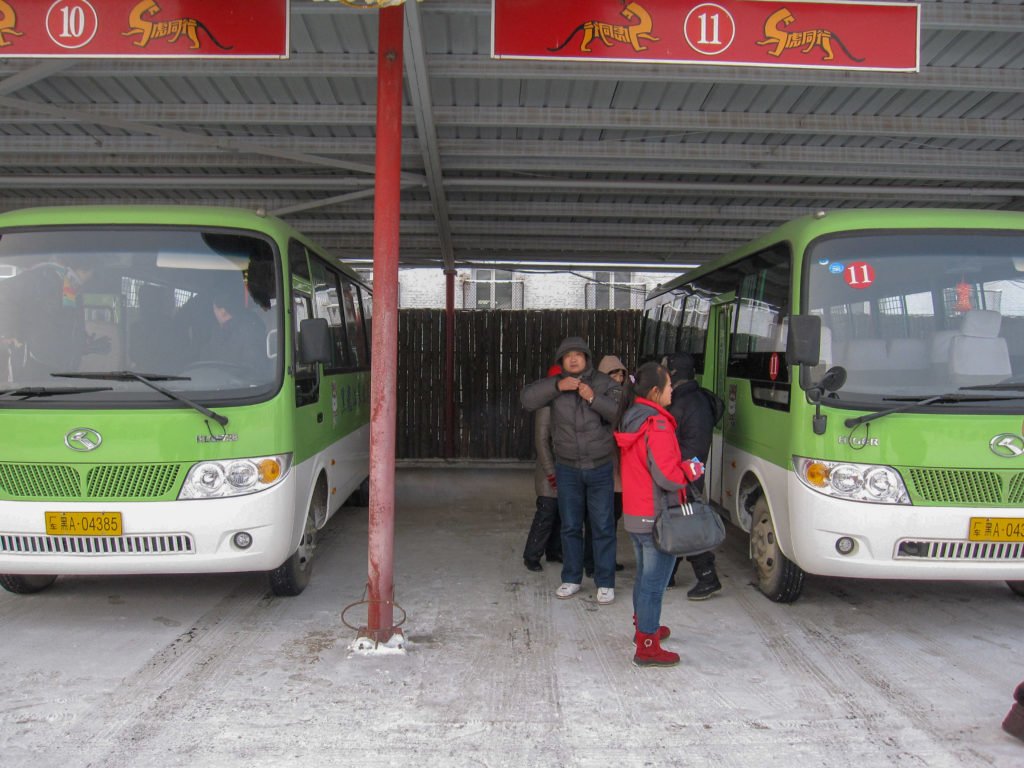
    tour bus
    Our tour bus at the Harbin Siberian Tiger Park.

    The Siberian Tiger Tour

    It is time for our tour.  We leave the warm confines of the waiting area and board a small bus.  There are large windows on every side so you could view the tigers from your seat. 

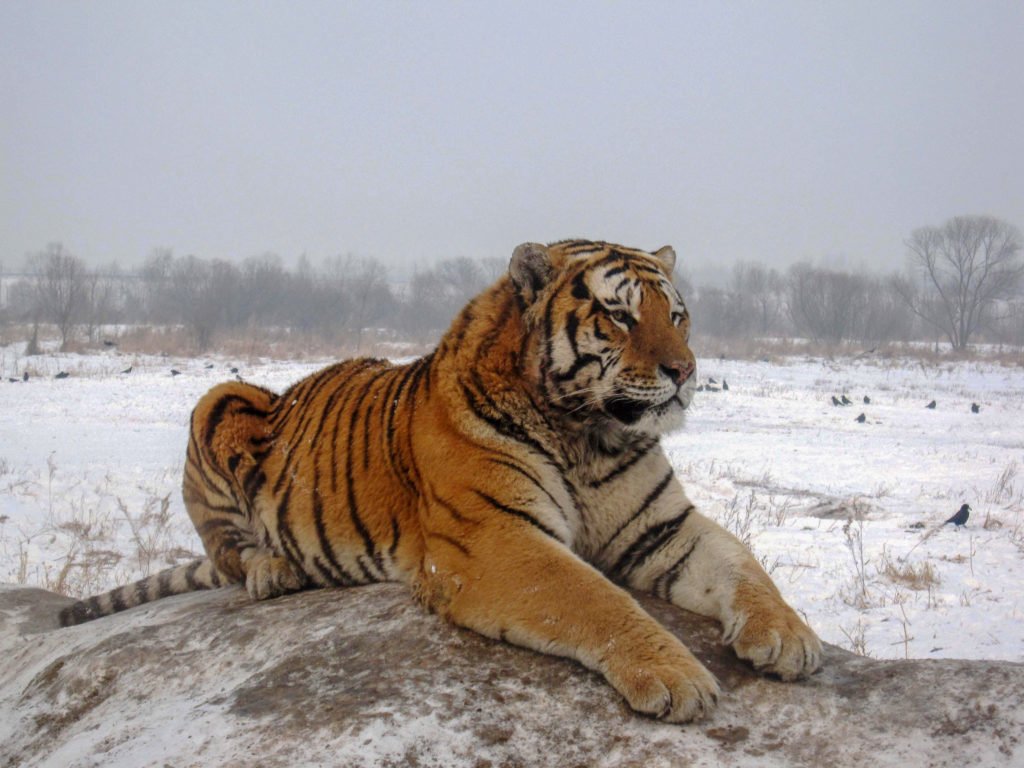
    Siberian Tiger
    These are such beautiful creatures!

    We wait while another SUV, a different package experience than ours, drove out to feed the tigers.  One of the Siberian tigers walked up to the SUV, and its head came above the passenger window! I was in awe at how massive these beautiful creatures were. They are stunning!

    Getting to see the tigers up close through the windows of the tour van was a great experience.  However, there was also a section of the tour that you could walk through, that had animals in small cages.  Some of them looked injured and others malnutritioned, including a liger, which of course, made me think of Napoleon Dynamite–“It’s pretty much my favorite animal…”

    All in all, I loved seeing these gorgeous creatures, but it’s not an excursion I recommend. All in all, I felt the animals were not receiving proper care. 

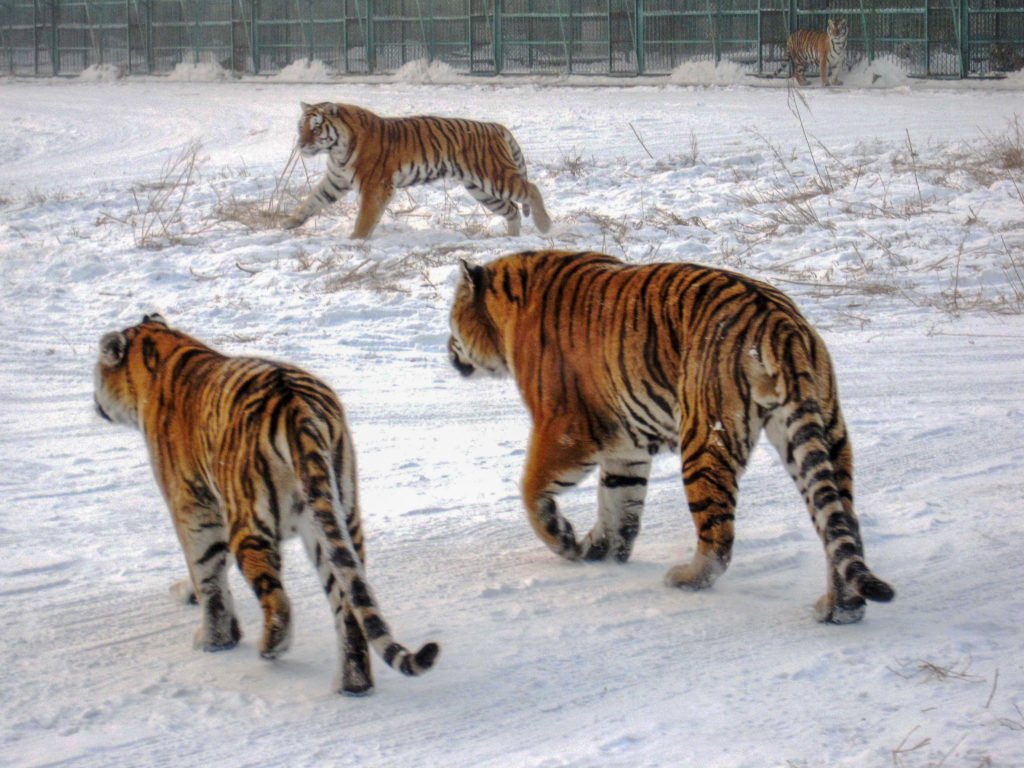
    three Siberian Tigers
    Here kitty, kitty!

    Almost Stranded in Harbin, China

    It was getting dark as we finished the tour, and since we were the final tour of the day, everyone headed outside to leave for home. I saw a taxi driver, and I ran over to him to ask if we could get a ride, he let me know he was waiting for someone else.  I went to another taxi driver, but he was also waiting for someone else.  

    It was at this point I realized we had no way to get back to our hotel.  Just when I felt a little panic starting to creep in, the two men I conversed with earlier, offered to give us a ride back to town in their car.  Thank God! There was no way we could walk back to town in the dark, not to mention we wouldn’t even know how to find our way there.

    We packed into their car and thanked them profusely for their generous offer.  The Chinese man explained that there were no taxis that came there, except the ones reserved to take the employees home. We would have been stranded at the Harbin Tiger Park if they had not offered us a ride.

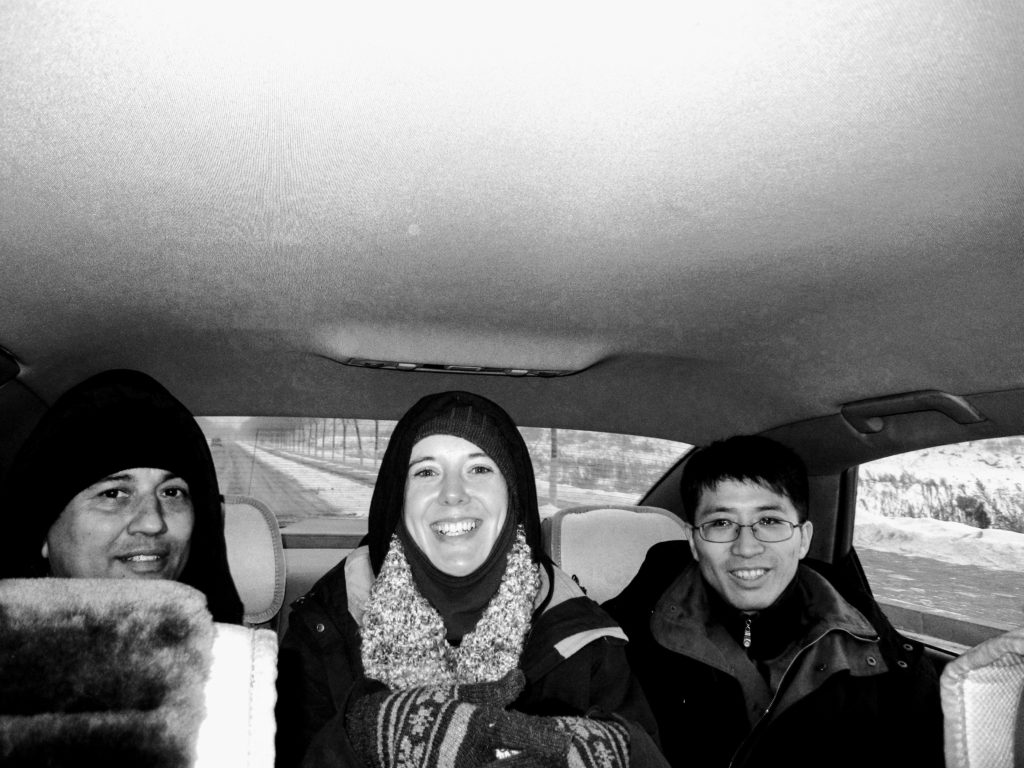
    3 people in the back seat of a car
    Me and the two men who befriended us on our car ride back to Harbin.

    On the way back to town, we learned that the other man was there on business from India. The Chinese man was his business contact and host during his stay.  The man from India told Angela and me that if we thought China was crowded, then we really needed to take a trip to India!

    They dropped us off in town, and Moe and I stopped to eat dinner before walking to our hotel. This wasn’t the first misadventure of our trip to China. Thankfully it was the last.

    Other Misadventures in China

    There was the time we visited a remote Shaolin temple, only to learn there weren’t any “official” taxi drivers to take us home.  We had to bargain with a man in a van for the ride back to our hotel. We joked with each other about what our moms would think. They taught us never to take rides with strangers; yet, here we were riding with one for over an hour. He turned out to be an amiable and helpful driver who gave us a good tip about which train to take the next day.

    Then, of course, there was the time in Xi’an when we couldn’t find a taxi anywhere (typical problem there) and had to take a ride with a rickshaw driver who thought he was a NASCAR driver.  Then on top of it, he tried to take advantage of us on the price! So he and I got into an argument on the street, which then drew a crowd, and eventually Moe and I just walked off, paying him the originally agreed-upon amount. 

    Sometimes, these misadventures were frustrating, even a little scary, but in the end, they always taught us more about ourselves and our fellow humans. Perspective is all you need to change a misadventure to an adventure.

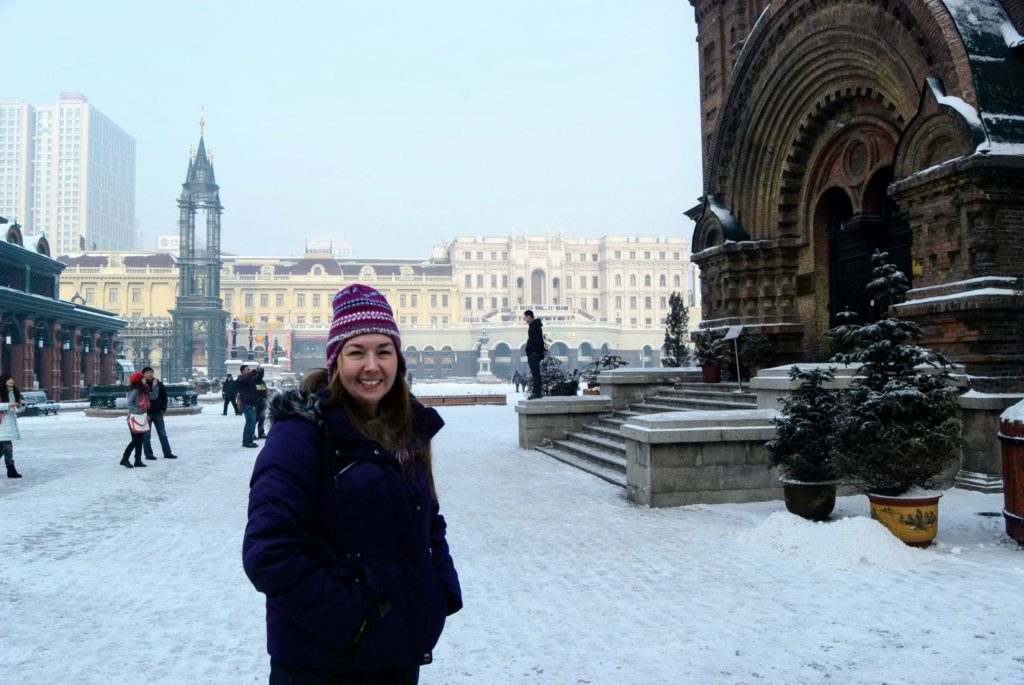
    Women standing in the snow
    My friend Angela standing outside the Saint Sophia Cathedral.

    Kindness of Strangers

    Those two men, who gave us a ride in Harbin, were just a part of many acts of kindness I have been fortunate enough to receive during my travels. I was relieved and grateful for their generosity. I knew we had angels watching over us that day in Harbin.  Otherwise, we might have become an ice festival exhibit, “ode to ignorant tourists.”

    It is a reminder that we should practice kindness, no matter where we are.  You never know what struggles a person might be dealing with–especially when they’re in an unfamiliar place. Your act of kindness might make all the difference. I know that was the case for Moe and me in Harbin.  I’m glad those men thought I was Russian, and I’m happy I spoke up, even though it went against my usual inclinations.

    I can say, looking back on my time in China, I experienced things I’d never experienced before. I did and said things I wouldn’t normally have back home. However, it was all part of the adventure (or often misadventure), and it changed me for the better. That’s what traveling does. It opens you up to new things, new people, and a new way of thinking. You grow and develop a better understanding of the world outside your comfort zone. I am better for having traveled.

    China wasn’t the last of my misadventure fun with Angela, read Misadventures in Normandy France to learn more about our travels together.

    Have an Adventure!

    Lorem ipsum dolor sit amet, consectetur adipiscing elit. Ut elit tellus, luctus nec ullamcorper mattis, pulvinar dapibus leo.

  • 15 Inspiring Things to Do When You Can’t Travel

    There are a variety of reasons why someone may be unable to travel.  These include restrictions due to a new wide-spread virus (and here I thought Outbreak was a fictional movie), lack of funds, sickness, work or school schedules, and so on.  It can be frustrating when you want to travel, but can’t, so I’ve created this list of things to do when you can’t travel to keep you inspired until your next adventure. You can “travel” from the comfort of your home, with a little inspiration and a dash of imagination!

    *Given our current restrictions on travel due to the COVID-19 virus, some of these things to do will not be an option under the current shelter-at-home mandates. However, many of these ideas will work, even if you are forced to stay indoors. 

    1) Read Your Favorite Travel Blogs

    First off, I’m going to assume you’re doing that at this very moment (wink wink). However, besides reading all your favorite articles on Travelffeine (subscribe here), why not check out some other travel bloggers to inspire your next adventure. Here are a few to get you started.

    • A Suitcase Full of Books is a travel blog I recently came across. I feel that Elizabeth and I are kindred spirits in our love of literature and travel. If you’ve ever thought about planning a trip based on your favorite author or story, then check out her travels and start planning your trip!
    • Sailing Zatara is a sailing blog I heard about from a friend.  If you’re a fan of Captain Jack Sparrow and dream of one day sailing a ship around the world then Sailing Zatara has you covered!  The Whitaker family sold everything and set sail for a full-time life of sailing abroad.  They also have a YouTube channel where they vlog about their travels. So grab your eye-patch and discover what it’s really like living full-time on a boat.
    • Maybe you’ve secretly thought of moving to some tropical destination, then check out TielandtoThailand to learn what it takes to uproot and move to another country. Angela and Chris moved to Thailand in 2013 and have been living there ever since. They share their experiences as ex-pats in Thailand and also travel tips for those coming here for vacation.

    2) Read Inspiring Travel Books

    Long before I was old enough to travel on my own, I traveled the world with a single visit to my local library. I would fill up my backpack with stacks of books on almost every subject imaginable. I’d check out books on languages, biographies, and fictional adventures in far off places. Books were how I dreamed, explored, and traveled the world, all from my home in Small Town, U.S.A. They are still where I turn for inspiration and adventure. All you need to travel is a good book and a little imagination!

    Books to start your adventures at home

    • 501 Must-Visit Destinations: I love photo books like this one, and each time I visit someplace new, I look through the book to see if I can check any of the destinations off with the hope of one day seeing all five hundred and one.  Flip through its pages and let the photographs and descriptions inspire you to dream about your future travels.
    • The Lost City of Z: The book, as usual, is much better than the movie. It has adventure, mystery, scary creatures, and an exotic destination. David Grann sought to uncover the mystery behind the disappearance of the early 20th-century British explorer Percy Fawcett. Percy Fawcett went on an expedition in the Amazonian jungles, never to be seen again, and Grann went on his own adventure to retrace the lost explorer’s steps.  If you love adventure, then you’ll enjoy this book and perhaps even be inspired to travel there.
    • The Log of the Snark & The Cruise of the Snark: These two books, one written by Jack London and the other by his wife Charmian London, describe their sailing adventure to the South Pacific.  Jack London wrote The Cruise of the Snark, which tells his side of their expedition, whereas The Log of the Snark is the journal of Charmian London, giving us her point of view on their journey.
    • A Moveable Feast: This book was published posthumously from Ernest Hemingway’s writings and journals from his time in Paris during the early 20th century.  It made me think of the movie Midnight in Paris (see below) and of that time in history where so many artists and writers were putting pen to paper and brush to canvas to create the masterpieces we enjoy today.  It might also inspire you to take a trip to Paris and try to recreate the spirit of that era for yourself.

    3) Watch Travel Films & Shows

    My Grandma is 96 years old at the time that I write this.  For years, she has been unable to take trips of any real distance. However, that never stopped her from “traveling.” Her favorite thing to do, as she calls it, is “traveling from her armchair.” I’d call her up and ask her where she’d traveled to recently, she’d tell me about someplace, usually in Europe, that she’s visited as she watched her favorite Rick Steves travel show or something of that nature.

    I love watching movies and shows about traveling. It’s one of my favorite things to do when I’m looking for a little travel inspiration. Here are a few of my recommendations. To see more travel movie recommendations read 32 Movies & TV Shows to Inspire the Traveler at Home.

    Travel Movies:

    • The Secret Life of Walter Mitty
      This movie is full of beautiful landscapes and cinematic shots that create that sense of awe and wonder that travel provides. Its message is to stop daydreaming about living life and to live it. Begin your bucket list adventures and embrace life now. What some may not know, is the original movie came out in 1947 starring Danny Kaye. (You can stream the 2013 version on various platforms such as YouTube or Amazon Video)
    • Midnight in Paris
      This movie follows Gil Pender, who, on a visit to Paris, travels back in time to the 1920s and bumps into writers like Ernest Hemingway, Scott Fitzgerald, and Gertrude Stein. It’s a unique story that blends the present with the past and inspires you to book the next flight to Paris and write that novel you’ve been putting off! Okay, perhaps that’s just me. (You can stream for free on Crackle, or pay to stream on YouTube and Amazon Video)
    • UP
      This is a heart-warming movie the whole family can enjoy.  It’s filled with dreams, adventures, and a message about what matters in life–our relationships with those we love. If it’s been a while since you watched it, or if you’ve never seen it before, I highly recommend you make it a family movie night and begin creating special moments right now.

    Travel Television Shows:

    • Somebody Feed Phil
      You can’t help but smile along with Phil as he shares his genuine (and expressive) love of food and travel. This is a light-hearted show, Phil is not the cranky, seasoned traveler you might be used to seeing.  His childlike joy of food and life is infectious! (you can watch on Netflix, and if you like it, you can purchase the DVD from his earlier series “I’ll Have What Phil’s Having“)
    • The Amazing Race
      In The Amazing Race, contestants compete to win the grand prize in a non-stop race around the world. The contestants compete in pairs consisting of a parent and child, husband and wife, brother and sister, and so on. Anyone who has traveled knows how stressful travel can be. The Amazing Race takes that stress to a whole new level! Plus, you get to see beautiful and unique destinations and learn about giving back while you travel too. (you can watch on Amazon Prime Video and CBS All Access)
    • Gordon Ramsay: Uncharted
      Follow Gordon Ramsay as he explores the world experiencing new cultures, foods, and local experiences on his quest to create his own dish with his unique flair in a friendly showdown with a local chef. It’ll have you wanting to travel and eat all in the same show! (Currently, this is only available on Disney+.)

    4) Listen to Travel Podcasts

    Another great thing to do when you can’t travel is to listen to travel podcasts.  Travel podcasts are great for learning about a new destination, getting travel tips, and exploring travel opportunities you may not have considered.  You hear firsthand from seasoned travelers what they have learned during their years of traveling.

    There are so many to choose from, but here are a few to consider:

    • Zero to Travel
      This podcast has tips and ideas for how to travel long-term. It covers different ways to make money living abroad, as well as general tips all travelers can use.
    • Travel with Rick Steves
      In this travel podcast hosted by Rick Steves, he interviews locals from his travels, and you learn the stories and history behind the different destinations.
    • Hawaii Vacation Connection
      Learn about where to stay on the different Hawaiian islands, where to eat, do’s and don’ts of visiting Hawaii, and so much more.  If you want to take a trip to Hawaii, start your vacation planning now with this all about Hawaii podcast.

    5) Go on a Food Journey

    One of my favorite things to do when I return from a trip is to find recipes from my travels and try making them. This is a fun way to bring the travel experience home. Find a new recipe that you’ve never tried and bring some culture to your table. 

    If you need some inspiration, check out my “Recipes Inspired by Travel” Pinterest board. I regularly add to this board, so subscribe if you want to see future pins as well.

    If you don’t enjoy cooking at all, you can, of course, have a similar experience by getting take-out from a local restaurant. Try to choose dishes you’ve never tried before. This will make the experience more authentic. 

    6) Throw a Travel-Themed Party

    This idea goes well with the previous one. Choose a country for a travel-themed party and then decorate and plan a menu based on that country. In addition to making dishes from other countries, you can have your dinner guests look up facts about your meal’s country of origin. Consider creating some trivia cards for a fun party game to learn more about that destination. Discuss favorite travel memories, if you’ve visited the destination of your dish before. Make a fun night of it and pretend you’re dining in another country. 

    7) Play a Travel Board Game

    When looking for things to do at home, I love turning to old-school board games! I know in the world of technology, you have a lot of options for online video games, but there’s something so fun about playing board games.  Perhaps, I feel that way since I grew up playing them, but either way, I think it’s nice to unplug once in a while and return to the world of low-tech fun. Here are a few of my favorites:

    • Ticket to Ride
      This strategy game has a few versions. I own the original, which has you riding the rails across America trying to create the most train connections before your fellow players can beat you to it!
    • Risk
      Risk is more about world domination than traveling for fun, and depending on who you play with–it might get intense!
    • Settlers of Catan
      Catan is a great strategy game that has you trying to build a civilization and keep your fellow players from building theirs.  It has a little bit of a learning curve, but it is a lot of fun, and the gameplay changes every time you play it.
    • Continent Race
      Continent Race is a fun game the whole family can play. It is a game created by a kid for other kids. The entire family can explore the world together and learn all about the different countries around the world in this fun and educational game.

    If you’d like a mobile app to play a game on your own, try World Geography Quiz Game.  Have fun learning about countries all over the world. Learn about maps, flags, language, currency, etc. If you love travel and learning, then you’re sure to enjoy the World Geography Quiz Game.

    8) Create a Travel Collage

    Another fun thing to do when you can’t travel is to create a travel inspiration board, aka a travel collage.  Travel collages are fun to do on your own or with a friend. Your family could even create one together for your next family vacation.  

    Find some magazines, or lookup maps and photos online and print out any that spark your interest. Then find a large piece of cardboard (use an empty box), poster board, or piece of thick paper and begin cutting and pasting to create your travel dream board! 

    You can use a mixture of maps, text and inspiring photos you found online.  You can also create simple photo collages like the one I made below.  Group together favorite vacation photos and memories that make you smile then frame it and hang it somewhere in your house.

    9) Take a Trip Down Memory Lane

    Dust off your photo albums and travel down memory lane. This is one of my favorite things to do when I’m not traveling. It’s so fun to look back on past trips, whether it’s a trip to another country, a trip to the local zoo, or last year’s camping trip–it doesn’t really matter. It’s always great to see the smiling faces and remember those special moments you may have forgotten. Photos are time machines that take us to our favorite places and memories with those we love.

    If you don’t have any physical photo albums, then why not go through your digital photos and make one with your favorite moments. Google Photos has a feature that lets you create a photo book that they’ll print and ship direct to you. 

    Create a Photo Montage

    Another fun way to use your digital photos is to create a photo montage of your favorite travels.  Then have a family movie night. Even better, if you have digital movies, incorporate these into your photo montage for a mixture of photos and videos.  This is sure to be a hit with your family! 

    There are a variety of tools you can use to do this.  One of the easiest is probably Google Photos. This simple option allows you to create short montages utilizing a mixture of photos and videos. Kapwing is another free montage/video software that will enable you to drag and drop your photos and videos to easily create a photo montage to share with your friends and family. For something a little more advanced, consider trying Shotcut, it’s free and has a lot of features, but there is a bit of a learning curve.

    10) Learn a Language

    Do you want to travel to Spain, but don’t have the money to do it just yet? Why not start by learning Spanish? Learning languages is a great way to start your travels while at home. It helps create a connection with the culture of the country you plan to visit.  Plus, with technology, there are now some great (and easy) ways to start learning a new language. Even if you’ve only got 15 minutes a day, you can learn to speak a foreign language.  

    Here are some apps I’ve used for my language learning.

    • Duolingo
      This is probably one of the most popular language-learning apps.  It is easy to use and allows you to progress in your language learning from beginner to more advanced language skills. It has a ton of language choices too.
    • Memrise
      Memrise uses a variety of memory techniques to help you learn a language quickly and remember it. This is an easy to use app for beginner language learners.
    • Beelinguapp
      This language learning app lets you read books and listen to music in other languages. I’d say it’s a little more advanced than the other apps listed here, but a great way to expand your language learning.
    • HelloTalk
      If you want to practice your language skills with native speakers, then HelloTalk is a great place to start. You can chat with native speakers from around the world and begin practicing before you ever leave home!

    11) Create a Travel Scrapbook Journal

    When you get back from a trip, often there’s a bit of sadness that your travel adventures are over (at least for the moment). A fantastic way to extend your travel experience is to create a travel scrapbook journal. Go through all the receipts, and ticket stubs, and photos you have from a recent trip and turn it into a personalized travel journal.  Write notes about your favorite moments and create a customized travel souvenir you’ll cherish forever.

    Here’s a quick video by Paperchase showing you a few ideas for creating your travel journal. For more ideas on ways to turn your travel mementos into DIY souvenirs and keepsakes, check out my Travel Gifts & DIY Crafts Pinterest board.

    12) Learn a New Activity

    Another fun thing to do when you can’t travel is to learn a new activity you want to try on your next travel adventure. Perhaps you’re planning a trip to the Joshua Tree National Park, and you’d like to do some rock climbing while you’re there, take a local rock climbing class and begin learning the skill before your trip. 

    Maybe you’ve always wanted to learn to scuba dive, well why not start with an intro scuba diving class at your local pool, then if you like it you can enroll in a PADI certification course and be ready for your next tropical diving adventure! 

    There are so many things you can do, even learning to run is a great way to prepare for a trip, running is one of those activities you can do no matter where you are, and it’s a great way to explore an area while traveling. 

    13) Hotel Retreat at Home

    This one may require a little effort, but I think when you’re relaxing in your hotel at home, you’ll appreciate the time it took. 

    Start by making up your bed with your nicest sheets and bedspread. Find some fresh cut flowers and put them in a vase somewhere in the room. Then get some bottled water, and maybe even move your coffee maker into your bedroom if possible. In addition to coffee, you may also want to bring in some of your favorite tea along with mugs to enjoy it later.

    Find some bath salts or bubble bath and maybe even put some fresh flowers in your bathroom to complete your hotel retreat at home.  Then hang a “do not disturb” sign on your door and settle in with your favorite book or movie for a relaxing night.

    14) Play Tourist at Home

    If you have a visitor coming to stay with you, who has never been to your town before, what places would you take them to see, and what would you plan for things to do?

    Create a list of things to do and places to see and also places to eat, basically plan out a trip to your local area and then do that!  This will be a fun way for you to travel and play tourist, and it will also give you some great ideas the next time you do have guests over to visit.

    15) Start Planning Your Next Trip

    You may not be able to travel right at this moment, but you can certainly start planning your next trip! Trip planning is one of the best things to do when you can’t travel.  It gets you excited and focused on a goal.  You can use the collage idea I mentioned above on #8 and create a vision board for your trip.  Then place it somewhere you’ll see it each day and remind yourself what you’re working toward. 

    Abbigayle on Her Luxe Travels gives an example of a fold-out travel vision board you can create and place in your daily planner or journal.

    Go to your local library, whether in person or online and look up travel guides to your intended destination, then begin writing down all the places you want to see.  You can start to create an itinerary based on your “must-see” list for that destination.  You’ll also get an idea of how long you want to stay.  Check out my Maui Itinerary and Thailand Itinerary to get ideas on how I go about planning my trips.  If you’re a complete beginner, then check out Trip Planning 101.

    Final Thoughts on Things to Do

    It is discouraging when you want to travel but can’t, no matter what the reason is.  So finding things to do that give you the experience or essence of traveling, even when you’re stuck at home, is a great way to encourage and inspire yourself during those periods. 

    Whatever you do, make sure to have fun, be creative, and be thankful for all the opportunities that surround you. It’s easy to take things for granted, especially when we’re at home, but sometimes we just need to slow down and remember we’ve got an incredible world right at our feet if only we have eyes to see it.

    Happy Travels!

  • 6 Stunning Hikes in the Quinault Rainforest

    The beauty of the Quinault rainforest is something you need to see for yourself. It is breathtaking! The good news is, there are a lot of excellent choices for hikes around Lake Quinault, no matter your skill level. Whether you have younger kids or are just a beginner hiker, these Lake Quinault hikes offer you gorgeous displays of the area’s natural beauty with minimal effort. 

    Additionally, the drive around Lake Quinault is a beautiful adventure on its own. So, if you are unable to do any hiking at all, consider making the drive around the lake instead. In this post, I go over some of the easiest and most accessible hikes around Lake Quinault. The scenic drive around the lake combined with a hike in the Quinault rainforest will be a day you’ll never forget! 

    Quick Overview of Rainforests

    We are very fortunate here in Washington state to have a part of the largest temperate rainforest ecosystems in the world, right in our own Olympic National Park. According to National Geographic, rainforests are Earth’s oldest ecosystems and home to over half of the Earth’s plant and animal population! 

    The Olympic National Park covers almost 1 million acres and includes some of the most well-preserved temperate rainforests in North America. For those of us living in Seattle, we have something truly unique in our own backyard–we shouldn’t take that for granted. Instead, we should explore it and protect it.

    6 Easy Beautiful Hikes in the Quinault Rainforest

    1) Maple Glade Rainforest Trail

    This short 0.5  mile loop trail is probably my favorite out of all of the Quinault rainforest hikes I list in this post.  I felt like I entered another world. It was as if I was on the set of Avatar or Endor, the forest moon inhabited by Ewoks. The wonder and beauty of the rainforest all in this short 1/2 mile walk.

    Walking the Trail

    You’ll start by the Maple Glade Rainforest sign and walk across the wooden bridge to begin. Follow the trail as it curves left and winds its way past giant Western hemlocks and redcedar trees.  Soon the path meanders around and then curves left where it opens up alongside a small body of water.  This bog or pond, or whatever it is called, most likely connects to the Kestner Creek.  

    This is the area of the Quinault rainforest, where I feel as though I’ve entered another planet. There are mossy trees everywhere, forming an emerald canopy overhead, and small green plants that live under the water make it appear as a bright green pool of liquid.  I really can’t describe it justly, you’ve got to see it for yourself.  It is one hike I’d do on any day, rain or shine. It is stunning.

    Quinault rainforest green plants

    The trail loops around to the left and circles back to the trailhead. However, you can fork to the left and hike to the Kestner Homestead if you’re up for it.  See my notes on this hike below.  Make sure to stop and sit on the trail bench as you make your way back to the parking lot. The Maple Glade Rainforest trail deserves a slow meandering pace, filled with a lot of gazing upward in awe at the staggering beauty surrounding you.

    Accessibility

    This trail is marked as an accessible trail, although not fully meeting ADA accessibility guidelines. It is a flat trail with no real elevation change.  However, when I hiked it, the path was not wide enough to push a wheelchair through it, plus it gets muddy due to all the rain. So, it’s certainly a flat, easy trail, that one can take very slowly, perhaps with a cane, but probably not with a wheelchair.

    Getting Here

    Turn onto N Shore Rd from US-101. There is a small grocery store on the corner where you turn. Then stay on N Shore Road for about 5.5 miles. You’ll see the turn for the Quinault Rainforest Ranger Station and trailhead parking on the left. The Maple Glade Rainforest Trailhead is also shared by the Kestner Homestead Trail, which I discuss below.

    Facilities

    There are accessible toilets by the Quinault Rainforest Ranger Station as well as picnic tables. The ranger station is only open part-time during the summer when it is; I recommend you go in and speak with the rangers on staff to learn more about the area.

    Maple Glade Rainforest trail

    2) Kestner Homestead Trail

    The Kestner Homestead Trail is a 1.5-mile loop trail that starts from the parking lot at the Quinault Rainforest Ranger Station. The trailhead parallels Kestner Creek to the right, with the Maple Glade Rainforest Trail on the left. Look for salmon in the creek before starting the trail. I saw two huge salmon here when I visited in February. If you combine this hike with the Maple Glade Rainforest trail, it is about 2.0 miles roundtrip.

    The Kestner family moved here in the late 1800s, and the homestead has a variety of structures left behind from these early homesteading days. There is also a large picnic area underneath one of the large barn-like structures—lots of space for kids to run around and explore.

    Tip: If you don’t want to hike the 1.5 miles loop to the Kestner Homestead, you can also make a left out of the Quinault Rainforest Ranger station parking lot and follow the road about 0.5 miles. 

    You’ll see a small parking area on the left-hand side of the road near a gate. You can park here and then walk to the Kestner homestead from here. This option is wheelchair friendly as you have a wide dirt road and open paths that will easily accommodate a wheelchair.

    Getting Here

    Turn onto N Shore Rd from US-101. There is a small grocery store on the corner where you turn. Then stay on N Shore Road for about 5.5 miles. You’ll see the turn for the Quinault Rainforest Ranger Station and trailhead parking on the left.

    Facilities

    There are accessible toilets by the Quinault Rainforest Ranger Station as well as picnic tables. The Kestner Homestead does not have any toilet facilities, but it does have a picnic area.

    Kestner Homestead

    3) July Creek Trail

    This loop trail is at the July Creek Picnic Area about 3.5 miles down the North Shore Road when coming from US-101. You will see the parking area for this day-use picnic area on your right. It’s a very short “hike,” but I feel that the giant trees you find here make it well worth your time!  You also have access to Lake Quinault from the picnic area.

    It is a great place to enjoy a picnic by the lake or to take the short hike past towering Douglas firs and cedar trees. As you continue down the trail, past the main picnic area, you’ll cross July Creek and pass a few more picnic areas with views of the lake before the trail connects with the road.  

    You can walk up the road back to the parking lot from here, or, turn around and loop back up the side trail you passed earlier when crossing the creek bridge, and this will connect you back to the parking lot as well.

    The picture below is of me standing by a fallen tree that is probably about 6’0 in diameter, and someone wrote the number of rings, the last marking I could read was “800” so I guess that means the tree was 800 years old? Either way, these are massive trees and so beautiful to admire.

    Getting Here

    Turn on to North Shore Rd from US-101. There is a small grocery store on the corner. Then drive about 3.5 miles east on North Shore Rd before you see the parking area for the July Creek picnic area.  

    Facilities

    There are vault toilets here and lots of picnic tables scattered along the trail.

    July creek trees Lake Quinault

    4) Quinault Rainforest Nature Loop

    This 0.5 mile interpretive trail is on South Shore Rd about a mile from the Lake Quinault Lodge. The Quinault Rainforest Nature trail gives you a great sample of the rainforest ecosystem. You’ll gaze up at the towering giants around you and listen to the roar of the creek while admiring some waterfalls along the way.  

    This short hike packs a lot in! Stop and read the signs along the trail, explaining more about this unique area. There are some connecting trails you can choose from should you decide to extend your hike, look at the trail map before you begin to plan out the best route that loops you back to your car.

    Getting Here

    Turn on to the South Shore Rd from US-101 and drive about 1.5 miles to the trailhead parking lot, it will be on the right side of the road.

    Facilities

    There are restroom facilities here and a few picnic tables near the parking area.

    mossy trees Quinault rainforest

    5) World’s Largest Sitka Spruce

    Be on the lookout for the trailhead to the Largest Spruce Tree. There is a small sign on the left side of the road when heading east on South Shore Rd. A large dirt parking lot is on the right side of the road. There are no toilet facilities here, so plan ahead. 

    This is a 0.3 mile trail, and it’s a beautiful walk down a path with moss-lined trees on each side before reaching a beautiful crystal clear creek where you’ll gaze across at the towering spruce.  It gets even more impressive close-up!

    Getting Here

    Turn on to the South Shore Rd from US-101 and drive about 1.5 miles to the trailhead parking lot, it will be on the right side of the road.

    Facilities

    There are restroom facilities here and a few picnic tables near the parking area.

    world's largest sitka spruce

    6) Quinault Lodge and Cascade Falls Loop Trail

    This trail goes by a few different names. You might see the trail name as the  Lodge Trail to Cascade Falls Loop or as the Quinault Lodge Trail. The trailhead begins across the street from the Lake Quinault Lodge. If you want more information about the trails in the area, go inside the lodge to the front desk, and they will be happy to answer your questions.  

    The hike is about a 2.0-mile loop that returns you to the lower side of the Lake Quinault Lodge. It is an easy and mostly level trail with only small elevation changes. The path rewards you with views of the Cascade waterfalls as well as some time walking along Lake Quinault. 

    Getting Here

    Turn on to the South Shore Rd from US-101 and drive about 2.0 miles where you’ll see the Lake Quinault Lodge on the left-hand side. There is a dirt parking area on the right side of the road. Look for the trailhead sign to begin your hike. (You can also refer to the Google Map I linked at the top of the post.)

    This trail is one of the trails I mentioned under the Quinault Rainforest Nature Loop that connects with that .5 mile trail. For an optional longer hike, from the Rainforest Nature Trail parking lot, you can take the Quinault Loop Trail #854, which connects the trail systems to create a 4.0-mile loop trail.

    Facilities

    There are restroom facilities at Lake Quinault Lodge and also at Falls Creek Campground. Also, the Lake Quinault Lodge front desk has trail maps and useful information regarding things to do in the area.

    Lake Quinault with logs

    Quinault Rainforest Loop Drive

    If you choose to drive the approximate 31 miles around Lake Quinault, here are a few things you should know. It takes almost 2 hours to complete the entire loop, and only half of the loop is paved.  The pavement ends a little past the Quinault Rainforest Ranger Station on the North Shore Rd. 

    The pavement ends shortly past the Colonel Bob Trailhead turn off on the South Shore Road. The rest of the loop is a graveled dirt road with large potholes scattered here and there. It is doable in a car, but you will need to take it slow.

    Where to Stay at Lake Quinault

    There are several campgrounds scattered around Lake Quinault. However, these are closed during the winter months. You can also choose to stay at the Lake Quinault Lodge on the South Shore or Locharie Resort on the North Shore. There are also some RV park options on the South Shore Rd, one of them, the Rain Forest Resort Village RV Campground is next to the World’s Largest Sitka Spruce. 

    Additionally, you can drive about 30 minutes north on US-101 to Kalaloch and either camp at the Kalaloch campground or stay at Kalaloch Lodge. Both are excellent choices for ocean views.

    rainforest reflections in the water

    Tips for Hiking at Lake Quinault

    What to Pack

    Make sure to pack rain gear (rain jacket, layers for warmth). The Quinault rainforest reportedly gets between 10-15 feet of rain each year! Also make sure to pack sturdy hiking shoes, preferably waterproof or water-resistant, although not required, your feet will appreciate this.  

    It’s always a good idea to pack extra water and snacks. Even though these are shorter hikes, if you combine a few of these or even a drive around the lake, you’ll appreciate having a little extra food for the journey.  I like to pack peanut butter and jam sandwich fixings to make in the car.

    Also, don’t forget to bring your camera gear and tripod if you wish to photograph some of the waterfalls, capture the sunset, or take group shots. A tripod is a handy thing to have!  Plus, none of these trails are that long, so the extra weight shouldn’t be too much of a hassle.

    Wildlife

    Be prepared to see Roosevelt elk during your drive and hikes in the Quinault rainforest. This area is a popular feeding area for the elk, so your chances of seeing one are pretty good. I saw the one below while driving on South Shore Road. 

    You’ll also have excellent opportunities to see eagles, bears, coyote, salmon, and other wildlife that calls the area home.  As always, remember these are wild animals, give them a safe distance and do your best not to disturb them.

    Roosevelt Elk

    Technology Needs

    In addition to packing your camera and any extra batteries and chargers you’ll need, it’s also important to know how to prepare your cell phone. There is no cell service around Lake Quinault, so plan for this by downloading your Google Maps ahead of time, and if you use a hiking app (such as BackCountry Navigator), download the topography maps ahead of time too. 

    Related Articles

    Here are more articles related to this post and the area around Lake Quinault.

    If you’ve never visited the Olympic rainforest before, then take the opportunity to do it this year.  It’s only a 3-hour drive from Seattle, and there are lots of great places to camp as well as lodges and private resorts, and even a few Air BnB options around the lake. 

    This area of US-101 and the Olympic National Park is someplace you need to visit at least once.  Consider making a week of it and stop at a few of the park areas along the way, such as Lake Quinault, Kalaloch, Lake Crescent, and Sol Duc Hotsprings.  You’ll be amazed at the natural beauty of this area.

    Go Explore!

    Quinault Rainforest

  • Lake Quinault Lodge: Your Rainforest Retreat

    Lake Quinault Lodge is a beautiful historic lodge set on a wooded lake.  It’s a short 5-minute drive off US-101 North, and I had been missing it all these years. For almost two decades, I’ve made regular visits to Kalaloch Beach, only a 30-minute drive past Lake Quinault Lodge. I had no idea the beauty I was passing up each time I drove past the Lake Quinault sign on the side of US-101. 

    Imagine a pristine lake surrounded by rainforests filled with ancient trees dripping with emerald moss—a place where you and your family can get away and unplug.  You can hike in the rainforest, paddle kayaks on the lake, and gaze up at some of the world’s largest trees.  It is a breathtaking escape, and it’s less than a 3-hour drive from Seattle. If you’ve never been, I hope this post will inspire you to make a trip there this year.

    History of Lake Quinault Lodge

    Lake Quinault Lodge feels like stepping back in time. This rustic lodge was designed in 1926 by the Seattle architect Robert Reamer, who also designed Old Faithful Inn in Yellowstone National Park.  What amazes me is that it only took 53 days to complete this stunning lodge! According to the USDA Forest Service, bonfires were lit around the construction site so that crews could work around the clock to complete the lodge before the rainy season started.

    Cedar shingles cover Lake Quinault Lodge as it curves to form a v-shape or half-circle. Its two-story peaked roof rises tall, surrounded by towering cedar trees, Douglas firs, and even a few California coastal redwoods. President Franklin D. Roosevelt ate lunch at the lodge’s restaurant in 1937 during his trip around the Olympic Peninsula. The restaurant is now named the Roosevelt Dining Room in his honor.

    His visit to the Olympic Peninsula inspired him to make it a part of the U.S. National Park system. He also named the Olympic elk the Roosevelt elk in honor of former President Theodore Roosevelt. President Theodore Roosevelt created the Olympic National monument in 1909 to help stop the decline of the elk population. 

    It is no surprise that once President Franklin Roosevelt saw the natural beauty of this area that he wanted to preserve it for future generations.  I am thankful he did.

    Quinault rainforest

    Accomodations at Lake Quinault Lodge

    Main Lodge

    The rooms in the main lodge are on both the first and second floors. They have queen or king bed accommodations and some lake view rooms to choose from as well. The lodge rooms provide you with the feeling of staying at the lodge during the early 20th century.  Staying in the main lodge offers easy access to the lodge amenities such as the Roosevelt Dining Room, fireplace sitting room, and pool.

    Fireplace Rooms

    The fireplace rooms are in a separate building that is accessible through the second story of the main lodge.  It is also accessed directly from the parking lot next to the main lodge. These rooms come equipped with gas fireplaces and offer lake views. Trees partially obstruct some of the lake views. 

    Each of the fireplace rooms includes a private balcony with a seating area.  The fireplace rooms also include a mini-fridge, television (with about ten cable channels), and heated bathroom floors.

    Lake Quinault fireplace room

    Boathouse Rooms

    The boathouse is a separate two-story building located on the opposite side of the property from the fireplace rooms. It is not attached to the main lodge at all and sits a little below the main lodge and is closer to the lake. 

    Constructed with a wrap-around deck, guests enjoy easy access to the lawn and lake. Only some of the rooms at the boathouse offer lake views. The first-floor accommodations of the boathouse are the only rooms where pets are allowed to stay on the Lake Quinault Lodge property.

    The Beverly Suite occupies the top floor of the boathouse and provides the experience of staying at your own private residence on Lake Quinault. It has two bedrooms, a sleeper sofa, a kitchen, and a living room area with a television.

    Lakeside Rooms

    The lakeside rooms have a more contemporary look of what you might expect from a modern hotel rather than a lodge retreat.  All rooms offer partial lake views, televisions, and private balconies. There are also a few ADA accessible rooms available.

    Fireplace in Lake Quinault Lodge

    Lake Quinault Lodge Amenities

    Room Amenities:

    All rooms on the Lake Quinault Lodge property offer coffee makers and bottled water. I appreciated the two bottles of water I received each day during my stay.  They were perfect for taking with me in the car for my day hikes around the lake. Some of the rooms include TVs and about ten or so cable channels, but most do not have any television. The main lodge and fireside rooms also include Wi-Fi.

    There is no room service, and there are no phones in the rooms. Lake Quinault Lodge is about unplugging and unwinding.

    Pool & Sauna:

    The main lodge has a pool and sauna that is available to all guests, and it’s open from 9 a.m. until 10 p.m. each day. There are changing rooms outside the pool in case you happen to come during the winter and don’t want to make the chilly walk to the pool. 

    Pool at the Lake Quinault Lodge

    Game Room:

    Next to the pool and sauna is the game room.  There are a couch and television in one area where parents or kids can lounge around watching a little cable television. A shuffleboard is in one corner and a ping pong table (aka tabletop tennis) and a Foosball table in another area of the game room. The game room, combined with the pool option, makes for great spaces when the weather is less than desirable outside.

    Roosevelt Dining Room

    The Roosevelt Dining Room offers relaxing views of the lawn and lake. I dined here for breakfast on a rainy day, and it was so peaceful to watch the rain out the wall of windows. 

    There are also hummingbird feeders set up along the windows so we could watch the hummingbirds feed while eating our breakfast.  The sausage biscuits and gravy, as well as the spinach, mushroom, and goat cheese omelet, were delicious!
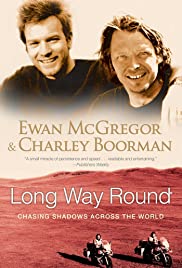
    Dinner here is also amazing. You can watch the sunset over the lake and catch glimpses of its colors through the trees. During the busy months, make sure to make a reservation and snag a window seat when possible.

    Roosevelt Dining Room

    Sitting Room:

    On the main floor of the lodge is a large sitting area. Gorgeous timber beams painted with Northwest designs act as supports throughout the space, and in the center of the room is a giant fireplace. It’s the perfect place to settle into one of the comfy chairs for a cozy read with your favorite book. 

    Glance out the large windows on either side of the fireplace and enjoy views of the sprawling lawn and lake.  This will be your favorite space on a rainy day.  It feels so cozy, and the lodge makes you feel as though you’ve stepped into some time portal into the early 20th century. 

    The sitting room also has a jumbo-sized chess set, historical photographs scatter the walls, and there are puzzle tables replete with puzzle pieces (I assume all of the pieces are there).  In the mornings, you can find complimentary coffee supplied here. What a great place for your first (or perhaps second) cup of morning coffee.Lake Quinault Lodge Sitting Room

    Deck and Lawn Area

    When the weather is sunny, the deck off the backside of the main lodge is a beautiful place to enjoy a cup of coffee.  Tables and chairs are scattered along it to create spaces to soak in the occasional bouts of sunshine.  Adirondack chairs dot the lush green lawn in front of the deck area.

    These chairs are my favorite type for lounging in, chatting with a friend, or reading a good book. There is also a gazebo on one side of the lawn, which lights up at night.  Next to the gazebo is a horseshoe pit where you can test out your throwing skills.  I admit, I’m lousy at horseshoes, but I still enjoy playing.
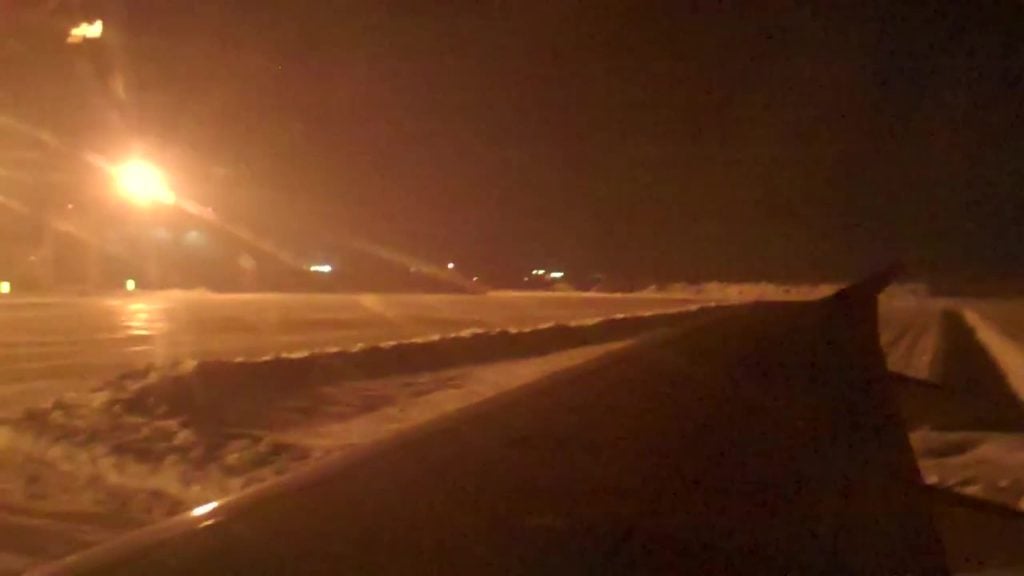
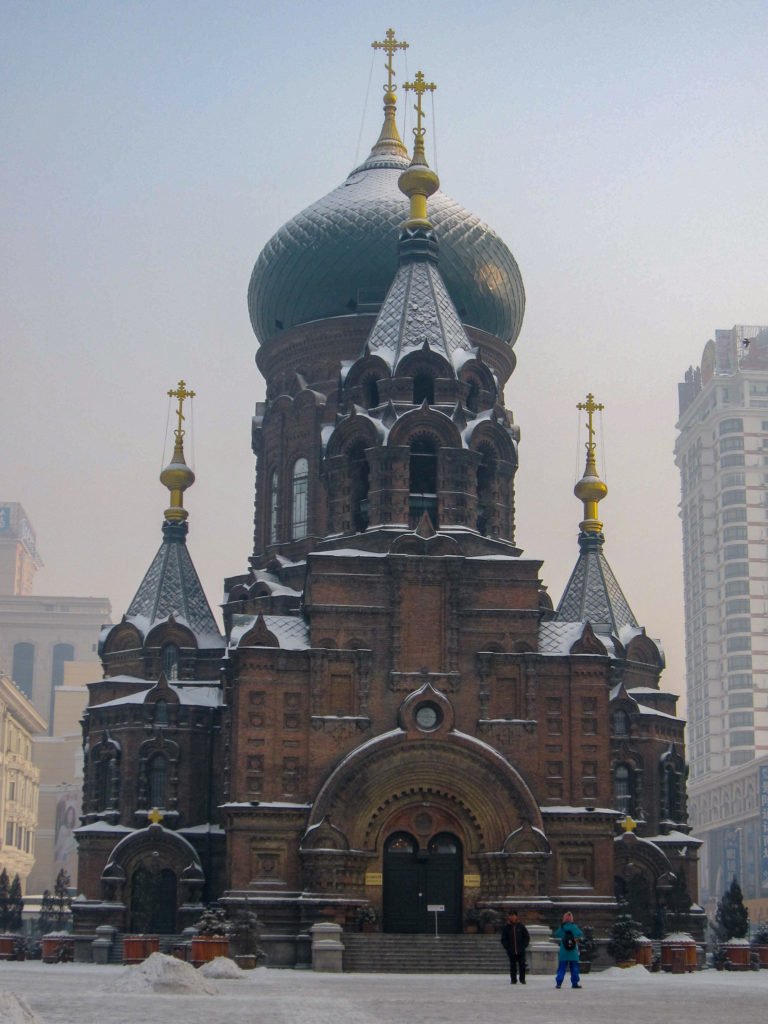
    Lake Quinault

    Follow the path from the lodge that leads down to Lake Quinault.  This lake is 2 miles wide and around 300 feet deep.  There are seating areas carved into some of the driftwood on the beach. These make perfect resting areas to watch the sunset.  

    In the summertime, you can rent kayaks, canoes, and paddleboards from the beach. They also offer boat tours of the lake during the summertime, with rates starting at $35.  Check with the front desk at Lake Quinault Lodge to learn about all of their tour options.

    Lake Quinault

    Things to Do

    • Game Room
    • Pool & Sauna
    • Hiking
    • Boat Rentals (seasonal)
    • Swimming (seasonal)
    • Tours (boat tours, driving tours, and hiking tours offered seasonally)
    • Reading
    • Relaxing
    • Puzzles
    • Fishing
    • Horseshoe Pit
    • Stargazing (it’s so beautiful on a clear night)
    • Drive Around the Lake (Takes about 1.5 hours, un-paved road for half of the drive)
    • Drive to the Ocean at Kalaloch (only a 30-minute drive)

    What to Pack

    Here are some items I recommend bringing: Bug spray, swim clothes, cameras, books, notebooks, rain gear, layers, hiking shoes, board games, and activities in case of rain. If your kids need a movie or online entertainment, you can always download movies and shows ahead of time to your mobile device or tablet. Also, see my tip for light sleepers below, you’ll want to bring headphones or earplugs if that applies to you.

    What Time of Year to Visit

    Any time of the year is a wonderful time to visit. However, during the summer months, you will have the opportunity to rent boats and kayaks and spend more time playing on the lake. The downside is that it is busier and more expensive.  

    In the winter, it is rainier, colder, and you have frequent wind storms; however, you will also find better rates and fewer people. So it depends on your needs and what experiences you want to get out of it. 

    Quinault waterfall

    Useful Tips & Things to Know

    Weather Tips

    Make sure to pack layers. Whether you visit during the winter or the summer, due to the coastal location and forest shading, it can be chilly here no matter what time of year you visit.  Also, you are visiting an area bordered by rainforests, and they are called “rainforests” due to the abundance of rain they receive.  Therefore be prepared for rain. Pack your raincoats and waterproof hiking gear.  Prepare to get a little muddy on the trails.

    Another weather component to be mindful of, are the wind storms.  This area often gets wind storms, especially during the winter.  This can cause power outages and downed trees.  Check with Quinault Lodge ahead of time if you are concerned about this, and of course, don’t ever go out hiking during a wind storm.  A tour guide at Lake Quinault Lodge once told me that even the elk come out of the forest during a wind storm and find a safe meadow to wait out the storm.

    Seasonal Hours

    Certain activities like boat rentals and camping are unavailable during winter. The Mercantile store and restaurant is also closed. So you have fewer options for activities and places to eat during the winter months.  This won’t keep you from having a pleasant visit, but it is something to be aware of.
     
    Lake Quinault Lodge with stars

    Money-Saving Tips

    To save money on food, I like to pack stuff for peanut butter and jam sandwiches.  Then when I’m out all day hiking and taking photos, I don’t have to return to the lodge for food.  I make a sandwich in the car, and I also pack a bottle of water and some snack bars. 

    Other ways to save money on food are to bring some ramen cups and then use your coffee maker to boil water. Maybe bring a box of your favorite donuts to have with your morning coffee.  You’ll burn off the calories later.

    Email Offers

    You can also sign up for the Olympic National Park email list and learn about deals on accommodations throughout the year. I visited Lake Quinault Lodge during the winter on a buy one night, get 1-night free deal–major bonus!

    No Cell Service

    It’s important to know that there is no cell service at Lake Quinault Lodge. I overheard one person say that if you stood on the lawn, in a particular spot, you could get a spotty signal. I  had no cell signal during my visit, so I would not count on that.  

    You do, however, have Wi-Fi at the lodge, and I also had coverage on the property around it. This means if you want to text or call someone, plan to use Google Duo or Hangouts (or similar app) for Wi-Fi calls and texts.

    Smoking Policy

    All rooms and facilities at Lake Quinault Lodge are non-smoking.

    Alert for Light Sleepers

    This is your public service announcement for all of you light sleepers (myself included). The walls separating the rooms at Lake Quinault Lodge are thin. You can hear the conversations of your neighbor at normal speaking volumes. You can also listen to them, brushing their teeth and snoring at night.  Make sure to pack headphones or earplugs if this will be a problem for you.  It will depend on your “neighbor.”

    Quinault Mercantile

    Dining Options

    In addition to dining at the Roosevelt room at Lake Quinault Lodge you can also eat at the following places:

    The Mercantile (opened seasonally)

    The Mercantile sells a variety of gear from food to camping and fishing supplies and souvenirs. It also has a small restaurant where you can get burgers or pizza during the summer months.

    Amanda Park 

    This is the small town only a 5-minute drive from Quinault. There is Dino’s Pizza & Grill (opened afternoon and evenings) as well as the Quinault Internet Cafe (closes at 3:30 p.m.), both are good choices when you’re looking for an alternative to dining at the Lake Quinault Lodge.

    Kalaloch Lodge’s Creekside Restaurant

    The Kalaloch Lodge is a short 30-minute drive from the Lake Quinault Lodge.  Their Creekside Restaurant offers ocean views as well as a delicious, locally sourced menu and a full bar for drinks. Enjoy a meal and a walk on the beach afterward before heading back to Lake Quinault Lodge.

    biscuits and gravy Roosevelt Dining Room

    Getting to Lake Quinault Lodge

    It’s less than a 3-hour drive from Seattle to Lake Quinault Lodge. Take I-5 South and cut over to Hwy 101 N. Watch for signs for the turnoff for Lake Quinault alongside the road.  The turn off is about a 7-minute drive after passing the town of Nielton.

    Don’t miss the incredible memories waiting to be made at Lake Quinault Lodge.  I cannot believe I didn’t stop in Quinault sooner.  It is quickly becoming my second favorite spot along the Olympic Coast.  I now have another destination that competes for a spot that once only belonged to Kalaloch. The mossy trees and the otherworldly beauty of this area have sucked me in and now holds a piece of my heart.

    Related Articles for the Area Around Lake Quinault Lodge

  • Kalaloch Lodge: An Ocean Getaway Near Seattle

    I recently returned from another trip to Kalaloch Lodge, and I realized that although I’ve written about camping at Kalaloch, I have yet to write about staying at the Kalaloch Lodge. My hubby and I love coming to Kalaloch each year. It’s our ocean getaway close to home. In the summer, we enjoy camping at Kalaloch Beach Campground, but in the winter, we prefer a little warmer (and dryer) resting place.  Thus, we stay at one of the Kalaloch cabins. 

    Fall asleep to the sounds of the ocean, go for a sunset walk on the beach, and enjoy ocean views while you eat breakfast in the Kalaloch Lodge Creekside restaurant.  It’s an excellent place for an annual getaway less than 4 hours from Seattle.  In this article I share everything you need to know to get here, how to plan your trip, what to pack, and things to do during your stay.

    Getting to Kalaloch Lodge

    Kalaloch Lodge is a part of the Olympic National Park.  It is set on a stunning stretch of coastline surrounded by old-growth forests and is only a 3.5-hour drive from Seattle. That is if you take I-5 south, like I do, down past Olympia and then cut over to Hwy 101 by either Montesano or Aberdeen. If you take the route that goes north to Port Angeles and take US-101 from there, it takes around 4.5 hours.  Visit the Kalaloch Lodge maps and directions page for more info on traveling here via car and also ferry options. 

    I recommend using Google Maps and downloading an offline map of Washington state before your trip as there is no cell signal for a good portion of this drive. Your drive time will depend on your starting point and time of day.  So far, Google Maps has been a reliable source for choosing the fastest travel time to Kalaloch Lodge.

    Make sure to pack some snacks, coloring books, or Mad Libs to do with the kiddos and, of course, your favorite road trip music.  I also like to download some audiobooks to help pass the time.  You’ll be there before you know it, and once you breathe in that ocean air and hear the roar of the surf, you’ll know it was worth it!  I know that’s how it works with me.
     
    Kalaloch Lodge Address: 157151 US-101, Forks, WA 98331
    Website: https://www.thekalalochlodge.com/
     
    Kalaloch Lodge gazebo
    Views from the Kalaloch Lodge gazebo.
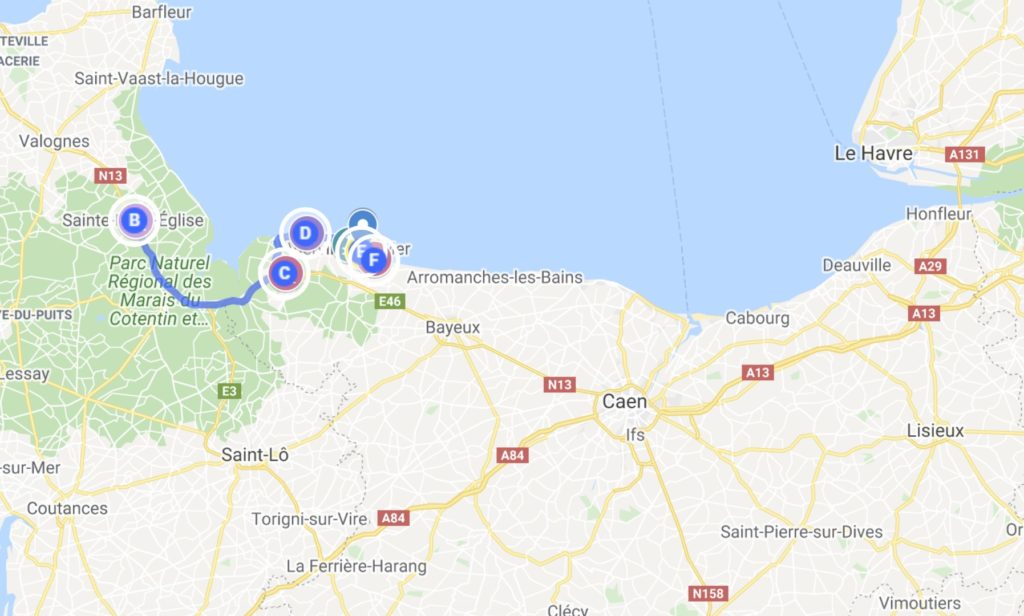
     

    Kalaloch Lodge Accomodations

    Main Kalaloch Lodge:

    You can stay in the main Kalaloch Lodge, and these rooms provide a more traditional hotel setting. You can choose from one or two queen bed layouts, and you’ll also have a choice of an ocean view room or non-view room. 

    Additionally, you can stay in their Kalaloch Suite, which is the only room in the entire complex that has a TV. The Kalaloch Suite has a king-sized bed, sofa, dining table for four, and panoramic views of the ocean. It also has a soaking tub with a separate shower, whereas the other lodging options only offer a shower. It is also one of the more expensive room options at Kalaloch Lodge. 

    The guestrooms are on the second floor above the main lodge area. Although the Kalaloch Lodge is not as big as some lodges, it does include a gift shop with fireside seating, the Creekside restaurant, and even a small game nook where you can borrow board games and puzzles to enjoy during your stay.

    Seacrest House

    The Seacrest House is a condo-style unit set on the far end of the property away from the main Kalaloch Lodge. It provides a blend of standard hotel room options (carpeted floor, seating areas, but no kitchen) with the rustic feel of a cabin.  The Seacrest House is situated behind the bluff cabins, but, second-floor units still have views of the ocean.  

    Kalaloch cabins
    These are some of the second-row (non-bluff) Kalaloch cabins.

    Each unit comes with a private balcony facing the ocean, perfect for enjoying a cup of coffee while listening to the ocean’s roar. The units at the Seacrest House also include fireplaces, and you are given a fresh bundle of wood each day during your stay. The wood-paneled walls and wood furniture provide rooms with a more rustic cabin feel than a standard hotel room. There are a variety of room options with the largest accommodating up to 6 people.

    Kalaloch Cabins

    The Kalaloch Cabins are what my hubby and I choose to stay in during our winter visits here.  We love the cozy cabins with wood fireplaces and listening to the sounds of the ocean as we fall asleep. We also enjoy having a kitchenette to prepare meals from the comfort of our cabin.  This is a great way to save money too. 

    Although the Kalaloch Lodge’s Creekside Restaurant makes some delicious food and has beautiful views, it is also on the expensive side.  I’d say it averages around $20/person after tip and tax.  So having the option to make a meal in our cabin, is a big plus for us!

    Kalaloch Lodge Bluff Cabins
    One of the bluff cabins. These have a front-row seat to the ocean views.

    Bluff Cabins

    The most expensive of the lodging options at Kalaloch Lodge is the Bluff Cabins.  These cabins are oceanfront cabins set on the bluff overlooking the beach. They offer all the same amenities of the other cabins (wood stove or fireplace and kitchen), but with an ocean view. The largest of the bluff cabins can sleep up to 7 people! They are also the most expensive option at Kalaloch Lodge.

    Kalaloch Cabins

    These cabins are in the second room behind the bluff cabins.  You can still hear the ocean from your cabin, but you’ll need to walk a little bit further to see it.  This has never been an issue for us, and these are the cabins we choose to stay in.  All of the Kalaloch cabins have kitchenettes and wood stoves.  A fresh bundle of wood is provided every day. They also include walking sticks inside each cabin for your personal use.  

    2 bedroom cabin at Kalaloch Lodge
    One of the two-bedroom Kalaloch cabins.

    Cabin Kitchenettes

    The kitchens in the cabins are stocked with pots, skillet, strainer, cutting knives, silverware, can opener/bottle opener, plates, bowls, water glasses and coffee mugs, a toaster, coffee maker (with coffee and filters), a microwave, cooktop stove, and a small refrigerator.  You have all the basics to make yourself some spaghetti, soup, or heat something in the microwave.  

    They do not include wine glasses or paper towels. The bathroom also did not include any hand soap, but there was dish soap in the kitchen and a sponge for washing your dishes. Also, a select few of the cabins offer a small oven, but no baking sheets or pans, so you’d need to bring those as well if you planned to use the oven.

    *All lodging options at Kalaloch Lodge include private bathrooms with a shower. Soap, shampoo, and conditioner are also provided. Rates range from $120 to $350 per night and vary based on the season.

    Kalaloch cabin kitchenette
    The dining area of one of the two-bedroom cabins.

    ADA Options

    Kalaloch Lodge does offer a couple of ADA accessible cabins.  To learn more about these options, check out Kalaloch Lodge’s website.

    Useful Tips for Your Stay

    Making Reservations

    You can make your reservations online or call and make reservations over the phone at (866) 662-9928. I recommend you sign up for the Kalaloch Lodge email newsletter so you’ll get notified of their sales throughout the year. Kalaloch Lodge also offers discounts for early bookings (7 days or more in advance), AAA members, members of the military, and seniors (62 years and older).   

    It’s important to note that Kalaloch Lodge is a very popular destination during the warmer months.  It is popular year-round, but it is generally easy enough to get a winter reservation with a week’s notice. 

    However, in the summer and fall, you may need to book months out to get a reservation and also during whale–watching season. This is also true for the campground.  I make my campground reservations 2-3 months ahead of time when planning a camping trip here in the summer.

    If, for some reason, you are unable to secure a reservation, then consider staying at the nearby Lake Quinault Lodge or perhaps a motel in Forks.  The best way though is to plan ahead so you can make sure you get a spot at your desired location.

    Beach at Kalaloch Lodge

    What to Pack

    If you’re staying in the Kalaloch cabins here some additional items I recommend packing:

    • Hand soap (for the bathroom — the kitchen has dish soap)
    • Paper Towels (none are provided)
    • Wine Glasses (if you plan to bring your own bubbly, just know the cabins only provide small water glasses)
    • Food (some ideas: oatmeal packets, pancake mix, eggs, toast or bagels, peanut butter and jelly sandwich fixings, pasta (spaghetti) and sauce, microwave popcorn, cooking oil, salads, etc.) Pack whatever easy favorites you can make in a limited kitchen or cook in the microwave.
    • Flashlight
    • Rain coats, sweatshirts and layers for cold to warm weather.  You may start the day out all bundled up, but later find yourself only needing a light jacket. 
    • Bug Spray
    • Coffee (they provide you with a small bag, but you may want to bring your preferred brand or extra if you like to drink it multiple times a day)
    • Tea and Cocoa
    • Re-usable water bottles for taking on the go
    • Zip-lock bags for sandwiches and other items.
    • Saran wrap (always handy)
    • Slippers (the floors in the cabins get really cold)
    • Books, games, puzzles, coloring supplies
    • Kites
    • Sandcastle building supplies (buckets and shovels)
    • Gloves & Hats
    • Sunscreen

    *Main Lodge or Seacrest House

    If you’re staying in the main lodge or Seacrest House, you won’t have a kitchen, but you will have a coffee maker and a mini-fridge.  You can use the coffee maker to heat water for oatmeal and ramen, as well as tea and cocoa.  You can bring stuff for sandwiches and keep items like jam, meats, cheeses, and mayo in your mini-fridge or pack bottled smoothies and drinks to store in the fridge.  This is an excellent way to cut down on costs for eating out.

    driftwood on the beach by Kalaloch

    Important Things to Know

    There is no Wi-Fi or cell service at Kalaloch. There are no phones or TVs in the rooms (except as I mentioned earlier, the Kalaloch Suite which has a TV). I recommend downloading a map of Washington state on your Google Maps app before your trip, to be on the safe side.

    High winds in the area can occasionally knock the power out, so come prepared with a flashlight and small LED camping lantern. Plus, it never hurts to pack some pb&j fixings. I have yet to experience a power outage during one of my stays at Kalaloch Lodge, but it’s always good to be prepared!

    Always check the tide charts each day so that you’ll know when hide tide is.  When you check in at the Kalaloch Lodge they will give you a printed copy of the daily tides.  They also post the tide charts at the main lodge.

    There is a convenience store next to the Kalaloch Lodge, which sells a variety of food and beverage options, plus souvenirs.  They also have a small espresso stand where you can order your coffee to go.

    If you want additional food and dining options, the town of Forks is about a 30-40 minute drive from Kalaloch Lodge.  There are a variety of mom-and-pop restaurant choices, as well as a Subway where you can order some sandwiches to take on a picnic. Forks also has a grocery store if you need supplies for your cabin. You can also rent a charcoal grill for $15 per day from Kalaloch Lodge.

    The tree of life at Kalaloch campground.
    The Tree of Life (Tree Root Cave) at Kalaloch campground.

    Things to Do

    • Gather around the communal fire pit (ask at the front desk in the lodge for firewood) and roast marshmallows
    • Go beachcombing
    • Have a bonfire on the beach
    • Sit near the gazebo and enjoy a nice book or watch the sunset from one of the Adirondack chairs
    • Go see the Big Cedar Tree (about a 4-mile drive north past Kalaloch Lodge)
    • Relax, pull up a chair, read a book, just enjoy being near the ocean.
    • Play tetherball, cornhole toss or horseshoes (there’s a small play area off to the side of the parking lot before the cabins)
    • Walk the short Spruce Burl Trail at Beach 1 and marvel at these strange and beautiful burl covered trees.
    • Drive over to Lake Quinault and explore some of the many trails around the lake.
    • Put together a puzzle or borrow a game from the community game closet in the main lodge.
    • Visit the Tree of Life (Tree Root Cave) (See it while you can, it seems to be sinking lower each year!) It’s located just below the Kalaloch Campground.
    • Explore one of many beaches close by. These are some of my favorite ocean beaches near Kalaloch. Don’t miss a stop at Ruby Beach, probably my favorite out of all the beaches – but each has its own unique charm. 
    • Fly a kite
    • Build a sandcastle
    • Soak in a sunrise or sunset (or better yet — both!)

    Sunset at Kalaloch Lodge

    What Time of Year to Visit

    Any time of the year is a good time to visit Kalaloch Lodge.  However, I love visiting in the winter when prices are lower, and it’s easier to find available dates.  Plus, it’s so cozy in the cabins with the wood fireplace and the sound of the ocean outside.  Even if it’s rainy, it’s still beautiful, and you can stay inside your cozy cabin playing games and reading books or put on your rain gear and enjoy the beauty outside. 

    You can also look at the weather forecast each week and then book when you see a couple of days of sunshine.  I’ve been going every winter for at least five years and have yet to be completely rained out. 

    In the summer, it is gorgeous and warm, and you can build sandcastles and dip your toes in the water’s edge.  Prices will be higher, but you can also stay at the Kalaloch campground (make sure to reserve in advance) if you prefer.  However, it is nice to have a bed to sleep in and the conveniences of a kitchen to cook in and, of course, a hot shower every morning!

    If you stay in a cabin, you can save money by bringing groceries and limiting the number of meals you eat at the lodge.  However, if money is no object, the lodge restaurant does have some excellent food and a welcoming staff.  

    Best Time for Whale Watching:

    According to Kalaloch Lodge, the best times to spot whales are in April & May as well as October & November.  However, I’ve seen whales when camping here at the end of August, and I’ve read other trip reviews which reported to have seen them even in July!  So you never know!

    sea otter shaking water
    A sea otter we saw one evening while walking on the beach.

    Who Should Stay at Kalaloch Lodge/Final Thoughts

    Kalaloch Lodge isn’t for everyone. If you’re someone who prefers a luxury resort or amenities like Wi-Fi, cable TV, and room service, then Kalaloch Lodge is not the place for you.  However, if you’re looking for a place to get away from it all and enjoy the beauty and solitude of nature–then Kalaloch Lodge is perfect for you! 

    The area around Kalaloch Lodge is a stunning stretch of coastline set in the Olympic National Park. When you visit here, you will discover why so many like myself come back year after year.  The area’s old-growth forests and unique coastline with beach logs, rock formations, and tidal pools are all a part of what draws visitors back each year. 

    I’ve seen whales, sea otters, eagles, salmon, starfish, and sea anemones during my visits to Kalaloch.  Each year my visit is a little different due to the storms of that year and the change in tides.  I leave with new memories and look forward to the next year when I return.

    Happy Memory Making!

  • A Self-Guided Tour of Historic D-Day sites in Normandy

    Visiting the historic D-Day sites is an unforgettable way to spend the day.  It is one of those bucket list trips that leave you better for having made them. June 6, 1944, is one of the most historic dates in world history. The victory achieved on D-Day changed the course of the world.  

    The freedoms I have today are in large part due to the battles fought on the shores of Normandy. If you have an opportunity to travel to France, take some time to visit the D-Day sites in Normandy. You’ll never forget it.

    In this post, I share my one-day self-guided itinerary to some of the D-Day sites in Normandy, France.  You’ll get a chance to learn about my experience and also see how easy it is to plan your own trip to this historic region. Although I would have preferred a minimum of 2 days for my visit, even with only one day to see the D-Day sites, you can cover a lot of ground and still have an unforgettable trip.

    Overview of Our One-Day Itinerary to D-Day Sites in Normandy

    Where We Started Our Road Trip

    We took a direct train from Paris to Caen, where we’d booked our hotel and rental car.  In addition to spending one day seeing the D-Day sites, we also spent one day driving to Mont-Saint-Michel. For our one-day D-Day itinerary, we drove from our hotel in Caen to our first stop, the Airborne Museum in Sainte-Mere-Eglise. Then we worked our way back in the direction of Caen for the remainder of the itinerary.

    Tip: You could easily make this trip in reverse, and depending on what time of year you go, you may want to.  We discovered during our visit here in October, that places open later and close earlier in the fall and winter.  

    So in the case of our route, we arrived at the Airborne Museum, thinking it opened at 9:00 a.m. (according to Google) only to discover it did not open until 10:00. Thus, we could have started at the Normandy American Cemetery, which opened at 9:00 and closed at 5:00 and then saved the Airborne Museum for last, which closed at 6:00 p.m.  Live and learn!

    Benefits of a Self-Guided Road Trip to See D-Day Sites

    By driving yourself to the D-Day sites, you have more flexibility and choices in which places you see and how long you spend there. Driving in France was easy for me since they drive on the same side of the road as we do in the U.S. As long as you can drive a car with a manual transmission, it is pretty much the same as driving in the States. The road signs may look a little different, but all in all, it’s a very similar experience.

    However, if you’re not comfortable with driving on your own in France, there are a lot of tour companies that will drive you around to the historic D-Day sites. You can take 12-hour day trips from Paris, or local tours starting at Caen and Bayeux. So decide on whichever option works best for you and your itinerary.

    A Little Background About This Trip

    My visit to Normandy, France, was a part of a 2 1/2 month backpacking trip I took with my friend through Europe.  As I planned our route and the “must-see” stops along the way, I knew that visiting Normandy, France, and the historic D-Day sites was a must for me.  Our visit to Normandy was during the final three weeks of our trip through Europe.  

    Before arriving in Normandy, we toured the house where Anne Frank hid in the attic before being captured by the Nazis. We visited Berlin and walked over what was once Hitler’s underground bunker and wandered through the Memorial to the Murdered Jews.  Then we traveled to Krakow, Poland, where we took a day trip to the Auschwitz-Birkenau concentration camps. Finally, we went to Normandy, France, and visited some of the historic D-Day sites.  

    It was a journey through World War II history, starting with the atrocities that forced people into hiding and ultimately led to the death of millions of people. Our travels brought us full circle to Normandy, and the history surrounding D-Day, the battles leading up to it, and the battles fought afterward. 

    Although the history surrounding D-Day was one of tragedy, it was also one of triumph and hope. I saw the bleakness of death at Auschwitz, which only made my visit to the D-Day sites all the more impactful. The price was high, the sacrifice great, but freedom demands we risk everything or end up with nothing. I am so grateful for those who gave their lives so I could live in freedom.

    Site 1: Church of Sainte-Mere-Eglise

    We started our day of sightseeing in the town of Sainte-Mère-Église. We arrived a little after 9 a.m. and found that the Airborne Museum didn’t open until 10 a.m. So we wandered over to the Church of Sainte-Mère-Église, where a mannequin of a paratrooper’s body hangs from the church steeple.

    John M. Steele

    We learned more about the paratrooper represented on the church steeple during our visit to the Airborne Museum. His name was John Steele, and he was a paratrooper with the 82nd Airborne Division. During the drop into Sainte-Mère-Église, one of the houses caught fire, which unfortunately illuminated the night sky, and thus the paratroopers dropping in. 

    John Steele was hit in the foot on his way down and lost control of his parachute. His parachute caught on the church steeple. He hung there for around 2 hours, pretending to be dead before German soldiers came up and brought his body down. They took him as a prisoner, but three days later, he escaped and returned to his division. He survived WWII and returned home after the war was over. 

    stained glass window of angel and paratroopers
    A beautiful stained glass window in the Church at Sainte-Mere-Eglise.

    There is so much more to John Steele’s story and to the paratroopers that dropped that night. For any of you who have watched “The Longest Day,” you might remember seeing the scene of the paratroopers dropping in.

    The real story is full of heroism, as one of his fellow troopers on the ground gave his life to save John’s.  The chaos was compounded by the house fire, which lit up the sky and made them glowing targets.

    Go inside the church and take a look around. There is a beautiful stained glass window created in memory of the paratroopers that lost their lives here. There is also another one portraying the angel Michael surrounded by the symbols of the various Allied forces who fought to free Sainte-Mère-Église.

    Time Spent Here: (~ 30 minutes)
    Location: Church of Sainte-Mère-Église, Rue Koenig, 50480 Sainte-Mère-Église, France
    Commute Time to Next Site: ~ 1-minute walk across the parking lot.

    Site 2: The Airborne Museum at Sainte-Mere-Eglise

    The Airborne Museum is a thoughtfully designed museum made up of multiple buildings as well as an outdoor area. At the ticket desk, you receive a tablet to carry with you as you make your way through the different areas.  The tablet provides additional information about the exhibits and includes interactive features, which if you have kids, they will especially enjoy this feature. For the most part, you won’t need the tablet. However, it guides you in a particular order throughout the museum complex.

    The first building we entered after purchasing our tickets was the building designed like the inside of a big parachute.  Inside there are numerous displays of paratrooper’s gear, mementos, and stories of some of those involved in the liberation of Sainte-Mère-Église. The museum does a beautiful job portraying the details of what these paratroopers must have gone through to prepare for their mission.

    In the next building is a large display of an airplane, and on one side is a mannequin of President Eisenhower and a printed copy of his D-Day order.  Many of these guys were barely out of high school. They didn’t have much training, and yet they were going into one of the biggest and most important battles in US history. They would be some of the first boots on the ground for the US military in Normandy, France.

    “You are about to embark upon the Great Crusade, toward which we have striven these many months. The eyes of the world are upon you. The hope and prayers of liberty-loving people everywhere march with you.” ~ General Dwight D. Eisenhower

    Airplane replica at Airborne Museum D-Day Normandy
    One of the Airborne Museum’s life-sized displays.

    In another room, audio speakers play the sounds of battle along with a display of an aerial view of Sainte-Mère-Église. I also learned during my visit here, that the paratroopers had to carry packs that weighed anywhere from 90 lbs to 180 lbs!  Can you imagine jumping from a plane with a pack the size of a human strapped to your back?

    The Soldier’s Stories Helped to Connect on a Personal Level

    It was incredible to hear their stories and to take a glimpse into what those men went through. It was heroic yes, but also scary. Real courage isn’t without fear. It’s acknowledging the fear and moving forward in spite of it. Courage understands what’s at stake.

    We watched a touching film that showed the images of Holocaust survivors and also the piles of dead bodies. Tears sprang to my eyes as it put in perspective what was being fought for.  All of our future freedoms were at stake if Hitler, and the other countries fighting against democracy, had not been stopped.

    I highly recommend making the Airborne Museum a part of your itinerary when visiting D-Day sites in Normandy. They took excellent care to make it a moving and thoughtful museum and memorial to 82nd and 101st Airborne Divisions.

    Time Spent Here: (~ 1.5 hours)
    Location: Airborne Museum, 14 Rue Eisenhower, 50480 Sainte-Mère-Église, France
    Commute Time to Next Site: ~ 30-minute drive

    entryway to La Cambe D-Day German War Cemetery
    The entryway in the German war cemetery at La Cambe.

    Site 3: La Cambe German War Cemetery

    Our next stop is the La Cambe German war cemetery. It is a simple and somber graveyard, and it is also the largest war cemetery in Normandy. There are over 21,000 bodies buried here as compared with the less than 10,000 buried at the American cemetery in Colleville-Sur-Mer.

    As you walk through the entrance to the cemetery, you notice straight in front of you, a mound of raised earth (also known as a tumulus). Sitting on top is a giant dark stone cross with a man and a woman on either side. I assume this represents the mother and father of the dead. I recommend you walk to the top and get a bird’s eye view of the enormous size of this cemetery.  

    Most of the graves are marked with simple bronze-colored stones set in the ground. There are also rows of dark stone crosses spaced here and there across the cemetery. As I pass by the markers, I notice that most of the soldiers buried here were only 18 or 19 years old.  According to the cemetery, most of the soldiers buried here died between June 6, 1944, and August 20, 1944.

    The German soldiers buried here were teenagers sent off to war by the command of their country. A surviving German soldier said that some of the soldiers enlisted in WWII were only 16 years old, forced to go to war, scared to death, wanting to run, but told they’d be shot if they did.  They had families who loved them and mourned their loss. War is ugly no matter which side you’re on.

    La Cambe German War Cemetery at D-Day Normandy
    A view of the German cemetery at La Cambe from atop the tumulus.

    A Comparison of Two Cemeteries

    My visit to the German war cemetery at La Cambe provided a thoughtful comparison with my visit to the Normandy American Cemetery at Colleville-Sur-Mer. I left the La Cambe cemetery feeling sorrow at the tragic loss as a result of this war.  Although there is still certainly a sense of loss at the American cemetery, I left it feeling a sense of pride and gratefulness. It was a cemetery that celebrated and thanked those buried within, rather than only mourning their loss.

    Time Spent Here: (~ 30 minutes)
    Location: La Cambe German war cemetery, Les Noires Terres, 14230 La Cambe, France
    Commute Time to Next Site: ~ 20-minute drive

    Path to the memorial for fallen Rangers at Pointe du Hoc
    Looking down the path to the memorial for the fallen Rangers at Pointe du Hoc.

    Site 4: Pointe du Hoc

    Next, we drive to the parking area for Pointe Du Hoc. Near the parking area is a memorial to the Army Rangers who gave their lives during the bloody battle fought here.  It is a moving tribute to their courage and sacrifice. It tells the story of the Ranger’s persistence to scale the cliffs soaking wet in the middle of a storm while being gunned down by Germans from above.

    What courage and commitment it took for them to continue scaling the almost 100-foot cliffs! Their fellow soldiers were dying one after another, and yet they continued to climb until at last some of them reached the top and claimed Pointe du Hoc as an Allied stronghold.

    The cliffs at Pointe du Hoc
    The same cliffs at Pointe du Hoc the Rangers once scaled.

    This, of course, is the short version.  The entire story of what occurred at Pointe Du Hoc on June 6, 1944, is an incredible tale of heroism. It is almost unbelievable, like something out of a Hollywood movie, and yet it’s true. These men defied unbelievable odds. 

    craters formed from aerial bombings at Pointe du Hoc
    The craters from the aerial bombings dot the landscape.

    Lunar Landscape

    From the memorial near the parking lot, you continue down a trail leading to the very cliffs these Rangers climbed on that dark and stormy night. You walk past large craters from aerial bombings and get a chance to step inside the bunkers the Germans built to house their 155mm arterial guns. These guns could target ships up to 12 miles offshore! You can understand why it was so crucial for Allied forces to overtake these strongholds to win the fight on D-Day.

    The walk to the stone memorial overlooking the water is memorable in itself. It gives you a scope of the type of battle fought here.  Kids will enjoy exploring the craters and empty bunkers. The walk from the parking lot takes about 10 minutes.  Make sure to wear sturdy walking shoes and give yourself enough time to explore the grounds before heading on to your next stop.

    Time Spent Here: (~ 1 hour)
    Location: Pointe du Hoc, 14450 Cricqueville-en-Bessin, France
    Commute Time to Next Site: ~ 15-minute drive

    National Guard Association Monument
    The National Guard Association Monument built atop a former German pillbox.

    Site 5: National Guard Association Monument at Omaha Beach

    The National Guard monument located along Omaha Beach is an inspiring monument dedicated to the soldiers of the National Guard who fought not only in World War I but also in World War II.  That was one of the things written on the monument that stuck out to me. It mentioned how the sons of the National Guardsmen would fight for freedom in WWII just as their fathers had fought for freedom during WWI. What a powerful legacy.

    Take time to read the words and quotes engraved on each side of the monument. Close to the monument is another memorial of a National Guardsmen carrying his fellow soldier out of battle. This memorial is in tribute to the National Guardsmen of the 29th Division’s 116th Infantry Regimental Combat Team. 

    They were some of the first to land on the area that is now referred to as “bloody Omaha.” They came with brothers, and boyhood friends, never to return home to their families or to live out their lives.  They were so young and so courageous. The soldiers who fought in WWII are true superheroes. 

    Memorial to National Guard
    The tribute to the National Guard titled “Ever Forward.”

    Walk along the beach while you’re here and look up at the cliffs. Imagine what it was like for the soldiers who landed on these shores, wet, cold and disoriented, being gunned down in the water before they even had a chance to fight. No matter what, they wouldn’t be stopped.  They knew what they had to do, no matter the cost!

    Time Spent Here: (~ 15 minutes)
    Location: National Guard Monument (Secteur Charlie), 12 Boulevard de Cauvigny, 14710 Vierville-sur-Mer, France
    Commute Time to Next Site: ~ 5-minute drive

    Site 6: Omaha Beach Memorial

    We drove along the waterfront for another 5 minutes before reaching the parking area for the Omaha Beach Memorial.  The wind was blowing and the cold air bit into our skin. The skies were blue and clouds dotted the horizon. It made me think of the weather conditions the soldiers dealt with during the early morning hours on June 6, 1944. 

    I tried to imagine a much darker and stormier scene.  The first wave of soldiers arriving soaking wet, many drowned before they ever made it to shore. Gunfire raining down from German soldiers perched on the cliffs and the beach. This was war, ugly and chaotic with freedom on the line.  

    I live in the light of victory, but on D-Day, victory was still being fought for. It was a scene of tragedy, and decades later, many survivors would continue to have a hard time talking about it. I’ll never truly understand the full cost, but I’ll do my best to live gratefully.

    A stone memorial at Omaha beach commemorating D-Day.
    A stone memorial at Omaha beach commemorating D-Day.

    Next to the parking lot, there is a large stone marker, which is a memorial to the Allied forces landing here on Omaha Beach on June 6, 1944.  On one side of the stone memorial is the inscription: —No mission too difficult —No sacrifice too great. Duty First. Forced Omaha Beach at dawn 6 June. The other is etched with the images of soldiers and reads: Erected in memory of those —The 116th RCT 29th Infantry Division AUS landed here June 6, 1944.

    Les Braves

    Just behind it is a beautiful metal sculpture rising out of the sand just off the shore. The sculpture created by French sculptor Anilore Banon is titled “Les Braves.” According to Banon, the sculpture consists of the following three elements:

    The Wings of Hope – So that the spirit which carried these men on June 6, 1944, continues to inspire us, reminding us that together it is always possible to change the future. 

    Rise Freedom! – So that the example of those who rose against barbarity, helps us remain standing strong against all forms of inhumanity. 

    Wings of Fraternity – So that this surge of brotherhood always reminds us of our responsibility towards others as well as ourselves. On June 6th, 1944, these men were more than soldiers, they were our brothers.

    Les Braves D-Day Sculpture
    “Les Braves” sculpture on Omaha Beach.

    The people of Normandy are still very grateful to the American and Allied forces for freeing them from the Germans.

    If you have extra time and want to stop, there is the Omaha Beach Museum about a 5-minute walk from the Omaha Beach Memorial.

    Time Spent Here: (~ 1 hour)
    Location: Omaha Beach Memorial, Avenue de la Libération, 14710 Saint-Laurent-sur-Mer, France
    Commute Time to Next Site: ~ 15 minute drive

    Lunch Break

    We ate lunch at the D-Day restaurant across from the Omaha Beach Memorial parking lot. It was a choice of convenience. However, it was warm and cozy inside the restaurant. My lunch consisted of some toast topped with ham and cheese. It was a warm break from the chilly weather outside.

    I recommend packing snacks and water in your car, and possibly a picnic lunch if you’re able to. I didn’t see too many dining choices along this route.  However, that may be due in part to the time of year when we visited. In the summer, you might find more options available.

    Location: D-Day House, 1 Rue Désiré Lemière, 14710 Saint-Laurent-sur-Mer, France

    Normandy American Cemetery for WWII
    This beautiful cemetery dotted with white crosses is a serene resting place for the heroes buried here.

    Site 7: Normandy American Cemetery & Memorial

    Next, we drove to the Normandy American Cemetery and Memorial in Colleville-sur-Mer. Due to the delay at the Airborne Museum, we only had about an hour to spend at the cemetery before it closed at 5:00. So we quickly parked and headed down the long path.  We bypassed the visitor’s center, knowing what little time we had and instead continued to follow the path towards the ocean, along the infinity pool, and then curving around to the cemetery.

    mosaic at Normandy American Cemetery
    The beautiful mosaic on the chapel ceiling.

    The rows and rows of white crosses stretched out almost endlessly in front of us.  People were milling about through the rows of crosses, searching perhaps for the grave of a loved one.  As you walk throughout the Normandy American cemetery, you feel almost as though you are in a park and not a cemetery. The setting is so lush and green. It is very peaceful.

    Sculptures & Artistic Tributes to the Fallen

    Make sure to stop in the cemetery’s chapel.  It is the rotund building at the center of the cemetery. Step inside the small chapel and admire the beauty and thoughtfulness put into the gorgeous mosaic on the chapel’s ceiling. American painter Leon Kroll created this beautiful portrait symbolizing American on one side, sending out her son to battle and France on the other side, taking our fallen soldier in her arms.  It is such a beautiful image. 

    After you finish your walk around the cemetery, make your way to the large reflection pool where you’ll see a tall bronze statue rising above from the far end.  This beautiful sculpture created by Donald Harcourt De Lueis titled “Spirit of American Youth Rising from the Waves.” It bears an inscription at the bottom that reads “Mine eyes have seen the glory of the coming of the Lord.” On the walls close to it, you’ll find huge maps displaying all of the various forces along the shore and their routes.  It is awe-inspiring!

    Bronze sculpture at D-Day cemetery in Normandy France
    “The Spirit of American Youth Rising.”

    If you have time, walk along the shores of Omaha Beach below the cemetery. Make sure to stop in at the visitor’s center for more helpful information regarding those buried here and to view the beautiful infinity pool.  They have volunteers on staff who can also help you locate any loved ones who are buried here.  

    Normandy American Cemetery in Colleville-sur-Mer is a beautiful park-like setting, very peaceful.  A wonderful resting place and memorial to these soldiers.

    Time Spent Here: (~ 1 hour)
    Location: Normandy American Cemetery, 14710 Colleville-sur-Mer, France
    Commute Time to Next Site: This was the final stop, and it was about a 45-minute drive back to Caen.

    The reflection pool at Normandy American Cemetery.
    The reflection pool at Normandy American Cemetery.

    Tips & Recommendations for a Self-Guided Tour of D-Day Sites

    Planning Tips

    • Always check the hours for each museum directly on the museum’s website. Google is not always up to date on its listing for hours and operations.
    • Pack snacks and drinks in the car to keep your energy up in between stops.
    • Make sure you can drive a manual transmission before renting a car in Europe.
    • Organize your day, so you have the most time at the sites you want to see. Then if you can’t make it to all the stops on the list, you will at least have seen the ones most important to you first.
    • Wear layers and sturdy walking shoes.

    How Much Time To Spend Here

    There is so much to see that you could spend days or possibly weeks here, depending on your interests.  However, with only one day, you’ll need to pick the top sights you want to see and save the rest for your next trip. One site I would have liked to have fit into our day was Utah Beach. I guess I’ll save that for my next trip!

    Getting Here:

    You can take a direct train from Paris’ Saint-Lazare station to Caen. This takes approximately 2 hours, 15 minutes. You can also take a train from Caen to Bayeux if you prefer to stay there.  In Bayeux, bus #70 takes you to many of the D-Day sites if you prefer not to drive.  You can also, of course, book a tour of the sites. Caen also has an airport so if you’re coming from somewhere other than Paris, you might check to see if they have flights that go through it.

    Recommended Apps to Download Before Your Trip

    Google Maps: This invaluable tool will help you get to each destination along your journey. If you plan to do a self-guided driving itinerary, then you will want to install Google Maps on your phone ahead of time and also download it for offline use.

    Normandy D-Day 1944 (by Spot on Locations Ltd): This Normandy D-Day app provides the names and locations for all the various D-Day sites in Normandy. It gives historical details associated with each area and includes over 500 photos and 100 locations. If you like learning more about the history, then consider downloading this app before your trip and looking through the areas you’ll visit and read up on the history associated with each.

    Rick Steves Audio Europe: Consider downloading this app before any trip you take to Europe.  If you enjoy self-guided tours, then you will appreciate this app. Just put your earbuds in, and Rick Steves will guide you on your walking tour to whichever destination you’ve chosen on the app. 

     So say you choose France, you will then see a list of all the audio guides the app has for France.  Look for the one titled “Normandy: D-Day Sites” and listen to this before your trip to D-Day to get an idea about what there is to see and learn more about the history of the region. The app has not only audio walking guides, but also interviews with local experts on a variety of subjects relating to each location.

    crosses at American Cemetery in Normandy.
    Roses and flowers left by crosses. Reminders that they are not forgotten.

    Closing Thoughts on D-Day

    Visiting the D-Day sites in Normandy was like walking through the history books. It is one thing to read about this incredible date in history, but it is something else to see the area firsthand. To see the graves of the thousands of soldiers who lost their lives here, and to read about their individual stories is an incredible and moving way to spend the day.  

    Visiting sites like D-Day or even Auschwitz remind me of the beauty of the human spirit. Yes, there is an ugly side to humanity. However, there is also resilience and a determination to overcome even the worst odds for the good of mankind.

    I hope you plan a trip to visit Normandy, France, and the historic D-Day sites. However, if you can’t do that right now, why not visit a local Veteran’s Cemetery or museum near you, dedicated to those who gave so we could have freedom.  Say thank you the next time you see a veteran, and let’s use our freedom to show compassion and grace to everyone we meet.

    Thank You to All Who Served and Continue to Serve