author.travelffeine.com

Tag: Adventure Gear

  • 20 Useful Camping Accessories to Add to Your Packing List

    I love camping! Over the years, my camping supplies have grown to include various camping accessories depending on the camping style I am doing. If I’m camping off my motorcycle, I pack a much lighter load than if I am camping out of my car or planning a large family camping trip. I don’t like to waste space in my car with things I won’t use, so I adjust what I pack depending on my camping needs.

    The below list is some of my go-to camping accessories. Whatever camping gear you bring should enhance your experience and make it more enjoyable. After all, we want to look forward to camping and spending time outdoors. Camping can be such a rewarding experience if done right. This list of camping accessories will help you have a successful trip!

    Shelter

    This one is a no-brainer. Most of us don’t want to sleep under the stars with nothing to protect us from the bugs and morning dew. Unless you’ve got a camp trailer or are sleeping in the back of your car,  you’ll want a tent.  These are my top three suggestions based on ease of use, easy packing, and if you’re camping with a family.

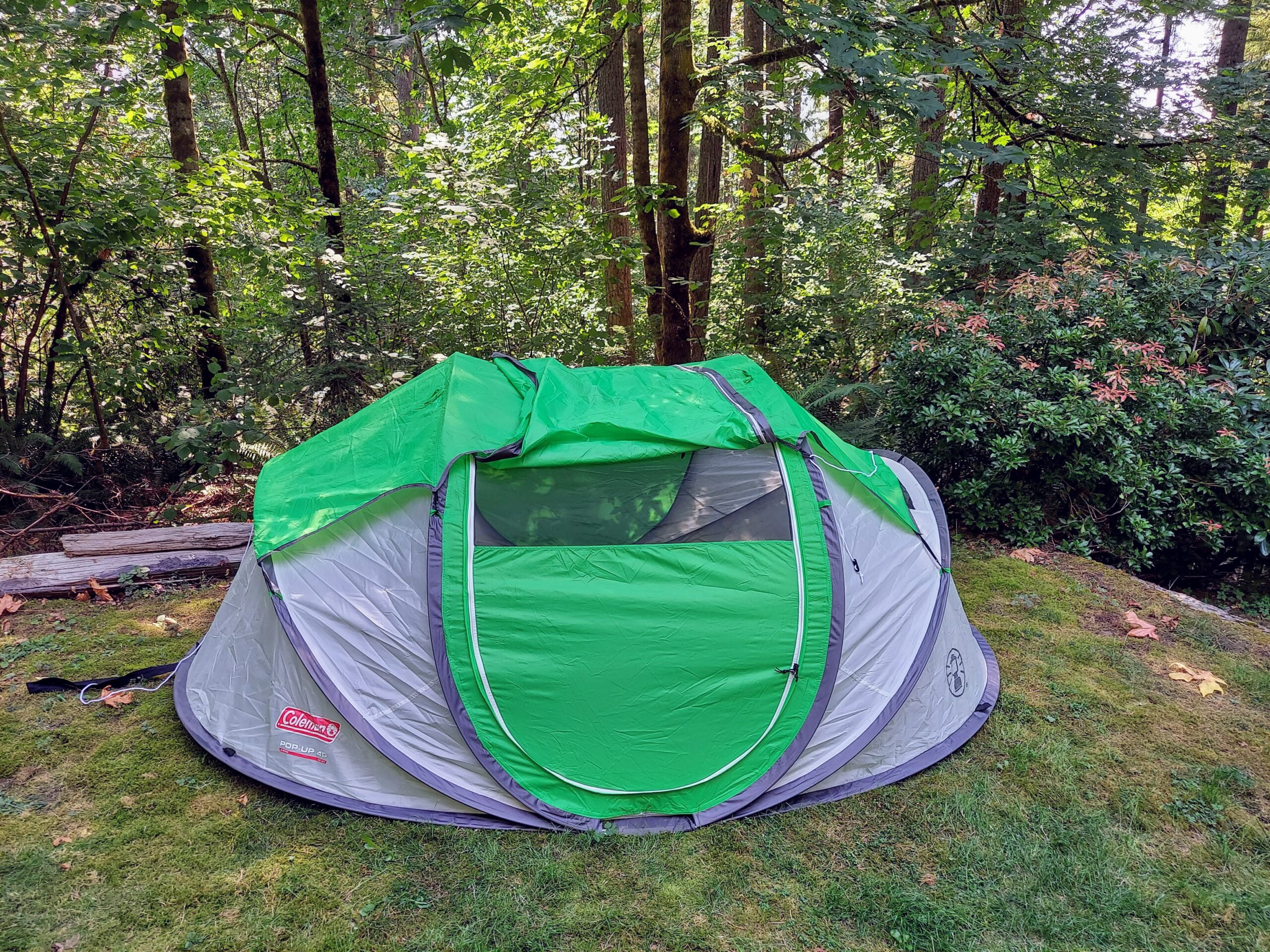
    The Coleman 4-person Pop-Up Tent

    I love how easy this tent is to set up. You can read my review and watch a video on how to put it up and stow it away. In about 1-minute, your tent is set up, and you’re ready to throw in your sleeping bags and begin enjoying camp.

    tent camping accessories

    REI Co-op Trail Hut 2 Tent with Footprint (2-person tent)

    I’ve used the REI Passage 2 tent for over ten years, and it’s still in great condition! Before getting the pop-up tent was my favorite tent to use. I bought it for a backpacking trip and loved how easy it was to set up that I continued to use it for car camping trips. It is also perfect for camping off my motorcycle. It appears that it may have been discontinued as it was unavailable as of this writing.  So the REI Trail Hut 2 appears to be the next closest equivalent to the Passage 2.

    Coleman Cabin Tent with Instant Setup

    For family camping trips, consider getting the Coleman Cabin Tent. It is designed with integrated tent poles so that it takes only a minute to set the tent up, then another minute to stake it down, and you’re ready to go! It comes in a 4-person, 6-person, and 10-person design.

    I have a large family tent for when I take my nieces and nephews camping, and I often hear groans from the older kids and adults when they have to set it up.  So upgrading to an easy set-up tent for groups might be something I do in the future.

    Camping Comforts

    Camping doesn’t have to be “roughing it.” Although I don’t need to bring my house when I camp, and my camping doesn’t reach the level of “glamping,” I still enjoy a few creature comforts. Some of these camping accessories are optional. I’ll admit that, but they certainly make camping a lot more relaxing and extend the amount of time you’re willing to “rough it.”

    REDCAMP Folding Camping Cot

    Cots are really nice as they keep you up off the ground, which keeps you a little warmer, and it’s easier for getting up in the morning. When shopping for a camping cot, it’s important to look for the weight capacity of the cot and how easy it is to fold and stow away. I also bring extra blankets to place as a layer of padding underneath the sleeping bag.  With an extra blanket underneath you, you don’t feel the cot’s support bars, and you have a little more insulation.

    Coleman Self-Inflating Camping Pad

    I own a couple of these, which I purchased for backpacking, but now I use them for car camping and motorcycle camping. They are small and easy to pack. Plus, they’re durable. I often give these to my nieces and nephews while the adults use camping cots or air mattresses.  They’re easy to set up and provide enough padding, so you don’t feel any loose rocks digging into your back. You’ll often find these at your local department store. Grab a couple when they have their camping sale.

    sleeping-bag

    Coleman Big Basin Sleeping Bag

    I think a mummy bag is one of the best styles of sleeping bags for keeping you warm at night.  My Dad bought me one when I was around 18, and I still use the same mummy bag whenever I go camping out of my car.  I have a lighter weight backpacking version when weight is a concern.  My husband loves being able to cinch the top of the bag around his head and burrow in to stay warm.  They also make them in kid sizes.

    I have a best friend whose main complaint is getting cold at night. She doesn’t, however, like the mummy-style sleeping bags.  So if you fall into that category, consider getting one of the traditional styles.  

    Try to get a sleeping bag that fits your body, with a little extra room for turning on your side but not too much extra space, or you have large pockets of cold air. I also bring extra blankets just in case the kiddos or anyone else gets cold in the night.

    camp chair camping accessories

    Coleman Camping Chair with Built-in Cooler

    The Coleman Camping Chair with Built-in 4 Can Cooler is a nice option as it has a drink holder and a side pocket you can stick your phone or notebook and so on in while you’re sitting around camp.  The ALPS Mountaineering King Kong Chair is rated for up to 800 lbs. It’s always good to pay attention to the weight rating on any camping accessory you purchase. 
    Also, when you go camping, the nicest camping chair is invetibly the one everyone will want to sit in.  We tend to bring a few nice ones for the adults and simple, cheap ones for the kiddos.

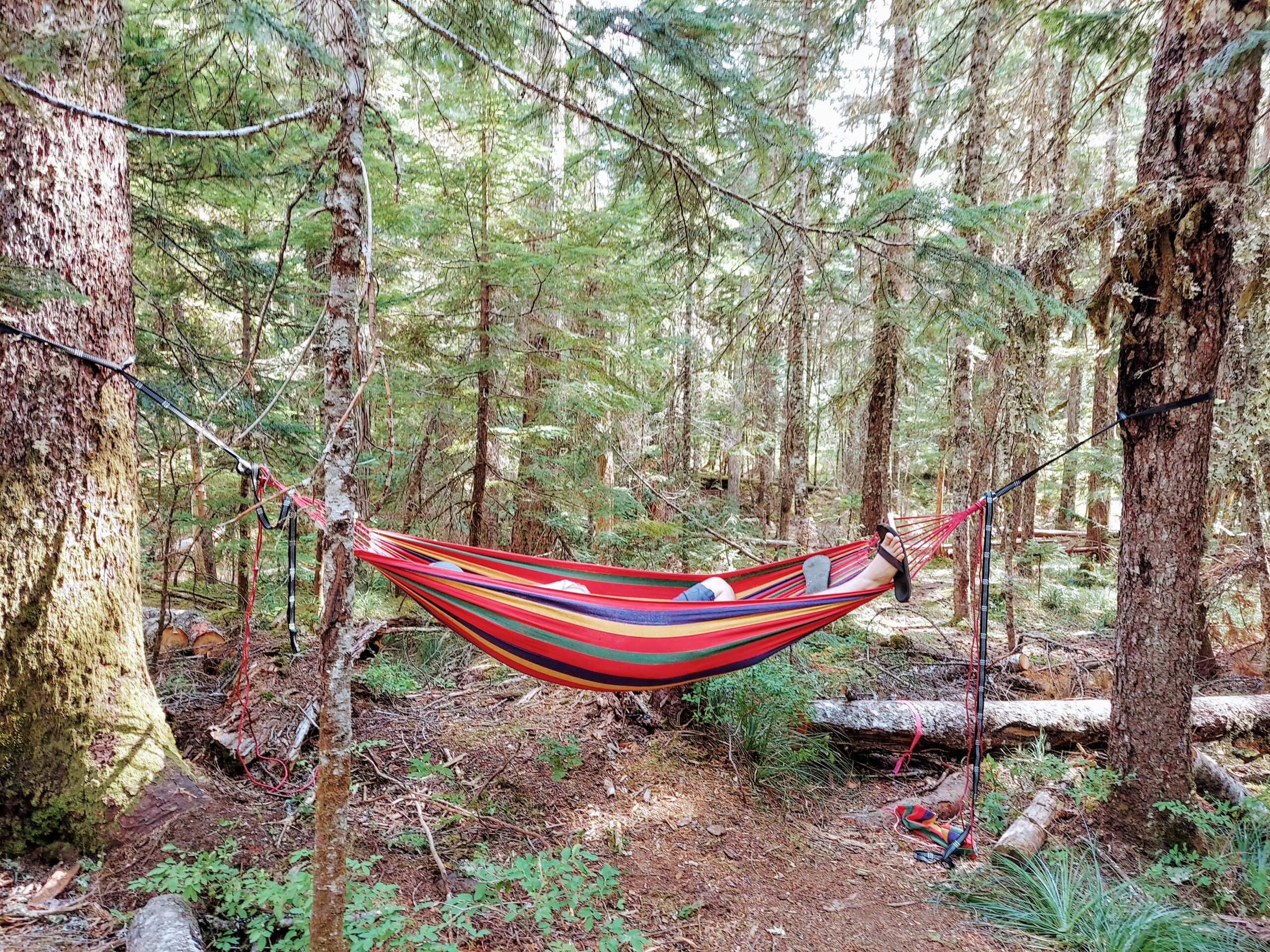
    Wise Owl Camping Hammock

    A hammock may not be a camping accessory you think you need. However, we set one up during last year’s group camping trip, and it was a favorite spot at the campground. After a day of hiking, you’d soon find someone sleeping in it.
    hammock camping accessory

    You don’t need to purchase a camping-specific hammock. If you already have a hammock you use at home (see ours in the photo below), you can bring it instead. You can use it with these handy hammock straps that make it incredibly easy to hang a hammock. You can also purchase a portable hammock that comes with its own stand. These work well when you don’t have any suitable trees to hang a hammock from. They are also easier for younger kids to get in and out.

    Ozark Trail Instant 2-Room Shower

    Perhaps this is the ultimate luxury camping accessory.  It is something I keep thinking I’ll buy, but I haven’t yet.  This year might be the year I do.  It seems to be the one thing that everyone misses most when they’re camping. A shower helps us feel a little more human when we’re camping. Some of the teenagers in our camping group mention how they’d like a shower, so you might be surprised at the kids wanting to use it versus forcing them to.  

    The Ozark 2-room shower is a very versatile camping accessory as it can be used as a changing room as well as a shower. It also includes a solar shower, which is a nice plus. Some people even bring a porta-potty and stick it on one side when nature calls in the night. I suggest shopping around online to find it at the best price.

    camp-shower-camping-accessories

    If you prefer something a little smaller, this one-room shower tent is a good option, but you’ll need to purchase a shower to go along with it. The Nelio Portable Pressure Shower is one to consider and the budget-friendly portable shower that you can use in conjunction with a bucket of water for a simple shower setup.

    Camp Kitchen

    Here are a few camping accessories I always bring for our camp kitchen. I need efficient ways to cook breakfast and an easy way to brew coffee in the morning. Typically we cook over the fire for dinner, and lunch is something simple like sandwiches or food we can take when we’re on the go.

    Coleman 60 Quart Cooler

    Often we’ll bring two coolers when it’s a large family trip. One for the drinks and one for the meat, dairy, and other food. When people are getting in, and out of the drinks cooler off and on throughout the day, it doesn’t cool down the food.

    Coleman Gas Camping Stove

    I love having two burners to cook on when camping.  I use one of the burners to boil water for my morning coffee. That leaves the other burning free for a skillet to cook eggs in.
    camp-stove

    Blackstone Table Top Stainless Steel Griddle 

    I love the Blackstone tabletop griddle my brother and sister-in-law gave us as a gift.  It is awesome for cooking breakfast when camping! Plus, you can cook up tepanyaki meals on it and impress all the other campers with your cooking prowess.

    Stanley French Press 48oz

    I’ve written some articles about how I make campfire coffee, and which method I choose really depends on how many people I need to make coffee for.  If it is only myself and my hubby, I usually choose to use my AeroPress or Brew Buddy. However, when I have groups, I need something a bit bigger. I usually use my percolator, but I recently came across the Stanley French Press and added it to my wishlist as it is large enough to make coffee for four to six people, and it’s rugged!

    camp-coffee-camping-accessories

    Coleman Outdoor Folding Table

    This is handy when you need a little extra table space. I also like to use it for road trips as it packs up so nicely for easy carrying. 
     

    Coleman Instant Canopy

    This is a new addition to my camping accessories. However, I look forward to trying it out this season both when we’re at the beach and also when we’re camping in the woods.  Canopies are great for providing instant shade and protecting your food area from bird droppings, tree needles, morning dew, etc. If you have a Costco near you, I recommend checking there to see their options, as that is where I found mine.

    Lighting

    LED lighting is where it’s at these days.  We used a propane lantern in our earlier camping days, but now we opt for the easier (and brighter) LED lantern

    I also like to bring these hanging LED lightbulbs that I use when I’m SUV camping, as you can clip them to your tent ceiling for easy hands-free lighting. You can also give them to the kids to use inside the tent.

    Additionally, we always bring a headlamp or two when we camp.  These are so nice to have at night when you’re cleaning up around camp, walking back and forth to the restroom, or reading in your tent at night.  It’s nice to have a hands-free light, plus they have a red light option for stargazing.

    Electronics

    As much as I’d like camping to be an electronic-free zone, that’s not going to happen, especially when kids are involved.  You can, however, restrict electronics to certain times.  Also, most people use their cell phones to document their camping memories, so having a few camping accessories to keep their portable cameras charged isn’t a bad thing.

    Jackery Portable Power Station

    We love our Jackery and use it for road trips and camping. You can use the Jackery to charge a portable DVD player and create a fun family movie night in the tent. I also use it to power my electric coffee grinder. Priorities, am I right?

    Anker Portable Power Bank

    A smaller charging bank is useful if you don’t think you need a larger power source like the jackery. We bring these whenever we’re traveling, and I charge my phone and DSLR with one. 

    Motorola T100 Talkabout Radios

    These are fun for kids to talk to each other and can be used to communicate with large groups when hiking. You can have the group leader keep one, and then the person in the rear of the group has the other.  Then if someone needs to stop, you can radio the leader to wait. 

    Misc. Camping Accessories

    Emergency Kit 

    It’s always good to have an emergency kit no matter where you go.  When we go camping, the most often used items are the following:

    You can purchase one with about every survival tool or pick one that has the main items you’d use when camping (minor scrapes, sprain kit, antiseptic ointment, headaches, etc.).

    Leatherman Multitool

    My husband never likes to go anywhere without his leatherman multitool. He has one he keeps at home and one he keeps in the car, and he always wants it when we go camping. They are useful camping accessories when it comes to cutting and opening things. I still prefer my Swiss Army knife, but to each their own.

    Thermacell Rechargeable Mosquito Repeller

    Last year, I purchased the Thermacell rechargeable mosquito repeller and was pleasantly surprised to discover it actually works! We sat around the campfire and didn’t even think about mosquitos, that is until the second night when it ran out of its repellant, and we started noticing them.  

    At first, we said, “that’s strange we didn’t have issues with  mosquitos last night.” Then, it dawned on me that we’d been using the Thermacell, and I realized what had happened.  When I returned home, I made sure to buy some for our next camping trip.

    This list is not a comprehensive list of all my camping accessories, but it has many of my favorite go-to items when camping.  Camping should be fun, and I think it can be enjoyable for just about anyone with a few of the right items.

    Do you have a favorite camping accessory that isn’t listed? I’d love to hear some of your recommendations too!

    Other Articles You Might Enjoy


    Note: Travelffeine is reader-supported. This post contains affiliate links. When you purchase using one of these affiliate links, we get paid a small commission at no extra cost to you. And as always, all opinions are our own. Thank you!

    Happy Camping!
    Useful Camping Accessories Travelffeine
    Useful Camping Accessories to Bring
  • Coleman 4-Person Pop-Up Tent Gear Review

    Imagine driving up to your campsite, getting out of your vehicle, and setting up your tent in less than a 1-minute.  You are now free to go about your day and enjoy your campsite and its surroundings.  Sounds too good to be true, right?  Well, actually, it’s totally possible with the Coleman 4-Person Pop-up Tent!  It’s so easy you can have your kids set it up and still be done in a minute!  Plus, it’s entertaining when you camp with a group and your tent is up in less than a minute, and you get to sit there watching them spend 10 minutes setting theirs up.  That’s worth the purchase of the tent all on its own!

    Okay, jokes aside, as with every purchase, there are pros and cons. I’ll discuss what led me to purchase this tent and what I like and don’t like about it.  If you’re in the market for a new tent, then continue reading to decide if the Coleman 4-Person Pop-up Tent is right for you.

    My History of Tent Purchases

    Over the years, I’ve gone through a few tents. I started with a cheap dome tent that was probably rated for 4 people but really fit two comfortably. Then I upgraded to a Wenger 4-person tent with shoe ports, little corner pockets, and a place to hang a lantern in the center.  It also had better airflow than my cheaper dome tent.

    Bigger Must Be Better

    One day I decided it might be nice to have a tent you could stand up in, perhaps even use cots in and sleep more than two people. So I purchased a large 6-person tent, and we began using it for our annual camping trips with the nieces and nephews. My hubby and I tried the tent for when it was just us, and although it is nice to be able to stand up in the tent and sleep on cots, the time it took to set it up coupled with the amount of time we actually spent inside the tent didn’t make it worth it for us. For a large tent, it’s easy enough to set up, and it works great when we have a large group. However, for the two of us, it just wasn’t the right fit.

    Bitten by the Backpacking Bug

    Soon though, I got the backpacking bug, and my hubby and I purchased an REI Passage 2 tent.  After backpacking the Northern Loop at Mount Rainier, we never did any serious backpacking after that; although there are still plans to do a portion of the PCT, they have yet to materialize.  Even so, we found that we loved our new REI Passage 2 tent.  It is easy to set up with only two poles. It takes about 5 minutes to have it up and ready to go. Because of this, we continued to use our backpacking tent for our regular camping needs for almost a decade.  It also works great when we’re off-roading on our motorcycles.

    Because we often camp with groups, it also allowed us to fit our tent and the larger group tents into one campsite as ours had such a small footprint.  Then this year, I decided it would be nice to have a little more space. Space to keep our bags with us in the tent and a larger area for sleeping.  However, I still wanted something quick and easy to set up. So as I began my research, I came across the Coleman 4-Person Pop-up Tent. 

    The Coleman 4-Person Pop-up Tent

    I started reading about the Coleman 4-Person Pop-up Tent, and to be honest pop-up tents make me think of something you bring to the beach.  It sounded a little too good to be true that I’d actually camp in one.

    However, the promise of an instantaneous setup lured me in.  Plus, at less than $80, it seemed like a risk I was willing to make. So I went ahead and ordered it for an upcoming camping trip with friends.  When it arrived, I was anxious to see it in action, so I opened it inside the house.  Sure enough, within about 10 seconds, the tent was up and ready to crawl into!

    It was a lot of fun when we went camping with our friends because not only were we set up in under a minute, but when it came time to take down the tent, it only took about 2-minutes, thus leaving us with plenty of time to give our good-natured friends some fun (albeit childish) “haha, look who’s done with their tent first” comments. It’s the little pleasures in life.

    Coleman 4-Person Pop-up Tent Dimensions

     According to Coleman, the tent dimensions are as follows:

    • 9 ft. 2 in. x 6 ft. 6 in.
    • 3 ft. 4 in. center height

    You can fit a queen size air mattress inside the tent.  They show four people sleeping in it width-wise.  I am a little under 5’9, and I can sleep width-wise. However, if you’re 6′ and above, your head and feet would be hitting the tent. That is unless you’re able to lie completely still while sleeping.  I don’t know anyone like that, though, so I recommend lying lengthwise.  That is how my hubby and I used it, and that gives you plenty of space plus lots of room for your gear with only two people.

    You could also sleep to “average-sized” adults and two kids comfortably.  I think four adults under 6 ft could, of course, make it work, but it’ll be cozy! Watch my YouTube video for more information on the size and shape.

    Pros and Cons of the Coleman 4-Person Pop-Up Tent

    Coleman 4-Person Pop-up Tent

    After camping in the Coleman 4-Person Pop-up Tent, these are some of the pros and cons I’ve discovered.

    Easy Set-up

    This is by far the biggest “pro” for purchasing a pop-up tent. It takes less than 30-seconds to unzip the tent case, remove the straps, and voila! The tent is ready to go!

    Fast Storage

    Initially, putting away a pop-up tent can be challenging for most people. I know it was for me. You feel like you’re wrestling some unwieldy creature that keeps trying to get away from you. However, with practice putting your pop-up tent away should only take 1-2 minutes to do.

    The Downside

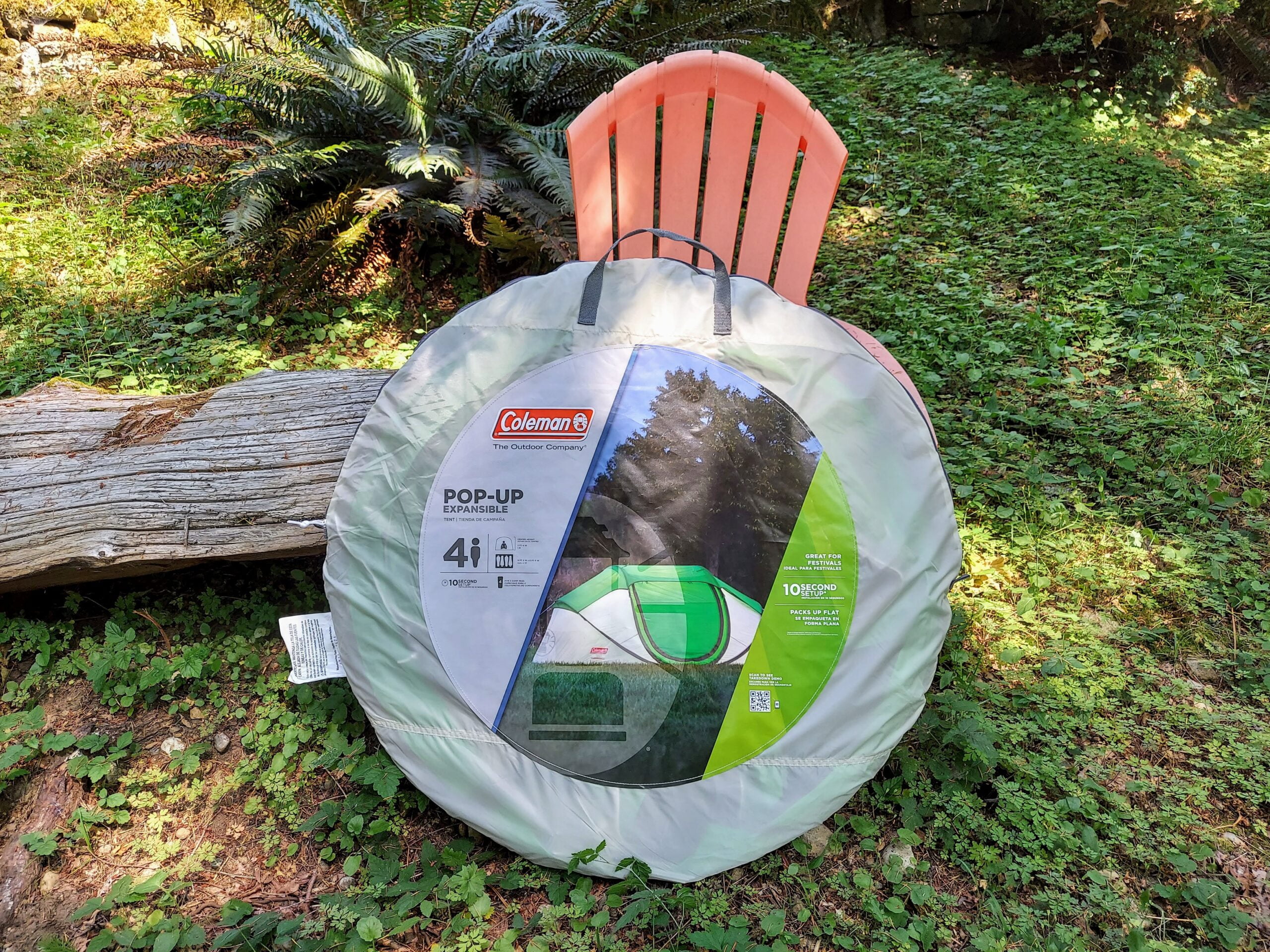
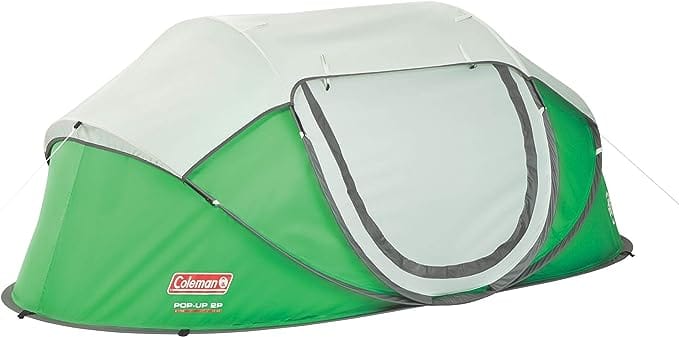
    Well, putting it away, as I just mentioned, can be a challenge. However, probably the main downside for some would be the shape of the pop-up tent. Most tents come in a long round shape that makes them good for backpacking or shoving into tight spaces in the back of the car. The Coleman 4-Person Pop-up Tent packs into a large disc shape. This makes them pretty much a no-go for backpacking. There is a smaller Coleman 2-Person Pop-up Tent option that might work for this or cycling, but again, I think it would be hard to pack due to the disc shape. 

    Packing the Car

    It also means you need to rethink how you pack your car.  Normally I might put the tent in first with some of my longer items like camping chairs. However, due to its disc shape, I ended up putting it in last and laying it on top of my other camping gear.  Also, if you have a small trunk space, you might have to carry it behind your front seats as it’s possible the disk might not fit in your trunk.  You’ll want to measure this ahead of time to make sure.

    Summer to Early Fall: Seasonal Use

    This is not a 4-season tent, probably not even a 3-season tent, and although I have yet to try it in the rain, I doubt it would do well in heavy rain.  However, for a summer camping experience, it works great.  

    We first camped in our Coleman 4-Person Pop-up Tent in late May on the Olympic Coast. We were sleeping on a thin backpacking-style air mattress and a blanket underneath for a layer between us and the cold ground. It was cold and damp in the morning and evenings, and the sides of the tent felt a little wet from dew.  We, however, stayed dry and warm in our sleeping bags. 

    Tent Footprint

    The Coleman 4-Person Pop-up Tent does not come with its own footprint. They also don’t appear to sell one specifically made for it.  I purchased a cheap tarp that was roughly the same dimensions as the tent floor. Make sure you don’t purchase one that is too big. Otherwise, it will collect water.  I learned that lesson early on as a kid.

    Coleman 4-Person Pop-up Tent Disc

    Review Summary for the Coleman 4-Person Pop-Up Tent

    So, to summarize this review. I really enjoy the simplicity of the Coleman 4-Person Pop-up Tent. It makes car camping so easy! If you’re looking for a tent for summer camping and maybe late spring and early fall, then the Coleman 4-Person Pop-Up Tent is worth considering. 

    You can purchase the tent by click on this link or the photo below.

    We will continue to use ours for weekend car camping trips when we want a little more space than our tiny backpacking tent. I think we’ll also bring it for road trips when we’re only camping for a night or two. It will make set-up and takedown much quicker when we need to get back on the road.

    I recommend spraying the tent down with Scotch Guard or some other type of waterproofing spray.  I always do this with outdoor gear and wouldn’t even consider camping in the rain in this tent without it. 

    All in all, I am happy with my purchase. If you have any questions regarding this tent or the camping gear I use, please let me know. Also, if you’ve used this tent or the 2-person version, I’d love to hear what you think about it.

    Happy Camping!

    Note: This post contains affiliate links. When you make a purchase using one of these affiliate links, we get paid a small commission at no extra cost to you.

  • 5 Essentials You Need for Car Camping or SUV Camping

    Have you ever thought it might be nice to pull up to your campsite and not need to put up a tent? Perhaps you have visions of crawling into the back of your car and curling up in a cozy bed, all ready for you without any extra work.  Well, that’s exactly what I decided I wanted on my recent road trip where I tried camping in my SUV.  This is not to be confused with the typical type of car camping where you pack everything in your car and stay in a tent.  That is the type of camping I normally do, but I thought I would see how I liked actually sleeping in my car.  

    Below I share the five things I found to be extremely useful when camping in my SUV.  They were essential items I am so glad I purchased before I left for my trip and will continue to use in the future.  If you plan to try car camping or SUV camping, I highly recommend you consider getting these five things first!

    Facebook
    Reddit
    Twitter
    Pinterest

    5 Things You Need for Your First Car Camping Trip

    These are the main essentials I found to be helpful when camping in a car or SUV.  In the video above, I discuss some of these items and the pros and cons of my setup.  At the bottom of the article, I’ll also list a few “nice to have” options to consider getting in addition to these five essential items.

    1) Privacy & Shading When Car Camping

    Since you’re car camping and sleeping in your car, you will want to cover your windows with something to give you both privacy and shade from the sun and block lights from cars and other campers that might pass by your vehicle.  

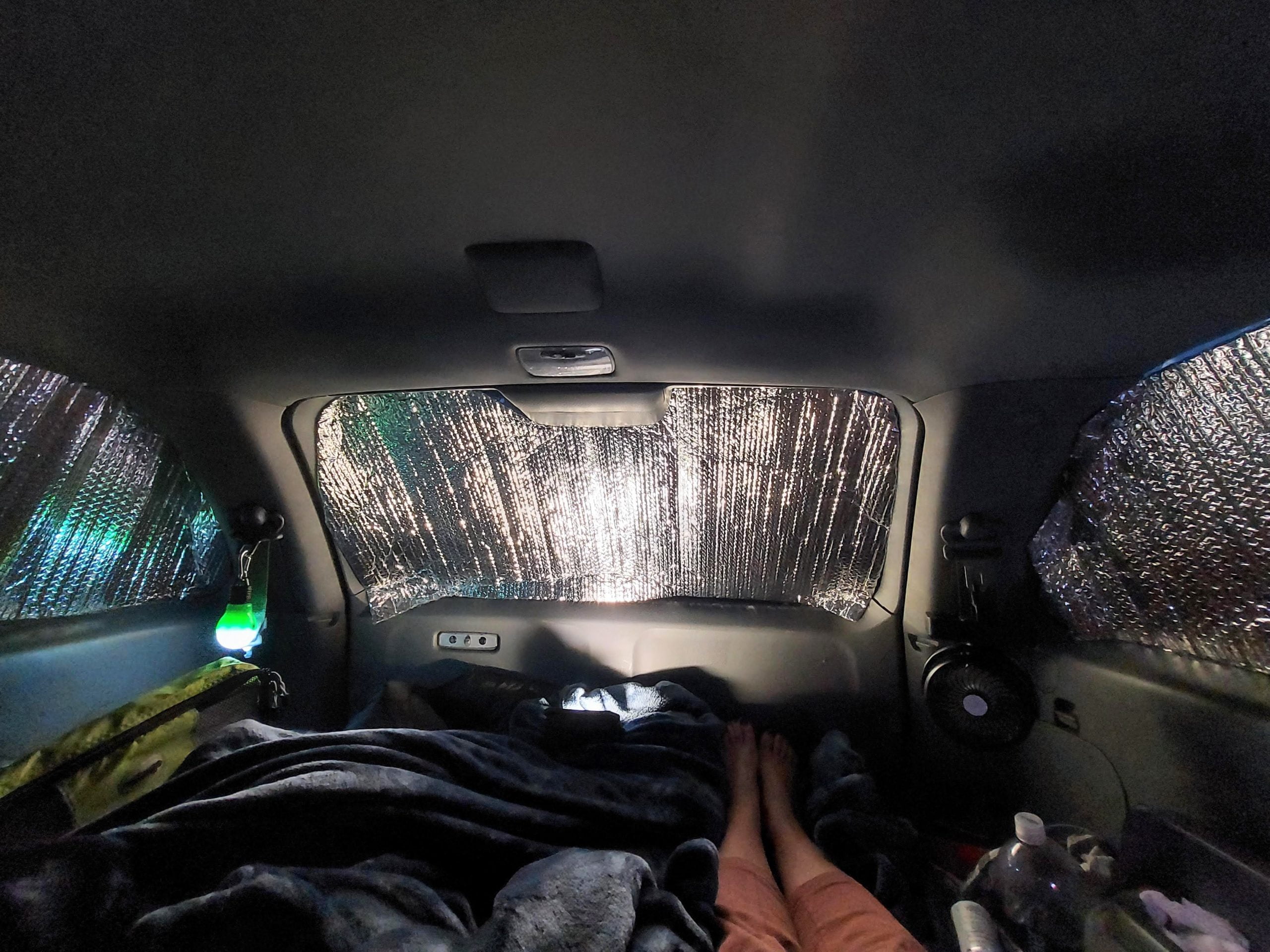
    I purchased a roll of Reflectix from my local hardware store, and it was a lifesaver!  I cut out shapes to fit all of my windows, except the front windshield and the front side windows.  

    Covering the rear door windows and back windows of the vehicle with Reflectix made a HUGE difference!  It made my vehicle dark at night, and it also helped create some shade for my car during the day.  

    This was incredibly helpful since I was camping in the desert!  I started in Joshua Tree National Park and then went to Death Valley National Park and then on to Utah’s national parks.  So, having some extra shade was really nice!

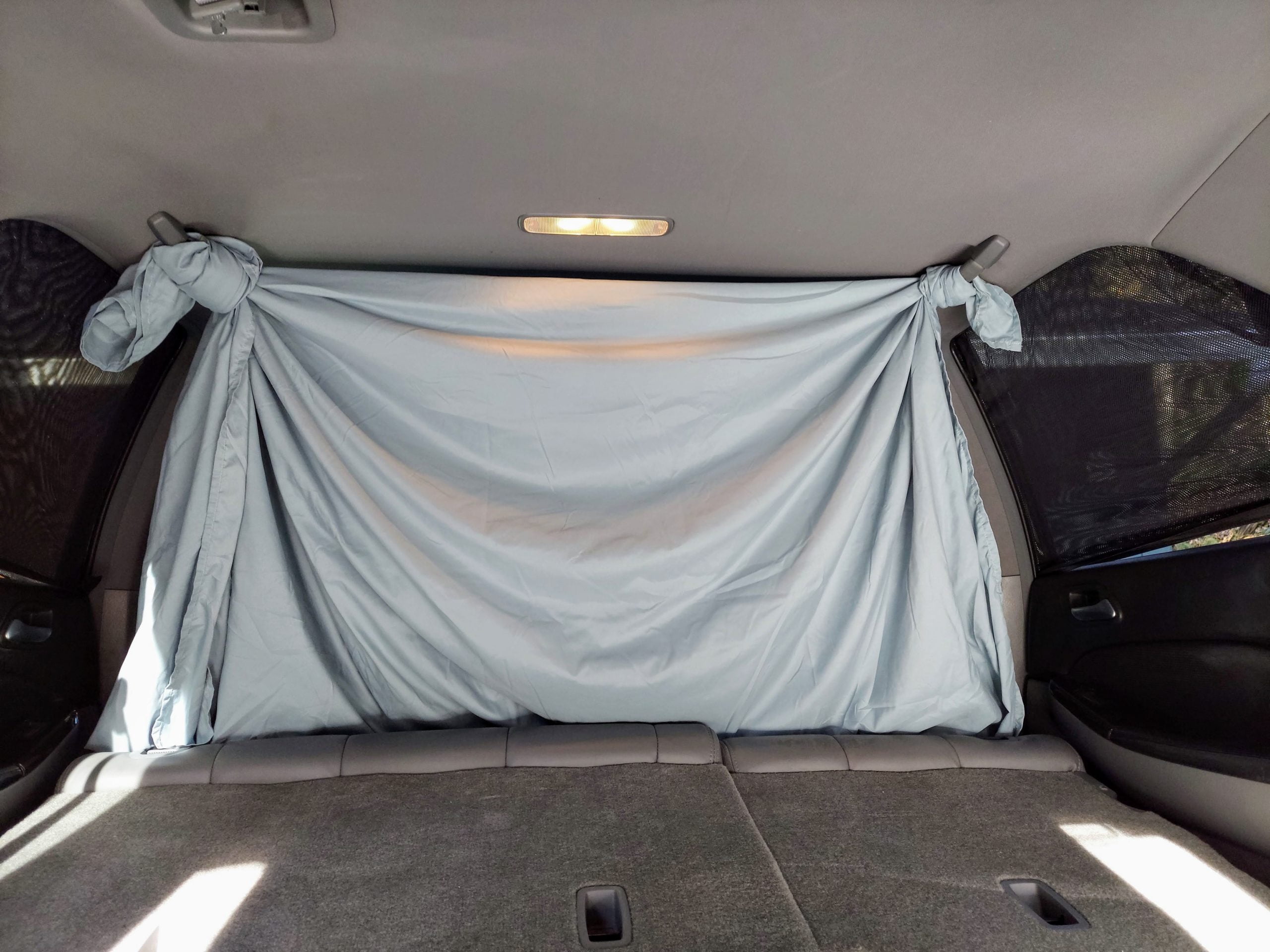
    In addition to the Reflectix, I had these windshield pop-out shades for the front windows.  I also used a sheet strung across the backs of the two front seats to give me more privacy since the two front side windows did not have any Reflectix.  

    For future trips, I’d cut out Reflectix for those as well.  I forgot those when making my window cut-outs and ended up using the sheet, as you can see in the photo below, for an additional layer of privacy.  The sheet was easy to put up and take down.

    2) Lighting

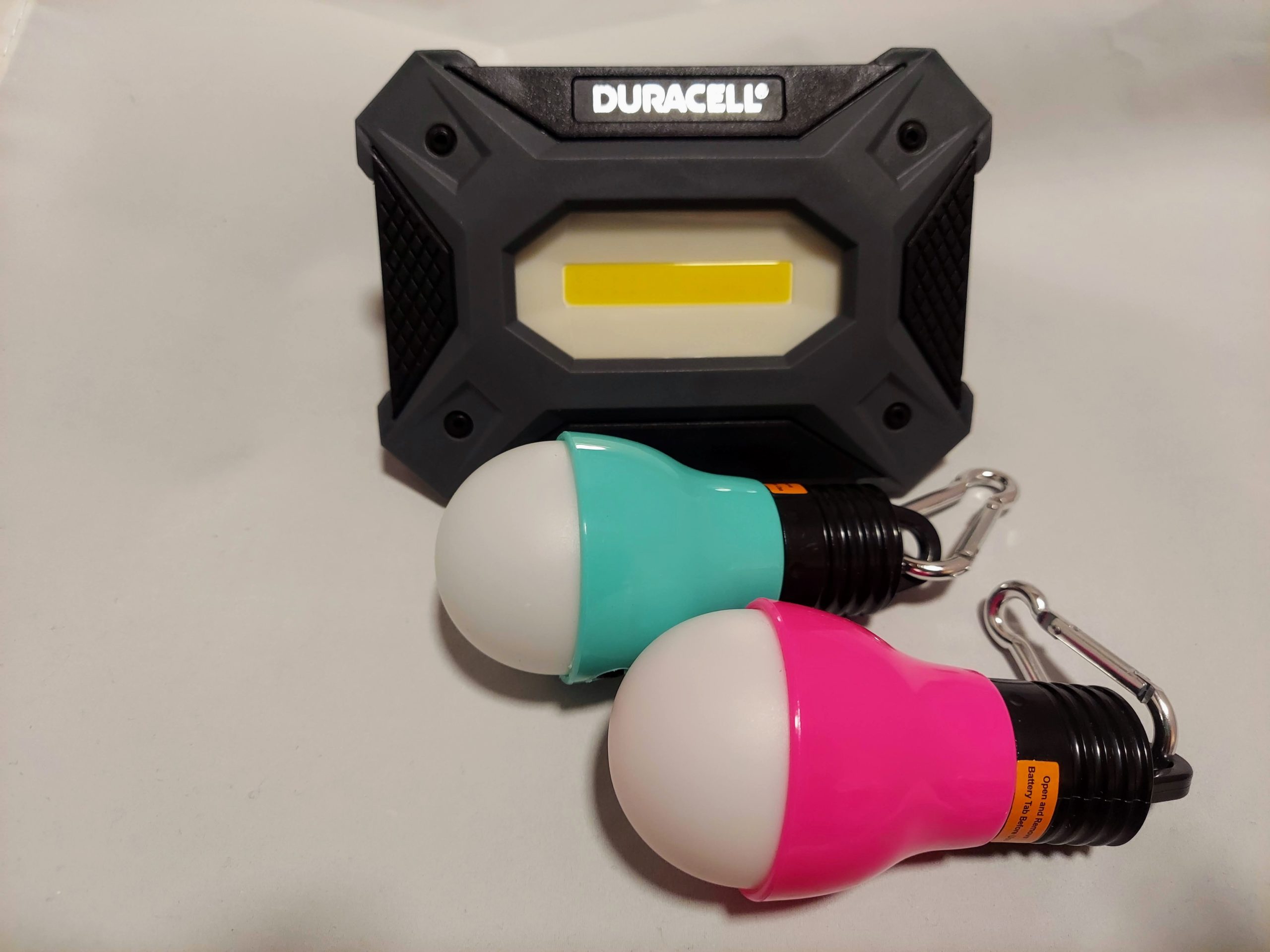
    I purchased these LED light bulbs from my local hardware store, and I loved them! You can also purchase similar ones on Amazon if you can’t find them locally.  They have little clips that make them easy to hang in different areas, plus even if you decide to sleep in a tent, they work well for clipping to the ceiling of a tent.  They have a high setting and a low setting when you want it a little dimmer.

    I also purchased these Duracell LED lights that have a built-in stand so you can set it down on the ground or set it on the floor of your SUV when you’re getting ready for bed or just sitting in the car reading at night.  If you face it toward the Reflectix, it really brightens up the vehicle!  

    I made sure to shut off my dome light to my car during my trip as I didn’t want to take any chances that I’d accidentally leave a door open. Also, when using the SUV tent attachment (read more below in #5), the rear hatch is left open, and thus the light on the hatch door stays on unless you shut off all dome and ceiling lights. So if your dome lights are turned on, your battery will most likely be dead by morning.

    3) Organization System

    This is a must when camping in your car! I felt like it was even more necessary than when I went tent camping. Each day, I’d need to move stuff from the rear passenger seats to my car’s front seats to lay down the rear seats and get ready for bed.  Then the next day, it would get moved back.  Needless to say, things got moved around a lot.  When it was just me, I could still lose track of things, but I pretty much knew where I kept everything.  However, when my husband later joined me on the trip, the organization became an even greater issue.  

    Totes

    Having totes to keep your food, electronics, and other miscellaneous supplies organized in will really help!  Label totes for one thing, such as a tote labeled “food” or a tote labeled “electronics” and so on.  That way, if you’re traveling with someone else, everyone will know where specific items go, and then when you need them, you’ll know where to find them.

    Zip Lock Bags

    I love zip lock bags.  I always bring these when I travel, whether it’s a trip abroad or a road trip close to home. There always seems to be a need for these.  When camping in your car, you might use these to contain food items like sugar or trail mix, or PB & J sandwiches. You can also use them to keep extra batteries, USB cables, headphones, etc.

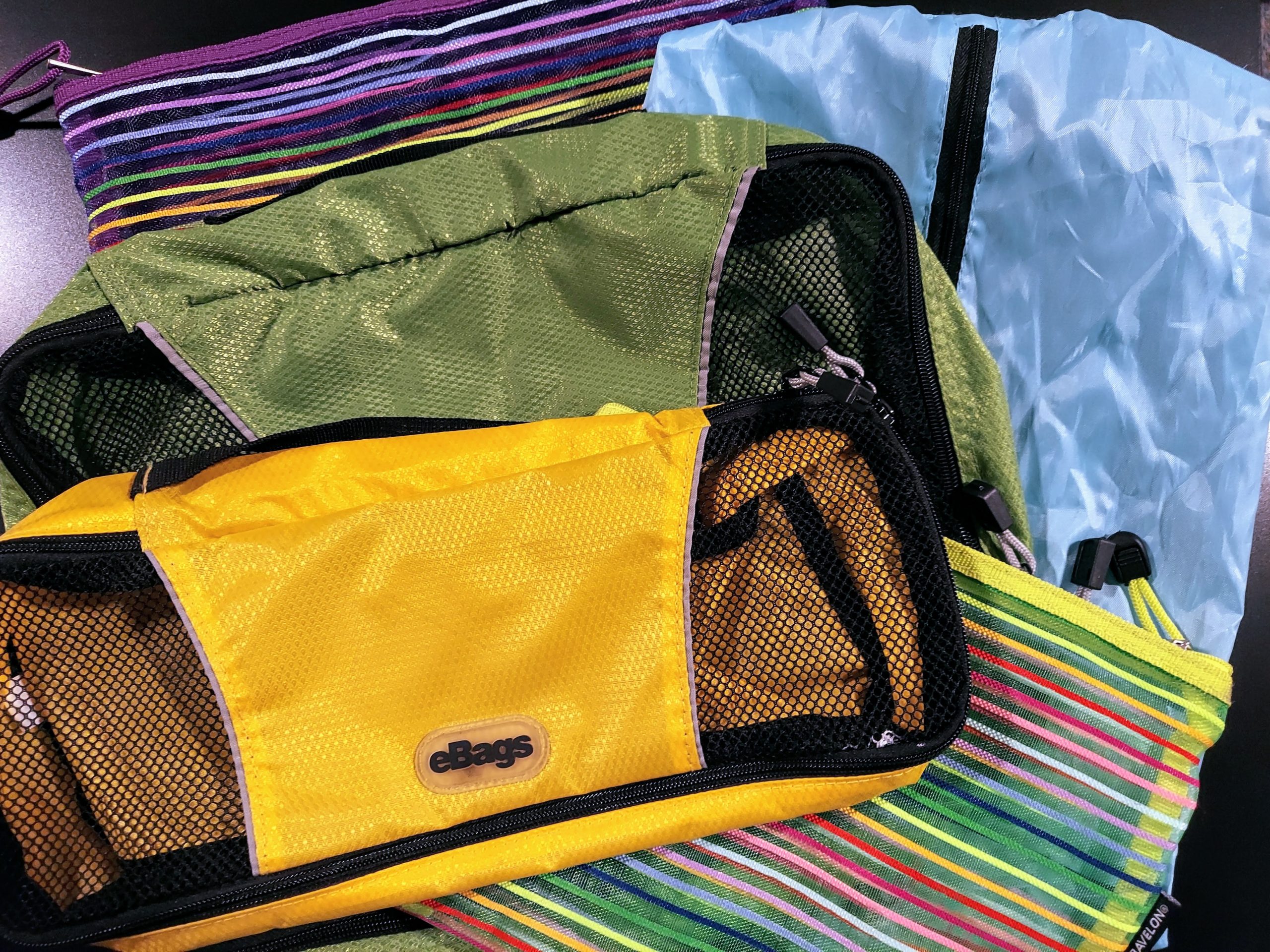
    Cube Organizers

    These cube organizers for traveling are also great when camping in your car or SUV. I used them for clothing items as well as keeping certain electronics together.  For example, in one of mine, I put all my GoPro gear, chargers, gimbal, batteries, etc.  Then I always know where my GoPro accessories are.  “Oh, it’s in the green organizer.”  This sounds simple, but it really saves you a lot of time looking for things.

    Shoe Bags

    The last thing that sort of falls under organization is shoe bags. I use these when I travel to keep my shoes from getting my clean clothes dirty.  However, they are also useful for carrying extra shoes, like flip-flops (don’t forget to pack those for your trip around camp), and I also sometimes use them to store socks in.  So it makes socks easier to find rather than rummaging through a duffel bag.

    4) Portable Power for Car Camping

    You’re essentially living in your car when you’re car camping or SUV camping.  This means you’ll need some way to charge your camera batteries, cell phone, laptop, and any other miscellaneous electronics you travel with.  I purchased the Jackery Portable Power Station Explorer 300 before my trip, and I loved it!  

    I was able to charge my Nikon batteries, GoPro batteries, cell phone, laptop, drone batteries, and even power my little coffee grinder when I needed some freshly ground coffee beans.  

    You can charge the Jackery in the car when you are driving, or if you’re like me, you’ll probably want the occasional stay at a motel to take a real shower and feel a little more “human.”  Let’s face it, camping in your car is still camping.  

    Many of the campgrounds in the National Parks do not have showers, so eventually, you’ll need something.  So when considering your charging needs, you can plan to use a small generator like the Jackery and then use stays at a motel or KOA for extra charging as needed.

    If you plan to bring a portable shower and stay off-grid for longer periods of time where you won’t be driving (or staying at a motel) to charge your Jackery, then you might also consider purchasing one of their solar panels, which will charge your Jackery without needing to run your vehicle. 

    5) Airflow & Ventilation

    One thing you’ll notice if you crawl into the back of your car or SUV and close all the doors is how quickly things can get stuffy, and you’ll most likely find yourself wanting some airflow, especially if it is warm out. 

    Fans

    I used this rechargeable fan which, believe it or not, was really nice to have in the desert heat.  Even the small amount of air blowing on you at night when it’s hot will really help! Plus, it also has a built-in LED light. I liked that I didn’t need batteries for it either. I never had to recharge it on my trip, so it lasted a pretty fair amount of time between charges.

    Bug screen covers

    I purchased two different types of these, and I’ll admit, neither was perfect.  Getting ones that fit your vehicle just right can be a challenge.  The first set I purchased has larger holes which are nice as it allows more air in.  However, I also have to believe they could potentially allow some bugs in too. The second set was a thin, tight mesh material with perhaps too little ventilation as it didn’t seem to let much airflow in.  

    That being said, if it is really hot, you’re going to want some airflow; these allow you to keep your windows rolled down about halfway to allow airflow but keep the bugs out. You can see them in the photo above on the windows on either side of the sheet I had strung across the rear seats.

    SUV Tent for Car Camping

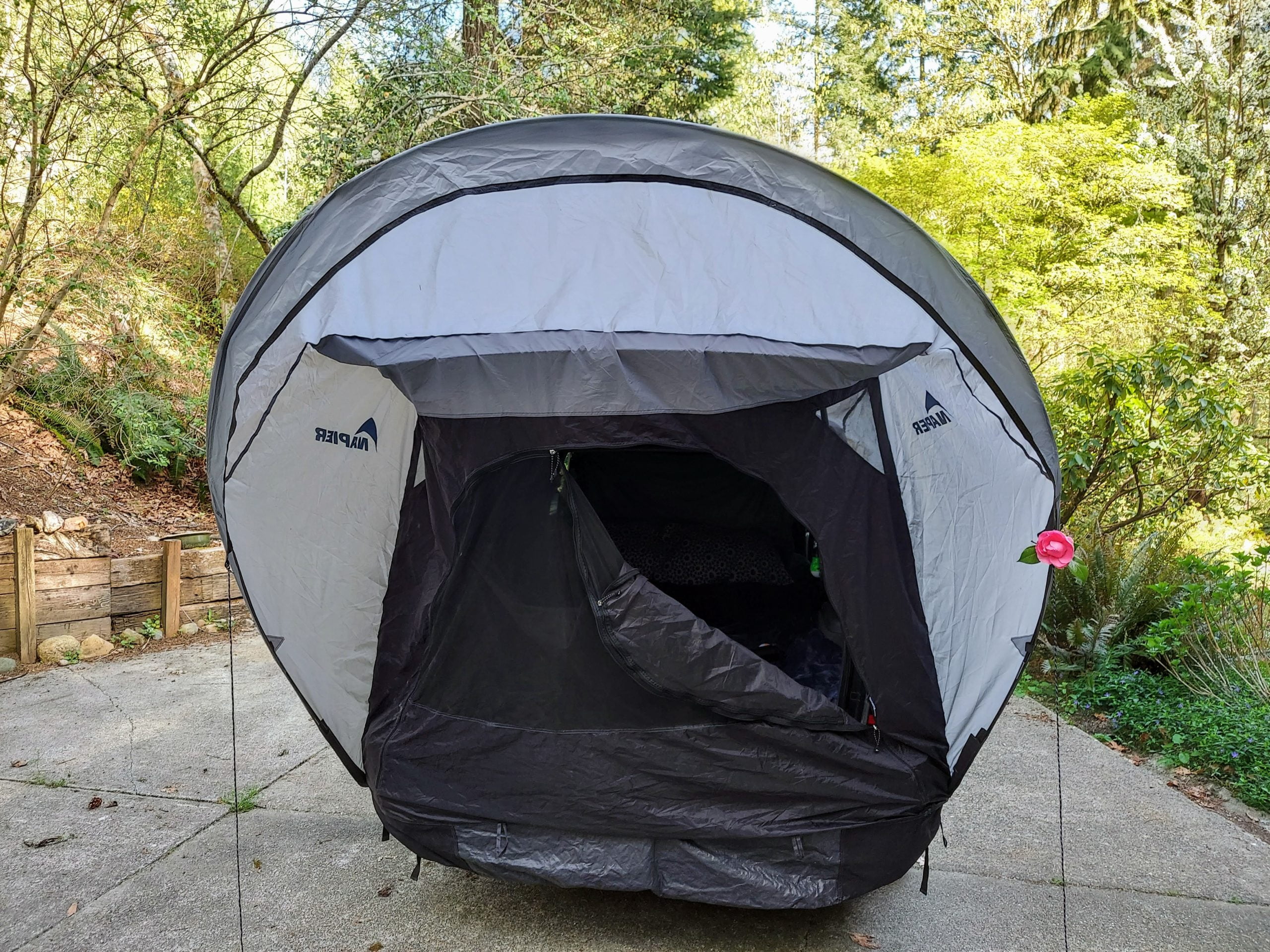
    The last item that I tried on this trip was an SUV tent attachment.  This turns your SUV into a tent.  It gives really nice airflow and also provides easy rear entry and access to your sleeping area.  This was nice because in my MDX, once I close the rear hatch, I can’t open it. I have to crawl out the side door when I want to get out again.  So with the SUV tent, you can unzip it like you would a tent and climb out the back.  As I mentioned before, if you use this, make sure to shut off your dome lights since the rear hatch is open when the SUV is attached.

    Napier sells this SUV Family tent which attaches to the back of your vehicle and can also be used as a traditional tent on its own.  It’s a bit pricey, but it would allow for a couple to sleep in the back of their vehicle while the kids or other companions slept in the tent portion.  It also has the added benefit of being used as a sitting area during the day to read or take a break from the sun.  So although pricey, depending on your needs, you may want to consider it.

    I used the Napier Sports Cove SUV tent, and it worked very well and was easy to set up. I’d say it takes about 5-minutes to attach to the vehicle and probably about the same to take it down.  I also demonstrate how it attaches to the vehicle and how easy it is to get in and out of the car in my video.

    Car Camping Wishlist Items: “Nice to Have”

    After taking my first maiden voyage of camping in my SUV, there are some changes I think I’ll make for future trips.

    One simple item I want to invest in is a mini-fridge.  I looked at these before I left but decided I wasn’t ready to spend the money.  However, trying to keep fresh ice in the cooler while spending almost a month in the desert was a little bit of an inconvenience.  With a mini-fridge/electric cooler made for cars, I can charge it in the car or use my Jackery to run it.  This eliminates my need to purchase ice.

    The other thing I plan to make before I take another SUV camping trip would be a platform for the bed.  I’ve seen lots of builds by people online (like this one), and I want to create something that would allow me to organize my belongings underneath my bed, thereby eliminating the need for me to move things around each day from the rear seats to the front seats to put my bed down.  With storage under the bed area, I could leave the bed in place during the entire trip.  That would be really nice!  

    If I planned to spend more time camping on BLM land, where typically you have no bathrooms or privacy, then I would consider getting one of these instant shower shelters.  You can use them for showering, changing, and I’ve read some people place a porta-potty in them for a makeshift restroom.

    Final Thoughts

    So there you have it!  These are things I highly recommend when car camping or SUV camping. You may also want to consider adding some of the wishlist items before you take your first car camping trip.  

    I know I don’t go into all of the gear I used, but you can rest assured I had my coffee camping gear with me!  Plus, I used RISE oat milk and almond milk as both don’t need to be refrigerated until after opening.  This is very convenient for storing!

    If you are a seasoned car camper and want to share what you have found useful when camping in your car, please drop your insights in the comments below.  I’d love to hear from you!

    Happy Camping!
     

    *Disclaimer:
    Travelffeine is a reader-supported blog. When you buy via links on this site, we may earn a small affiliate commission at no cost to you. 
  • My 3 Favorite Ways to Make Coffee When Camping

    I love waking up to crisp fresh air, falling asleep to the sounds of nature, and roasting marshmallows around a campfire.  So I give up some comforts of home for a few days to enjoy living in the great outdoors. I won’t, however, give up my coffee. I have to make coffee when camping. It’s a part of the camp experience I look forward to each morning.

    Alright, it’s a part of the life experience I look forward to daily, but when camping, it’s a little extra special to sit there with a hot mug of delicious campfire coffee. The coffee tells me that it doesn’t matter that I only slept four hours the night before and that I haven’t showered in two days, all that matters is that I have coffee and I’m in a beautiful place.  It also matters to the people I camp with, as I would be a much grumpier companion without it.

    I have tried a variety of ways to make coffee while camping, and these are a few of my favorite methods. I think they’re also some of the easiest and most flavorful ways to make coffee while camping. Whether you’re camping with a group, or by yourself, car camping or backpacking, there is an option for everyone.  So let’s get to it!

    Cowboy Coffee

    Cowboy Coffee is the tried and true method to make coffee when camping.  If it is good enough for rough and tough cowboys, it’s good enough for me! I love this method for brewing campfire coffee as it is so simple, you don’t need a bunch of equipment, and it’s also great for crowds.

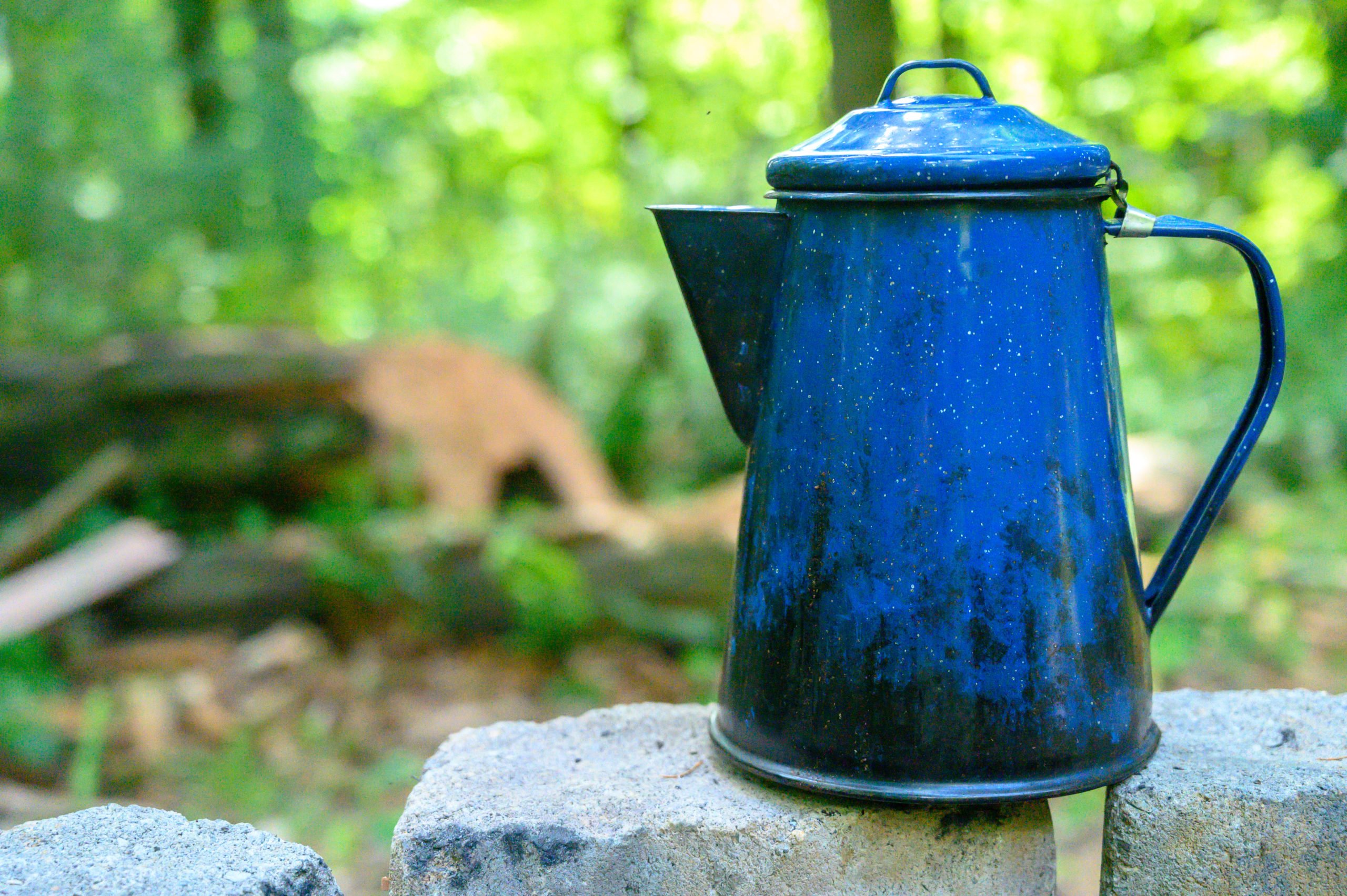
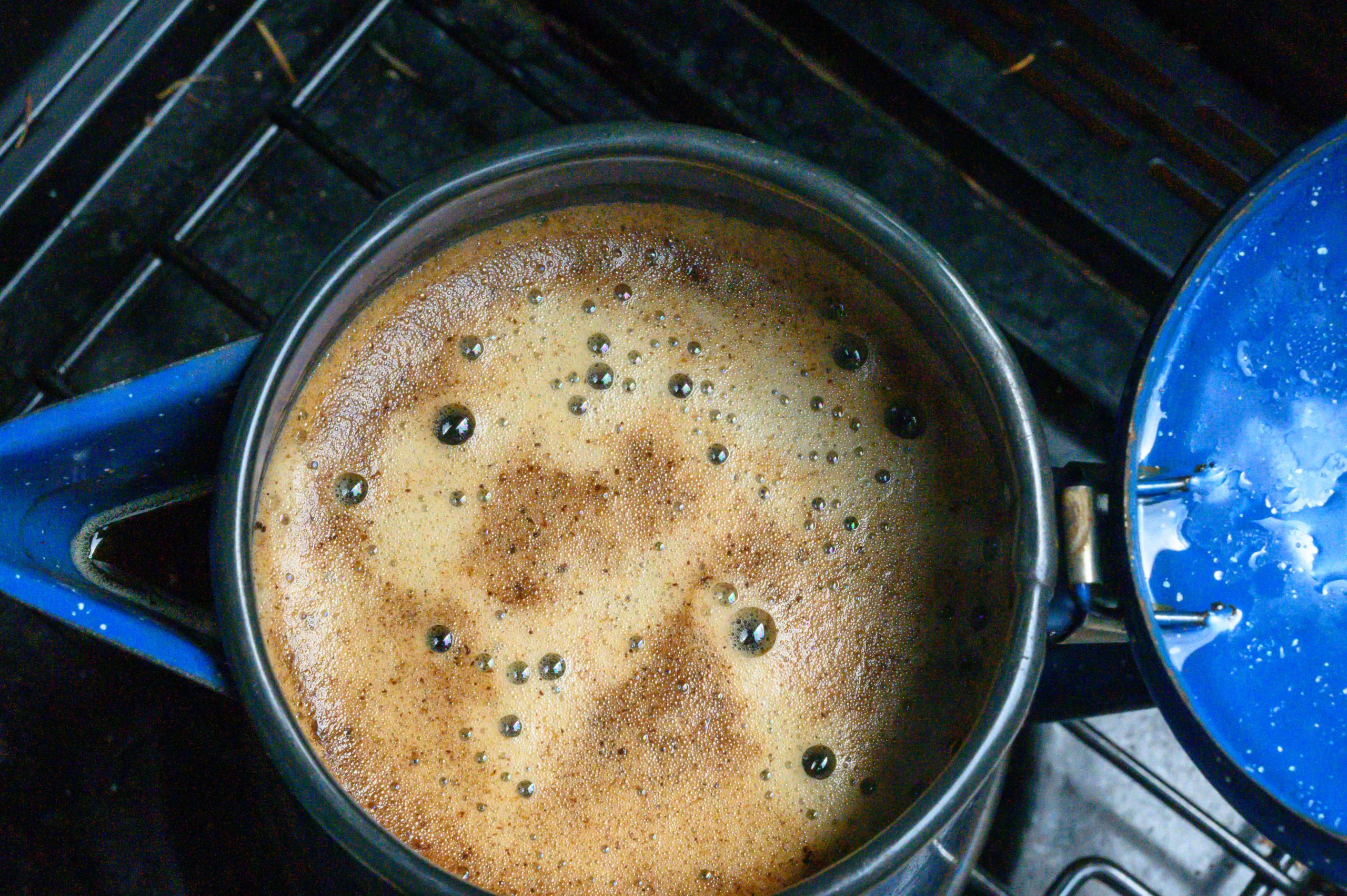
    I own an 8-cup enamel coffee maker like this one. However, you can get them in all different sizes and from a variety of companies. So choose the size that makes sense for your coffee needs.  The idea behind cowboy coffee is pretty simple, you boil water, add coffee, let it steep, and then you drink it!  Simple as that. To avoid bitter coffee or a bunch of grounds in your cup, follow the steps below.

    Here’s the recipe I use for my 8-cup coffee pot. Adjust according to the size of your coffee maker and personal preferences. I find that the amount of coffee I use also depends on the coffee beans I’m using, so you may have to play around with the ratios to get your preferred strength.

    Equipment:

    • Coffee Pot made for use over a fire or stove (I use an 8-cup enamel coffee maker for this recipe)
    • Measuring cup or tablespoon
    • Wooden Spoon (for stirring)
    • Campfire or camp stove
    • Towel or Grill Gloves (to avoid burning yourself when you take the coffee pot off the heat)
    • Your favorite camping coffee mug
    • Thermos or Carafe (optional)

    Ingredients:

    • Water for boiling in a coffee pot
    • ~ 1 cup medium to coarse ground coffee per pot (measure according to the size of your coffee pot, approximately 2 tbsp of ground coffee per 8 oz of water)
    • 1/4-1/2 cup cold water (depends on the size of the coffee pot)
    • Optional Ingredients: sugar, half-n-half, coffee creamer, cinnamon to sprinkle on top
    • My Favorite Roast Type: Medium Roast

    Instructions:

    1. Bring water to a rolling boil in your coffee pot.
    2. When the water is boiling, take it off the heat.
    3. Let it sit for about 45 seconds. This brings the water temp down below the boiling point. The ideal coffee temperature is around 195°F to 205°F. By allowing your boiling water to cool a little, it helps you avoid brewing a bitter cup of coffee and instead extract the best flavor from the coffee grinds.
    4. Add your coffee and slowly stir into the water with a long wooden spoon. Close the lid.
    5. Wait about 2 minutes.
    6. Stir again and wait another 2 minutes. (I keep the lid closed to retain heat.)
    7. Then add about 1/4 cup cold water to the spout and on top of the coffee.  I dribble a little down the spout first. Then, I open the lid to my coffee maker and sprinkle a little on top. The cold water helps settle the grinds to the bottom of the coffee pot, so you don’t get a cup full of coffee grounds–yuck!
    8. Let this sit for about another minute. 
    9. Slowly pour a cup of hot, steaming deliciousness and enjoy! (You’ll want to pour the coffee carefully, so you don’t disturb the grounds that have settled onto the bottom of the pot)

    Notes: 

    If you don’t plan on drinking your coffee right away, you may want to pour it into a separate carafe or thermos to keep it hot for later.  The longer the coffee sits in the pot with the coffee grounds, the stronger (and more bitter) it will get.

    AeroPress Coffee

    If you want to make coffee when camping but don’t want to sacrifice any of the flavors, the AeroPress coffee maker is your best bet. You can use it to make espresso, lattes, or an Americano all from the picnic table at your campsite.  Although I’ve also made French Press coffee when camping, now I prefer using the AeroPress as it brews a smoother and less acidic cup of coffee. 

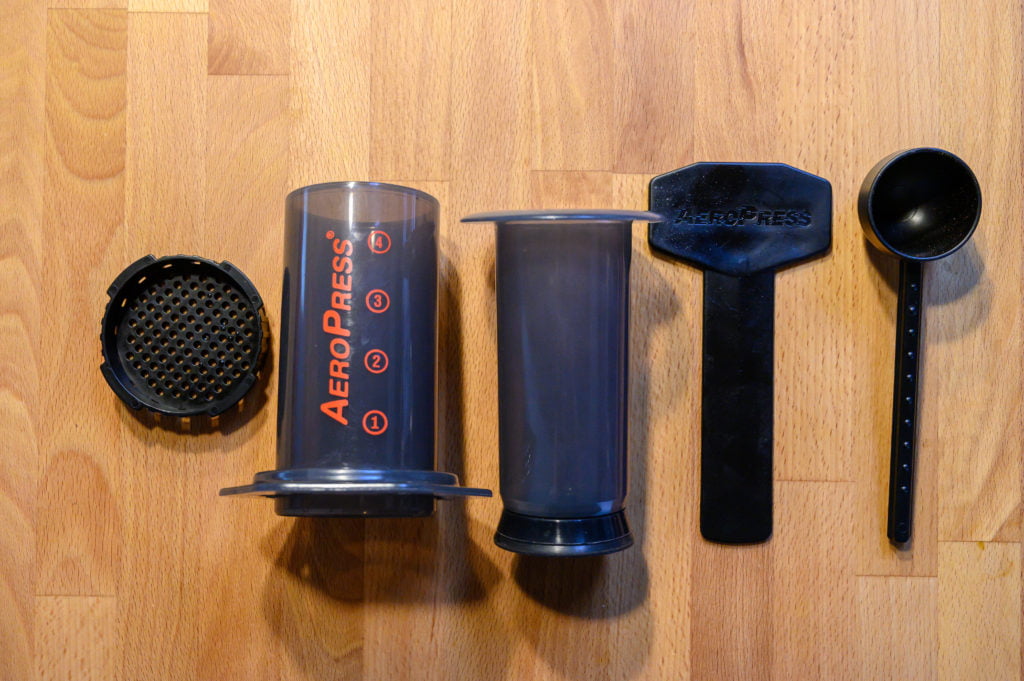
    Three main parts of the AeroPress coffee maker:

    • Chamber (it’s the long plastic piece with numbers written on the side)
    • Plunger (the long piece of plastic with a rubber end)
    • Filter cap (attaches to the bottom of the chamber)  
    Aeropress coffee maker parts
    AeroPress components left to right: filter cap, chamber, plunger, stirring stick, and coffee scoop.

    There are a variety of ways to make coffee using the AeroPress. However, since this is for campfire coffee, I kept the equipment and the method as simple as possible.  Below are instructions for brewing an Americano or drip-style coffee. I will also give tips for brewing an espresso-style or latte. 

    An important thing to note is that you need a sturdy coffee mug to use with the AeroPress.  You cannot use a paper cup for this method as you apply firm pressure when pushing down on the plunger to extract the coffee. A paper cup would not hold up.

    Equipment:

    • AeroPress Coffee Maker (Use a 20% off coupon at Bed Bath & Beyond for the best deal)
    • Coffee Scoop (the AeroPress comes with one that is equal to 2.5 tbsp or 3 tbsp heaping)
    • AeroPress microfilters (each AeroPress comes with a starter pack)
    • Stirring Utensil (the AeroPress comes with a special stirring stick, you can also use a spoon)
    • Coffee Pot made for use over a fire or stove (for boiling water)
    • Campfire or camp stove
    • Towel or Grill Gloves (to avoid burning yourself when you take the coffee pot off the heat)
    • Sturdy coffee mug (Needs to be sturdy enough to handle the pressure of the AeroPress being pushed down on top)

    Ingredients:

    • Water for boiling
    • Medium-fine ground coffee (~ 6 tbsp per brew)
    • Additional hot water to make an Americano or drip-style coffee (optional)
    • Optional Ingredients: sugar, half-n-half, milk (for a latte) coffee creamer, cinnamon to sprinkle on top
    • My Favorite Roast Type: Light or Medium Roast (AeroPress works well for Light Roasts and allows to the subtler flavors to shine through)

    Instructions:

    1. Boil water (at least 16 ounces).
    2. Remove from heat and let sit for about 1-2 minutes. A water temp anywhere between 180°F to 205°F works well with the AeroPress.
    3. Prep your AeroPress by placing a microfilter in the filter cap, and attach it to the AeroPress chamber, then place it over your coffee mug. 
    4. Pour a little hot water over the empty coffee filter to rinse it out, then dump the water out of your mug and place the AeroPress back on top of your cup.
    5. Add two rounded scoops of coffee (~6 tbsp) to your AeroPress chamber and give it a little shake to even out the coffee grinds.
    6. Pour hot water into the AeroPress to just below the number two. Stir for 10 seconds.
    7. Then add enough hot water to come to the top of the number three. Wait 1 minute.
    8. Insert the plunger into the top of the AeroPress chamber and gently press down.  Don’t force the plunger down. You’ll feel a slight resistance as you push down. If it feels too hard to push, then gently pull up slightly and then push down again. It should take about 30 seconds to push the plunger to the bottom.
    9. Remove the AeroPress maker from your coffee mug and add about 3/4 cup of hot water to the coffee to create a 12-ounce Americano style coffee. Adjust the amount of water to get the coffee strength you prefer.
    10. Take the Aeropress and unscrew the filter cap (be careful as it may be hot). Then hold the AeroPress over a plate or trash bag and push down on the plunger to expel the filter and coffee grounds. Rinse the bottom of the Aeropress chamber and plunger with cold water, and it’s ready to use again.

    Tips for Making an Espresso Style Coffee:

    For an espresso-style coffee, use the same amount of coffee, but add less water.  Add water to just below the number two, stir for about 10 seconds, then slowly plunge to extract the coffee.  Drink this shot of coffee without adding any water.

    Tips for Making a Latte:

    Make a brew according to the Espresso instructions above, then add warm milk to the coffee (I use about a 1/2 cup of milk). If you want to get fancy, you can bring one of these battery-powered milk frothers to froth your milk. Now, won’t you feel special drinking your latte while sitting around the campfire! 

    Brew Buddy Coffee

    Last year I purchased the Primula brew buddy for my off-road motorcycle trip. I needed something small and lightweight since we were packing our camping gear on our motorcycles.  It is also great for backpacking as it is incredibly lightweight and compact. It is the simplest of the campfire coffee methods and the cheapest of them too!  You place the brew buddy over a mug, add coffee to the filter in the center, then slowly pour in hot water and voila! You have a freshly brewed cup of coffee. Easy peasy!

    Equipment:

    • The Primula Brew Buddy
    • Coffee Mug (brew buddy needs to fit on top of the rim)
    • Tablespoon for measuring coffee
    • Coffee Pot made for use over fire or stove (for boiling water)
    • Campfire or camp stove
    • Towel or Grill Gloves (to avoid burning yourself when you take the coffee pot off the heat)

    Ingredients:

    • Water for boiling
    • Medium-fine ground coffee (~ 3 tbsp per cup of coffee)
    • Optional Ingredients: sugar, half-n-half, coffee creamer, cinnamon to sprinkle on top
    • My Favorite Roast Type: Medium Roast

    Instructions:

    1. Boil Water 
    2. Remove the coffee pot from the heat and let sit 30 seconds to 1 minute.
    3. Place brew buddy on top of your coffee mug.
    4. Add 3 Tablespoons of coffee to the filter in the center of the brew buddy. (Adjust to personal preferences.)
    5. Slowly pour in your hot water over the coffee in the brew buddy until you’ve filled your mug to your desired level. (You may have to lift it to check the water level from time to time.)
    6. Remove the brew buddy from the top of your cup. Be careful as the sides of the plastic may be hot to the touch. (The longer you leave it on the mug, the stronger the coffee gets, and it will eventually turn bitter).
    7. Rinse coffee grounds from brew buddy to clean it for future use and set aside to dry (or to make the next cup).
    8. Drink up!

    *Psst, you can also put loose leaf tea in your brew buddy and brew a cup of tea. I won’t tell, I promise. However, you may want to save that for the afternoon when everyone has already had their coffee—no need to start a riot.

    Additional Tips to Make Coffee When Camping

    Coffee Grinds:

    You can either purchase your favorite coffee ground or as whole beans. If you choose to grind your coffee beans (my preference), then make sure to grind them at home before leaving for camp.  If you have a hand grinder and want to grind your beans at camp, you can certainly do that. I tend to prep at home to make camping as simple as possible.

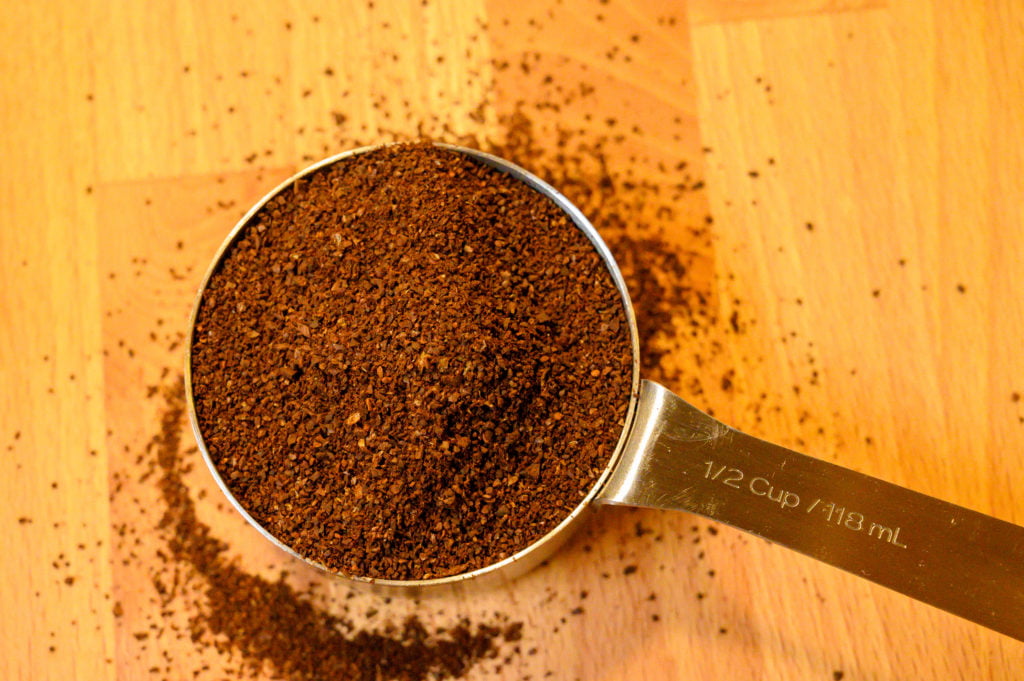
    If you’re making cowboy coffee, then you’ll want a medium to coarse grind something that sort of looks a little smaller than kosher salt. The coarser grind will help prevent getting coffee grounds in your cup when you pour. 

    Whereas if you’re making AeroPress coffee or using the brew buddy, then something more along medium to medium-fine is a good grind size.  Medium is about the size of sea salt, and medium-fine would be like coarse sand.  

    You can experiment with grind size at home to find your personal preference and then pack that for your camping trip.  

    coffee grinds
    A medium-coarse coffee grind.

    Cowboy Coffee Tips

    Measure the amount of water your coffee pot takes before leaving home, then choose the appropriate measuring cup or bring bags of pre-measured coffee to use each day.  A general starting point for coffee to water ratio is two tablespoons of coffee per 8 oz of water.

    So if you have a 12-cup coffee pot, then you’ll know you want somewhere around 1 1/2 cups of ground coffee per pot (adjusted to personal preferences). The important thing is to know how much water your coffee pot holds and then go from there to determine how much coffee you’ll need per pot.

    Final Thoughts for Campfire Coffee

    In all honesty, no matter which method you use to make coffee when camping, you’re going to be so happy just to have coffee that it won’t matter quite as much how you get it.  That said, I hope this post shows just how easy it is to brew a quality cup of coffee when camping. 

    Oh, and make sure to pack extra coffee cups as you are going to have people stopping by to ask for some when they see you sitting there drinking your liquid hug-in-a-mug. I’m smiling just thinking about that first cup of campfire coffee.  The air is crisp, my coffee is hot, the camp is quiet, and I inhale the smell of freshly brewed coffee and clean air.  Life is good.

    For more articles on coffee, check out:

    Now Let’s Go Camping!
    *Disclaimer:
    Travelffeine is reader-supported. When you buy via links on this site, we may earn an affiliate commission at no cost to you. 


  • Off Road Motorcycle Adventures: A Beginner’s Guide to Packing & Planning

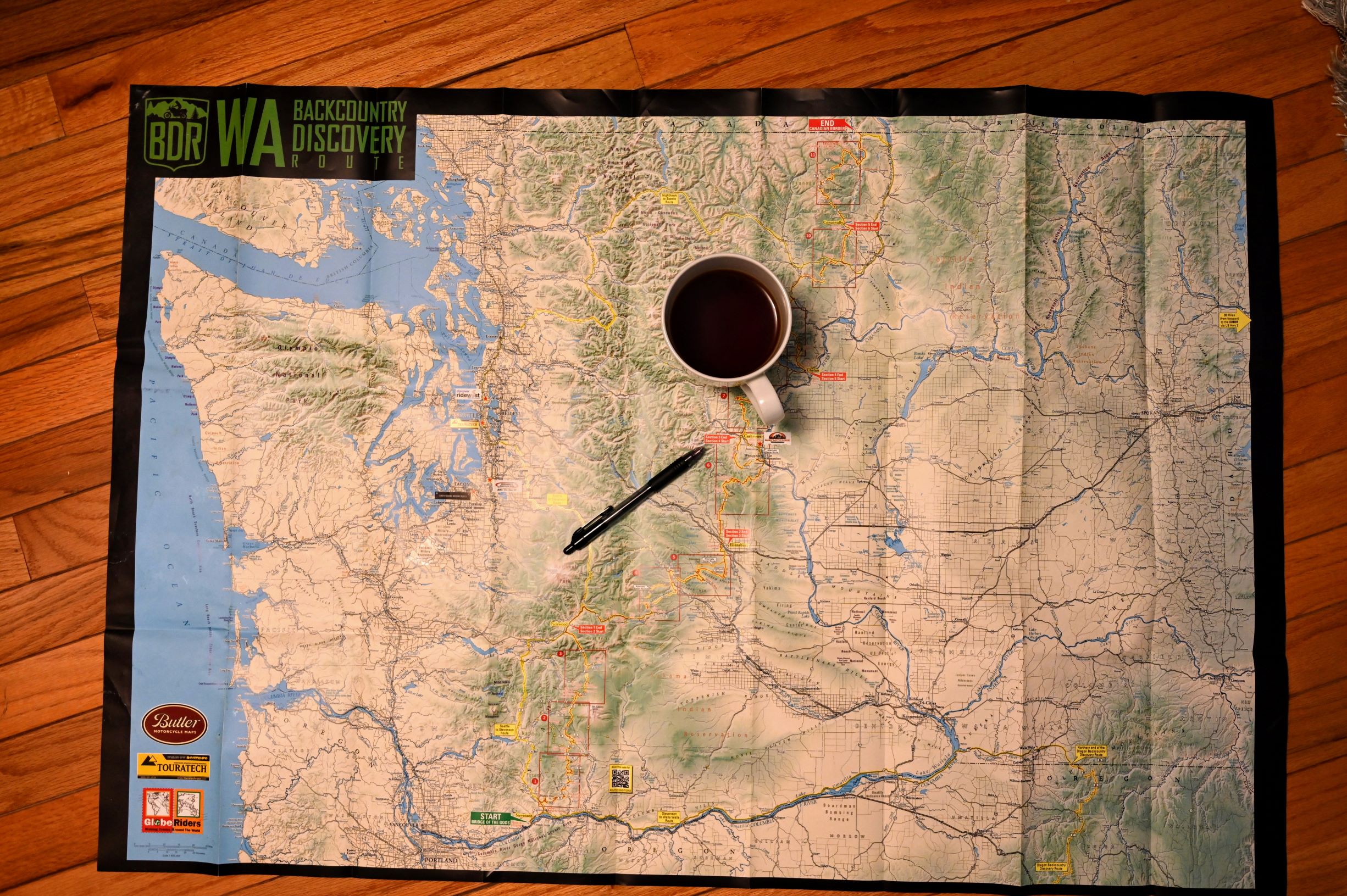
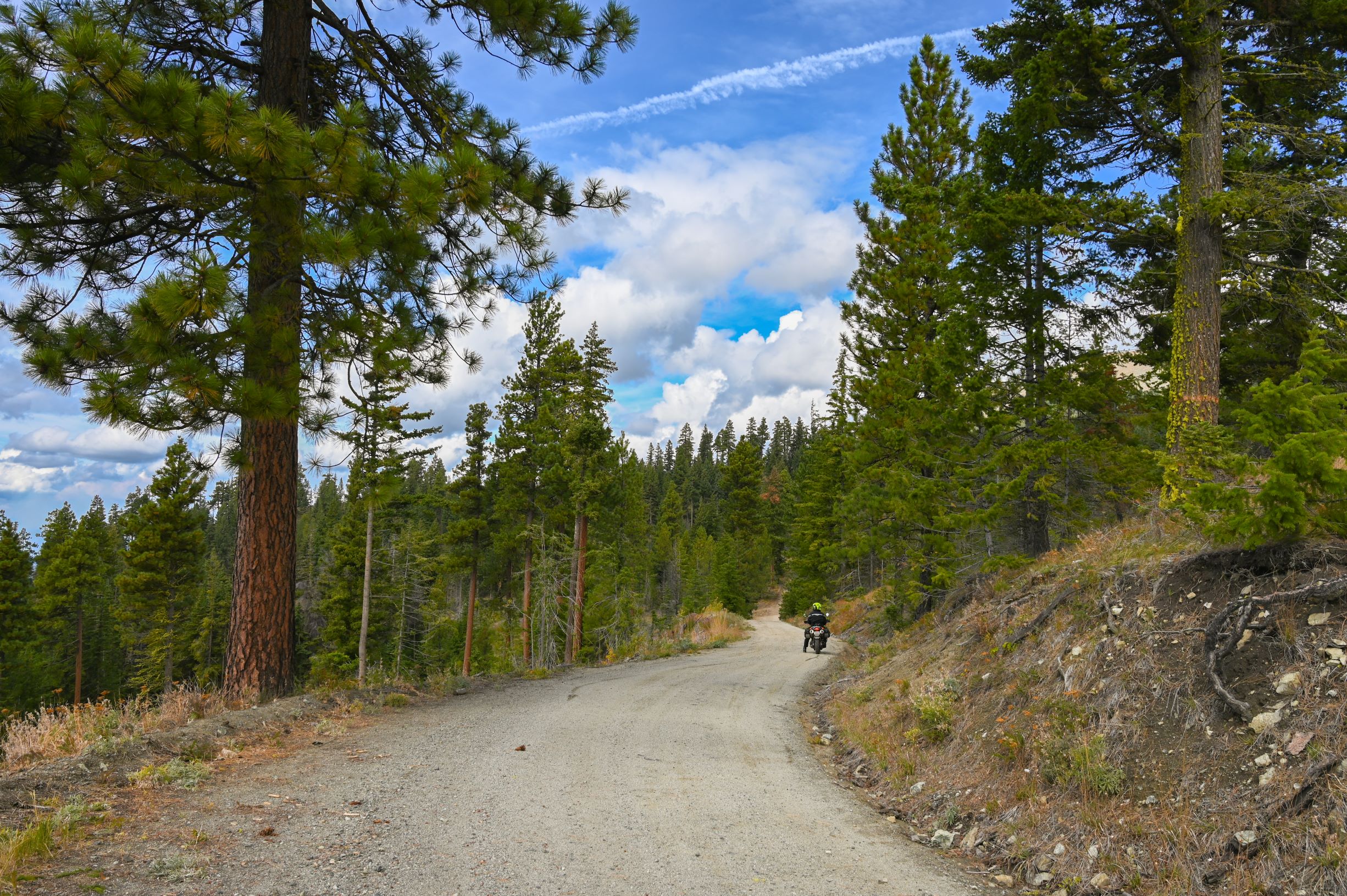
    My husband and I recently returned from an off-road motorcycle adventure. It was our first multi-day moto trip where we camped off our motorcycles. We were riding sections 4, 5, and 6 of the Washington Backcountry Discovery Route (WABDR). This beautiful off-road route stretches from the Oregon/Washington border and up to the Washington/Canadian border. 

    The WABDR is a mixture of challenging fire service roads as well as the easier and more maintained gravel forest service roads.  The Washington Backcountry Discovery Route is full of adventure with spectacular scenery all along the way. In this post, I share how I planned the trip as well as what gear I packed for moto camping. First, let me give you a little background on my motorcycle experience.

    My Motorcycle Riding Experience Thus Far

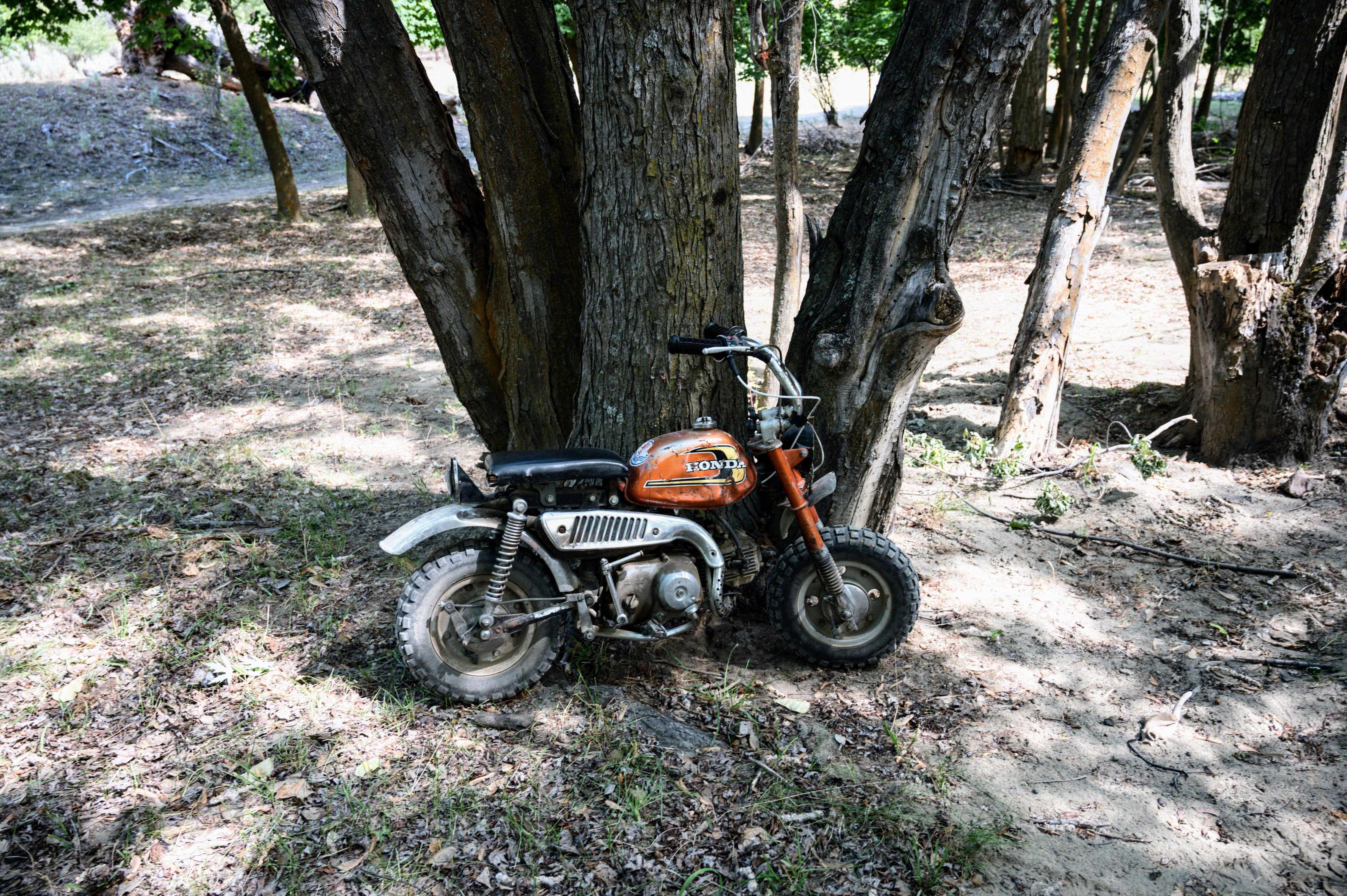
    I grew up learning to ride motorcycles on a Honda 50.  All of my siblings did, and to this day, all of their kids learn on the same Honda 50.  It is a fun legacy, and this Honda 50 is a beast! It rarely ever needs any work and keeps going and going — take that Energizer! 

    I eventually outgrew the Honda 50 (although let’s be honest, all of us adult kids still like to ride it once in a while, just to say we can). I transitioned into riding a Honda 250 and a Yamaha 400–all lightweight off-road motorcycles, always intending to get my motorcycle license eventually.

    One day while in Seattle at a motorcycle store (can’t remember why), my husband and I learned from the owner, that WA state had a new motorcycle endorsement program. They provided the motorcycles and put you through a course to get your license, and all it takes is one weekend.

    When we left, my husband said: “let’s do it!”  And so we did. It is a great program that teaches a lot of excellent road safety techniques. By the end, you take the motorcycle driving test, and pass (hopefully) and then head to the DMV, get a new mugshot, and you are officially a motorcyclist

    Beginning Our Off Road Adventure Riding

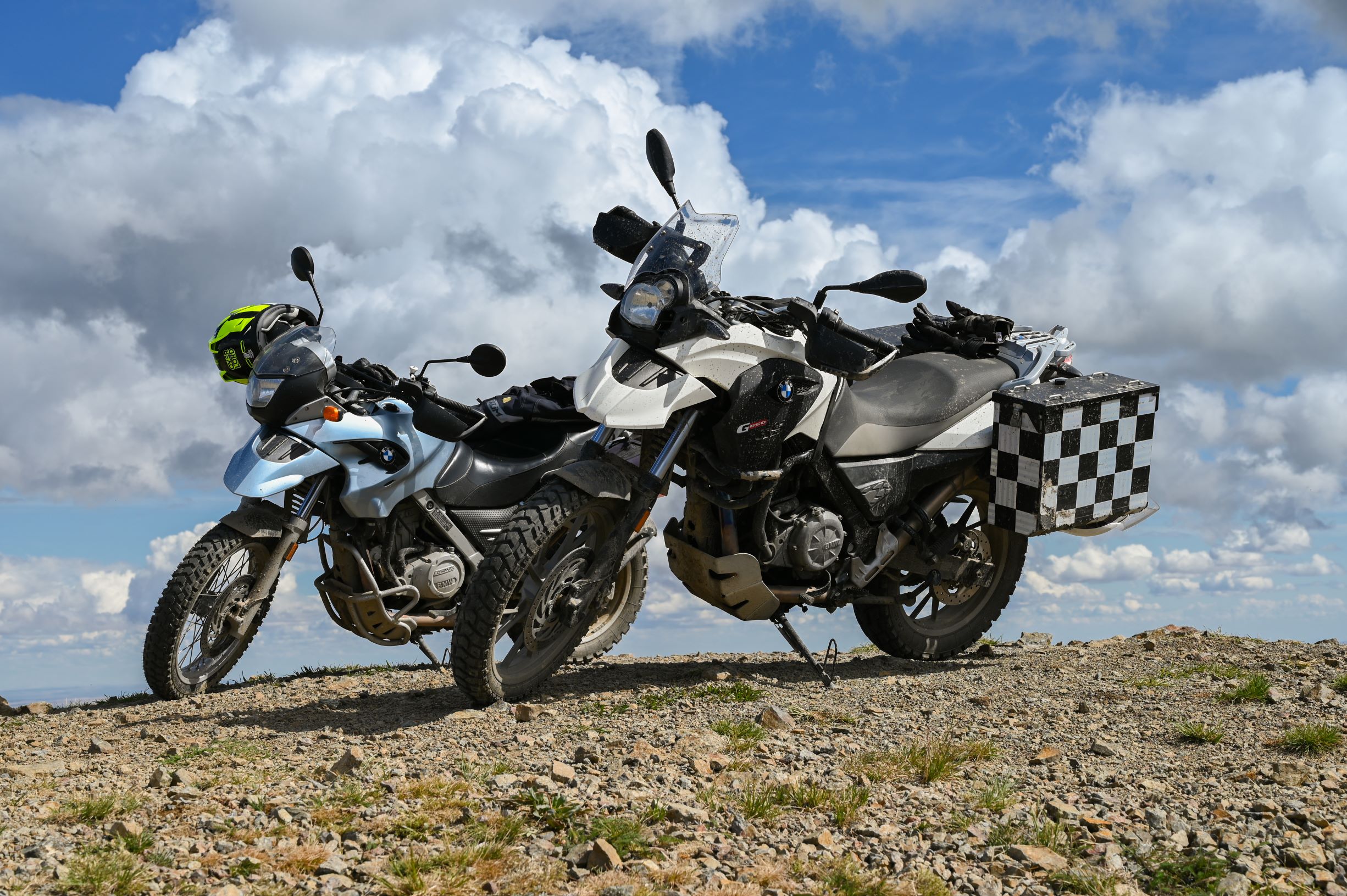
    That was over five years ago.  We purchased motorcycles right after getting our licenses and have been getting road experience ever since.  We bought a BMW F650GS and a BMW G650GS, both dual-sport motorcycles. This means you can ride on and off-road. We did some off-roading with my brother when he’d visit, but it was mainly just dirt or gravel roads, nothing too technical.

    We learned about the Washington Backcountry Discovery Route in 2015 and decided we’d ride the last half of the route when my brother came over for his annual summer vacation. Wildfires had a different plan, and due to the forest fires burning all over Washington state, we had to cancel our trip plans.

    Fast forward four years, and we have the best fire season we’ve had in a long time!  A former UW classmate of mine posted his pictures of completing the WABDR in his 4×4 Toyota, and I told him how I’d planned to do the route.  He said, “you should do it this year.” And I thought, “yeah, he’s right!” There is no guarantee we’ll get another year with so few fires, why not seize the moment and do it!  

    So I contacted my brother, told him my idea to do the last three sections of the Washington Backcountry Discovery Route in September, and he said to let him know the dates, and he’d put in for his vacation.  Next, I convinced my husband that this was a great idea, and soon we had our dates picked out.

    Planning our Off Road Motorcycle Adventure

    Now, it is essential to note that this decision was made right in the middle of our crazy hectic summer. Which meant I was busy planning camping trips, and get-togethers with friends and family and did not give our ride my usual planning attention.

    So this trip felt a bit more spontaneous than my trips usually are. I skimmed a few websites on the subject of riding the WABDR, and we bought the official WABDR printed map. I downloaded the GPS tracks and a free GPS app for my phone. From my minimal research, I determined that we should only need one day of riding per section. So I reserved some campsites for our ride and continued making plans with our group.

    We live in the Seattle area, and my brother lives in North Central Washington. So we decided to meet in Leavenworth the night before we began our ride. Also, my brother and his wife would be riding in their Toyota 4Runner for sections 4 and 5, so he agreed to pack extra water for our group and to carry any gear that might lighten the load in our panniers. That was wonderful! When you’re riding an adventure bike off-road, reducing the weight in your panniers is always helpful.

    Easy, Lightweight Food Options

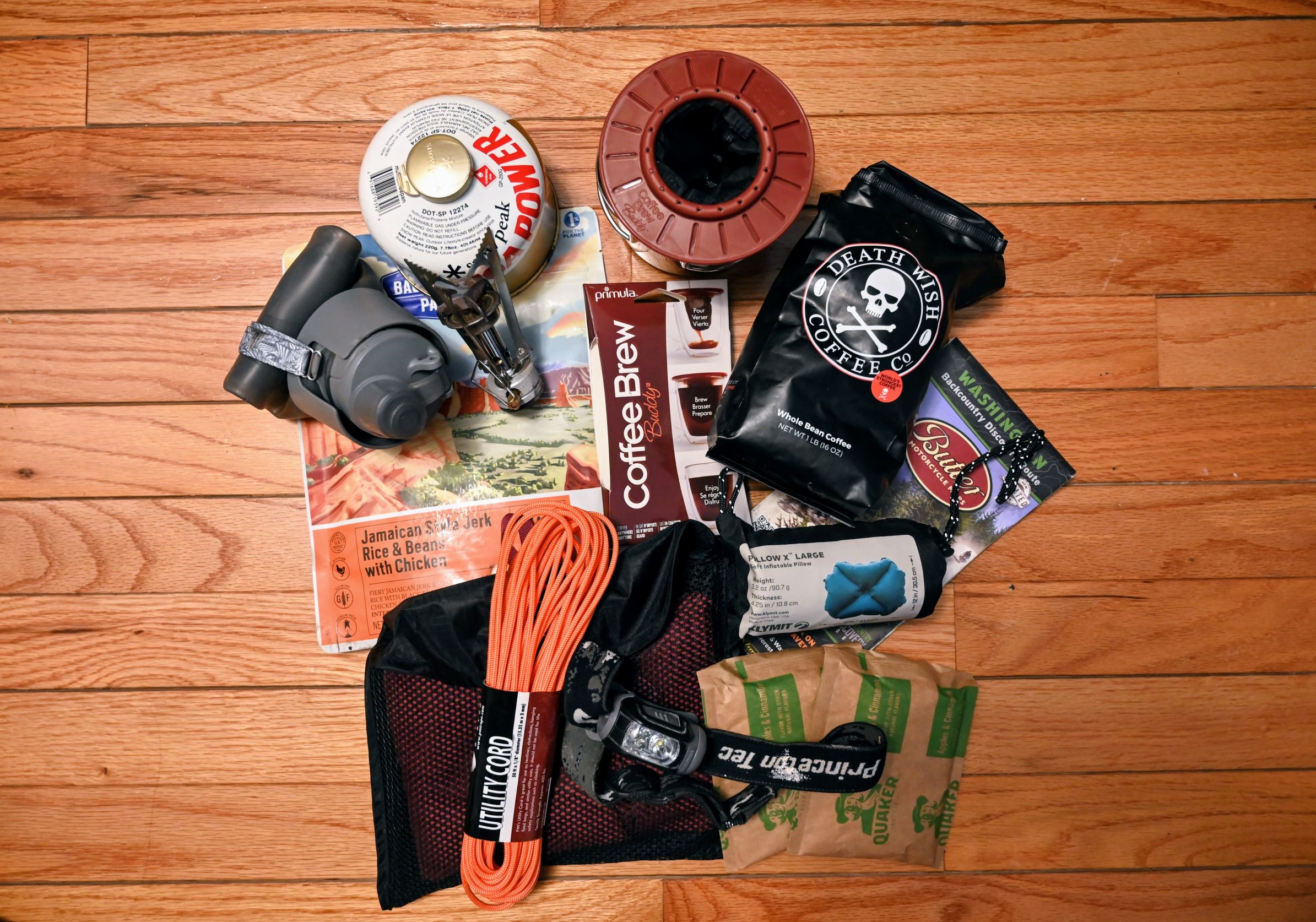
    I packed our backpacking propane burner and some dehydrated meals that you can prepare right in their pouches. And I also packed oatmeal packets and coffee for breakfast. To make each meal, all I needed to do was to boil water on our tiny propane stove.

    I used a new style of lightweight coffee filters to make coffee on this trip as they took up less space than my usual french press options. I like them, but I need to practice more to get the right strength.  The first cup was a little too weak. My husband then decided to triple that amount in his cup and oh my goodness! Way too, acidic! So I will perfect it, but overall I am pleased with my purchase.

    So in addition to a lightweight propane burner and dehydrated food, I also packed jerky and snack bars.  I planned for these to be both our lunch and our snacks. And that was it for food.  

    Breakfast: oatmeal and coffee. Lunch: jerky and snack bars. Dinner: Dehydrated meals. Remember, you want to keep your motorcycle as light as possible when off-roading.

    Packing Essentials: Camping Gear & Supplies

    I packed the same gear I used for backpacking and used it for this off-road motorcycle camping adventure. I think these two “hobbies” really compliment each other. You need lightweight gear for backpacking, and you need the same type of equipment for moto camping. The backpacking gear was small and lightweight and fit great inside our panniers. In addition to backpacking gear, I also packed motorcycle emergency supplies and of course, our riding gear.

    Packing List

    • Lightweight, fast-drying towel
    • Moisture-wicking clothing
    • Smartwool or riding socks of choice
    • Flip Flops or Tennis Shoes (when you’re at camp or in town, it’s nice to have a break from your riding boots)
    • Hat (for when you’re off the bike — to hide helmet head or to keep warm)
    • Sunglasses
    • Balaclava (great for cold morning rides)
    • Thin fleece pullover (great for layering in the morning and at night)
    • Waterproof riding gear
    • Jacket
    • Pants
    • Gloves
    • Riding Boots
    • Backpacking tent (lightweight, easy to set up)
    • Pillow (or use clothing) (we had inflatable pillows from backpacking)
    • Backpacking sleeping bag (you want something smaller than your standard car camping bag)
    • Sleeping Mat (it’s incredible what even an inch of padding can do for a rocky surface)
    • Ziplock bags for toiletries (at higher altitudes these may leak)
    • Packing Cubes — These are a great way to organize gear in the panniers and be able to grab out what you need quickly.
    • Toiletries (shampoo, soap, face wipes)
    • Travel-size brush/comb
    • Coffee and filter
    • Dehydrated Meals
    • Instant Oatmeal
    • Jerky
    • Snack bars (quick snack stuff when you’re on the go)
    • Water (refillable and collapsible water bottles are great)
    • Eating utensils/plates/bowls
    • Collapsible cups (I love these, and they can double as bowls too)
    • Propane stove and propane (use a small pocket rocket one)
    • Cash (for emergencies)
    • Paper Maps (GPS is great when it works, can cause real problems when it doesn’t)
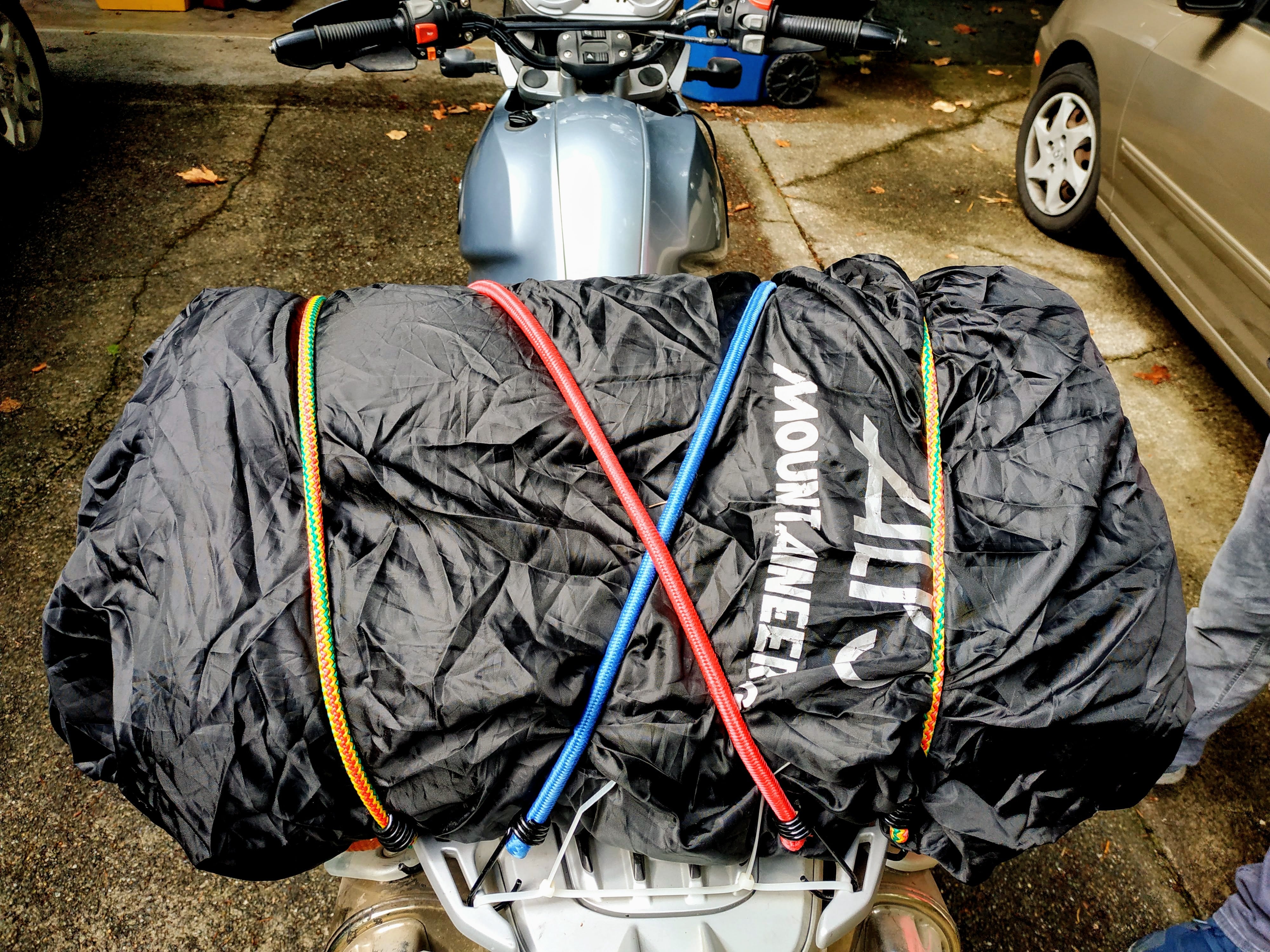
    • Bungees (for tying down the gear to the back of your bike or panniers)
    • Zip ties (always useful)
    • Multi-purpose tool
    • Spare Fuses
    • Engine Oil
    • Spare Tire/Tube or patch kit of some kind
    • Duct Tape
    • Fast Acting JB Weld
    • Loctite Threadlocker Blue
    • Tylenol/Ibuprofen
    • Allergy Medicine
    • Bug Spray
    • Hand Sanitizer
    • Chapstick
    • Raincover for your packs and sleeping bags
    • Small handsaw
    • Toolset for motorcycle
    • Waterproof Matches
    • Toilet Paper
    • First Aid Kit
    • Headlamp/flashlight
    • WD-40
    • Phone/GPS/Comms Charger (powerpack)
    • Charging cables
    • Communication Devices (we use the Sena SMH10 and loved the ability to communicate direction, needs of the group and sightseeing all along the ride)
    • Camera (bring proper padding and rain protection)
    • Passport (if needed)

    Packing Tips

    Practice packing up your motorcycle at least a day in advance, so you know how everything fits.  Make sure the weight in your panniers is evenly distributed so that it doesn’t throw the balance of your bike off.

    Also, when packing the day before, I reduced the weight even further by taking a second look at what I was packing. I discovered more items I could leave behind.  This tends to be the case. You can usually do without that extra shirt or shorts or “just-in-case” gadget. 

    Pack the miniature version of whatever you can — miniature brush or comb, travel size shampoo, small flashlight and so on. Moisture-wicking clothing is great because you can wear it for multiple days and easily wash it the night before a ride and hang to dry to wear the next day. 

    Also, you will eventually pass through towns during your off-road adventure whether you’re on the Washington Backcountry Discovery Route or some other adventure touring ride. So typically, you can purchase additional items, if you find you need them later. 

    I try to ask myself if I need the item in question. And if for some reason I discovered I did need it later on the ride, could I purchase it then?  If the answer is at first “no” I don’t need it and “yes” I could buy it later, then leave it at home. Chances are you won’t miss whatever it was.

    Final Tips for Planning Your Off Road Adventure and What to Expect

    If you are a beginner, like I was, you’re going to be really sore.  I highly recommend you start exercising ahead of time. Build up your shoulder muscles and your quads.  I would say these were the two sorest areas for me after a full day of off-road riding. 

    You should stand most of the time while riding off-road. If you haven’t built up your stamina yet, you will most likely be alternating between standing and sitting. This equates to doing squats.  By the end of the first full day of riding my quads were on fire, and it hurt to sit and stand up.  

    Give yourself extra time.  Yes, we could have done each section in one day, however, when you’re just a beginner at off-road adventure riding, it’s better to give yourself more time than you think. Plan to have downtime at your campsite. Rest, relax, discuss the day’s ride, and go over tomorrow’s trip. This will make your off-road adventure far more enjoyable.

    I made the mistake of not giving us enough time, and I will not make that mistake again.  I made too many assumptions about the trail and our abilities. These assumptions proved incorrect, and it made for some very stressful riding conditions.  So learn from my mistakes and add rest time to your schedule. 

    It’s also good to have extra time for any emergencies or detours that might come up. When you are riding off-road things get a bit more unpredictable.  And help is a lot further away.

    Drink plenty of water while riding and keep your energy levels up.  And have fun!! You can read Misadventures on the WABDR for more information about the route and our ride.

    Happy Adventuring!