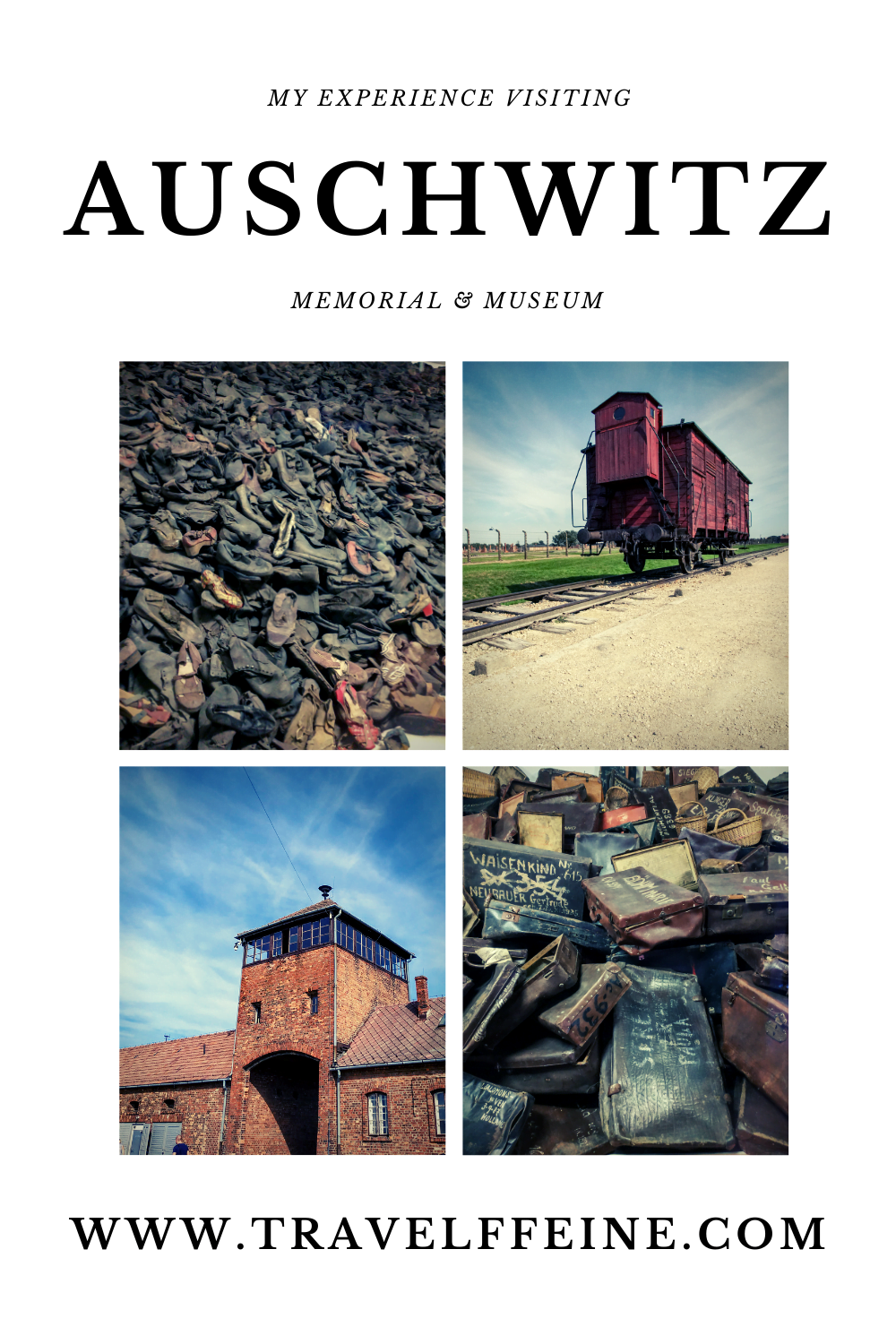
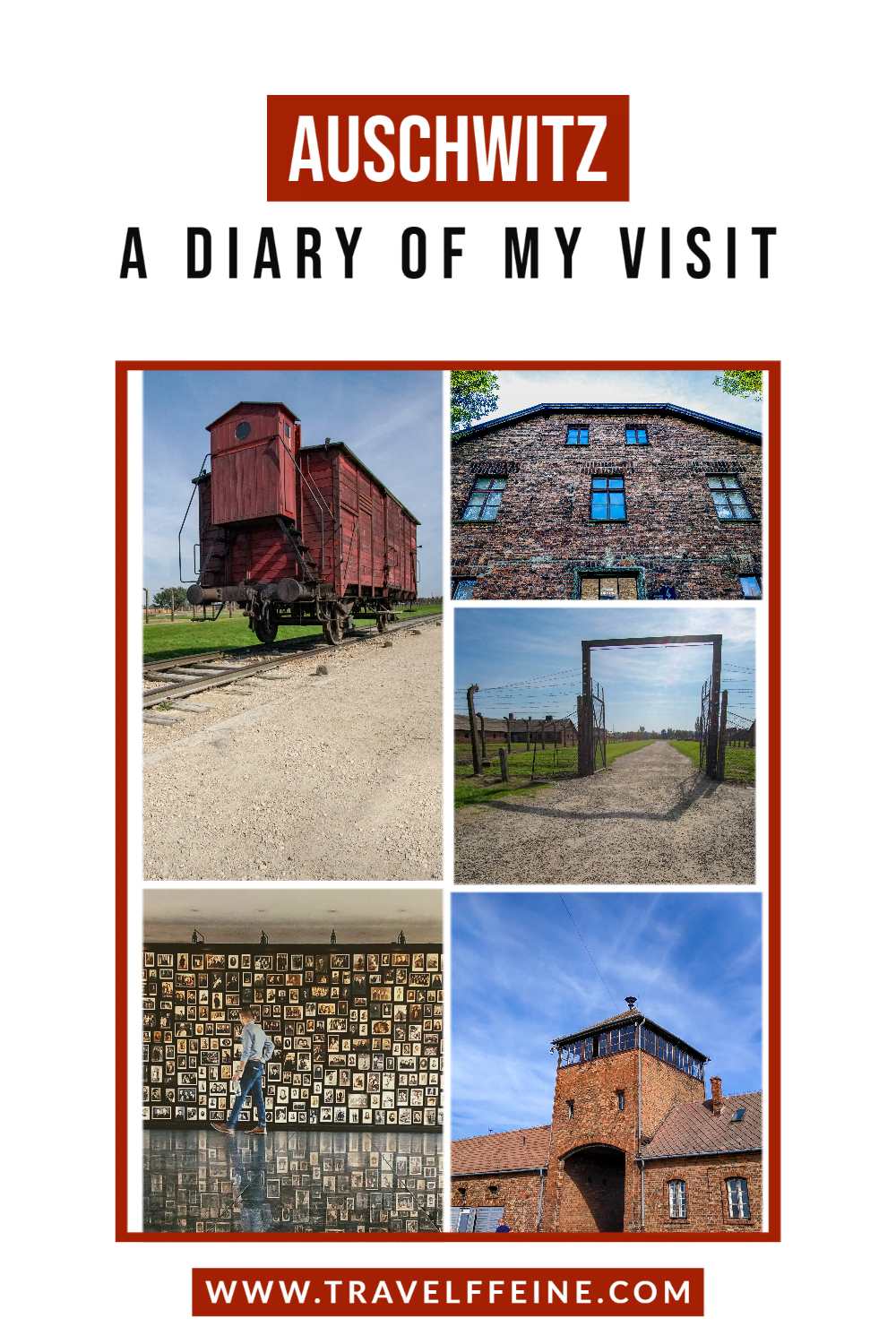
Poland is a unique country full of history and beauty. Your money goes a little further here too and there is so much to see! Enjoy the arts, classical music, ancient cities, good food, and the warm hospitality of its citizens.
I tried to think of what I would write regarding my visit to Auschwitz. I have so many thoughts regarding WWII and on the subject of The Holocaust. There are so many studies on The Holocaust and so much history to cover that I knew I could not discuss it all or better express the facts already documented.
Before my trip to Europe, I listened to the full version of The Diary of Anne Frank. I also spent a few days in Amsterdam, where I visited the secret annexwhere Anne and her family and the others hid from the Nazis. It was very moving to read her diary and then to visit the place where she penned it.
After the Nazis discovered them, Anne and the other seven people in hiding were all sent to Auschwitz. Some transferred to other camps, and only Otto, Anne’s father, survived. So as I contemplated how to write about my visit to Auschwitz, it seemed fitting to write a diary of my day and the thoughts I had along the way.
I will also provide information on how to visit Auschwitz-Birkenau at the bottom of the page. I recommend if you get a chance to visit here, that you’ll take it. It is a place that will leave an imprint on your heart. A place all of us should remember and never forget.
Tuesday, September 18th, 2018
My day begins far too early for my liking. However, I get up when my alarm goes off at 4:45 a.m. I have somewhere to be. Today is the day I will check off another bucket list destination. I know some may consider it a strange one, but it is a place I’ve read about since I was a child. A place that seems too awful to be true. Today I will visit Auschwitz-Birkenau.
My friend Angela and I finish getting ready. We leave our Airbnb apartment in Krakow around 5:25 a.m. to meet our Uber driver. His name is Dmytro. He is nice, but nervous and keeps apologizing for every bump in the road. I assure him that we have rough roads where we come from too.
We arrive ahead of schedule, so we wait for the bus. Angela told me earlier she’s a little apprehensive about today as she thinks it will be horrible.
Which of course, what happened was horrible. It was something so awful that people need to remember it happened. The horrors of Auschwitz and The Holocaust showed us the evil side of human nature.
Yet, it also demonstrated the resilience of the human spirit. The hope and faith that is still here. And the willingness of humans to not only sacrifice their earthly possessions to help others but to also lay down their very lives for the cause of freedom.
Bus Ride to Auschwitz-Birkenau
As I ride the bus to Auschwitz, sitting in my padded blue seat, I think what the journey must have been like for the victims transported there. I watch the landscape as we zip past the fields, the small towns, and forests along the way. What was the scenery like almost 80 years ago when they brought the first prisoners to Auschwitz?
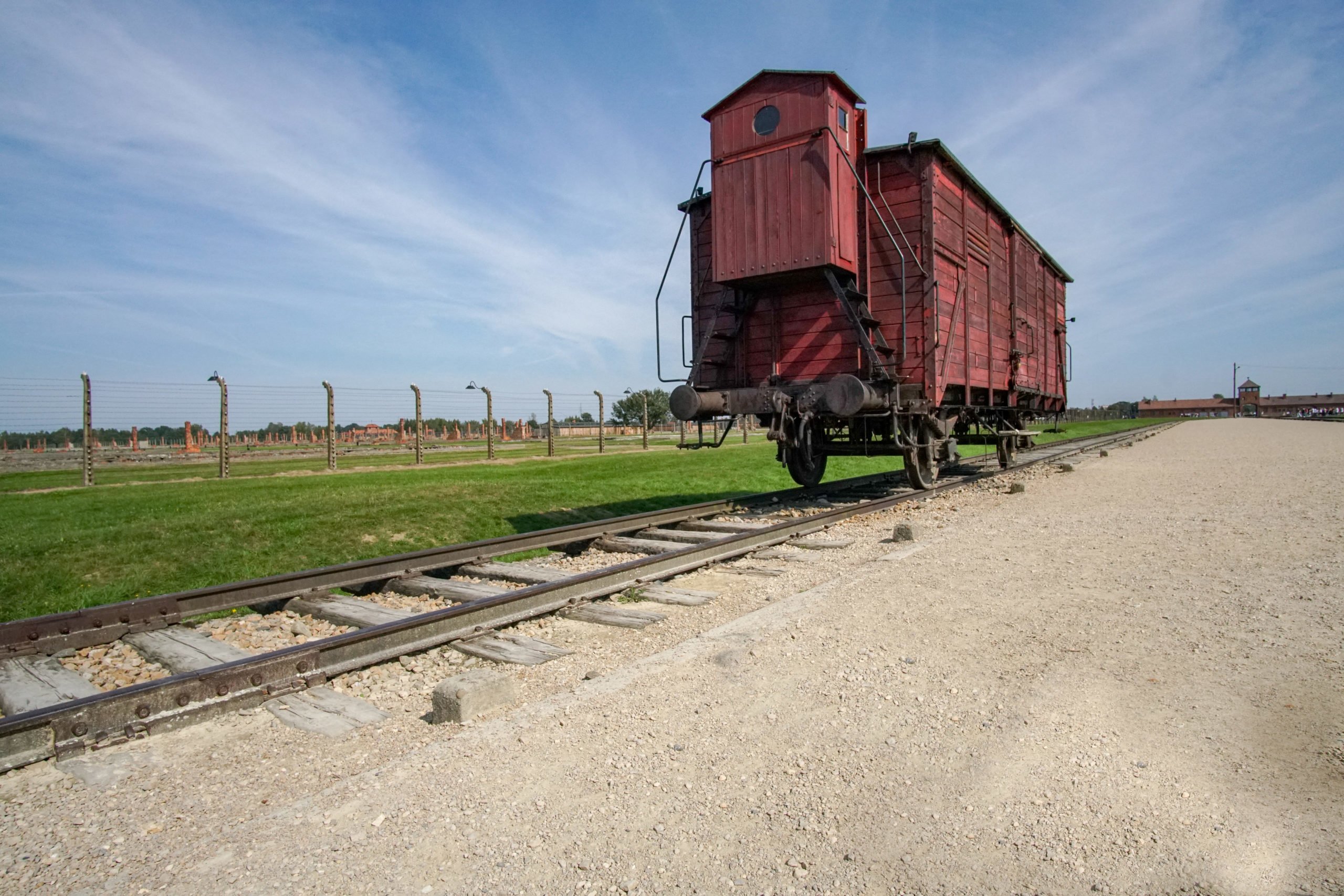
Later, I would see the train cars that brought the captives packed so tight they could hardly breathe. They didn’t have the luxury of a padded seat or windows to view the scenery. They were transported like cattle, worse than cattle. The Nazis packed 80-100 people to a train car with no windows, little to no food or water, and only a bucket to use as a toilet; many died during the journey. I cannot imagine it is too awful to consider.
Eating Breakfast in Auschwitz
The bus drops us off just outside the museum complex. We cross the parking lot, and I think about how I haven’t had breakfast and should eat as it will be a long day. I feel almost guilty about this. Even though most would consider my breakfast here mediocre at best, it would have been a royal feast for the prisoners at Auschwitz. I try not to think about this and instead eat my egg with toast and drink a cup of coffee.
I later learned that the prisoners at Auschwitz would work 11 hours of hard labor and receive around 1150-1400 calories per day. The food was so awful that in the beginning, it was hard for them to eat it, and later due to their starvation, they would eat food out of the garbage. I saw photographs of people who had lost over 50% of their body weight. They were living skeletons.
Waiting for Our Museum Tour
After eating breakfast, we walk through a security checkpoint on our way to a waiting area for our 9:00 a.m. tour group.
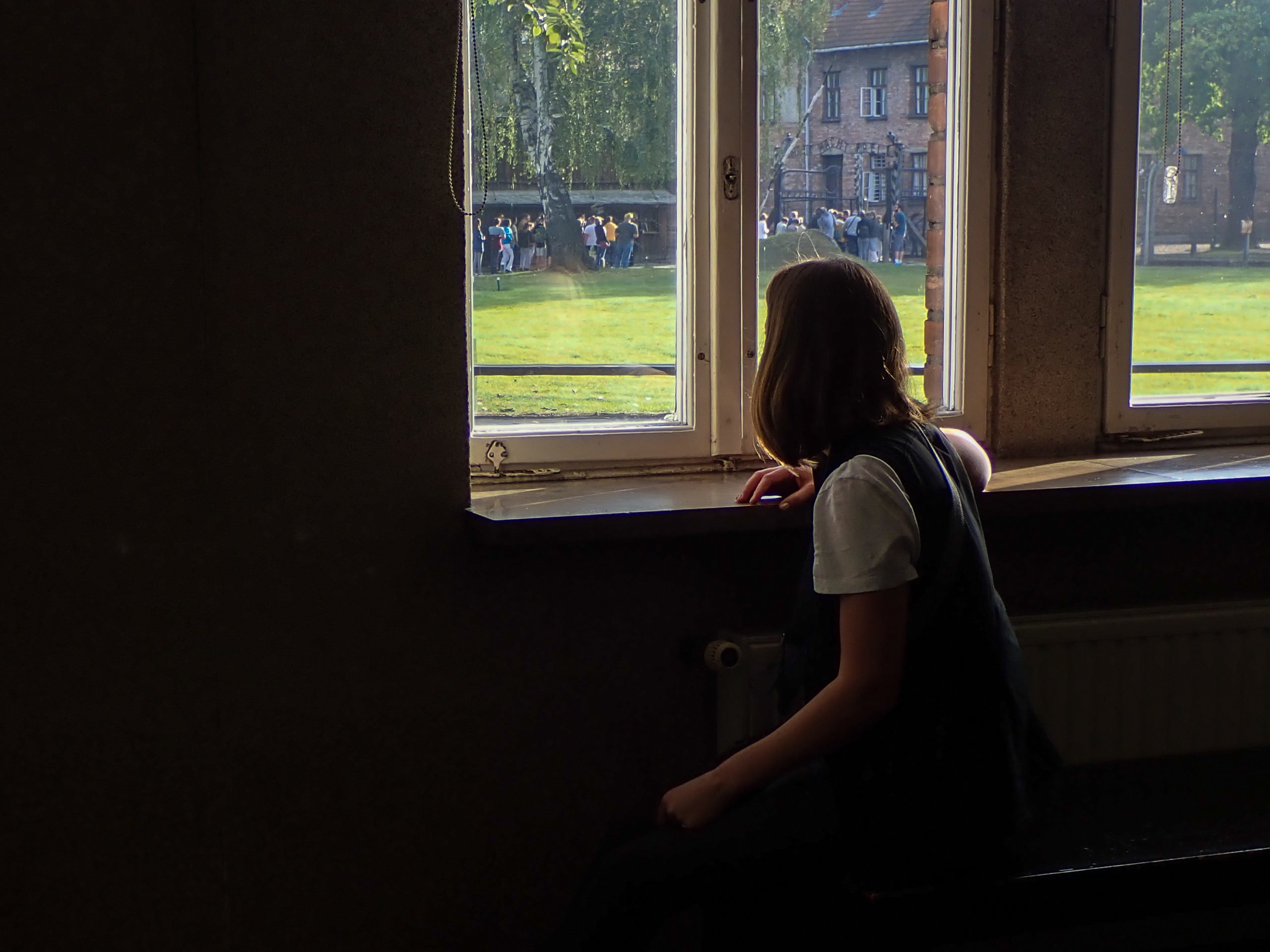
I find a seat by a window where I look out over the courtyard. It is a bright sunny day, hardly a cloud in the sky. It doesn’t feel dark and scary. There are hundreds of people milling around in tour groups, walking to and from the various barracks and buildings.
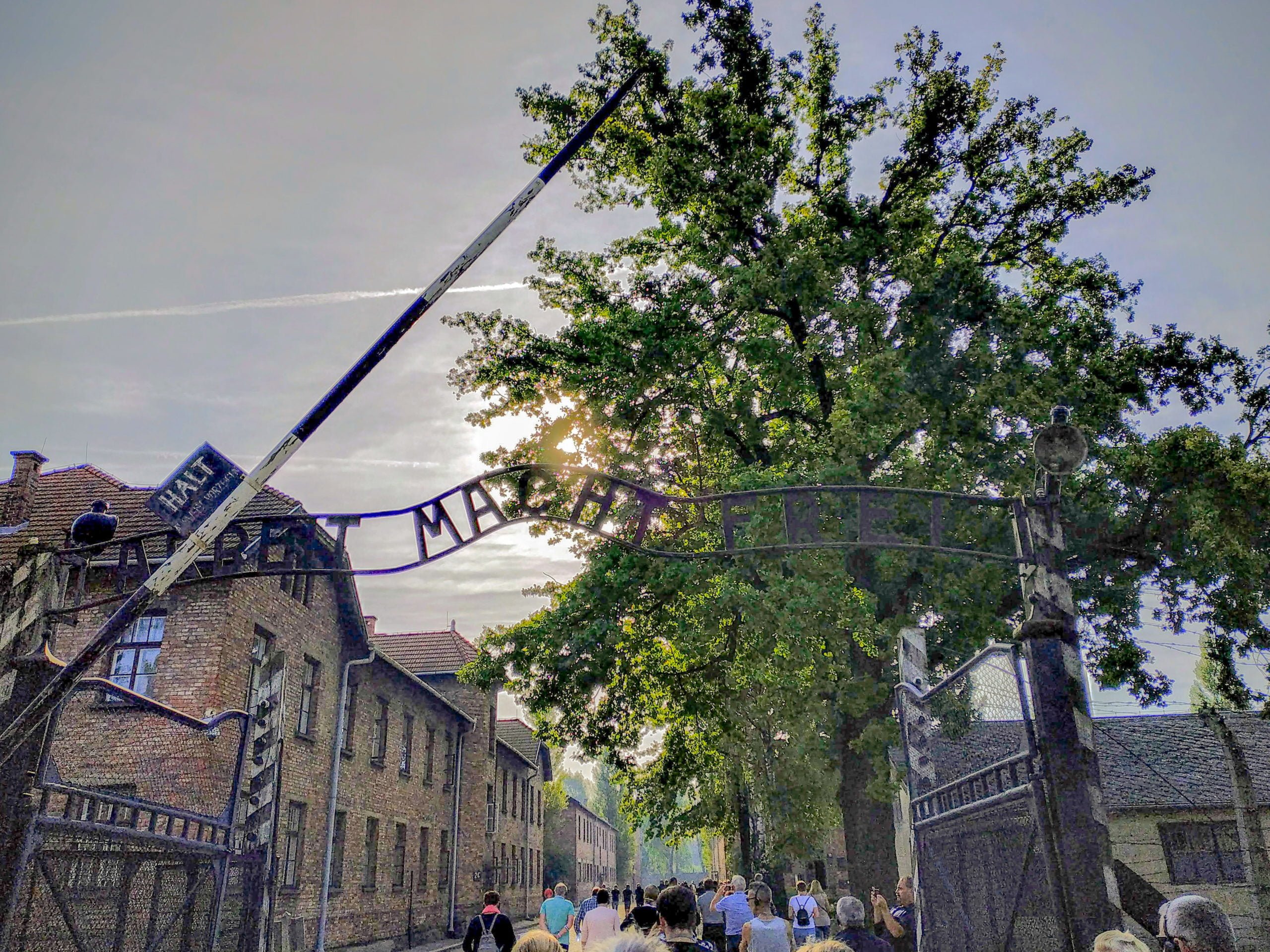
I look out over the grassy lawn to see the iconic gates that read “Arbeit Macht Frei” (“work sets you free”), and I think about the prisoners’ first glimpse of these gates and what they must have felt.
I try to imagine what it must have been like to arrive here on one of those trains. Indeed, I cannot grasp the agonizing journey that would have brought them here nor the atrocity of their fate.
Why It’s Important to Remember
No, try as I might, sitting there, looking out the window, as I wait safely for my tour, I could not grasp the horrors they went through.
However, I felt it was important to try. It is important to remember and never to forget. To accept what happened. Denying it does no one any good. It does not preserve the memory of those murdered, and it does nothing to respect the memory of those who gave their lives to stop these horrible crimes. We must remember and work to see that it is never again repeated.
And so I begin my tour, knowing I will hear the stories of things that are too terrible to imagine, but this isn’t fiction, this is the raw, unedited history of human depravity–and also the courage of the human spirit.
“Remember only that I was innocent and, just like you, mortal on that day, I, too, had had a face marked by rage, by pity and joy, quite simply, a human face!”
~Benjamin Fondane, murdered at Auschwtiz-Birkenau, 1944
Heroes of The Holocaust
It was these stories of courage that our guide tells us about during our tour at Auschwitz. She told us about Helena Plotnicka. A wife and mother of six kids. Helena sacrificed what little food her family had to leave food in the fields where she knew Jewish prisoners worked. She left it there for them to find.
Helena also worked to acquire medicines for the prisoners and would also leave these in the fields. Additionally, the prisoners would give her letters and correspondence explaining the conditions in the camp so she could help spread the word. Helena was later arrested and died in Auschwitz in 1944. She was one of many heroes that tried to fight the tide of evil.
Other heroes like Miep Gies, Victor Kugler, Bep Voskuijl & Johannes Kleiman from the Diary of Anne Frank. Corrie Ten Boom and her family, Oskar Schindler, and countless others, including the millions who sacrificed their lives during World War II to give hope and freedom to the victims of the Holocaust and the cause of freedom for all humanity. We must remember their sacrifice.
The Lies of the Nazis
Our guide explains that survivors would later recount the relief they felt upon arriving at Auschwitz. They came to Auschwitz believing if they worked hard, they would continue to live. The Nazis were fine with people knowing that they had work camps, but they hid the true identity of Auschwitz-Birkenau. They hid the fact of what it really was—a death sentence.
So they lied. Guards forced other prisoners to write postcards from Auschwitz telling their family that the conditions were better there and that they didn’t have to work as hard. Then these prisoners were murdered. Later the Nazis tried to destroy the evidence of the crematoriums and other documents that would connect them with their crimes.
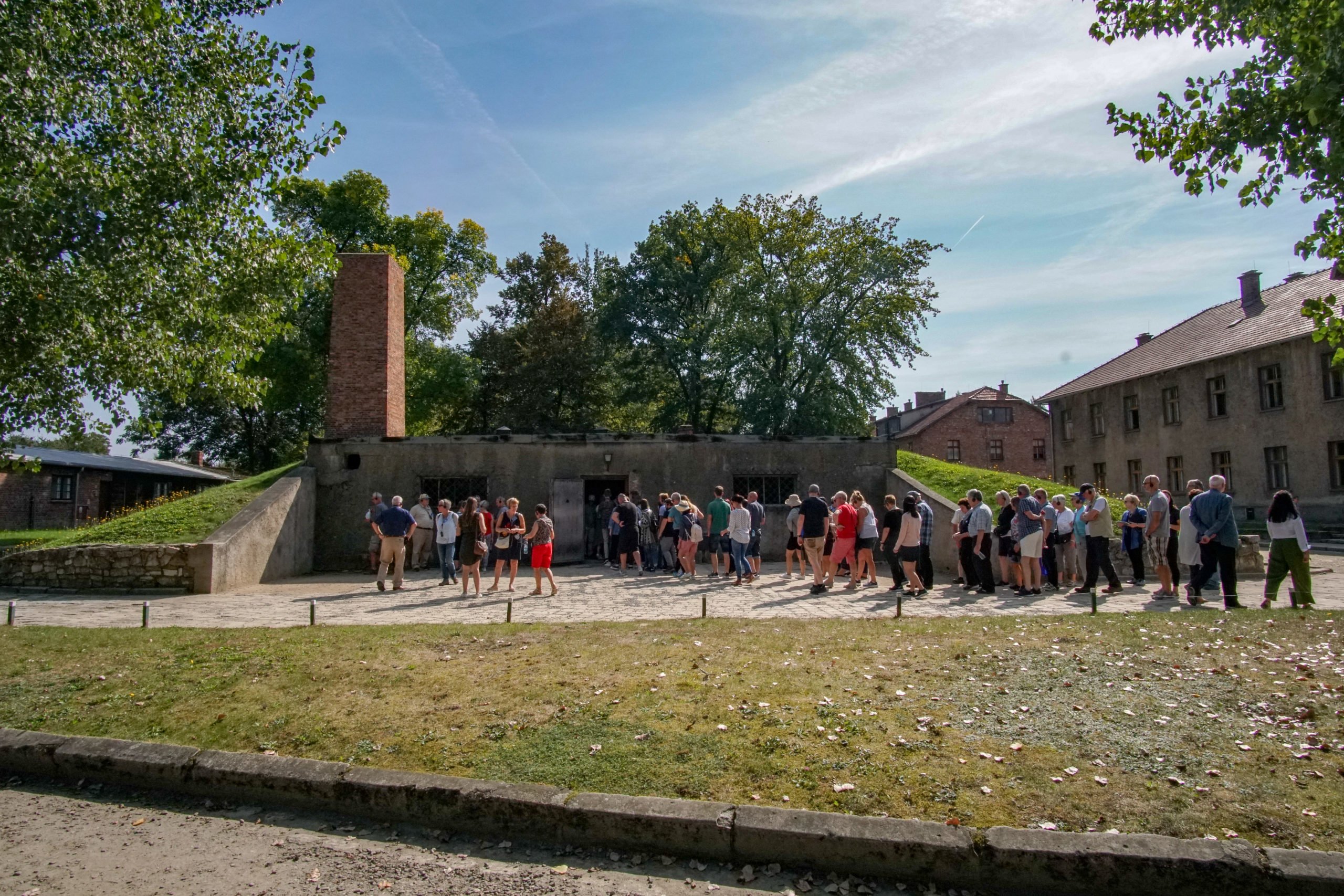
We saw piles of canisters once filled with Zyklon B. This gas, a type of cyanide, was used by the Nazis to exterminate millions in the gas chambers. Later our tour group walked inside one of these gas chambers. Fake showerheads placed on the ceiling perpetuated the lie that those entering were only taking a shower before moving to the barracks. Instead, they were sent to their deaths.
The Death Wall
Just before our break, we stop at the death wall. It’s an area where prisoners went through a series of steps that required them to undress and then walk naked to a wall where they were shot. Later the Nazis decided this was too slow of a process and thus came up with the idea of using gas chambers and crematoriums. They could only kill as many as they could burn; this turned out to be around 5,000 per day.
I saw the rooms with over two tons of human hair, the thousands of shoes, combs, pots, pans, and personal possessions left behind from the millions murdered. The Jews and other prisoners brought here thought they would leave someday, so they packed as many belongings as they could for the trip.
Upon arrival, they were told to leave their belongings in a pile and to remember where they left them as they would return to that spot. This was another lie. Instead, they went straight to a gas chamber, never to return.
Our Lunch Break
After almost 3 hours of touring Auschwitz, our guide announces that we’ll take a 40-minute break before continuing to Birkenau. 40 minutes. Just enough time to quickly eat the pb&j sandwiches we packed. We look for a place to sit in the shade to stay out of the burning sun.
It all seems surreal. One thing is for sure, I certainly won’t complain about the sun burning down on me, or how my back and feet are tired from so much standing and walking on the hard ground. These inconveniences are so inconsequential in the grand scheme of what occurred here. If complaining is wrong in normal circumstances, it seems almost sacrilegious now. Disrespectful, perhaps, is the sentiment I feel.
I look around at the other visitors lounging on benches and the grassy lawn outside the museum complex. Forty minutes doesn’t seem like a lot of time to digest what I’ve just seen and heard. Is there any amount of time that will make processing these horrors any easier?
Time is up, we board another bus and leave for Birkenau.
Auschwitz II-Birkenau
Birkenau, or Auschwitz II-Birkenau as it is also known, is a little over two miles from Auschwitz I and is shockingly massive. It is twenty times larger than Auschwitz I and designed for one purpose. Death. It was the largest of the death camps. They executed men, women, and children without regard for life.
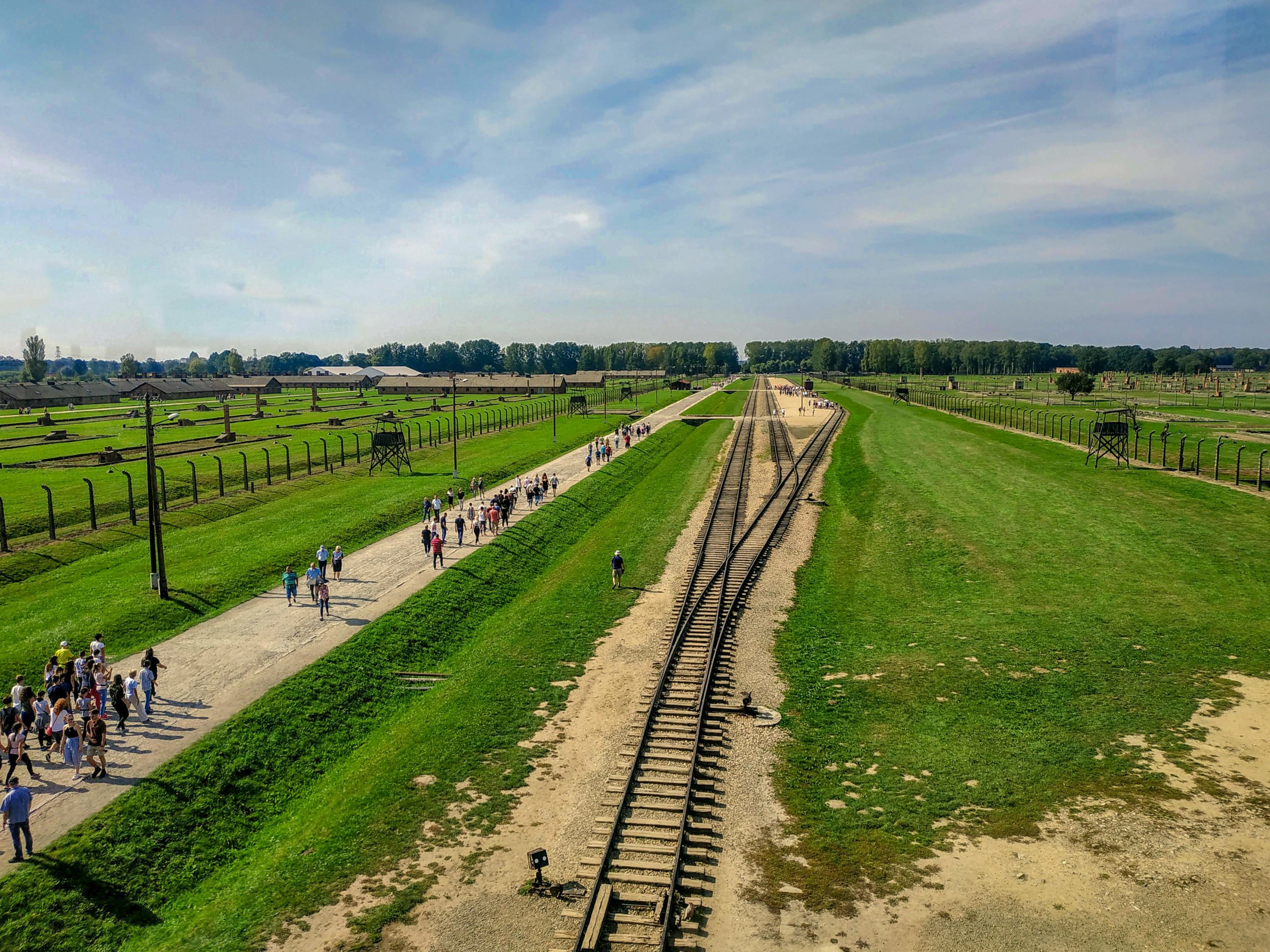
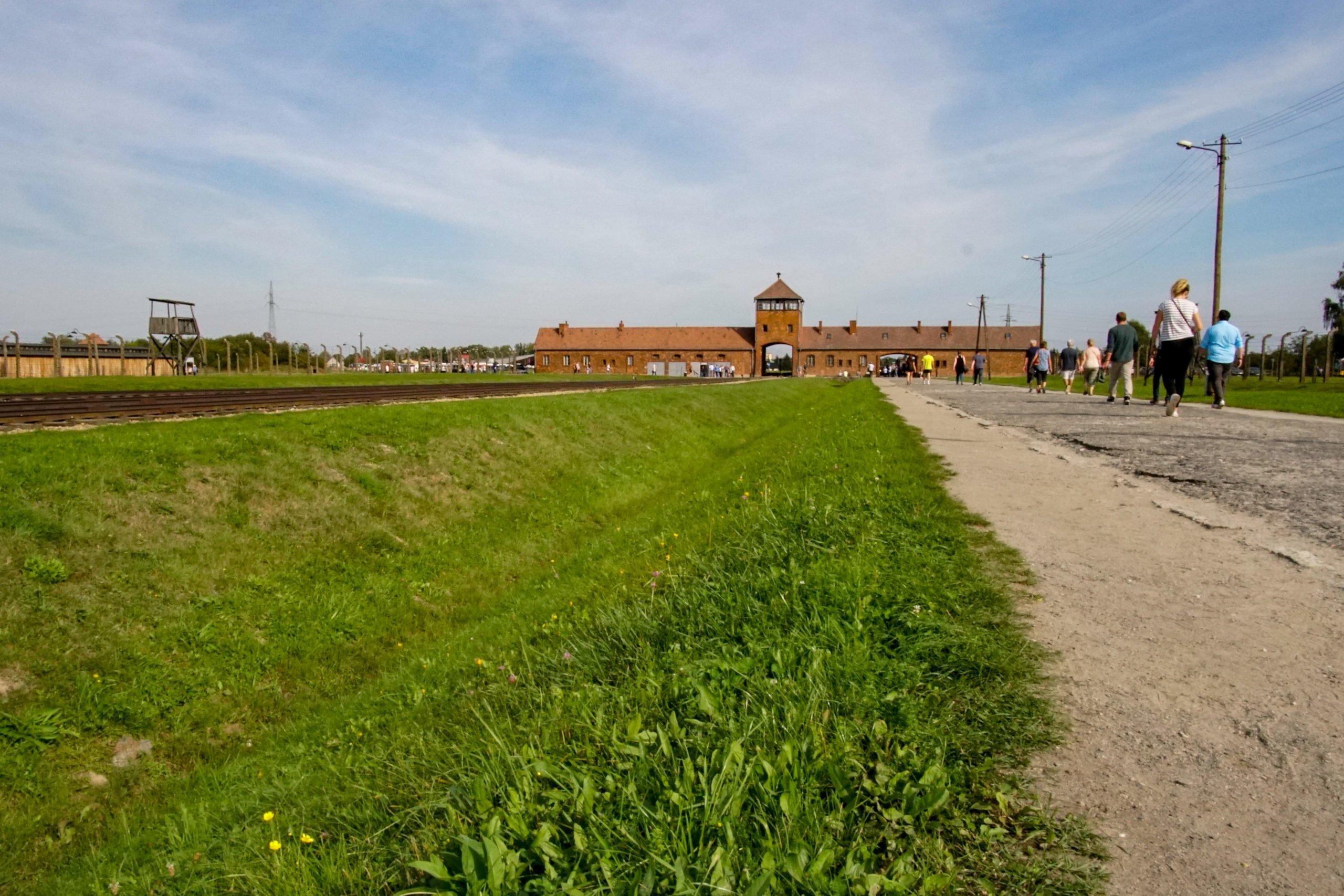
I cannot stop looking around in shock at how big this concentration camp is. We ascend to the top of the central guard tower or “death gate” at the entrance to the Auschwitz II-Birkenau concentration camp. We have an aerial view of Birkenau from here. It stretches out further than I can see.
On the left, I see barracks made of brick. I learn that the prisoners had to tear down homes and buildings in the nearby towns and then use them to build these brick barracks. They ran out of bricks, and so to the right, I see row after row of barracks made of wood.
There were over 300 buildings here during WWII. The barracks used to house prisoners had been designed as horse stables. They were not insulated and would have been awful both in the hot summer and in the freezing winters. Prisoners often had to sleep five or more to a bed. You can imagine the smells, the dirt and filth, and the hopelessness of the place.
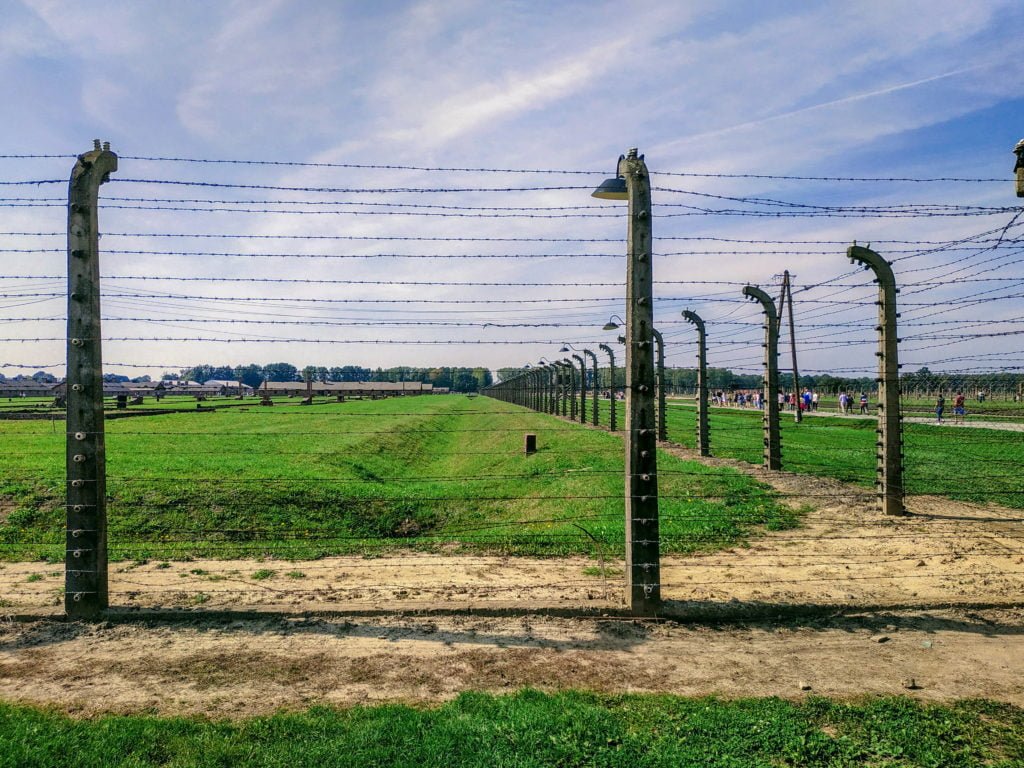
Electric barbed wire fences surrounding Auschwitz-Birkenau.
The Family Camp
We walked to a “family camp” where a select number of children were allowed to live. We see drawings from these children that show their perspective. The few that were allowed to stay in this camp were there for propaganda purposes to send out letters and postcards before meeting their fate.
The Gas Chambers
Our guide takes us down the long stretch of train track that leads from the death gate to the unloading ramp where they forced prisoners into groups: women and children in one and men in another. They immediately killed some while others walked the long way to the gas chambers.
There were four massive gas chambers at Birkenau, and they crammed over 2,000 people into these at a time. Toward the end of the war, the Nazis expedited their killing and murdered anywhere from 5,000 to 6,000 people per day.
Dr. Mengele, also known as the “angel of death,” selected some of the prisoners for his twisted human experiments. He performed medical experiments on them without anesthesia. Twins and people with physical anomalies such as two different colored eyes were of particular interest to him.
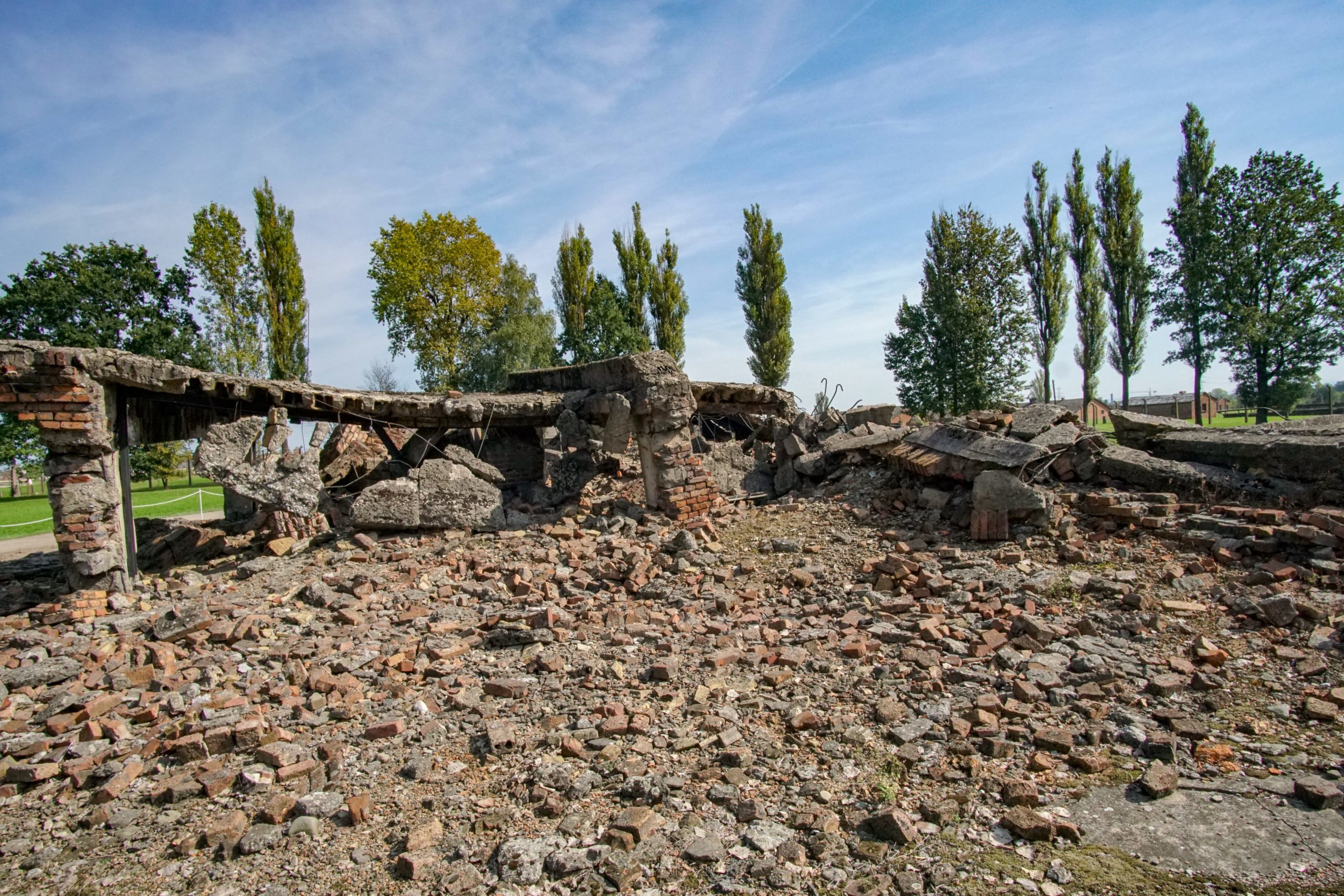
We view the remains of two of the gas chambers and crematoriums. The Nazis tried to destroy these at the end of the war to hide the evidence of their crimes. It is hard to imagine, even as I stare out over the demolished gas chamber and crematorium, that such evil exists.
The horrors of The Holocaust and the actions of the Nazis are so unfathomable to me. This is not ancient history. This happened in the last 100 years. I know, too, that holocausts have occurred in other parts of the world. It is heartbreaking to consider.
Individuals Not Just a Number
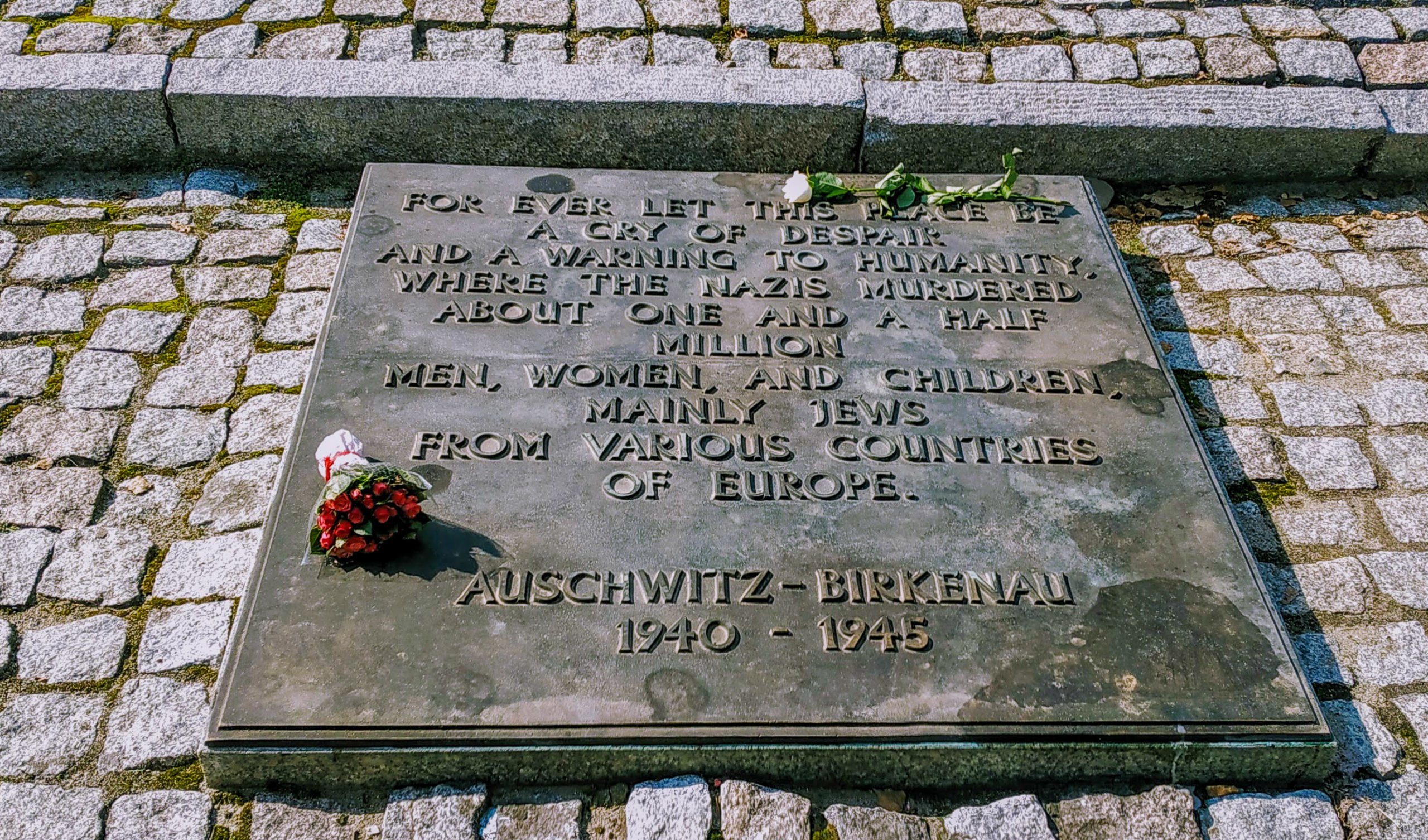
Over 1 million people died at Auschwitz-Birkenau. Most of these were Jews, but there were also other prisoners of war murdered here. The death toll for Polish Jews was particularly high. Around 3 million Polish Jews were killed, that’s half of all Jews killed during The Holocaust. Only about 10 percent of Poland’s Jewish population survived.
Our group walks to a building on the far side of the Birkenau concentration camp that has an important story to tell. The story of the victims before they came to the concentration camps before they were hunted down, back when their lives were healthy and happy.
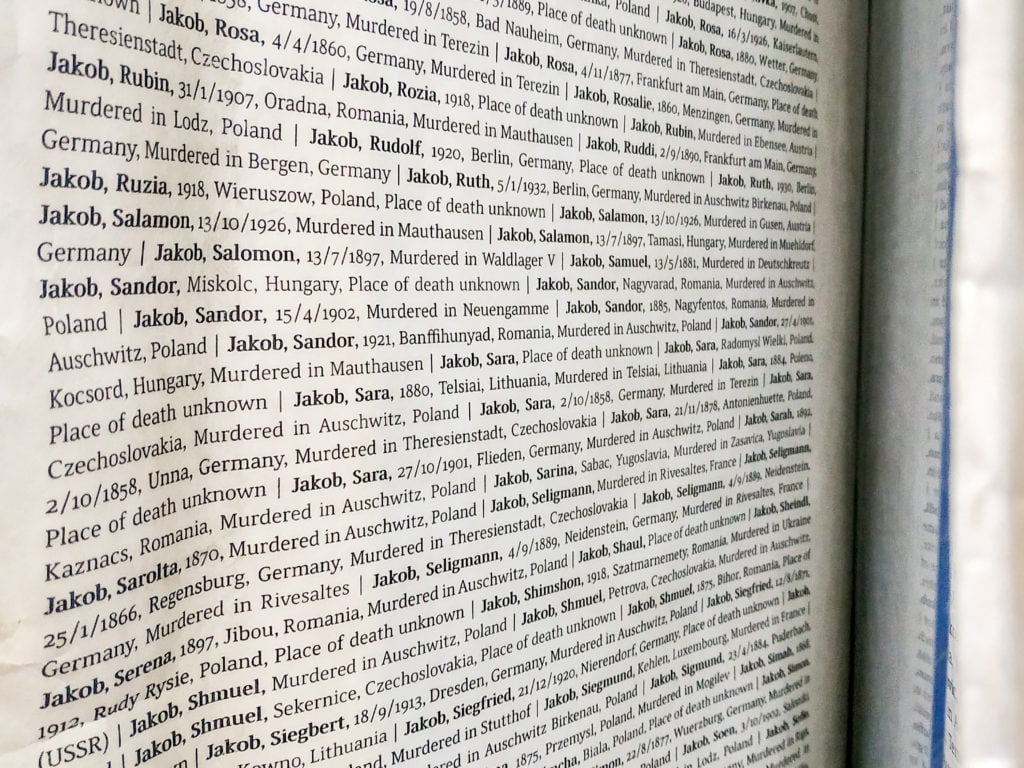
In one area of the exhibit, there are enormous books on display that visitors can flip through and read name after name of those murdered during The Holocaust. There are over 4 million Holocaust victims listed with blank pages at the end for the names not yet recorded. These books are a tribute to those murdered. They have no graves and no tombstones. However, every life mattered, and everyone one of them was an individual with a name.
Photographs, Memories & Moments in Time
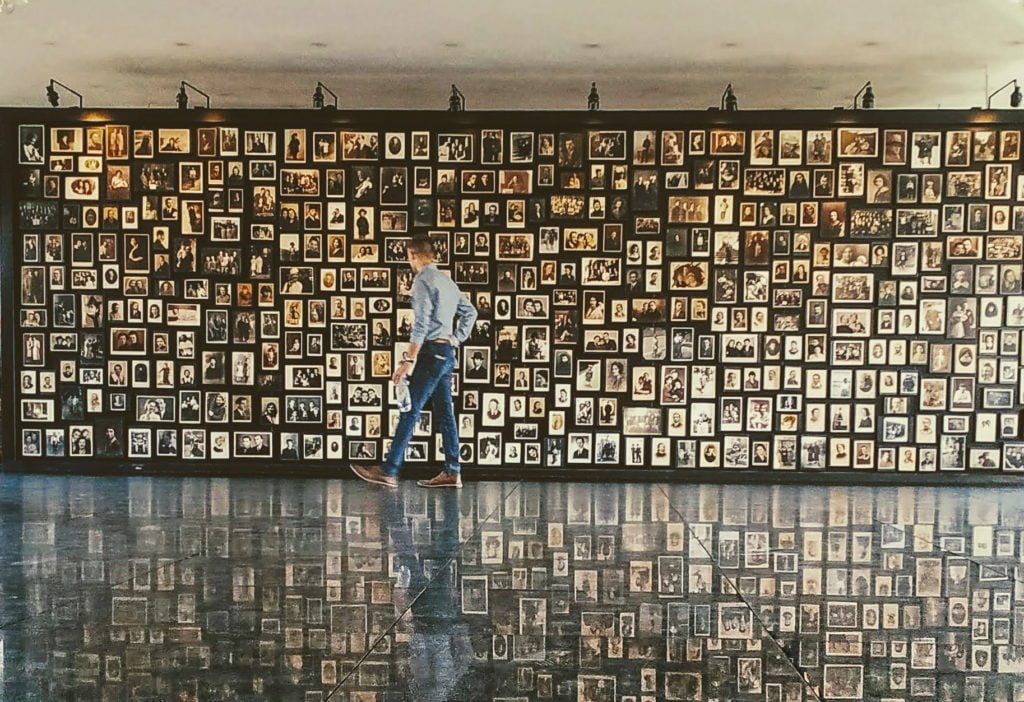
In another room, I see photos of some of these individuals. There are photographs with them at the beach, at the park, and hanging out with friends at dinner parties. They are photographs of kids at school, family portraits, young couples in love–people enjoying their lives. People like you and me.
In another room, home movies discovered after the war play on every wall of the room. I stood there watching people at concerts, on sailboats, with friends and family smiling and laughing. It was as if I had a time machine to go back and see them alive again. These movies brought their memories to life, and I saw my humanity reflected in their faces.
I, too have home movies and photographs, I also have people I love and a life I love. However, their lives were taken from them, and I still have mine. Children never to become adults, parents never to know parenthood, and grandparents robbed of the joys of grandchildren. This exhibit had the most significant impact on me.
A wall displaying photographs recovered from suitcases found after the war.
It is easy, due to the mass total of victims murdered, to view them as a number. However, it is essential to see them as individuals who loved and laughed–people like you and me.
As a teenager, I read the personal stories of the survivors and those that died. Knowing these people as individuals makes it easier to empathize, to relate. No, I can’t comprehend the horror they endured at the hands of the Nazis and others, but I know what it is to love, to laugh, to be scared, and to have dreams. Their stores teach me about courage, about love, and to never take life for granted.
Here is a short clip from the room displaying the home movies.
Life and Freedom are Gifts
That is the theme by which I try to live my life. To live life to the fullest and be grateful for everything. I am so blessed. I’m rich with love and family, friendship, opportunities to travel, and the ability to see the beauty in the simple. I am thankful that I still get excited over a beautiful flower, a fall leaf, and a snowflake.
We are not all survivors of a horrible event such as The Holocaust, but we all deal with hurt, the pain of loss, and death. I suppose it is this terrible and painful side of humanity that can also enhance the joy we can find in life. I think it should cause us to be more thankful for life and to embrace the joy amidst the pain.
Don’t stop living while you’re still alive. There are so many others whose lives ended too soon, those that never got to graduate high school, those that never learned to ride a bike, those that never got to marry, to have kids, or to wake up to another beautiful morning.
So be kind. Be humble. Help others and reach out to those that are hurting. Encourage. Share hope. Enjoy the simple things of life. Be grateful. Never, ever forget that all human life is precious!
And maybe, just maybe, in the tiniest way, by living our lives, we remember those who no longer are able to live theirs.
Visiting Auschwitz
Tour Options:
You have several options when planning a visit to Auschwitz. You can go with a tour group, or you can take a self-guided tour through the concentration camps.
The 6-hour study tour is what I took, and I highly recommend it. It allows for a slower pace to see both camps and provides more time for reflection. There are tours from 2.5 hours to 6 hours in length. If you choose to go with the self-guided option, just know that you can only enter at certain hours, usually early morning or late afternoon. You still need to reserve a self-guided tour, just as you would a guided tour.
The guided tours offer insightful commentary and information I feel one might miss by going on their own, but each person will have their reasons for choosing which type of tour they take.
Booking Online:
Make sure to book your tour in advance of your trip to Auschwitz as the tours do book up. Learn more about the different tours offered, book your tour, and get useful information regarding your visit on the museum’s website.
Food:
They have a cafeteria at Auschwitz I and a hotel across the street that also has a restaurant.
Getting There:
I booked a shuttle through Discover Cracow from Krakow to Auschwitz. If you are staying in Krakow, I highly recommend you consider using their service. It is incredibly affordable and easy to book.
The journey takes 1-1.5 hours—plan for your visit to the camps to take an entire day. Depending on which tour option you choose, it may take more or less time, however, given the solemnity of these memorial sites, it is good to give yourself time for some restful reflections rather than pack a bunch of sightseeing in afterward.
Additional articles for your visit to Krakow, Poland:
Krakow, Poland, is an incredible place to visit, and I loved my time there! One of the things I love about travel is arriving at a completely new destination, unsure of what to expect, and then leaving with a new fondness for that place in which only days before had been unknown to me.
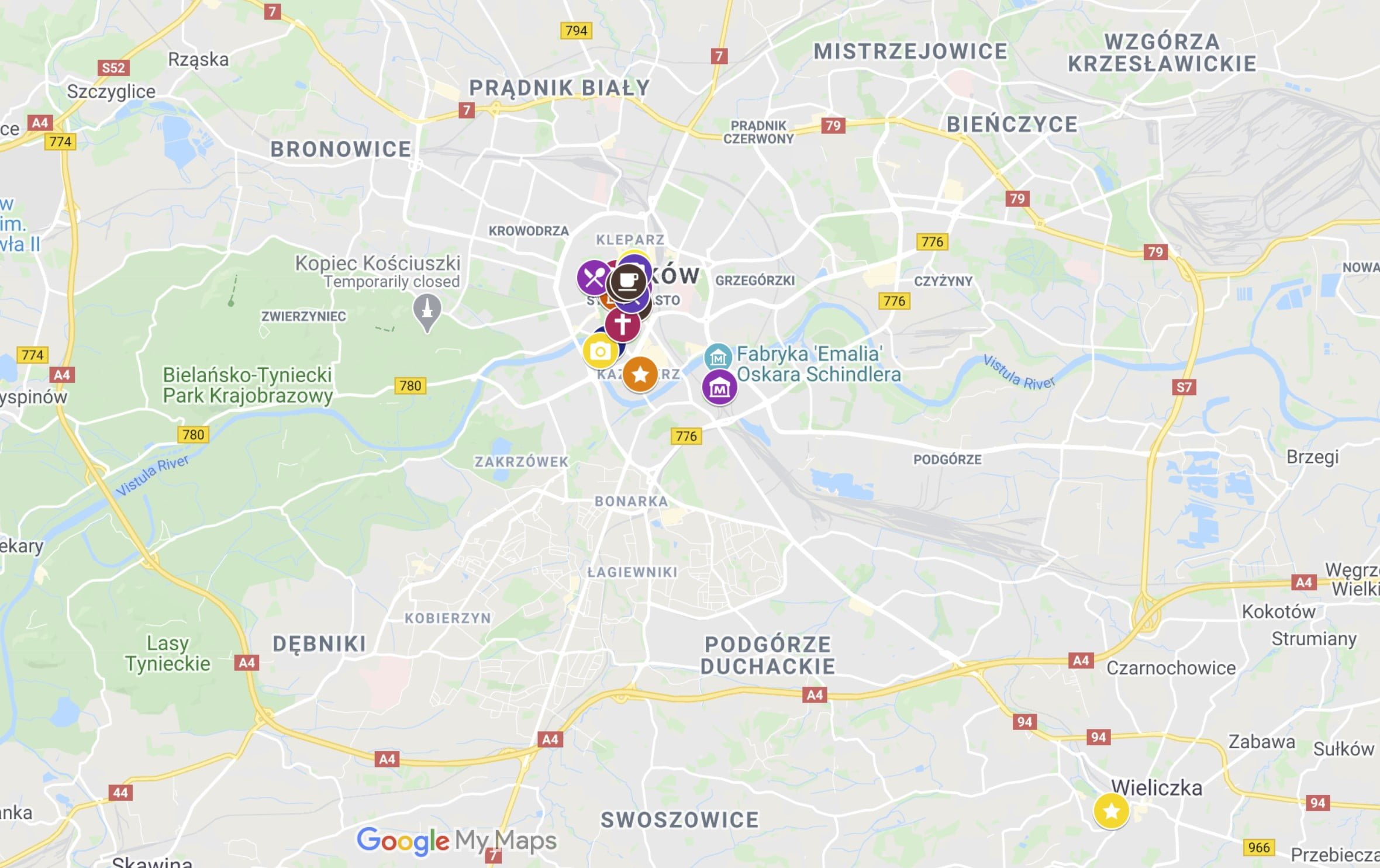
Krakow was like that for me. There are so many memorable things to do in Krakow you cannot possibly see them all with only two or three days. This article provides an overview of Krakow’s highlights to help you create an itinerary for your adventure there.
Brief History of Krakow, Poland
Krakow dates back to the 11th century (possibly even earlier) and was once the capital of Poland. It was where the kings of Poland ruled from high above the city at Wawel Castle.
Explore the ancient fortifications dating back to the 15th century, the castle built in the 13th century, and the largest medieval square in Europe! Krakow is teeming with history and beauty. You do not want to miss visiting this extraordinary city!
Memorable Things to Do in Krakow
#1 Old Town (Stare Miasto)
Wander around Old Town (Stare Miasto in Polish) and admire the gorgeous architecture and cobblestone streets. Old Town is a great place to shop for souvenirs, get a bite to eat or even better, try some gelato (I recommend Lodziarnia Donizetti)! It is also the location for many of Krakow’s main attractions.
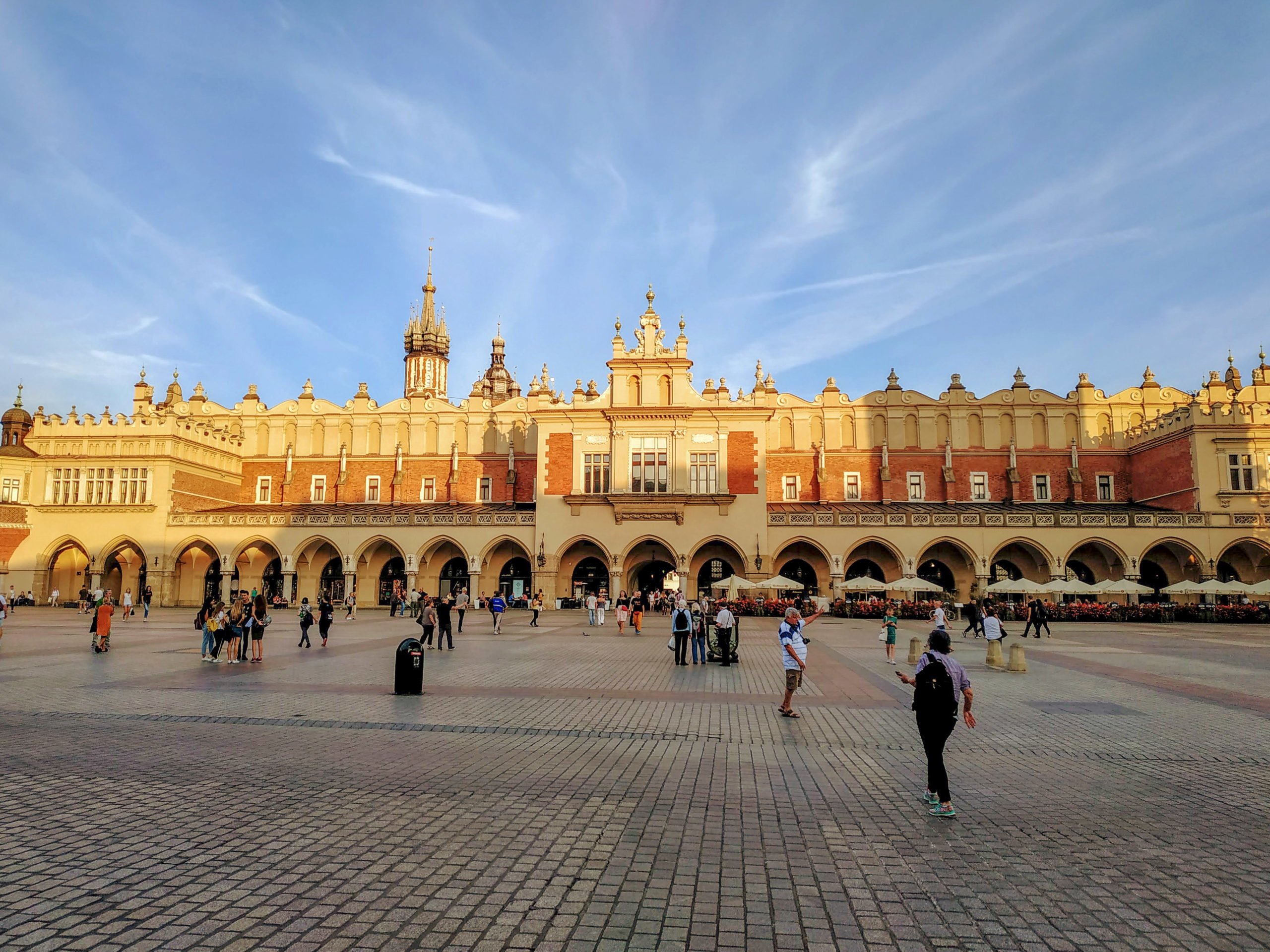
#2 Rynek Glowny (Main Market Square)
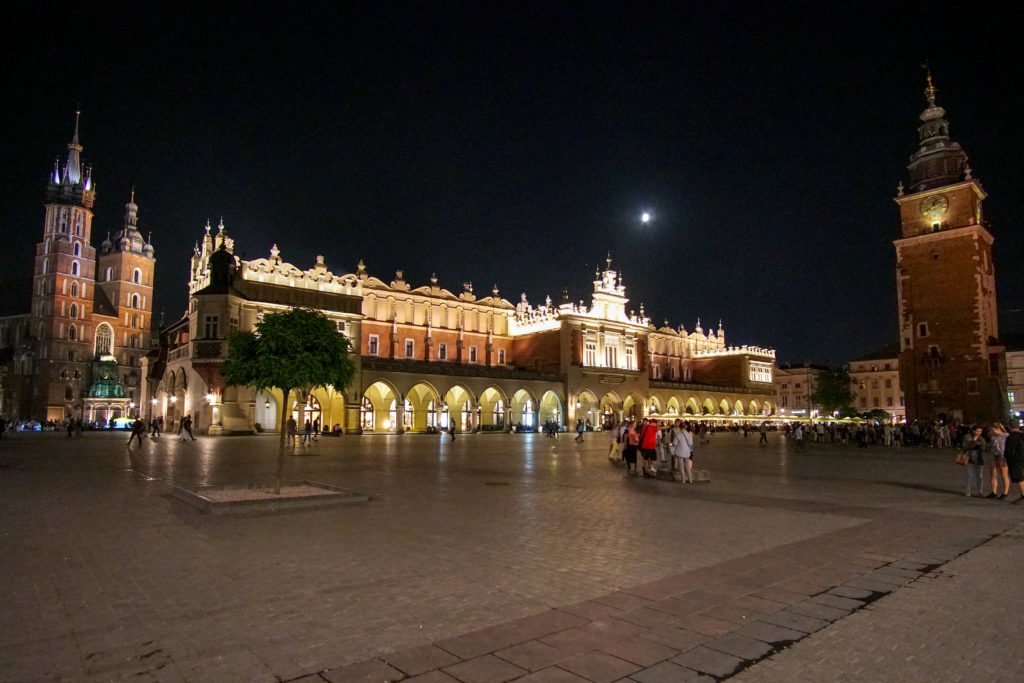
Rynek Glowny is the heartbeat of Krakow. It is a beautiful place to explore, and to spend an evening admiring the architecture and taking in the hustle and bustle of the square. Watch a street musician perform, take a horse and carriage ride along the Royal Road or just sit back and people watch.
Rynek Glowny is probably the most iconic space in Krakow and home to several of Krakow’s top sights. You’ll find Saint Mary’s Basilica, the Cloth Hall, Rynek Underground, and more located here.
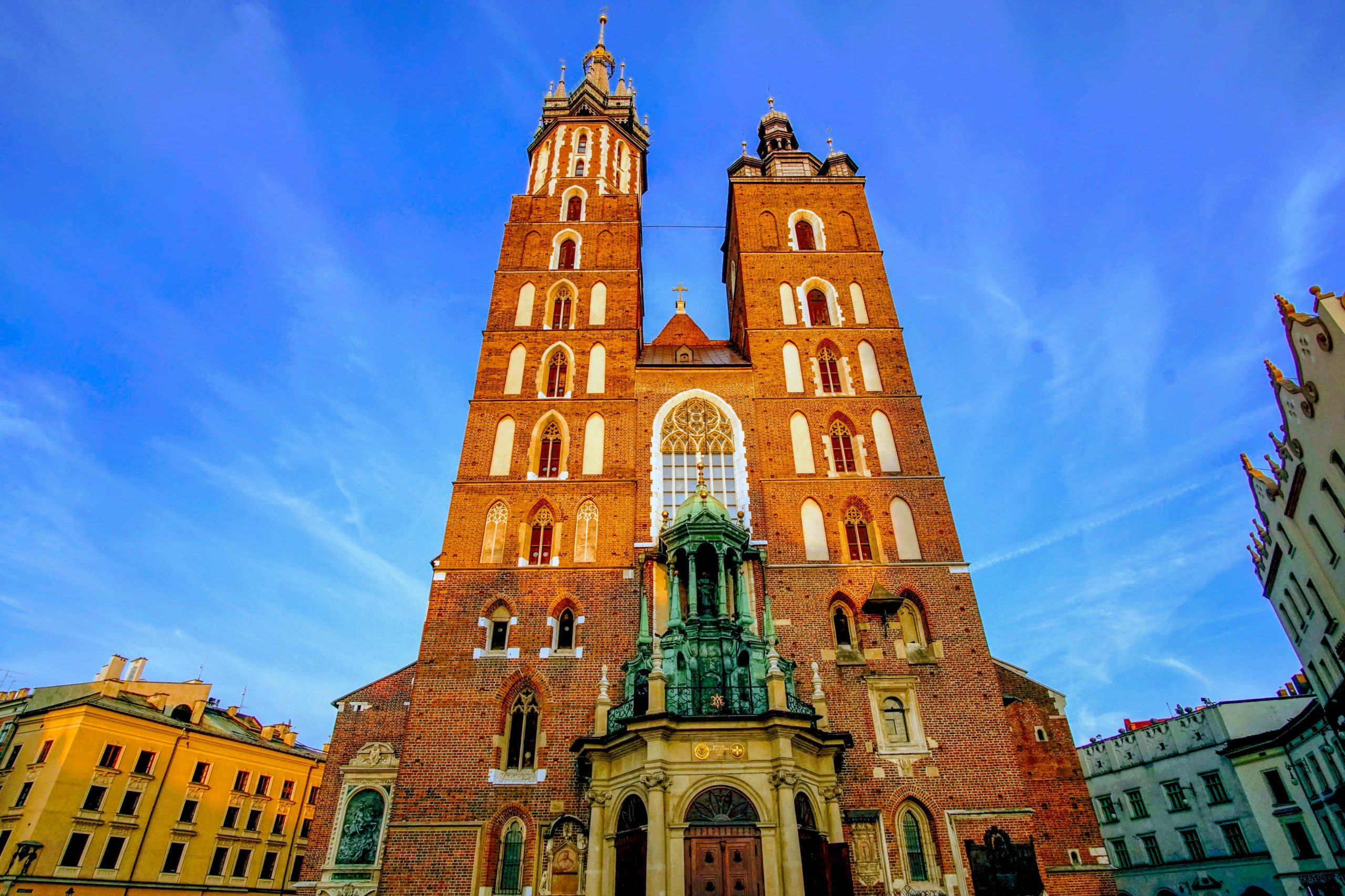
Saint Mary’s Basilica
#3 Saint Mary’s Basilica
This beautiful Gothic cathedral rises on the edge of Rynek Glowny (Main Market Square). It is easily recognizable by its twin spires and red brick facade. You can tour the inside of the basilica and see the stunning wooden altar (at the time of this writing it is undergoing renovations).
You can also tour one or both of the towers. Choose from the Bugle Call Tower, the tallest of the two towers, or the Bell Tower and see the historic cathedral bells. Every hour in the square, you can hear the bells ring and a trumpeter playing St. Mary’s Bugle Call from the Bugle Tower.
Both towers offer you beautiful views of the square below and are my recommendation for the best bird’s eye view of the square. So grab your camera and a pair of comfy walking shoes (no elevator) and get ready to climb to the top.
#4 Cloth Hall (Sukiennice)
Krakow’s Cloth Hall was once the hub of international trade in Poland. It is the centerpiece of Rynek Glowny and now houses shops and an art museum. It is here you’ll find the Visitor’s Center and useful information for tours.
You can also tour the Rynek Underground museum located beneath the Cloth Hall. The Rynek Underground offers you a glimpse of what medieval Krakow was like — and it’s all below the historic Cloth Hall!
Krakow’s Cloth Hall
#5 Planty Park
Take a break in the shade of one of the many trees in Planty Park, and people watch from a park bench while enjoying this green space. Planty Park resides in the area that was once the moat from the medieval walls that encircled the city.
The moat was filled with soil to create Planty Park, which now encompasses Old Town (Stare Miasto) in an over 2-mile loop. If you’re looking for an excellent place for a morning run, this is it!
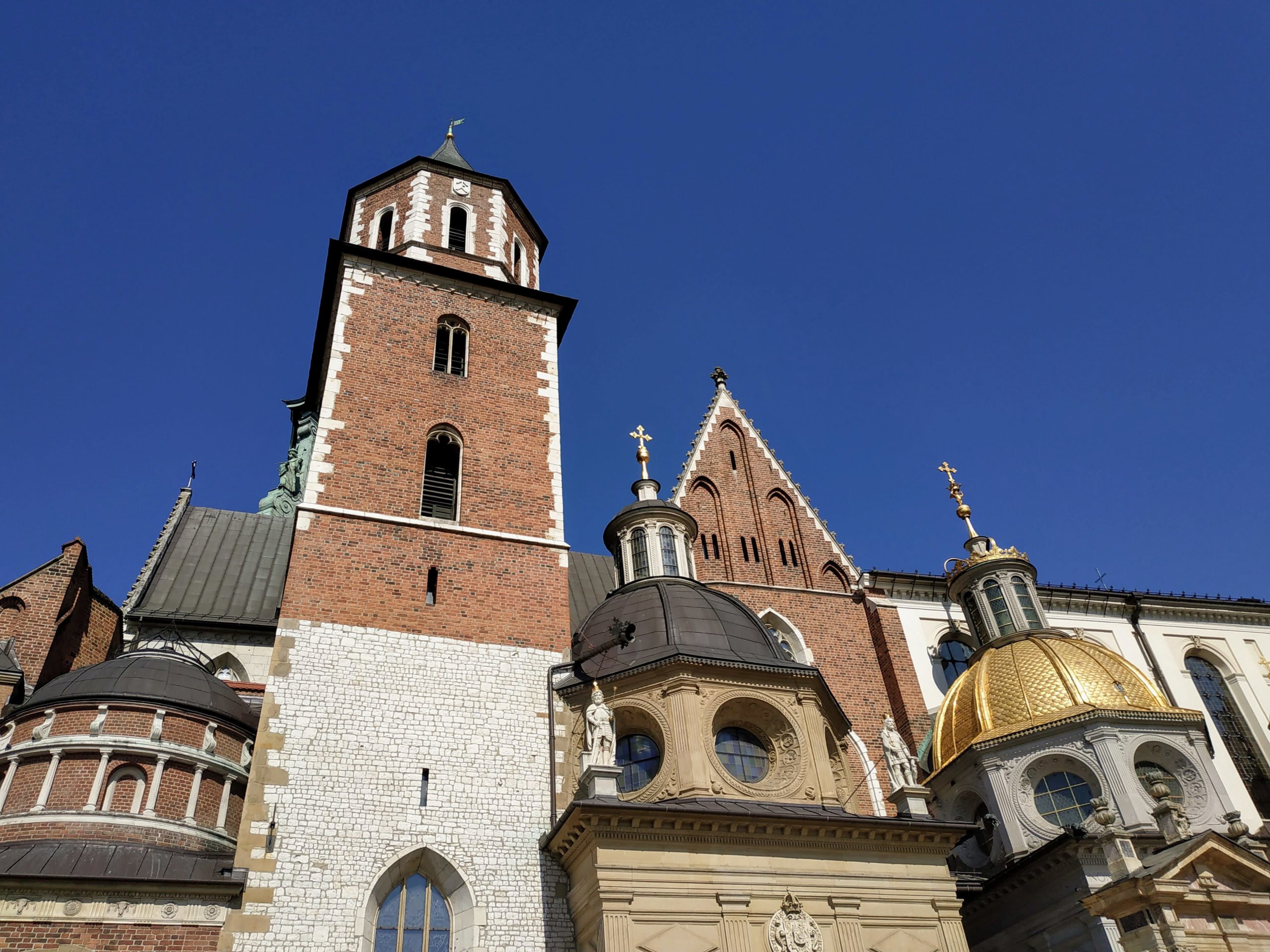
#6 Wawel Castle
Wawel Castle sits high atop Wawel Hill, and the castle complex includes a variety of attractions from which to choose. You’ll pay to see only the tours you’re interested in, such as the treasury, cathedral, royal apartments, etc.
You can also stroll the castle grounds and admire the gardens and architecture for free if you don’t have any interest in the tours.
There is a scenic viewpoint to one side of the castle complex that provides terrific views of the Vistula river and city. From here you can walk below and see a fire breathing dragon!
Wawel Castle complex
#7 Smok Wawelski
Don’t miss the fire-breathing dragon located alongside the Vistula river just below the Wawel castle grounds. You can even walk through the dragon’s den to reach this fire-breathing statue (the den is not stroller friendly or wheelchair accessible). Kids will especially love seeing the dragon breathe fire and will enjoy crawling through the cave, plus it’s free!
#8 Attend a Chopin Concert
Fredrick Chopin is one of Poland’s most celebrated composers and pianists. I love Chopin’s music, and since my trip to Poland wouldn’t include Warsaw (planning that for next time), Fredrick’s birthplace, I knew I wanted to attend a Chopin concert while in Krakow.
I booked my tickets at the Chopin Concert Hall. It is a small intimate setting and a beautiful way to spend an evening. I highly recommend it!
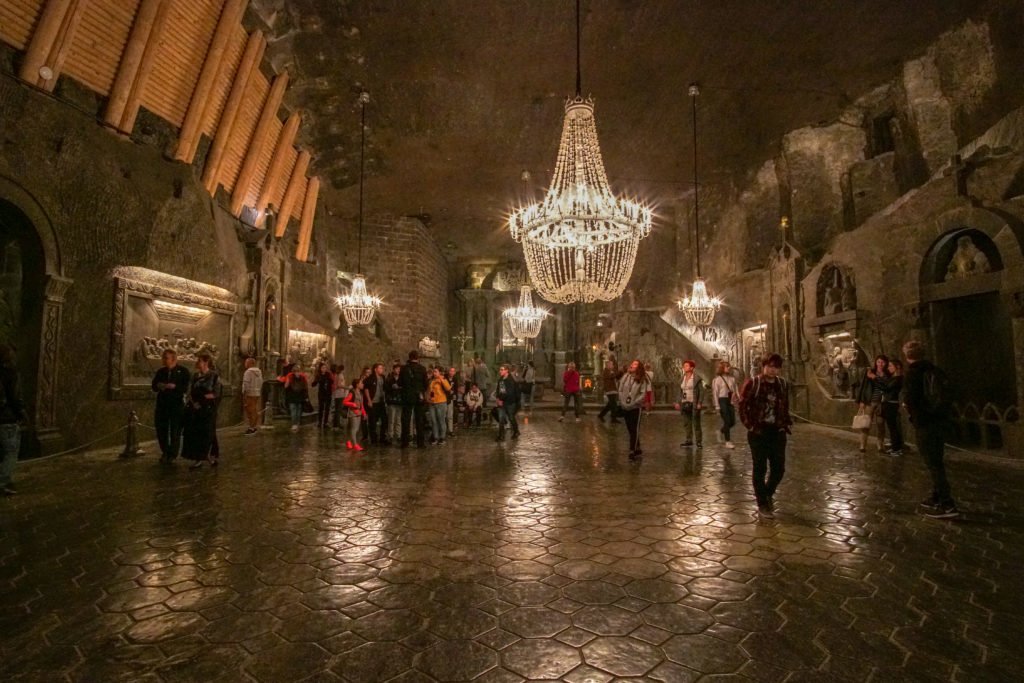
Wieliczka Salt Mine St. Kinga’s Chapel
#9 Wieliczka Salt Mines
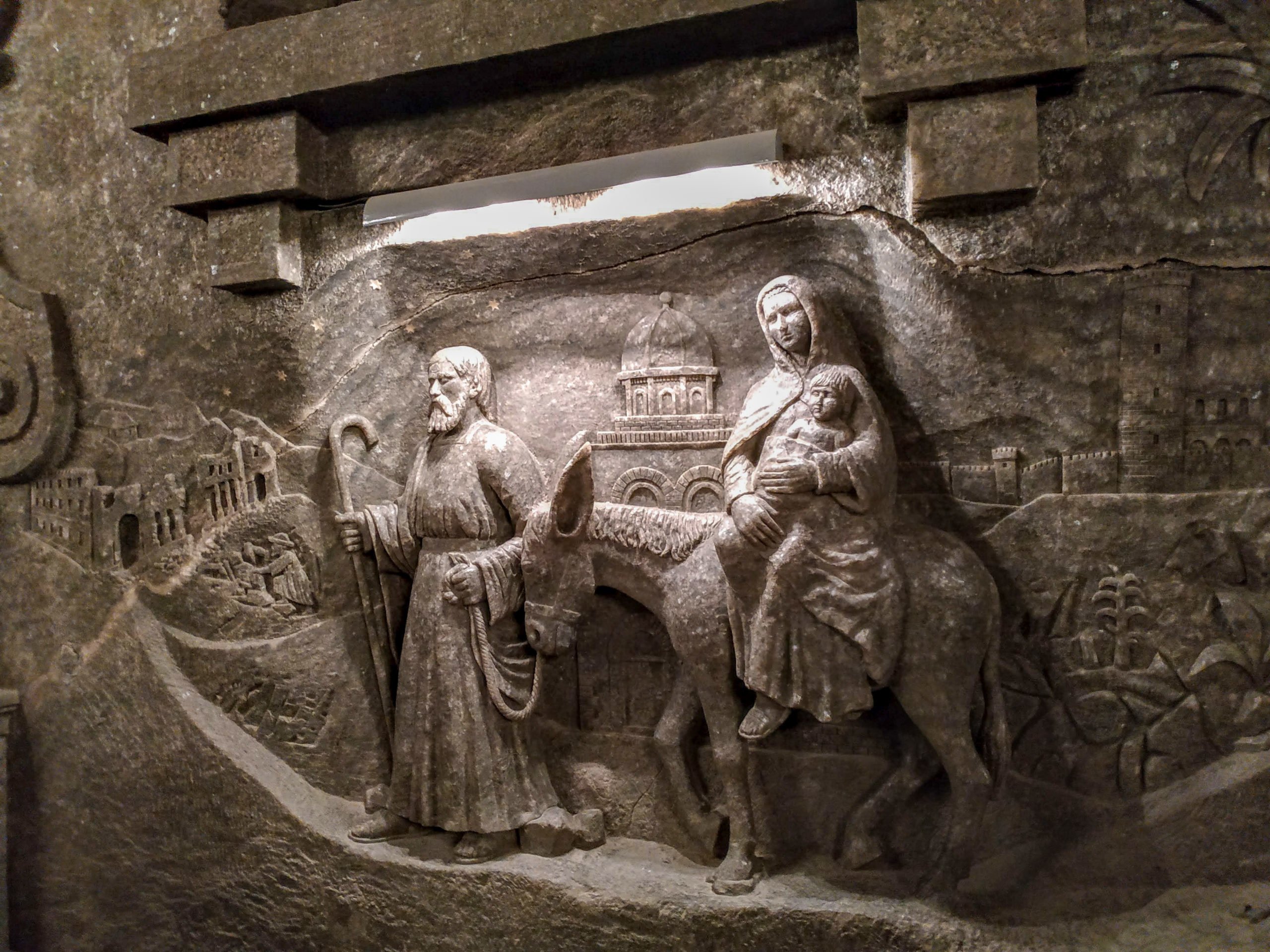
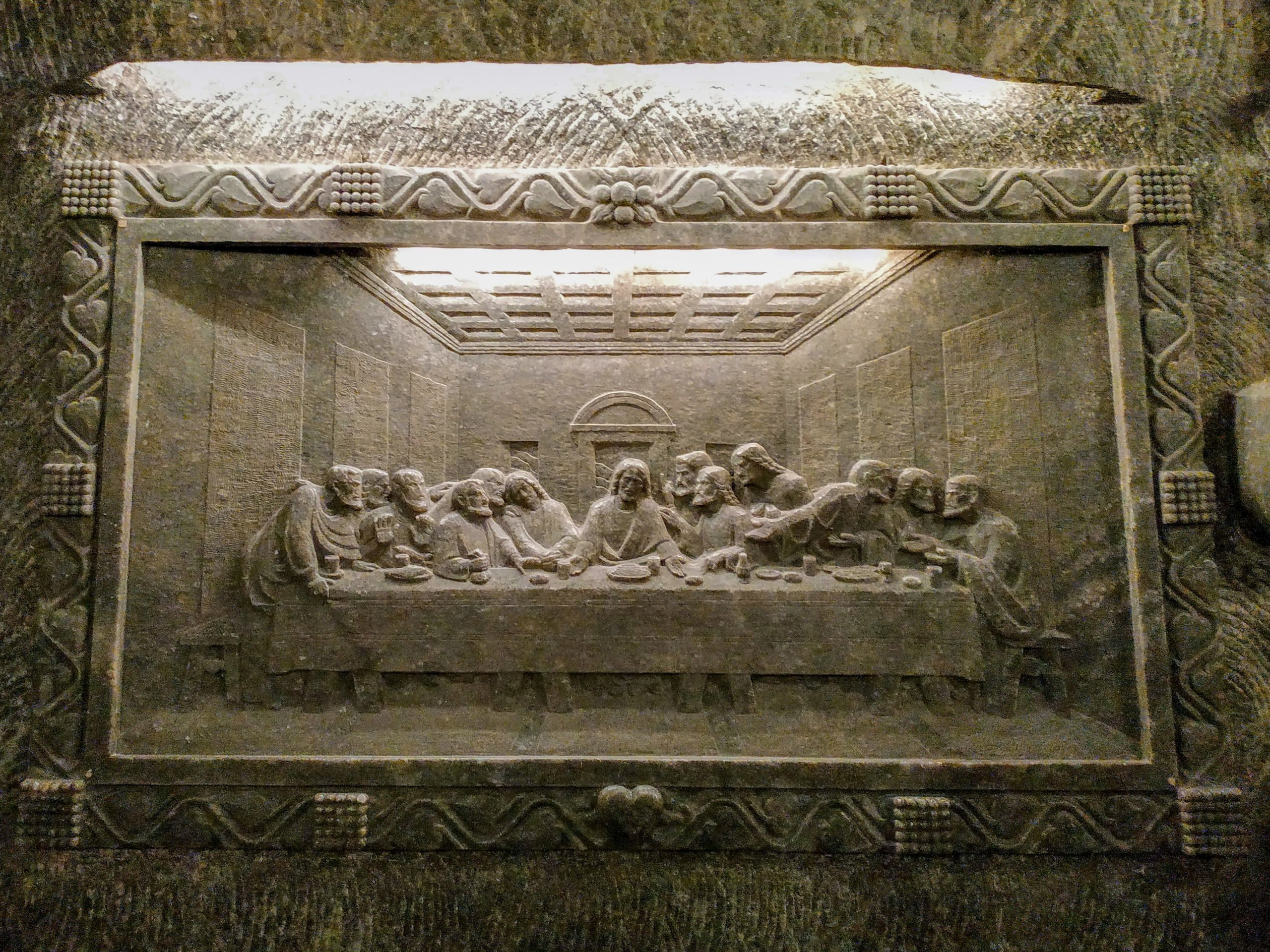
The Wieliczka Salt Mines are a UNESCO World Heritage Site. These mines are incredible to behold. You will see chandeliers, statues, beautiful wall carvings, and more–all made from salt!
I don’t know where else you’ll have a better opportunity to learn about the history and importance of salt as well as to observe some of it’s more unusual uses.
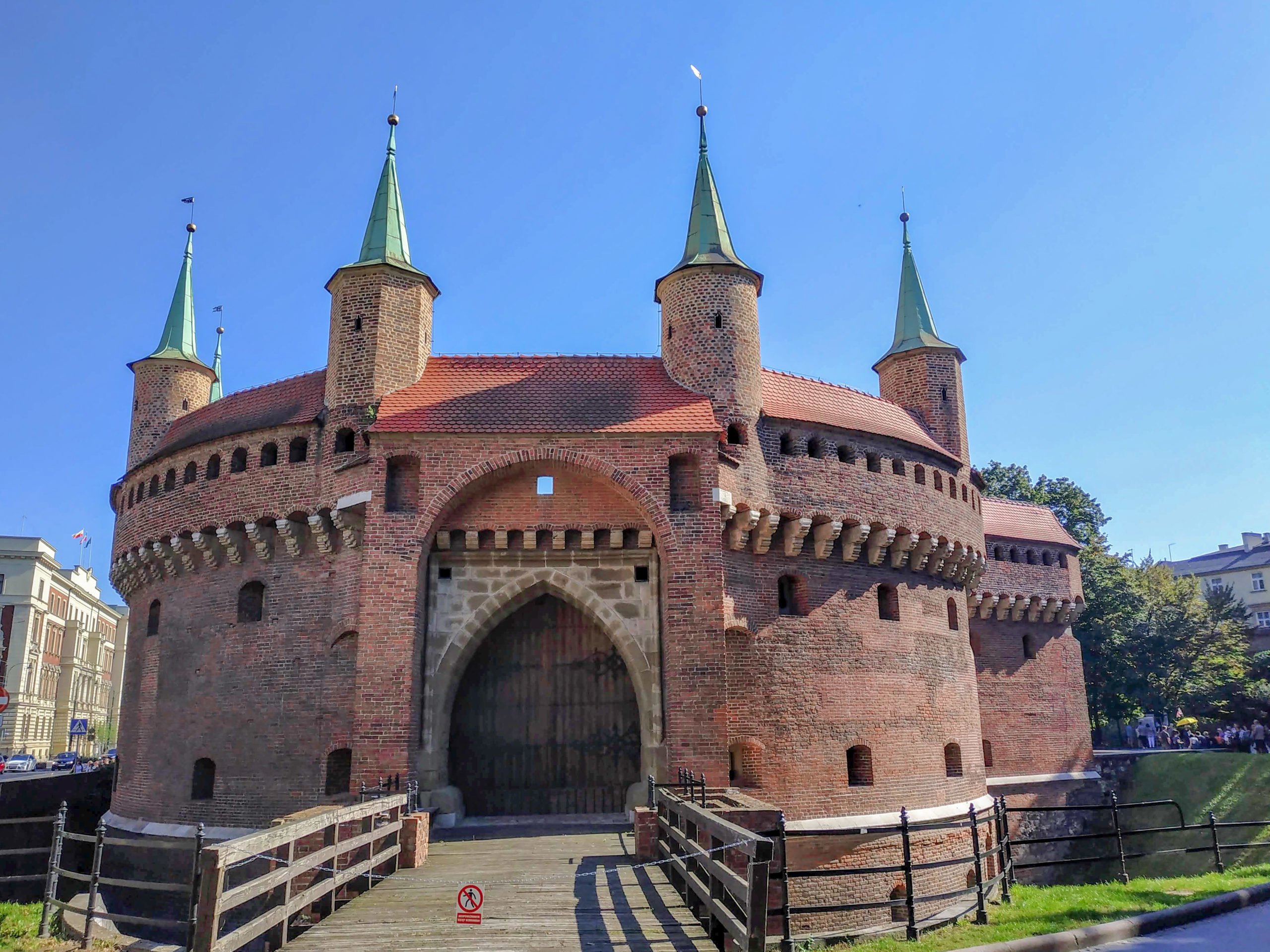
Explore this medieval fortress of Krakow located just outside the historical Saint Florian’s Gate. The Krakow Barbican was built around 1499 and is an impressive example of human engineering. It was an impenetrable defense for the city and had underground passageways that led to the city gates. This fortified gateway helps display the diverse history of Krakow and the many facets of this stunning cultural city.
Krakow Barbican
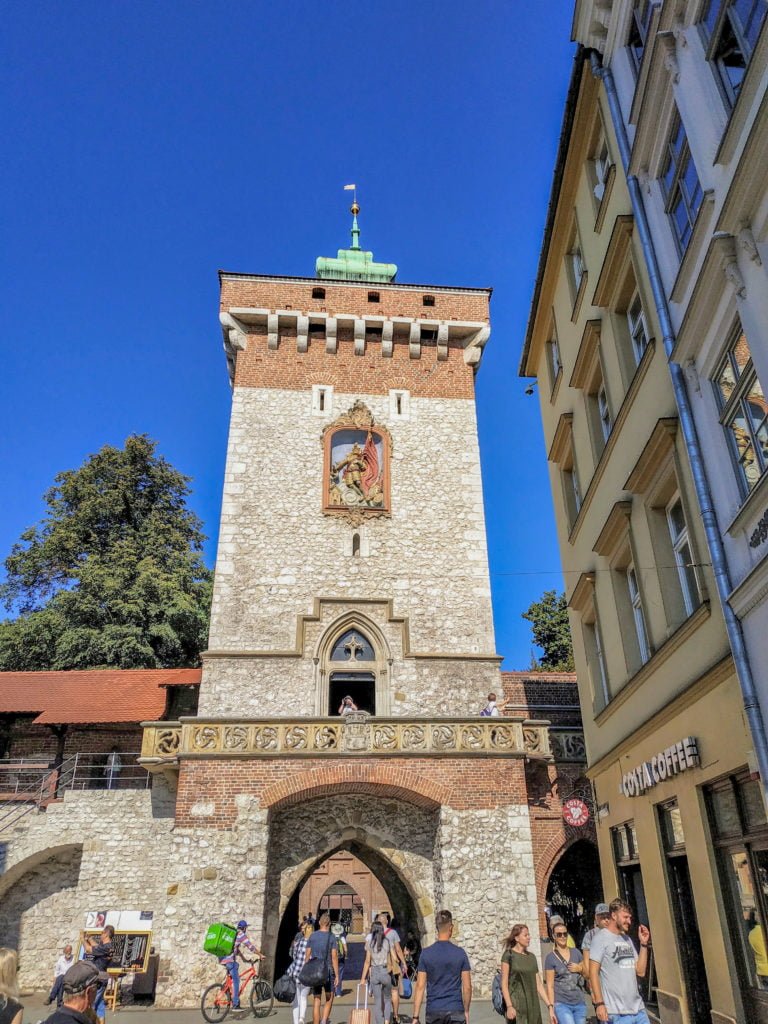
#11 St. Florian’s Gate
This Gothic tower was the main entryway to the city of Krakow. It was one of the multiple gates along the city’s defensive walls. Where these walls and moat once stood is now home to Planty Park. The tower is about 110 feet tall and is a beautiful piece of architecture and history. I recommend you make time to explore this historic area of Krakow.
#12 Oskar Schindler’s Enamel Factory
The factory currently houses two museums, the Museum of Contemporary Art and Schindler’s Factory Museum. The Factory Museum gives an in-depth look at the effects of WWII on Krakow and the atrocities the Nazis committed against the Polish Jews.
#13 Kazimierz Jewish Neighborhood
This Jewish neighborhood once had over 3 million Jews who lived here. However, due to the extermination of the Jews during WWII, only about ten percent of them survived.
Plan to visit the Old Synagogue and the Galicia Jewish Museum to learn more about the lives of the Jewish community in Krakow before WWII. Also, make sure to visit the Ghetto Heroes Square and the monument dedicated to their memory.
In addition to the historical sites of the Kazimierz neighborhood, it is also a great place to shop. Explore its distinctive architecture and eclectic shops to find unique souvenirs to take back home.
#14 Eat Polish Food
Don’t miss trying authentic Polish food while in Krakow! I recommend trying Polish Sour Bread Soup (Zurek). I ate this at Bar Smak and loved it!
Another popular street food is a Krakow bagel (Obwarzanki Krakowski). These make good on the go snacks to fuel your busy day of sightseeing.
Zapiekana is another delicious street food to try. They are like open-face sandwiches, long baguettes cut in half traditionally topped with mushrooms, cheese, and your choice of sauces.
These are just some of my recommendations, be adventurous, and try something new!
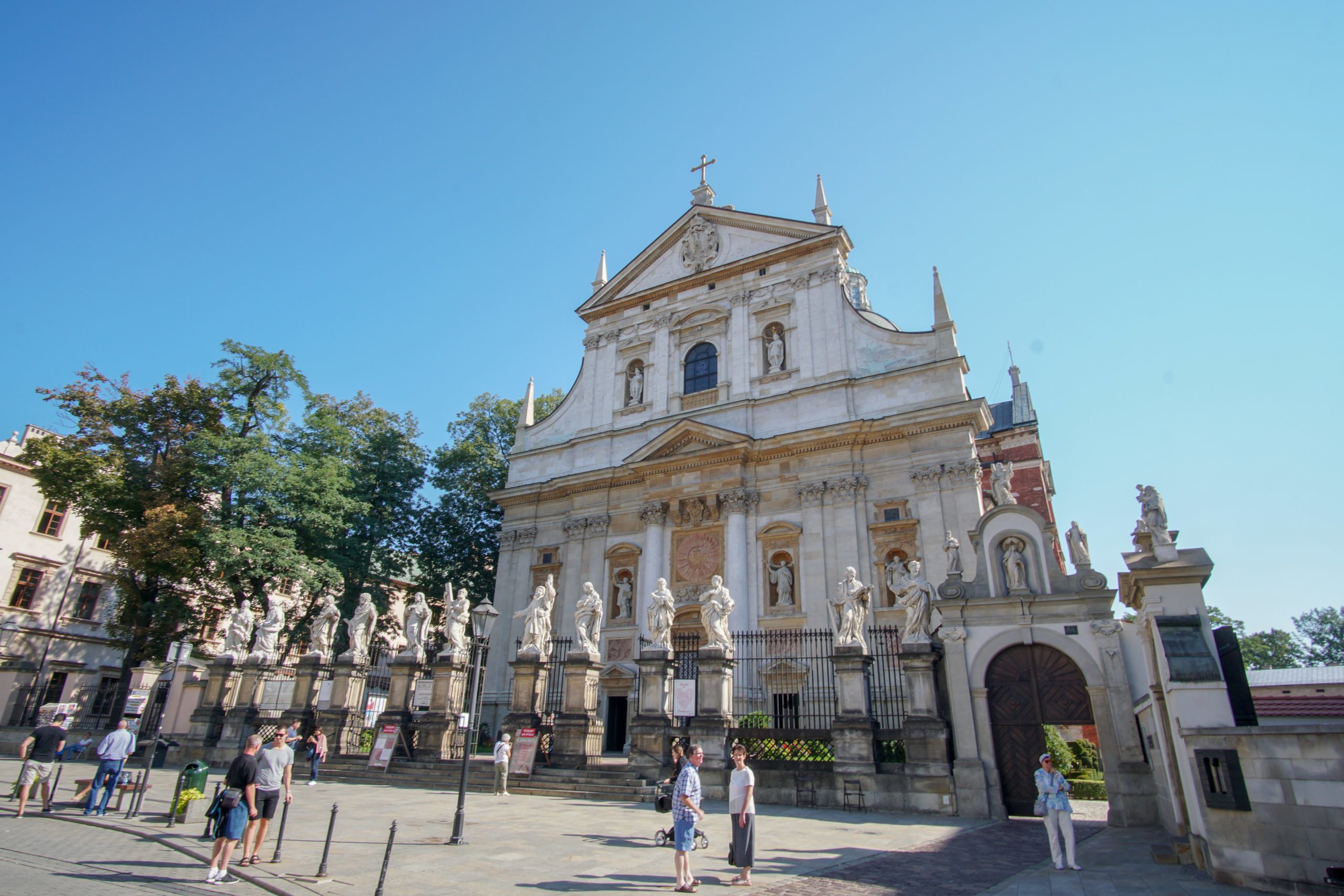
#15 Church of Saint Peter and Paul
Saint Peter and Paul’s Church is in Old Town. This historic baroque cathedral was built during the 16th century. Outside the church, sculptures of the 12 apostles line the gated entrance.
Once inside the church, you can purchase an audio guide that tells you more about the church history and also the crypt beneath the church, which is open to tour as well.
Directly next to the Church of Saint Peter and Paul, is the 11th-century church of Saint Andrew. St. Andrew’s church is one of Krakow’s oldest. Take time to step inside this ancient cathedral and admire its architecture before moving on.
Saint Paul and Peter’s Church
#16 Auschwitz-Birkenau Concentration Camps
Last, but certainly not least, is something I feel should not be missed during a visit to Krakow. The Auschwitz-Birkenau concentration camps are not in Krakow, but rather near the city of Oswiecim. However, you can easily take a bus from Krakow to Auschwitz.
The journey takes 1-1.5 hours—plan for your visit to the camps to take an entire day. Depending on which tour option you choose, it may take more or less time, however, given the solemnity of these memorial sites, it is good to give yourself time for some restful reflections rather than pack a bunch of sightseeing in afterward.
Make sure to book your tour well in advance of your trip to Krakow as the tours do book up. You can take a self-guided tour, but only during certain hours of the day. I chose the 6-hour study tour and I highly recommend it! The guided tours offer insightful commentary and information I feel one might miss by going on their own, but each person will have their reasons for choosing which type of tour they take.
Suggested Itinerary for 3 days in Krakow
Day One: Visit Auschwitz, have dinner in Krakow and enjoy Rynek Glowny (Main Square) at night. Consider attending a Chopin Concert.
Day Two: Visit the Wieliczka Salt Mines in the morning, get some lunch and then see Saint Mary’s Basilica, visit the Cloth Hall, and then head to the Kazimierz neighborhood and have dinner there. Explore the area and do some souvenir shopping, then head to Schindler’s Factory Museum (it’s open until 8 pm most nights).
Day Three: Explore Old Town, tour Saint Paul’s Cathedral, Wawel Castle, see the dragon, and then take a relaxing stroll through Planty Park before heading to see Saint Florian’s Gate and the Krakow Barbican. You’ll still have time for shopping in the Main Square if desired.
Recommended Places to Eat
Moa Burger
Address: Mikołajska 3, 31-027 Kraków, Poland
Moa Burger has delicious and unique burger choices. I tried a burger with beets and pineapple on it, it was delicious, and I don’t even like beets!
Bar Smak
Address: Karmelicka 10, 33-332 Kraków, Poland
This is the place I tried the traditional Polish sour bread soup, and I loved it! Stop here if you want to try some authentic Polish food.
India Masala
Address: Mały Rynek 2, 31-041 Kraków, Poland
Delicious Indian food a short walk from Rynek Glowny in the heart of Stare Miasto.
Milkbar Tomasza
Address: Świętego Tomasza 24, 33-332 Kraków, Poland
This is another option when looking to try some traditional Polish food. They are a popular spot for breakfast and also serve delicious pierogis.
Cafe Camelot
Address:Świętego Tomasza 17, 33-332 Kraków, Poland
If you’re looking for a place to get some delicious coffee and dessert, look no further than Cafe Camelot. This Cafe is close to St. Mary’s Basilica.
Żarówka Cafe
Address: Floriańska 20, 31-021 Kraków, Poland
Żarówka Cafe is around the corner from Cafe Camelot and has a lovely outdoor seating area. Enjoy coffee, a sandwich, and dessert while giving your feet a rest.
Rynek Glowny (Krakow’s Main Square)
Tips for Getting Around Krakow
I was pleasantly surprised to discover how cheap it was to use Uber in Krakow. I tend to use public transportation for its cost-effectiveness and convenience. However, in Krakow, Uber was often more convenient (at least from where I was staying) and very affordable.
Plus, since I was traveling with a friend, we split the cost, which made it that much more cost-efficient. Obviously, as a solo traveler, you’d need to determine what makes the most sense for your budget, but always consider the time it will take you to get to/from a destination when weighing the cost vs. benefit of a service like Uber.
I also used the bus. Bus 304 is a good one for visiting the Wieliczka Salt Mines.
Where to Stay
I stayed in Old Town during my visit to Krakow. I loved being around the corner from the Main Square, Planty Park, and the various sights located in Old Town. It was a little further from the main bus routes or the bus station, but otherwise very conveniently situated to Krakow’s main attractions.
Old Town can get quite noisy at night though, so be aware of that, the Airbnb that we stayed at was above an area with restaurants below and needless to say people were out enjoying themselves until two or three a.m. If you’re not a light sleeper like myself, then perhaps this won’t be an issue for you. All in all, though, I’d stay there again for the convenience of being in Old Town.
In addition to Old Town, you may also want to consider staying in Kazimierz, it’s close to Schindler’s Enamel factory, and has a more eclectic feel than Old Town. It is also in a touristy area, though, so expect it to be busier. If you want to stay somewhere outside the main tourist area, but still in close walking distance to Old Town, then consider staying in Kleparz. Kleparz is just a short walk outside of Old Town, so you’re out of the touristy area, but close enough, you can easily walk there.
Final Thoughts
If you haven’t yet put Krakow on your list of places to visit, do it now. Once you visit, you’ll wonder what took you so long to go, and you’ll begin making plans to explore more of this unique country.
I first learned about the Wieliczka Salt Mines reading the book 501 Must-Visit Destinations. Upon viewing the photograph of the salt chandeliers in the book, I knew I needed to see them for myself. After touring the Wieliczka Salt Mines, I feel I gained a new appreciation for salt and miners in general.
Imagine a tour that combines history, salt, sculptures, miners, and royalty, all from a dark labyrinth beneath the earth. Well, that’s what you get on a tour through the Wieliczka Salt Mines. This guide will help you plan your trip to the mines so you can see the salt carved chandeliers, walk on floors made of salt, and even taste the salt for yourself.
Brief History of Wieliczka Salt Mines
The Wieliczka Salt Mines are over 900 years old and still in operation today. Their history spans kingdoms and world wars and various periods of technological advancement. They are an impressive example of ingenuity and creativity. There are nine levels to the mine, and they descend to a depth of 327 meters (over 1,000 feet). Your tour will allow you to see only 2% of the mine. After you complete your visit, you will realize the significance of that and the vastness of the Wieliczka Salt Mine. Thankfully you are always with a guide. Otherwise, it is easy to see how one could get lost amidst the labyrinths of salt carved tunnels.
The Tour Experience
First off, let me say, if you struggle from claustrophobia or a fear of dark places, you may want to reconsider visiting the mines.
Although there are plenty of open spaces within the mine, you will need to travel down (and back up) in a somewhat cramped elevator and, in my case –an extremely crowded elevator. Then you’ll descend a lot of stairs to go even deeper into the mine before your guide will take you along paved pathways and into the various chamber areas.
You’ll have your choice of two tours in the mine. The Miner’s Tour and the Tourist Route. Both of these tours are approximately 3 hours in length.
The Miner’s Tour
As the name suggests, it focuses more on the mining aspect of the Wieliczka Salt Mine. You receive working suits and miner’s gear before you’re taken on a mining adventure! You’ll get to “mine” for salt and learn firsthand about the life of a salt miner. This tour is not suited for those with disabilities, and children need to be ten years old and older and accompanied by an adult. Reservations are recommended for this route and can be made online.
The Tourist Route
This is the route I chose during my visit. The tour gives you an overview of the history of mining and the technological advancements over the years. There are various displays along the way to illustrate what mining would have looked like during the early years. You’ll also tour beautiful chapels carved by miners throughout the mine’s history. You’ll see saline lakes and admire the raw black salt used to carve the many sculptures, artwork, and chandeliers.
Our guide was very knowledgeable and had a great sense of humor. The pace of the tour is steady, but not too rushed. If you want more time taking photos, then move to the back of the tour group so you can take your pictures and then catch back up.
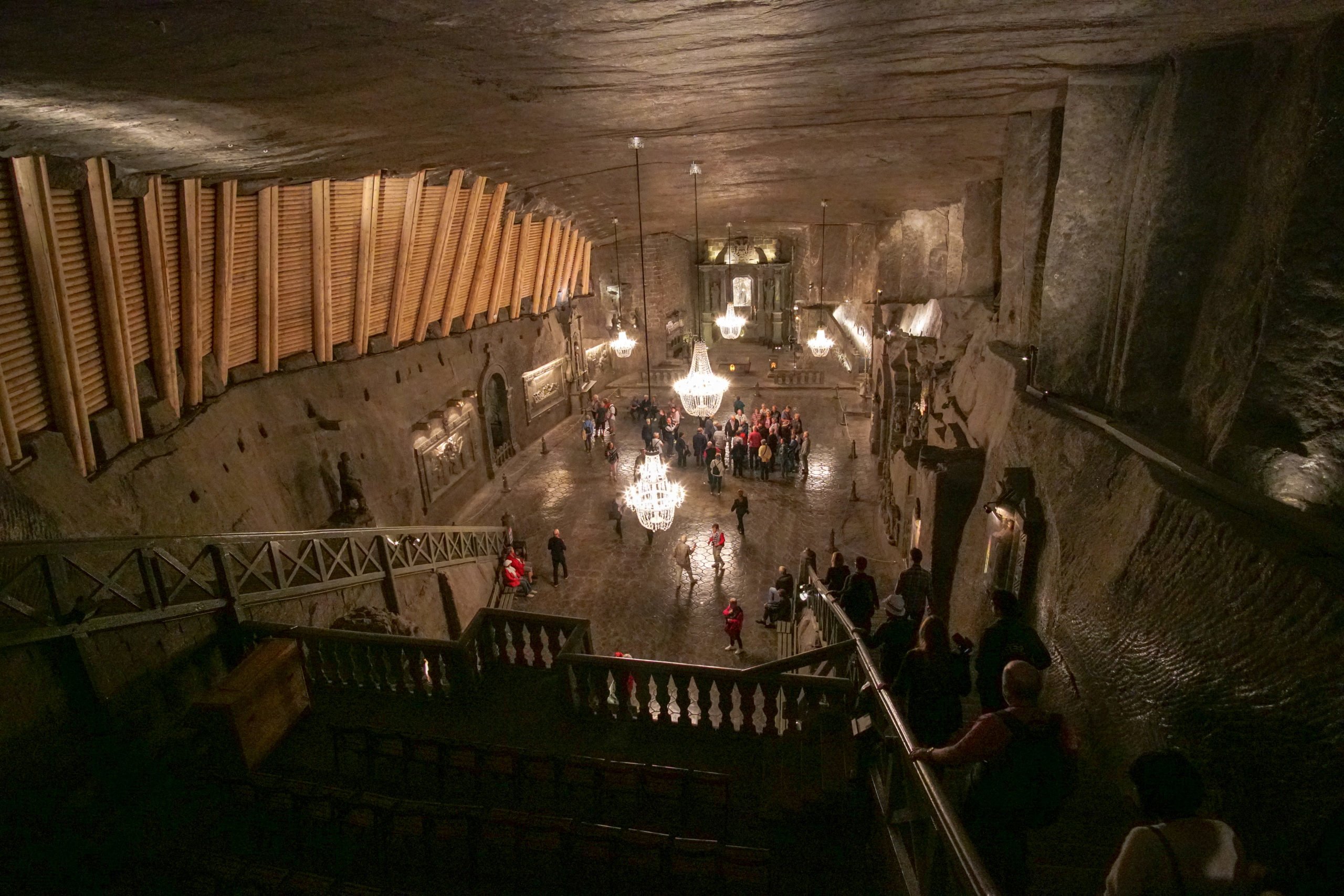
Looking down into St. Kinga’s Chapel.
St. Kinga’s Chapel
The highlight of the tourist route is a visit to St. Kinga’s Chapel. St. Kinga’s is the largest underground chapel in the world (there are 20 total chapels within the mine). You’ll descend stairs into this enormous space 350 feet underground. Everywhere you look, you see salt. You walk on floors made of salt and admire sculptures and chandeliers carved from rock salt. It’s stunning!
Please note that this tour requires you to descend 800 stairs. Children are allowed on the tourist route. If you have disabilities, please contact the mine ahead of time so they can create a specialized tour, as only certain portions are wheelchair accessible. Reservations are not required for the tourist route.
Luggage Storage
Plan to store your bags in the provided luggage lockers. Small purses (35cm x 20cm x 20cm or smaller) are allowed, but no large day bags—plan to pack your camera gear and jacket and leave the rest in your locker.
Tips on Touring Wieliczka Mine
Photographs
Due to the dim nature of the mine, you may find it challenging to take photographs. Try to steady yourself as best you can. A monopod or walking stick will help immensely (if you have one). The main thing is that you don’t rush taking your shots; otherwise, you will end up with blurry photographs. It is important to aim for in-focus shots, and then you can always edit later for brightness.
Eating
There is a cafeteria inside the mine with a variety of dishes, desserts, and beverages to choose from should you get hungry. Plus, how often can you say you ate lunch at over 400 feet underground?
How Much Time You Need
Each tour takes around 3 hours, plus any extra time you may spend eating in the cafeteria, or looking at souvenirs. So I recommend you plan for about 4 hours for your visit to the Wieliczka Mines. Additionally, you’ll want to factor in at least 1-hour round trip travel time getting to/from the mine.
What to Wear
Depending on which tour you choose, you will walk between 1-2 miles during your visit, so make sure to wear comfortable walking shoes. Additionally, the mines are around 57-60 degrees Fahrenheit, so you may also want to pack a light jacket.
Restrooms
There are two restrooms within the mine that your tour will take you past. Your tour guide will give everyone a chance for a break about midway through the tour, and then you’ll have an opportunity again toward the end of the tour.
Getting to Wieliczka Salt Mine
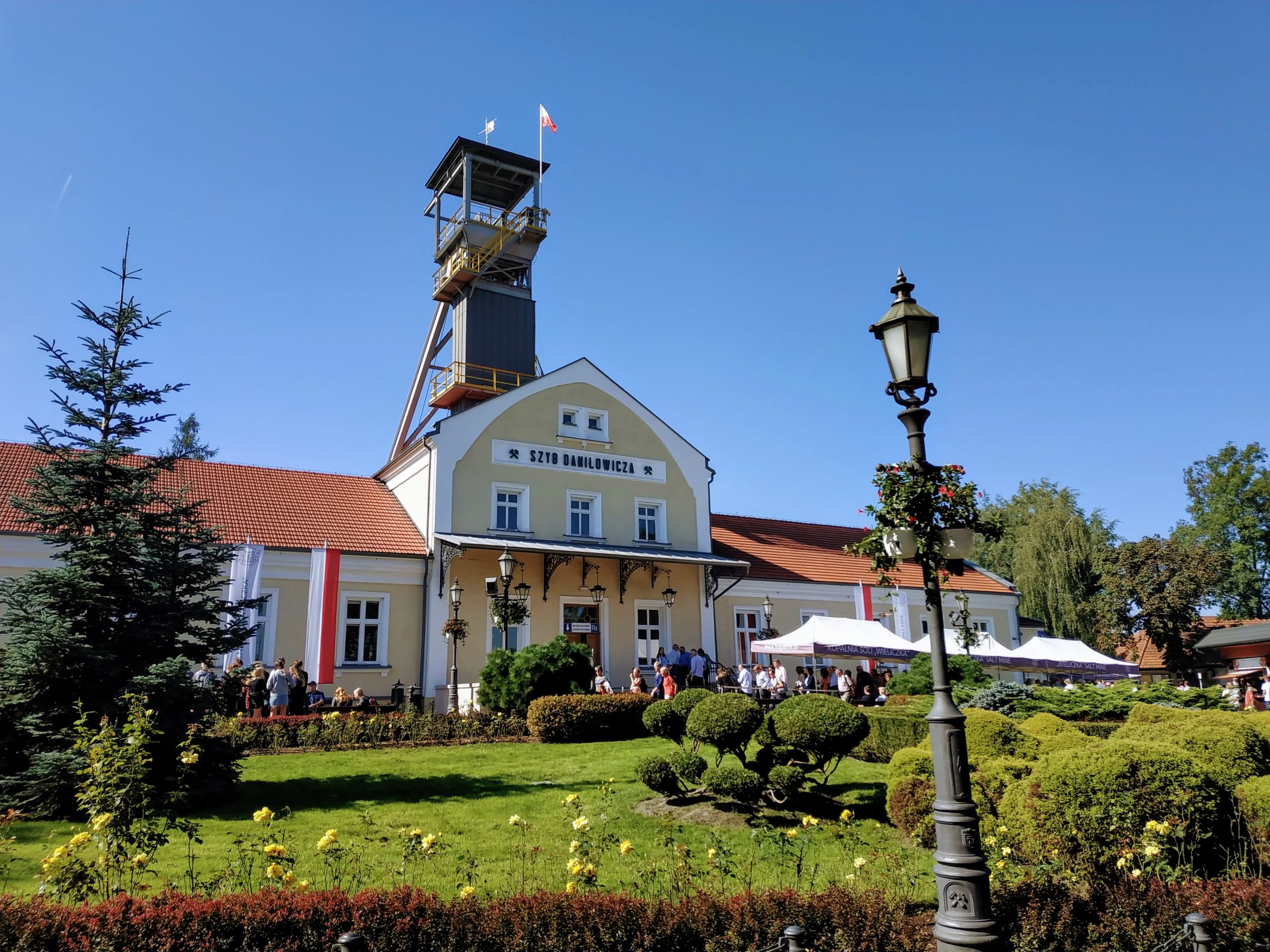
Most people visiting the Wieliczka Salt Mine come from Krakow’s city center. Wieliczka is on the outskirts of Krakow and takes 30-40 minutes by bus from Krakow’s touristy areas. You can take bus #304 to get there, and it lets you out just a short walk from the main entrance. The same bus route will return you to Krakow’s city center.
Another alternative to the bus is using Uber. My friend and I did this going to the mine and then took bus #304 when returning to our Airbnb. Uber is surprisingly affordable in Krakow, especially if you can split the cost with a traveling companion.
Hours of Operation
Make sure to check the Wieliczka Salt Mine website in advance to see what their current hours of operation are and plan accordingly.
Final Thoughts
A tour of the Wieliczka Salt Mines is certainly something you’ll never forget. It is an excursion the whole family will enjoy as long as you are prepared for it in advance. As mentioned before, the mine is dimly lit, and for those suffering from claustrophobia, you may not find it to be an enjoyable experience.
Visiting the Wieliczka Salt Mine is an adventure you are unlikely to experience anywhere else and I highly recommend it for any visit to Krakow.